Team Kit
What to pack in a youth soccer bag
Eight things in the bag, four in the car, and one that lives there permanently.
By Ryder M. · Published October 17, 2026
The short answer
- In the bag, every time: cleats, shin guards, match socks, water, the jersey and shorts if they are not already on, a warm layer, and a towel.
- In the car, permanently: a pump with a gauge, a spare pair of cheap shin guards, spare socks, and a plastic bag for wet kit.
- Add for a tournament: a second full kit, a second pair of socks per game, snacks, sunscreen, and something to sit on.
- Leave at home: the good ball, anything that cannot get wet, and the expensive gloves if it is not their week in goal.
A youth soccer bag is not a packing problem, it is a failure-mode problem. Everything on the list below is there because the version without it produces a specific Saturday morning: the guards are at school, the socks are in the wash, the ball is flat, the kit is still wet from Thursday.
So this list is ordered by what goes wrong rather than by what seems important. If you want the by-age version of what a player needs to own in the first place, gear by level has the full kit list for every bracket from U6 through travel club.
The eight things in the bag
- Cleats, in their own compartment. Separating muddy cleats from everything else is the one feature that matters in a soccer bag, and it is the reason to buy a soccer backpack rather than use a school one. Nike's Academy Team bag is built around exactly this.
- Shin guards. These are compulsory equipment under Law 4, not optional, and they are the single most-forgotten item in youth soccer because they live on a radiator between games. Are shin guards required in soccer covers the rule.
- Match socks, long enough to cover the guards. Law 4 requires the guards to be covered entirely by the socks, so a short sock is a kit-check problem as well as a comfort one.
- Water, more than you think. A kid who plays two games on a tournament day needs more than one bottle, and most youth soccer backpacks have at most two bottle pockets.
- Jersey and shorts, if they are not already worn. Dry, and separate from the cleats. The Nike Brasilia 9.5 has a zippered front pocket Nike describes for storing used gear separately, which is the feature a plain school backpack lacks.
- A warm layer. The sideline is colder than the field, and a substitute standing still in October is the most reliably miserable person at a youth game. Best youth soccer cold weather gear covers what works.
- A towel. Small, cheap, and the difference between wet cleats going into a bag and wet cleats going into a bag after a wipe.
- A plastic bag for the wet stuff. This is the item that protects every other item. A damp jersey sealed in with dry clothes is how a bag starts to smell permanently.
The four things that live in the car
These do not belong in a child's backpack, and they solve the problems a packing list cannot.
| Item | The failure it prevents | Notes |
|---|---|---|
| Pump with an inline gauge | A flat ball at warm-up | Kwik Goal's Premier pump reads 0-30 psi while you pump |
| Spare cheap shin guards | The real pair is at school | Franklin's Superlight guards are stocked almost everywhere |
| Spare match socks | One sock in the wash | Also the fix for a blister mid-tournament |
| Plastic bags | Wet kit through a clean bag | Two: one for kit, one for cleats |
The pump is the one worth spending on. A mini pump lives in the bag and has no gauge, so you are judging pressure by feel; an inline gauge turns inflating a ball from a guess into a reading, and over- or under-inflation is one of the things that quietly ends a ball. Best soccer ball pumps covers the choice, and soccer ball PSI chart by size has the target numbers.
The three bag-and-car items worth buying properly
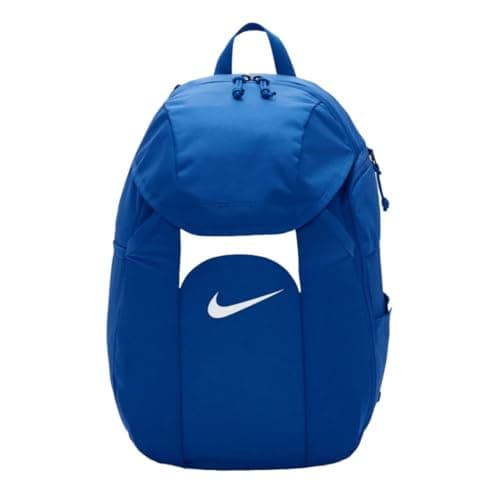
Nike
Nike Academy Team Soccer Backpack
The right basic kit bag: it separates the cleats, it fits a child, and it does not cost a fortune.
$54.99View on Amazon#ad — we may earn a commission · price as of October 17, 2026
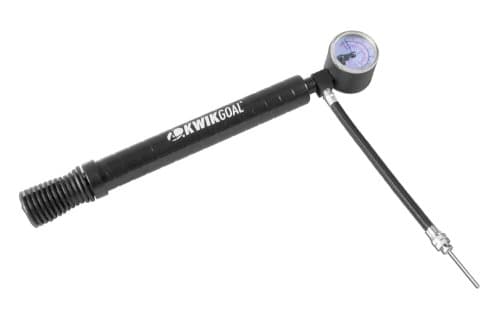
Kwik Goal
Kwik Goal Premier Hand Pump
The pump to buy if you are buying one: an inline gauge turns inflating a ball from a guess into a reading.
$29.99View on Amazon#ad — we may earn a commission · price as of October 17, 2026
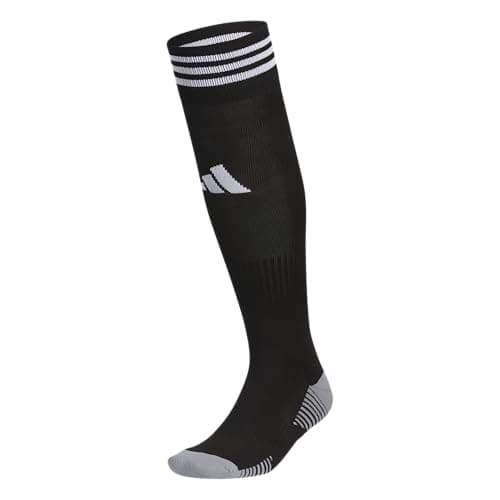
adidas
adidas Copa Zone Cushion Over-the-Calf Socks
The safe default. If your kid wears slip-in shin guards, the grip through the calf is the reason to pick these.
$10.00$16.00−38%View on Amazon#ad — we may earn a commission · price as of October 17, 2026
Product photos come from each item’s current Amazon listing.
Choosing the bag itself
Two decisions, and the second one catches people out.
The first is compartments. A separate footwear compartment and a separate used-gear pocket are the only two features that change anything. Everything else on a soccer backpack listing is capacity and branding.
The second is size, and the mistake is buying up. A 30 L or 36 L pack is an adult bag — adidas's own listing for its 36 L Stadium pack states it is not intended for children 12 and under, and a bag that reaches below a child's hips drags on the ground and swings when they run. Under about U11, a smaller pack and carrying the ball separately is the right answer. Best soccer bags for kids is the full roundup.
If carrying the ball is genuinely the problem you are solving, that is what the ball compartment on the larger adidas pack is for — with the caveat that the ball eats into the main space, so a full kit plus a ball in a 36 L bag is a squeeze.
The tournament version
A tournament is not a longer game day, it is a different packing problem: two or three games, several hours between them, and no trip home in the middle.
- A second full kit. Jersey, shorts and socks. Playing the second game in a jersey soaked through from the first is the main reason kids have a miserable afternoon.
- A pair of socks per game. The American Academy of Dermatology's blister guidance is specific on this: moisture-wicking rather than cotton socks, properly fitting shoes, and adhesive moleskin or soft bandages at problem areas. A dry sock between games is the cheapest blister prevention there is.
- Real food, not only snacks. Three hours between games is a meal, and tournament catering is a queue.
- Sunscreen and a hat. A full day on an open field in June, with a kid who is not moving for most of it.
- Something to sit on, and shade if you can carry it. This is for the family as much as the player.
- A spare set of laces. Thirty seconds to pack, and a broken lace twenty minutes before a game is otherwise a crisis. How to lace soccer cleats covers the patterns worth knowing.
A keeper's tournament bag has two additions: gloves that have been pre-washed and dried rather than brand new, and something padded for the hips and knees if the surface is hard. Best youth goalkeeper pants and how to choose goalie gloves cover both.
What to leave out
A soccer bag gets heavier every season and a child carries it. Four things that do not need to be in there:
- The good ball. Match balls get lost, and a youth player does not need one for a game that supplies its own. Keep a cheap second ball for the yard instead — training ball vs match ball explains why two cheap balls beat one expensive one below about U12.
- Anything electronic that is not a phone. It will get wet.
- Training equipment. Cones, ladders and rebounders belong at home, not in a game-day bag. Backyard soccer drills for kids covers what to do with them there.
- A second pair of cleats, most weeks. Unless the surface is genuinely unknown, one pair is enough. If the schedule really does split grass and turf, that is a plate decision rather than a packing one — MG vs FG soccer cleats covers it.
And one note on balls in cars, since the pump lives there: do not leave a ball in a trunk through the summer. Molten's own care instructions say never to leave a ball in high temperatures or humidity such as a car trunk, because it costs the ball its tuned shape and deteriorates the carcass. The pump can live in the car. The ball should not.
Common questions
What should a kid pack in their soccer bag?
Eight things: cleats in their own compartment, shin guards, match socks long enough to cover the guards, water, the jersey and shorts if not already worn, a warm layer for the sideline, a small towel, and a plastic bag for wet kit. Keep a pump, spare guards, spare socks and extra bags in the car rather than in the bag.
What should I keep in the car for youth soccer?
A pump with an inline gauge, a cheap spare pair of shin guards, spare match socks and a couple of plastic bags. All four are cheap and rarely used, which is exactly why they belong in a car rather than on a list that gets checked in a hurry — they cover the flat ball, the guards left at school, the sock in the wash and the wet kit.
What size soccer backpack does a kid need?
Smaller than you think. The 30 L and 36 L packs are adult bags — adidas's own 36 L listing states it is not intended for children 12 and under — and a bag that reaches below a child's hips drags and swings. Under about U11, a standard youth soccer backpack with a separate shoe compartment is right, and the ball gets carried separately.
What extra do you pack for a soccer tournament?
A second full kit, a fresh pair of socks for each game, real food rather than only snacks, sunscreen and a hat, something to sit on, and a spare set of laces. The second kit and the fresh socks do the most work: playing the second game in a soaked jersey is what ruins a tournament day, and a dry sock is the cheapest blister prevention there is.
How do you stop a soccer bag from smelling?
Unpack it when you get home rather than before the next game. A damp polyester jersey sealed in a bag for a week is where the smell comes from. Nike's jersey guidance is cold water, inside out, no fabric softener and no dryer — softener coats the fibers and traps odor. Shin guards should be stored dry and ventilated for the same reason.
Should you leave a soccer ball in the car?
No. Molten's own care instructions say never to leave a ball in high temperatures or humidity such as a car trunk in summer, because the ball loses its tuned shape and the carcass deteriorates. The pump can live in the car permanently; the ball should come inside. A cheap second ball for the yard is a better solution than a trunk ball.
Sources
- IFAB Laws of the Game — Law 4, The Players' Equipment — The Law text quoted on this site: undershorts and tights must be the same color as the main color of the shorts or the lowest part of the shorts, and players of the same team must wear the same color; shinguards must be of suitable material and appropriate size, covered by the socks, with the player responsible for their suitability; non-dangerous protective equipment of soft, lightweight padded material is permitted; and a player must not use equipment or wear anything that is dangerous, which must be removed rather than taped or covered. Law 4.3 is also the source for the kit-color rules quoted here: the two teams must wear colors that distinguish them from each other and the match officials, and each goalkeeper must wear colors that are distinguishable from the other players and the match officials. Law 4.4 names gloves, headgear, facemasks and knee and arm protectors of soft, lightweight padded material as permitted non-dangerous protective equipment, and separately permits goalkeepers caps and tracksuit bottoms.
- Coaching American Soccer — Law 4, The Players' Equipment — The Law 4 requirements quoted on this site: footwear is compulsory but cleats are not specified; shinguards must be of suitable material, appropriate size and covered by the socks, with the player responsible for suitability; a player must not use equipment that is dangerous; and the referee-level guidance that worn, pointed or exposed-shaft studs and shoes with sharp metal or pointed spikes are not permitted.
- Nike — how to wash a jersey — Nike's own jersey-washing guidance, quoted on this site: wash in cold water on a gentle cycle; turn it inside out; do not overdo the detergent because soap buildup traps odors; avoid fabric softener because it stops detergent penetrating the fibers where odor and bacteria sit; avoid the dryer and air dry flat, because heat makes letters and numbers crack or peel.
- Reusch — Shinguard Attrakt Supreme (care instructions) — A manufacturer's own care instructions for a hard-shell shinguard, quoted on this site: remove dirt with a soft brush and wipe with a damp cloth; do not use solvents or other cleaners as they may cause damage; do not expose the product to excessive heat or strong sunlight; store in a dry and ventilated area, otherwise the performance of the shinguard reduces significantly.
- Molten — ball care instructions — A ball manufacturer's published care instructions, and the source for the ball-care facts on this site: always use a thin inflation needle to avoid damaging the valve, and inflate slowly to the pressure printed on the ball; a very dirty synthetic-leather ball is cleaned with plenty of water and a mild detergent, never left immersed in detergent, and rinsed and drained thoroughly; detergent chemicals may fade the colors; the ball is then left to dry in a well-ventilated place out of the sun, and never dried with a hair dryer or similar appliance; store it in a cool dry place away from direct sunlight; never leave a ball in high temperatures or humidity such as a car trunk in summer, which costs it its tuned shape and deteriorates the carcass; leather protection creams and sprays must not be used because they make the surface slippery; and rotating two or more balls extends the life of each.
- Kwik Goal — ball pumps, needles and pressure gauges — The current pump range and the stock check for every pump named on this site: the Premier, Fingergrip and Mini hand pumps, the Digital Ball Pump, the PG-3 pressure gauge and the replacement needle packs.
- Kwik Goal — Mini Hand Pump (1A341) — Kwik Goal's description of the Mini as a compact, dual-action, high-volume hand pump with the needle stored in the handle.
- American Academy of Dermatology — how to prevent and treat blisters — Board-certified dermatologists' published guidance, and the source for the blister-prevention facts on this site: blisters are caused by chafing and are prevented by preventing chafing; to prevent blisters on the feet, wear nylon or moisture-wicking socks, and if one pair does not help, try two pairs; shoes should fit properly and be neither too tight nor too loose; avoid cotton in activewear because cotton soaks up sweat and moisture, which leads to friction and chafing; adhesive moleskin or soft bandages help at problem areas; stop the activity if there is pain, discomfort or redness; most blisters heal on their own in one to two weeks; and a blister should be left unpopped and loosely covered rather than drained.
- AYSO — Size of Ball and Field by Age Division — Official ball sizes, circumference and weight ranges, and field dimensions by age division. Used for every ball-size and field-size figure on this site.
Read next
- Best soccer bags for kidsBag picks by age, the one feature worth insisting on, and why adult team bags do not work on kids.
- Best youth soccer socksSock picks that actually hold slip-in shin guards, plus whether grip socks are worth the money.
- Best youth soccer cold weather gearBase layer first, then gloves, then tights — with the league rule that catches parents out on the tights.
- How to wash a soccer jerseyThe manufacturer method for a polyester jersey, why fabric softener makes the smell worse rather than better, and what to do about printed numbers.
- Are shin guards required in soccer?What Law 4 actually says about shin guards, the two conditions that get pairs rejected at a kit check, and where the rule is stricter than parents expect.
- Best soccer ball pumpsWhich pump to buy, why dual action matters, and why the gauge is the feature worth paying for.
- How long do soccer balls last?The four failure modes that end a youth soccer ball, how to tell a finished ball from a flat one, and the storage habit that doubles its life.
- Gear by levelThe full kit list for every age group from U6 through travel club.