Balls
Size 3 vs size 4 soccer ball
The cutoff is U9. Here is what actually changes, and when to start practicing with the bigger ball.
By Ryder M. · Published September 27, 2026
Heads up: we earn a commission if you buy through our links, at no extra cost to you. It never changes which product we recommend — here’s how that works.
The short answer
| Size 3 | Size 4 | |
|---|---|---|
| Age groups | U6, U7, U8 | U9, U10, U11, U12 |
| Typical ages | 5 to 8 | 8 to 12 |
| Circumference | Smallest standard size | 25.0–26.5 inches |
| Weight | Lightest standard size | 12–14 oz |
| Format it is used in | 4v4, no keeper | 7v7 and 9v9, with a keeper |
The short answer: U8 and below is size 3, U9 through U12 is size 4. AYSO lists the size 4 at 25.0 to 26.5 inches circumference and 12 to 14 ounces across its 10U and 12U divisions.
A handful of leagues move to size 4 at U8 rather than U9, so check your club's rules — that is the one genuine source of ambiguity here, and it is settled by asking rather than by reading.
Choose size 3 if…
- Your kid is in U6, U7 or U8 and nobody has told you otherwise.
- They are eight and playing in a U8 division rather than U9.
- You want one ball to last several seasons and they are just starting — size 3 covers three years. See the size 3 picks.
Choose size 4 if…
- Your kid is in U9, U10, U11 or U12.
- They are turning nine this season and will be playing U9 matches with a size 4.
- Your league has confirmed it moves to size 4 at U8.
- You want the longest-lived single purchase — size 4 covers four years. See the size 4 picks.
Why the sizes exist at all
Worth understanding, because it is not bureaucracy and it changes how you think about 'just using the bigger one'.
A ball that is too heavy for a player produces two problems. They cannot strike it cleanly, so they learn to toe-poke it instead of striking properly — a habit that takes years to unlearn. And repeatedly kicking a disproportionately heavy ball loads a growing leg more than it needs to be loaded.
A ball that is too small has the opposite issue: it lets a player get away with sloppy contact, because there is more margin for error in where the foot meets the ball.
So the size bands are a development tool. Using the right one is not about rule-following.
What the transition actually feels like
Going from size 3 to size 4 is a real step and it lands at the same time as the format changing from 4v4 to 7v7 with a goalkeeper on a pitch roughly double the length. So a lot changes at once at U9.
For a few weeks, expect shorter passes, less clean striking and some frustration. It resolves with playing time. What does not help is sending them back to the size 3 — the adjustment is the point.
Should you practice with a size 4 before U9?
Yes, in the last few months of U8, and this is genuinely the most useful thing on this page. A size 4 ball in the yard through the spring before they move up means the transition happens at home rather than in their first competitive game.
Two caveats. Their games are still size 3 until they move up, so the size 3 stays in the gear bag. And do not do it a year early — a seven-year-old on a size 4 is back in the toe-poke territory the sizes exist to avoid.
One ball in each size
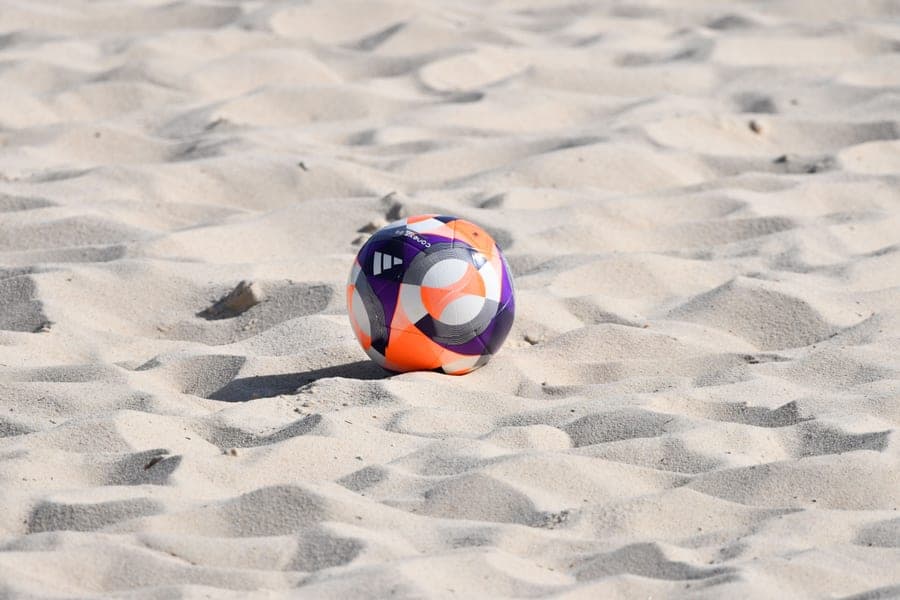
adidas
adidas Starlancer Club
The sensible default youth ball — right size range, right price, air stays in.
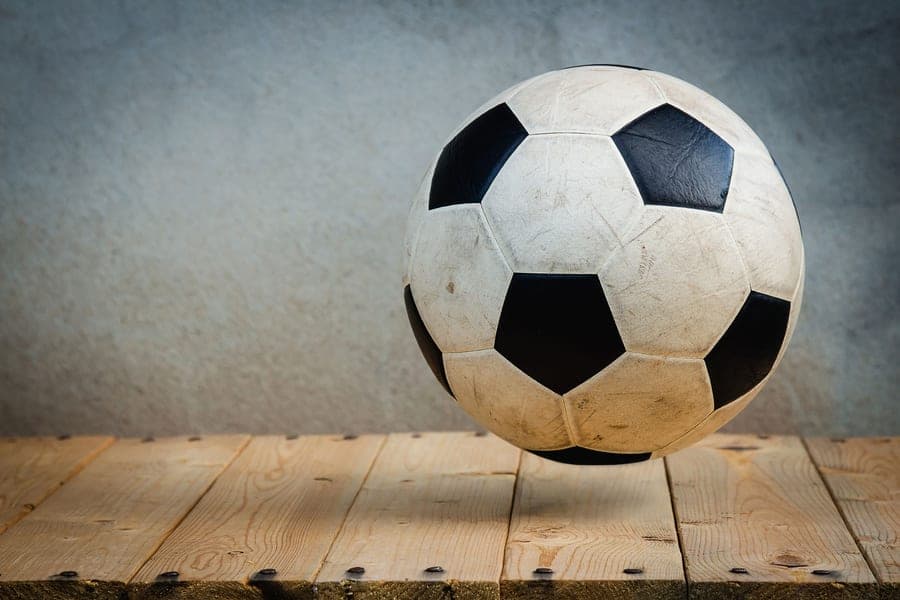
adidas
adidas Starlancer V
The one to buy if the ball is going to live in the yard rather than the gear bag.
Mikasa
Mikasa Goal Master
A solid, slightly overlooked rec ball; pick it if the Starlancer is out of stock in the size you need.
Photos are licensed representative stock images, not the exact models.
The practical answer for families with two kids
If you have a U7 and a U10, you need both sizes — there is no useful compromise and a size 4 in a seven-year-old's yard will get used by the seven-year-old.
Buying the same model in both sizes is worth doing for a small practical reason: the adidas Starlancer family runs in sizes 3, 4 and 5, so both balls behave similarly and neither kid thinks theirs is the worse one. That sounds trivial and is not, in a house with siblings.
What comes after size 4
Size 5, at U13, and that is the last change. It is a bigger jump than this one — up to 28 inches and 16 ounces, arriving alongside 11v11 on a full pitch. See size 4 vs size 5 and the U13+ level page.
Common questions
Should an 8 year old use a size 3 or size 4 ball?
Size 3 in most leagues, since U8 sits at the top of the size 3 band. Some leagues move to size 4 at U8 rather than U9, so check your club — that is the one real ambiguity. Late in the U8 year, practicing at home with a size 4 is a good idea even if their games are still size 3.
What size soccer ball for a 9 year old?
Size 4. Age 9 is the start of the size 4 band, which runs through U12. AYSO lists the size 4 at 25.0 to 26.5 inches circumference and 12 to 14 ounces.
Is a size 4 ball too big for an 8 year old?
For matches, yes — U8 plays with a size 3 in most leagues. For practice in the last few months before they move up, no: it is a useful way to make the transition happen at home rather than in their first U9 game. A year early is too early.
Are size 4 soccer balls good for younger kids?
Not below about U8. A ball that is too heavy for a player teaches them to toe-poke rather than strike properly, which is a habit that takes years to unlearn, and it loads a growing leg more than needed. The size bands exist as a development tool rather than as a formality.
Can two kids at different ages share one ball?
Not usefully, if they are in different size bands — a size 4 in a seven-year-old's yard gets used by the seven-year-old. Buying the same model in both sizes helps in practice: the adidas Starlancer family runs in sizes 3, 4 and 5, so neither kid thinks theirs is the worse ball.
Sources
- AYSO — Size of Ball and Field by Age Division — Official ball sizes, circumference and weight ranges, and field dimensions by age division. Used for every ball-size and field-size figure on this site.
- US Youth Soccer small-sided playing formats — Player counts, game lengths and format progression (4v4, 7v7, 9v9, 11v11) by age group.
Read next
- Best size 3 soccer ballsSize 3 picks for U6 through U8, the bladder difference that matters, and why you need a pump.
- Best size 4 soccer ballsSize 4 picks for U9 through U12, and the point where a match-quality ball starts earning its money.
- Size 4 vs size 5 soccer ballThe U13 cutoff, the real weight difference, and how to prepare for the last ball-size change there is.
- U7–U8 rec: the first real kitAges 6 to 8. Still a size 3 ball, but this is where the first real pair of cleats earns its place.
- U9–U10: size 4, seven-a-side, and a goalkeeperAges 8 to 10. The ball goes up to size 4, the format goes to 7v7, and someone has to play in goal.
- How to choose a soccer ball for your kidThree checks in order — size, bladder, where it lives — and what you can safely ignore below U12.