Balls
Size 4 vs size 5 soccer ball
Size 4 runs through U12. Size 5 starts at U13 and never changes again.
By Ryder M. · Published September 27, 2026
Heads up: we earn a commission if you buy through our links, at no extra cost to you. It never changes which product we recommend — here’s how that works.
The short answer
| Size 4 | Size 5 | |
|---|---|---|
| Age groups | U9–U12 (10U, 12U) | U13 and up (14U, 16U, 18U) |
| Circumference | 25.0–26.5 inches | 26.5–28.0 inches |
| Weight | 12–14 oz | 14–16 oz |
| Format | 7v7 and 9v9 | 11v11, full pitch |
| How long it lasts | Four years | Forever |
The short answer: size 4 through U12, size 5 from U13. AYSO's published standards put the size 4 at 25.0–26.5 inches and 12–14 ounces for the 10U and 12U divisions, and the size 5 at 26.5–28.0 inches and 14–16 ounces from 14U upward.
The most common mistake here is assuming a twelve-year-old has already moved up. They usually have not — U12 is still size 4, and buying a size 5 for a U12 means a ball they cannot use in a game.
Choose size 4 if…
- Your kid is in U9, U10, U11 or U12. Including U12 — this is the one people get wrong.
- They are twelve and playing 9v9 rather than 11v11.
- You want a ball for the rest of their time in the size 4 band. See the size 4 picks.
Choose size 5 if…
- Your kid is U13 or older, or moving up this season.
- They are playing 11v11 on a full-size pitch.
- You want the last ball you will ever buy for them — because it is. See the size 5 picks.
The weight difference is the real change
An inch and a half of circumference sounds minor. Up to four ounces of weight is not: at the top of each range, a size 5 is roughly a third heavier than a size 4.
For a thirteen-year-old that shows up in three specific ways. A driven ball travels shorter and dips sooner than they expect. Heading it is genuinely more of an impact. And a long pass needs noticeably more work through the ball.
All three resolve with playing time. None of them means anything is wrong.
Why this transition feels harder than the last one
Because more changes at once. At U9, the ball got bigger and the format went from 4v4 to 7v7. At U13, the ball gets bigger, the format goes to 11v11, and the pitch goes to full size — AYSO lists 13U and 14U fields at 100 to 130 yards long against 70 to 80 for 11U and 12U.
So a player is simultaneously dealing with a heavier ball, twice as many teammates, and a pitch nearly half as long again. Expect a rough few weeks. The U13+ level page covers the rest of what changes.
How to prepare for it
One genuinely useful thing: get a size 5 into the yard in the last few months of U12. Their matches stay size 4, but home practice on a size 5 means the strike adjustment happens somewhere low-stakes.
This is more worth doing than the equivalent at U9, because the weight jump is larger and the competitive environment they are moving into is more demanding. A cheap size 5 for the yard is a sensible purchase in the spring before they move up.
A ball for each side of the transition
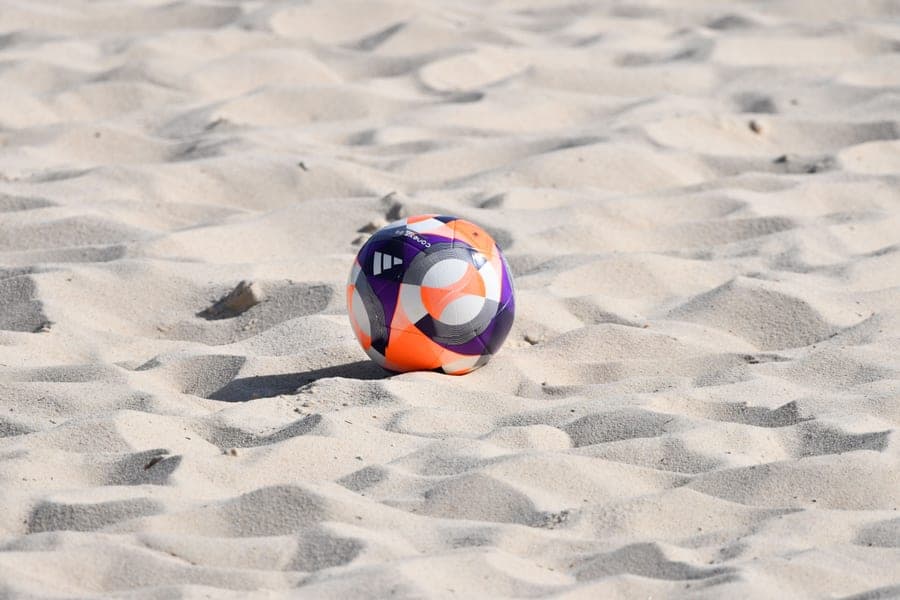
adidas
adidas Starlancer Club
The sensible default youth ball — right size range, right price, air stays in.
Select
Select Numero 10
Worth the money from about U12 upward, and a waste of it before then.
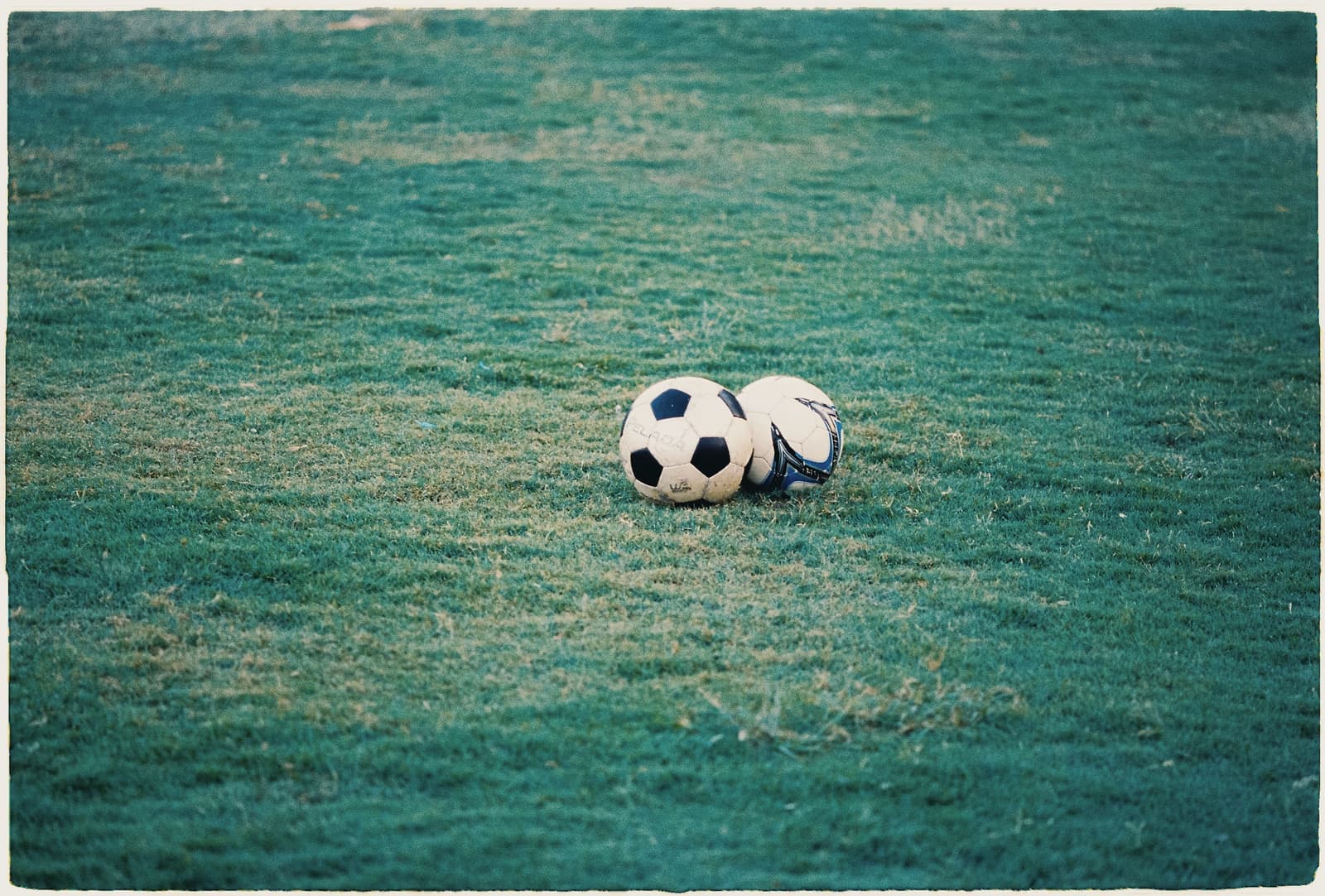
Mikasa
Mikasa Serious Soccer Ball
A good value competitive training ball if you can find it in the size you need.
Photos are licensed representative stock images, not the exact models.
This is where ball quality starts mattering
Two reasons the size 5 purchase deserves more thought than any previous ball.
First, it is permanent. Every earlier ball was outgrown; this one is not, so a good ball has years to earn its price rather than months.
Second, the player can now tell the difference. A U13 who strikes a ball cleanly and repeatedly will notice inconsistency in how a machine-stitched rec ball flies, in a way a nine-year-old genuinely cannot. That is the crossover point where match-ball construction stops being marketing.
The caveat, though: a match ball's advantage is flight consistency, and consistency is exactly what a winter in a hedge destroys. Buy a match ball for matches and a cheap one for the yard.
One thing that does not change
Inflation. Check the pressure range printed next to the valve and inflate to the middle of it. A size 5 holds more air and so loses pressure more noticeably as it ages — check monthly. A properly inflated ball barely dents under firm thumb pressure.
Common questions
What size soccer ball does a 12 year old use?
Size 4. AYSO's standards keep the size 4 through the 12U division, with size 5 starting at 14U. This is the most commonly mis-bought ball size — a lot of parents assume a twelve-year-old has moved up, and they usually have not.
When do you switch from size 4 to size 5 soccer ball?
At U13, or 14U depending on the organization. It is the last ball-size change there is. Getting a size 5 into the yard in the last few months of U12 is worth doing, so the strike adjustment happens at home rather than in their first 11v11 game.
How much heavier is a size 5 than a size 4 soccer ball?
AYSO lists the size 4 at 12 to 14 ounces and the size 5 at 14 to 16 ounces — so at the top of each range, a size 5 is roughly a third heavier. That shows up as a shorter driven ball, more impact when heading, and more work needed through a long pass.
Can a 13 year old use a size 4 ball?
For practice, yes — plenty of players and coaches use a size 4 for close-control work because the smaller target forces cleaner contact. For matches, no: U13 and up play with a size 5, and training only on a size 4 leaves the strike feeling different when they switch back.
Is size 5 the same as an adult soccer ball?
Yes. Size 5 is the standard adult and professional ball size, which is why U13 is the last size change there is. That permanence is the main argument for spending more on this one than on any previous ball.
Sources
- AYSO — Size of Ball and Field by Age Division — Official ball sizes, circumference and weight ranges, and field dimensions by age division. Used for every ball-size and field-size figure on this site.
- US Youth Soccer small-sided playing formats — Player counts, game lengths and format progression (4v4, 7v7, 9v9, 11v11) by age group.
Read next
- Best size 5 soccer ballsSize 5 picks for U13 upward, including budget options, and why quality finally justifies itself here.
- Best size 4 soccer ballsSize 4 picks for U9 through U12, and the point where a match-quality ball starts earning its money.
- Size 3 vs size 4 soccer ballThe U9 cutoff, what changes at the transition, and when to start practicing with the bigger ball.
- U11–U12: nine-a-side, and the travel questionAges 10 to 12. Size 4 still, 9v9 format, and the level where travel-club gear diverges sharply from rec.
- U13 and up: size 5, full pitch, adult sizingAge 13 and up. Size 5 ball, 11v11 on a full pitch, and the crossover into adult sizing.
- How to choose a soccer ball for your kidThree checks in order — size, bladder, where it lives — and what you can safely ignore below U12.