Balls
Soccer ball diameter by size
Every rule book specifies circumference. Diameter is arithmetic — here it is, done.
By Ryder M. · Published October 17, 2026
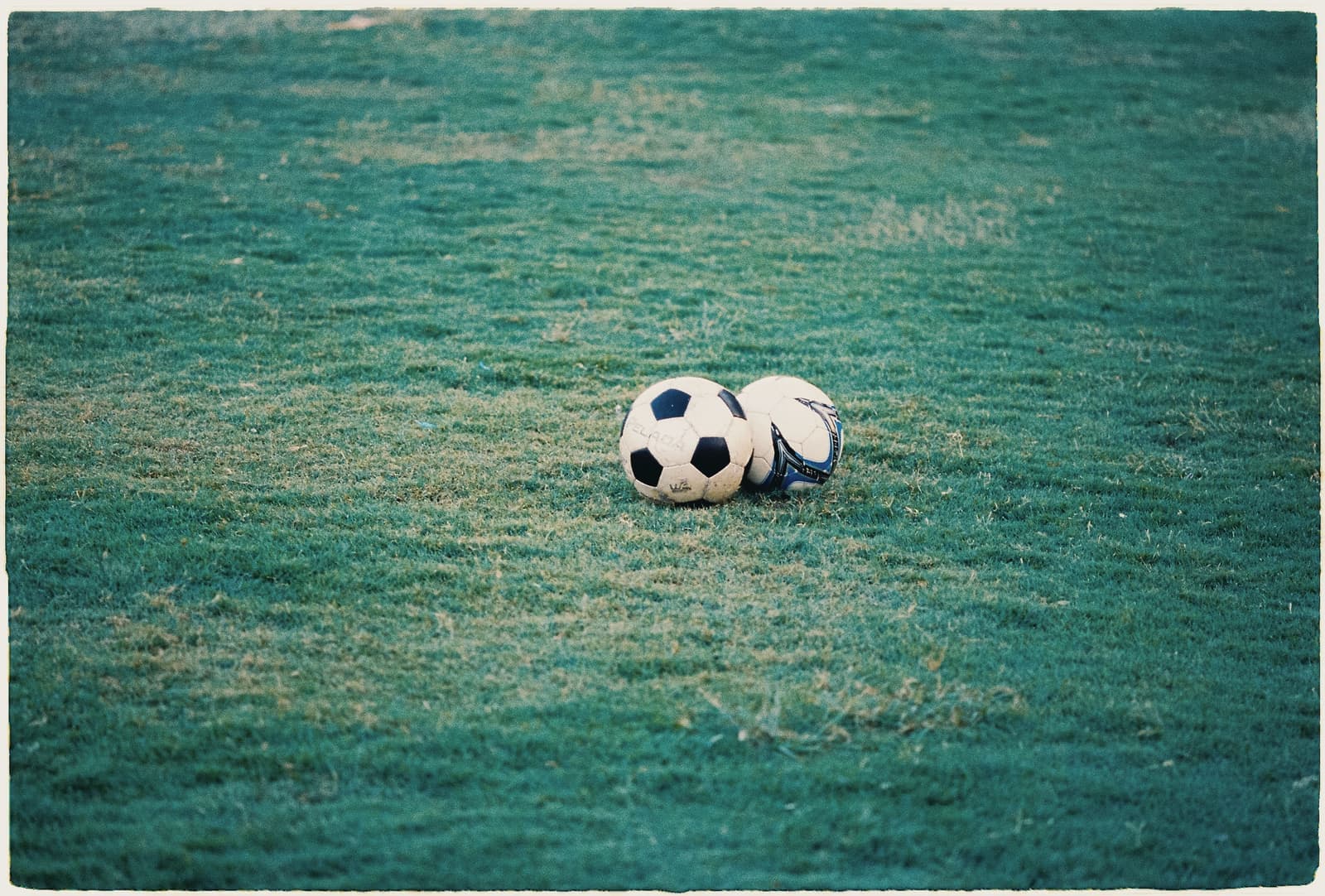
The short answer
| Size | Circumference (published) | Diameter (derived) |
|---|---|---|
| Size 5 | 68-70 cm / 27-28 in | 21.6-22.3 cm / 8.5-8.8 in |
| Size 4 | 25.0-26.5 in | 20.2-21.4 cm / 8.0-8.4 in |
| Size 3 | 23.0-25.0 in | 18.6-20.2 cm / 7.3-8.0 in |
| Size 1 (mini) | roughly 18-20 in | 14.6-16.2 cm / 5.7-6.4 in |
| Futsal (junior/senior) | 62-64 cm | 19.7-20.4 cm / 7.8-8.0 in |
A full-size soccer ball is about 8.5 to 8.8 inches across, or 21.6 to 22.3 cm. That is the answer, and the reason it takes a page to give is that no governing body publishes it. IFAB's Law 2 specifies a size 5 ball by circumference — between 68 cm and 70 cm — along with its weight and its pressure. Diameter never appears, so every diameter figure you find anywhere, including on this page, is circumference divided by pi.
Which is fine, and worth saying out loud, because it explains why different sites quote slightly different numbers. They are rounding the same division differently. If you need a figure for a school project, a storage rack or a goal-mouth calculation, the derived range above is as exact as the underlying specification allows.
Where the circumference figures come from
Two sources, and they cover different sizes.
- IFAB's Law 2 covers the size 5 only: circumference between 68 cm and 70 cm, weight between 410 g and 450 g at the start of the match, and pressure equal to 0.6 to 1.1 atmosphere at sea level — which the Law itself states as 8.5 to 15.6 lbs per square inch.
- AYSO's published size table covers the youth sizes by age division: size 3 at 23.0 to 25.0 inches circumference and 10 to 12 ounces, size 4 at 25.0 to 26.5 inches and 12 to 14 ounces, size 5 at 26.5 to 28.0 inches and 14 to 16 ounces.
- The FA's Futsal Law 2 specifies futsal separately and more tightly: circumference not less than 62 cm and not more than 64 cm, weight 400 to 440 g, and a controlled first rebound of 50 to 65 cm when dropped from 2 m.
The size 5 ranges differ slightly between sources: Law 2's 68-70 cm is 26.8-27.6 inches, while AYSO publishes 26.5-28.0 inches for its 14U and older divisions. Both are real; Law 2 is the match specification and AYSO's is the wider band a youth league will accept. The derived diameters above use Law 2 for size 5 because that is the tighter, official figure.
The full chart, with the age each size belongs to
| Size | Ages / divisions | Circumference | Weight | Diameter (derived) |
|---|---|---|---|---|
| Size 1 | Skills and mini ball, any age | roughly 18-20 in | roughly 7-9 oz | 5.7-6.4 in |
| Size 3 | U8 and below | 23.0-25.0 in | 10-12 oz | 7.3-8.0 in |
| Size 4 | U9 through U12 | 25.0-26.5 in | 12-14 oz | 8.0-8.4 in |
| Size 5 | U13 and up, and adult | 68-70 cm (Law 2) | 410-450 g | 8.5-8.8 in |
| Futsal | Indoor futsal, all ages | 62-64 cm | 400-440 g | 7.8-8.0 in |
Two things in that table surprise people. The first is how small the jump is: a size 4 and a size 5 are less than half an inch apart in diameter, which is why the change feels like a weight change rather than a size change — up to four ounces, or roughly a third heavier at the top of each range. Size 4 vs size 5 soccer ball covers that transition in full.
The second is where the futsal ball sits. By diameter it lands between a size 3 and a size 4, but it weighs almost as much as a size 5 — which is exactly the point. A futsal ball is heavy for its size and built with a damped bounce so it behaves on a hard floor. Futsal ball vs soccer ball has the side-by-side.
A ball in each size, if that is what you actually came for
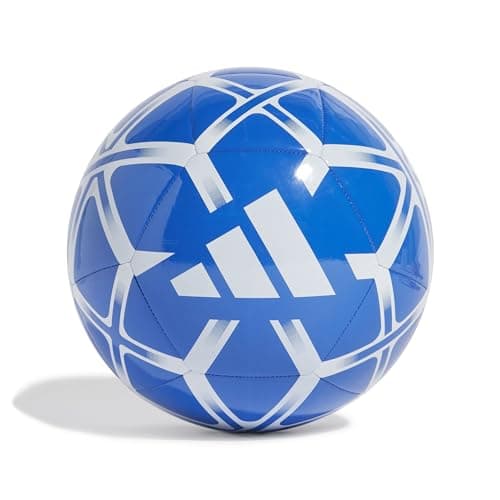
adidas
adidas Starlancer Club
The sensible default youth ball — right size range, right price, air stays in.
$18.00View on Amazon#ad — we may earn a commission · price as of October 17, 2026
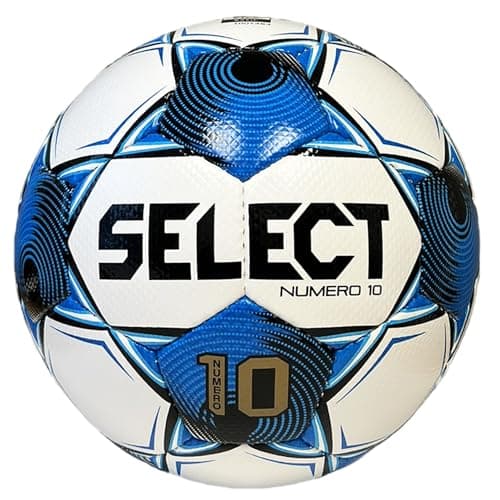
Select
Select Numero 10
Worth the money from about U12 upward, and a waste of it before then.
$48.09$53.45−10%View on Amazon#ad — we may earn a commission · price as of October 17, 2026
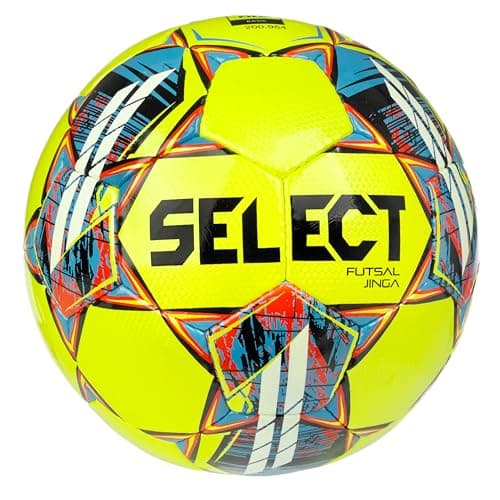
Select
Select Jinga Futsal Ball (Junior)
The right ball for a real indoor or futsal season, and the Junior size means a younger player is not handed an adult ball.
$45.00View on Amazon#ad — we may earn a commission · price as of October 17, 2026
Product photos come from each item’s current Amazon listing.
How to check a ball you already own
Measure the circumference, not the diameter. A tape measure around the widest part of the ball is a measurement you can actually take; measuring across a sphere by eye is not. Wrap the tape around the ball through two seams, keep it in one plane, and read the number — then divide by 3.14 if you want the diameter.
One caveat that matters more than the measurement: a soft ball reads small. Pressure changes the circumference, which is why Law 2 specifies the pressure alongside the size and why a ball should be checked at its stated inflation before anyone concludes it is the wrong size. A pen-style gauge reads 0 to 20 psi and is the cheapest way to settle it — soccer ball PSI chart by size has the target figures, and how to inflate a soccer ball covers doing it without wrecking the valve.
The size is also usually printed on the ball itself, next to the valve or on a panel. Checking the print beats measuring in almost every case — the reason to measure is a ball with the print worn off, or a suspicion that a ball sold as one size is actually another.
Why the official documents use circumference
Because it is the measurement you can take on a real ball without crushing it. A diameter requires calipers and a rigid object; a circumference requires a tape and a sphere. FIFA's own certification makes the same choice: of the seven laboratory tests every certified ball must pass, one is circumference — alongside weight, roundness, bounce, water absorption, loss of pressure, and shape and size retention. Diameter is not among them.
Roundness being a separate test is the other reason diameter is an awkward spec. A ball is not a perfect sphere, and a certified ball's roundness is checked precisely because it varies. A single diameter figure implies a precision the object does not have, while a circumference range tolerates it. What the FIFA quality marks mean covers how the three marks differ.
The practical version
If you are buying rather than calculating, diameter is not the number to shop on — the printed size is. Size 3 through U8, size 4 from U9 through U12, size 5 from U13, with the league's own rules overriding all of it if they say otherwise. How to choose a soccer ball is the buying guide, and the ball hub carries the full size-by-age chart with the picks at each size.
If you are calculating — for a storage bin, a shelf, a goal-mouth drawing or a homework question — use 22 cm or 8.7 inches for a size 5 and you will be within a couple of millimeters of any ball you meet. For a size 4 use 21 cm, and for a size 3 use 19.5 cm. A size 1 skills ball is about 15 cm, and Select sells its size 1 as a mini ball rather than a match ball, which is the right way to think about it.
Common questions
What is the diameter of a size 5 soccer ball?
About 21.6 to 22.3 cm, or 8.5 to 8.8 inches. No governing body publishes a diameter — IFAB's Law 2 specifies a circumference between 68 cm and 70 cm, and the diameter is that divided by pi. If you need a single working figure, 22 cm or 8.7 inches is within a couple of millimeters of any size 5 ball.
What is the diameter of a size 4 soccer ball?
About 20.2 to 21.4 cm, or 8.0 to 8.4 inches, derived from AYSO's published circumference range of 25.0 to 26.5 inches for its 10U and 12U divisions. A size 4 and a size 5 are less than half an inch apart in diameter, which is why the step up feels like a weight change rather than a size change.
What is the diameter of a size 3 soccer ball?
About 18.6 to 20.2 cm, or 7.3 to 8.0 inches, from AYSO's published size 3 circumference of 23.0 to 25.0 inches. Size 3 is the match ball for U8 and below. A size 1 skills or mini ball is much smaller again, roughly 5.7 to 6.4 inches across.
Why do rule books give circumference instead of diameter?
Because circumference is the measurement you can actually take on a ball — a tape around the widest part, in one plane. A diameter needs calipers and a rigid object. FIFA's own certification makes the same choice: circumference is one of its seven laboratory tests and diameter is not. Roundness is tested separately, which is the other reason a single diameter figure overstates how spherical a ball really is.
How do I measure a soccer ball at home?
Wrap a tape measure around the widest part of the ball, keeping it in a single plane, and read the circumference. Divide by 3.14 for the diameter. Inflate the ball to its stated pressure first, because a soft ball measures small — that is why Law 2 specifies pressure alongside size. Easier still: the size is normally printed on the ball near the valve.
Is a futsal ball the same diameter as a size 4?
Close, but it is a different specification. The FA's Futsal Law 2 sets a circumference of 62 to 64 cm, which works out at 7.8 to 8.0 inches across — just under a size 4. The weight is the real difference: 400 to 440 g, almost as heavy as a size 5, with a controlled low bounce of 50 to 65 cm when dropped from 2 m.
Sources
- IFAB Laws of the Game — Law 2, The Ball — The official size 5 specification quoted on this site: circumference between 68 cm (27 in) and 70 cm (28 in), weight between 410 g (14 oz) and 450 g (16 oz) at the start of the match, and pressure equal to 0.6-1.1 atmosphere at sea level, which the Law itself states as 8.5-15.6 lbs per square inch.
- AYSO — Size of Ball and Field by Age Division — Official ball sizes, circumference and weight ranges, and field dimensions by age division. Used for every ball-size and field-size figure on this site.
- The FA — Futsal Laws of the Game, Law 2: The Ball — The futsal ball specification quoted on this site: circumference not more than 64 cm and not less than 62 cm, weight 400-440 g at the start of the match, pressure equal to 0.6-0.9 atmosphere at sea level, and a first rebound of not less than 50 cm and not more than 65 cm when dropped from 2 m.
- FIFA — the quality marks for footballs — The three FIFA quality marks (FIFA QUALITY PRO, FIFA QUALITY, FIFA BASIC), the seven laboratory tests every certified ball must pass — weight, circumference, roundness, bounce, water absorption, loss of pressure, and shape and size retention — and the fact that the Pro mark means passing those same seven tests under more demanding conditions rather than passing extra tests.
- Select Sport — soccer balls — Select's current ball range, used to confirm that its outdoor balls start at size 3 and that its size 1 offering is a mini ball sold alongside the skills range rather than as a match ball.
- Kwik Goal — Pressure Gauge (PG-3) — Kwik Goal's specification for the PG-3: a pen-style metal gauge reading 0-20 PSI, sold for checking pressure rather than inflating.
Read next
- Soccer ball PSI by sizeThe official pressure range for a size 5, why sizes 3 and 4 do not have one, and how to inflate to a number instead of guessing.
- Size 4 vs size 5 soccer ballThe U13 cutoff, the real weight difference, and how to prepare for the last ball-size change there is.
- Size 3 vs size 4 soccer ballThe U9 cutoff, what changes at the transition, and when to start practicing with the bigger ball.
- Size 1 vs size 3 soccer ballWhy no age division plays with a size 1, what a mini ball is genuinely good for, and which size a young player needs.
- Futsal ball vs soccer ballThe official circumference, weight, pressure and bounce specs side by side, plus which ball a winter indoor season needs.
- How to choose a soccer ball for your kidThree checks in order — size, bladder, where it lives — and what you can safely ignore below U12.
- How to inflate a soccer ballStep by step, the official pressure range, and the thumb test for when there is no gauge in the bag.
- How long do soccer balls last?The four failure modes that end a youth soccer ball, how to tell a finished ball from a flat one, and the storage habit that doubles its life.