Heads up: we earn a commission if you buy through our links, at no extra cost to you. It never changes which product we recommend — here’s how that works.
The short answer
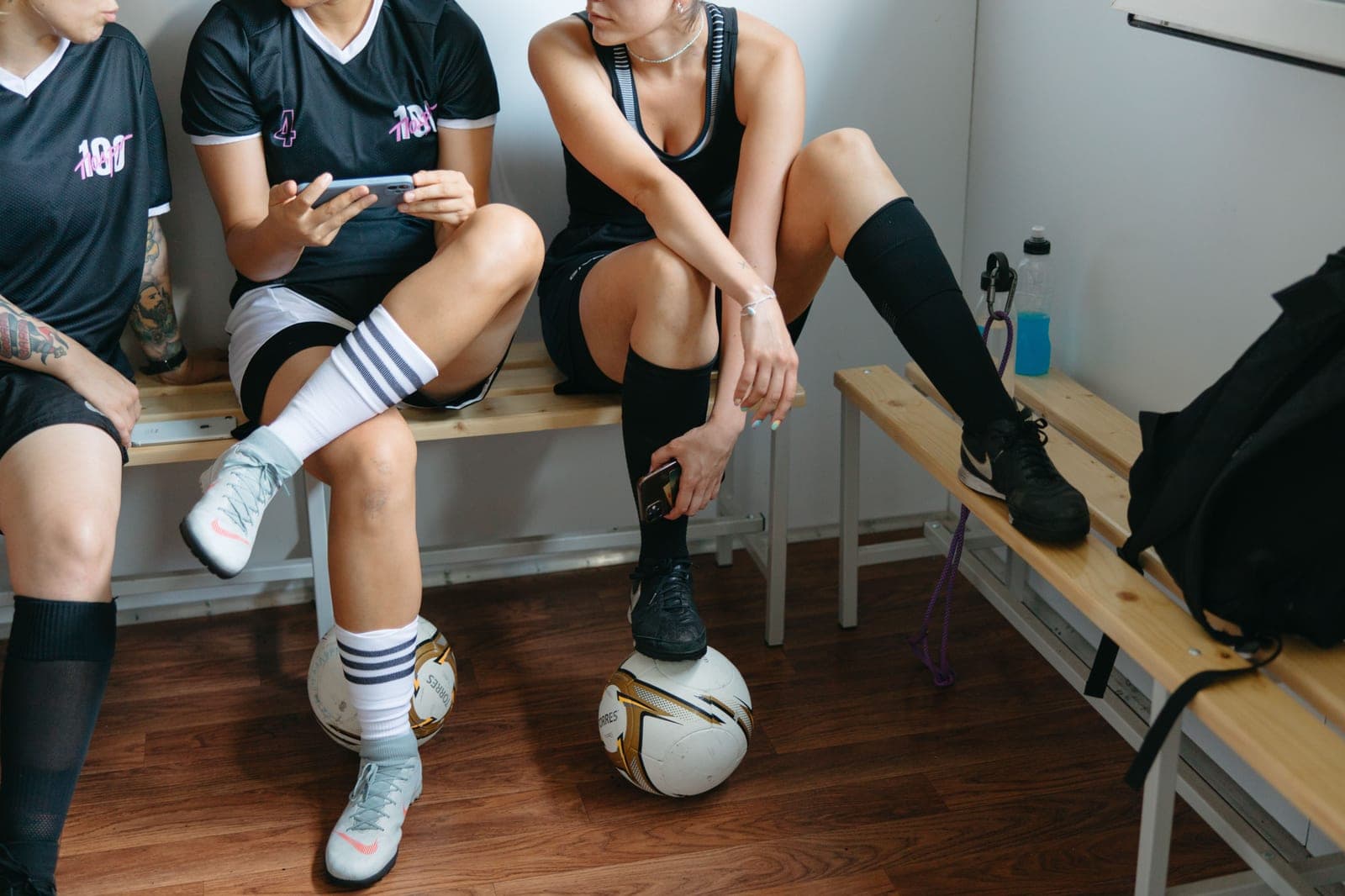
A soccer sock is not decoration: with slip-in shin guards it is the only thing holding the guard in place, which makes sock choice a protection decision. Buy over-the-calf with real compression through the calf, and buy three pairs — they come off soaked and take a day to dry.
Socks are the least researched purchase in youth soccer and the source of a surprising amount of weekly friction. The guards that keep sliding round the leg, the blisters nobody can explain, the Saturday morning with nothing clean — all sock problems, all cheap to fix.
Start here
Pick by your kid’s level
The right answer changes with the level, not just the shoe size. Find your kid’s bracket and start there.
A genuine performance product for a committed U12+ player: the grip reduces foot movement inside the cleat, which causes blisters and lost touches. Hard to justify below that.
Tap any row to jump to the full write-up. We do not show prices because we do not hold live pricing — the button opens the current Amazon listing so you see today’s number rather than last month’s.
Product photos are licensed representative stock images, not photographs of the exact model.
Why the sock holds the shin guard
If your kid wears slip-in guards, there is no strap. The guard sits against the shin and the sock's compression is the only thing keeping it there.
Two failure modes follow, and both get blamed on the guard. A thin recreational sock never had enough compression in the first place. And an over-the-calf sock washed thirty times has a cuff that no longer grips, even though it looks fine.
So if guards have started slipping after a season of being fine, replace the socks before you replace anything else. It is the cheapest possible fix and it works more often than not. How to stop shin guards slipping works through the rest.
Over-the-calf, not crew
Two reasons, one of which is a rule.
The laws of the game require shin guards to be entirely covered by the socks in organized play. A crew sock cannot do that.
Compression through the calf is what holds a slip-in guard, and a crew sock ends below where that matters.
Crew socks are fine for a kickabout in the yard. For anything organized, over-the-calf.
How many pairs?
Three, if there are two sessions a week plus a game. Soccer socks come off soaked and take a full day to dry properly, so two pairs means one is always damp.
They are cheap enough that three is not an extravagance, and it removes an entire category of Saturday-morning problem. For a travel player doing four or five sessions, four pairs.
Grip socks: worth it, or not?
Grip socks — thin inner socks with rubberized pads on both surfaces — are a genuine performance product rather than a gimmick. TRUsox describes its IN//EX technology as gripping on both the internal and external surfaces of the sock, to the foot and to the footwear.
What that does is reduce how much the foot slides inside the cleat, which is a real cause of blisters and of losing a first touch on a hard turn.
Worth it if
Not worth it if
U12+ and training several times a week
Playing once a week — a well-fitting sock in a well-fitting cleat does nearly as much
They play on turf, where in-shoe movement is worse
Budget is tight — these cost several times an ordinary sock
Scroll the table sideways on a narrow screen.
One practical note: grip socks are worn under the team sock, so they are an extra layer and an extra thing to lose. And the grip pads stiffen if tumble dried, so they need line drying. Are grip socks worth it goes into it properly.
Sizing
Soccer socks are sized by shoe size, not by age, and the bands are wide — check the packaging rather than buying by the label on the front. A sock that is too long in the foot lets the heel sit low, which bunches under the arch and causes exactly the blister you were trying to avoid.
Nike's Classic II runs slightly long in the foot, so take the smaller band if your kid is between two.
Washing them so they keep gripping
The elastic in the cuff is what holds the shin guard, and heat is what destroys elastic. Two habits genuinely extend the life:
Wash warm, not hot, and skip the fabric softener — it coats the fibers and reduces both grip and wicking.
Line dry rather than tumble dry. This is the big one. Tumble drying is the fastest way to turn a compression sock into a loose one.
Socks that have lost their grip are not worth keeping for games. Demote them to training and buy new ones for matches — the shin guard depends on them.
1. adidas
adidas Copa Zone Cushion V Over-the-Calf Socks
The safe default. If your kid wears slip-in shin guards, the grip through the calf is the reason to pick these.
Best for
The default match sock, U8+
Levels
U7–U8 rec · U9–U10 · U11–U12 · U13+ travel & club
Type / surface
Over-the-calf
How it fits
Sock size is keyed to shoe size — check the band on the packaging rather than buying by age.
What we like
The long-running default for a reason: the cushioning holds up through a season of washing
Tight enough through the calf to actually hold a slip-in shin guard in place
Sold in youth sizes, which a lot of adult-focused sock lines are not
Where it falls short
Hotter than a thin sock, which is a real issue in a summer league
The cuff loses elasticity after a season and starts sliding down
Manufacturer’s published specs
Cushioned footbed with zoned support
Over-the-calf length
Youth and adult sizing
These are the manufacturer’s own claims, not measurements we took.
They genuinely reduce how much the foot slides inside the cleat, which is a real cause of blisters and mis-hit first touches. Whether they are worth the money depends on volume: for a player training several times a week from about U12, yes. For a kid playing once a week, a well-fitting ordinary sock in a well-fitting cleat does nearly as much.
How many pairs of soccer socks does a kid need?+
Three, if there are two sessions a week plus a game. Socks come off soaked and take a day to dry properly, so two pairs means one is always damp. For a travel player doing four or five sessions, four pairs.
Do soccer socks have to be over the calf?+
For organized play, effectively yes. The laws of the game require shin guards to be entirely covered by the socks, which a crew sock cannot do — and compression through the calf is what holds a slip-in guard in place. Crew socks are fine for a kickabout.
Why do my kid's shin guards keep slipping?+
Most often the sock. With slip-in guards the sock's compression is the only thing holding the guard, and a cuff that has lost its elasticity after a season of washing will let it migrate even though the sock looks fine. Replace the socks before replacing anything else.
How do you wash soccer socks so they keep their grip?+
Wash warm rather than hot, skip fabric softener — it coats the fibers and reduces both grip and wicking — and line dry rather than tumble drying. Heat destroys the elastic in the cuff, and that elastic is what holds the shin guard.
adidas — kids' soccer — Verified current availability of the adidas models named here, plus adidas's published material and construction claims.
Nike — kids' soccer cleats and shoes — Verified that each Nike model named on this page is currently sold, and the source for Nike's own published upper, plate and surface descriptions.