Goalkeeper
Goalie gloves with or without finger protection
One prevents a specific injury. The other feels better. Which matters depends on how much your kid plays in goal.
By Ryder M. · Published September 27, 2026
Heads up: we earn a commission if you buy through our links, at no extra cost to you. It never changes which product we recommend — here’s how that works.
The short answer
| With finger protection | Without | |
|---|---|---|
| Prevents | Hyperextended and jammed fingers | Nothing specific |
| Feel | Stiffer — some keepers dislike it | More natural |
| Cost | Higher | Lower |
| Right for | A weekly keeper, or one who has been injured | A rotation keeper, or U8 and under |
This is the one genuine decision in youth goalkeeper gloves, and it is usually presented as a straightforward safety upgrade. It is not quite that — there is a real cost on the other side, and for a lot of youth keepers the answer is honestly no.
What finger protection does
Plastic or composite spines run up the back of each finger, limiting how far it can bend backwards. adidas markets it as Fingersave and reinforces the fingers with spines; Reusch calls its version Finger Support and states that it reduces the risk of injury without compromising mobility and flexibility.
The injury it addresses is specific: a finger hyperextended or jammed by taking a shot on the fingertips rather than in the palm. That is the most common goalkeeping injury at youth level, and it is a genuinely unpleasant one — it recurs, and it takes weeks.
What it costs
Two things, and both are real:
- Stiffness. Spines make the glove less flexible, and some keepers say it changes how a catch feels. This is subjective and it is worth taking a kid's complaint about it seriously rather than overruling them.
- Money. Finger-protection gloves cost meaningfully more, on a hand that will be a different size next year.
Neither is a reason to avoid them for a keeper who needs them. Both are reasons not to buy them by default.
Choose finger protection if…
- They play in goal every week. Exposure is what turns a possible injury into a likely one.
- They have already jammed or hyperextended a finger. Once it has happened, it tends to recur — this is the single strongest reason on the page.
- They face real shot power, which from about U11 upward they do.
- They are nervous about their hands. Confidence matters in goal more than in any other position, and a keeper who trusts their gloves commits to the ball.
See the finger protection picks.
Choose without if…
- They rotate into goal for a quarter or a half. Not enough exposure for the trade to pay off.
- They are U8 or younger. Shot power at that age is not what causes hyperextension.
- They tried finger protection and disliked it. A glove they resent is worse than no protection, because they will play tentatively in it.
- Budget is genuinely tight and the choice is between a well-fitting basic glove and a badly-fitting protective one. Fit wins.
See the budget picks.
One of each
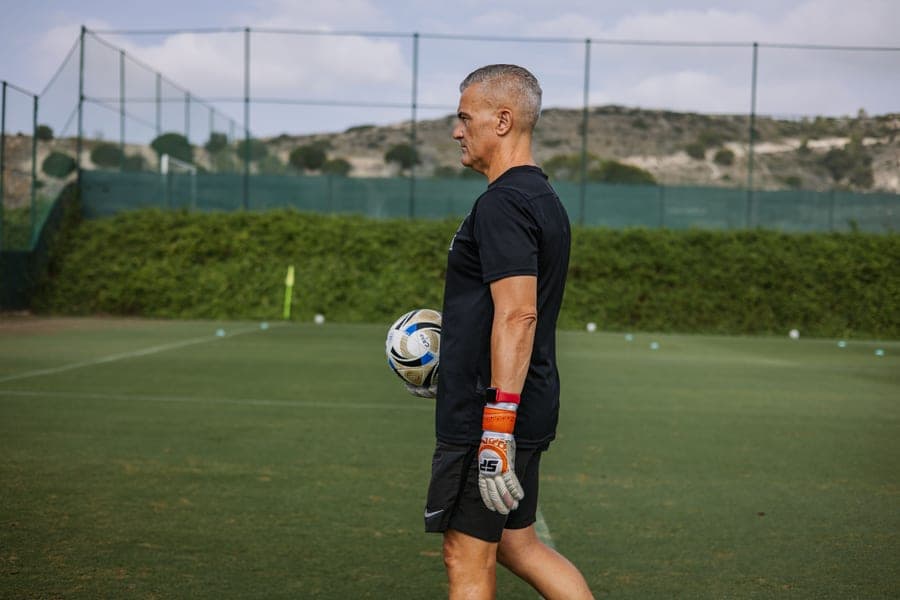
Reusch
Reusch Attrakt Grip Evolution Finger Support Junior
The best-fitting youth keeper glove here, and the right pick for a kid who genuinely plays in goal every week.
adidas
adidas Youth Predator Match Fingersave Goalkeeper Gloves
The right choice specifically when finger injuries are the concern — and a slightly stiff glove is the price of that.
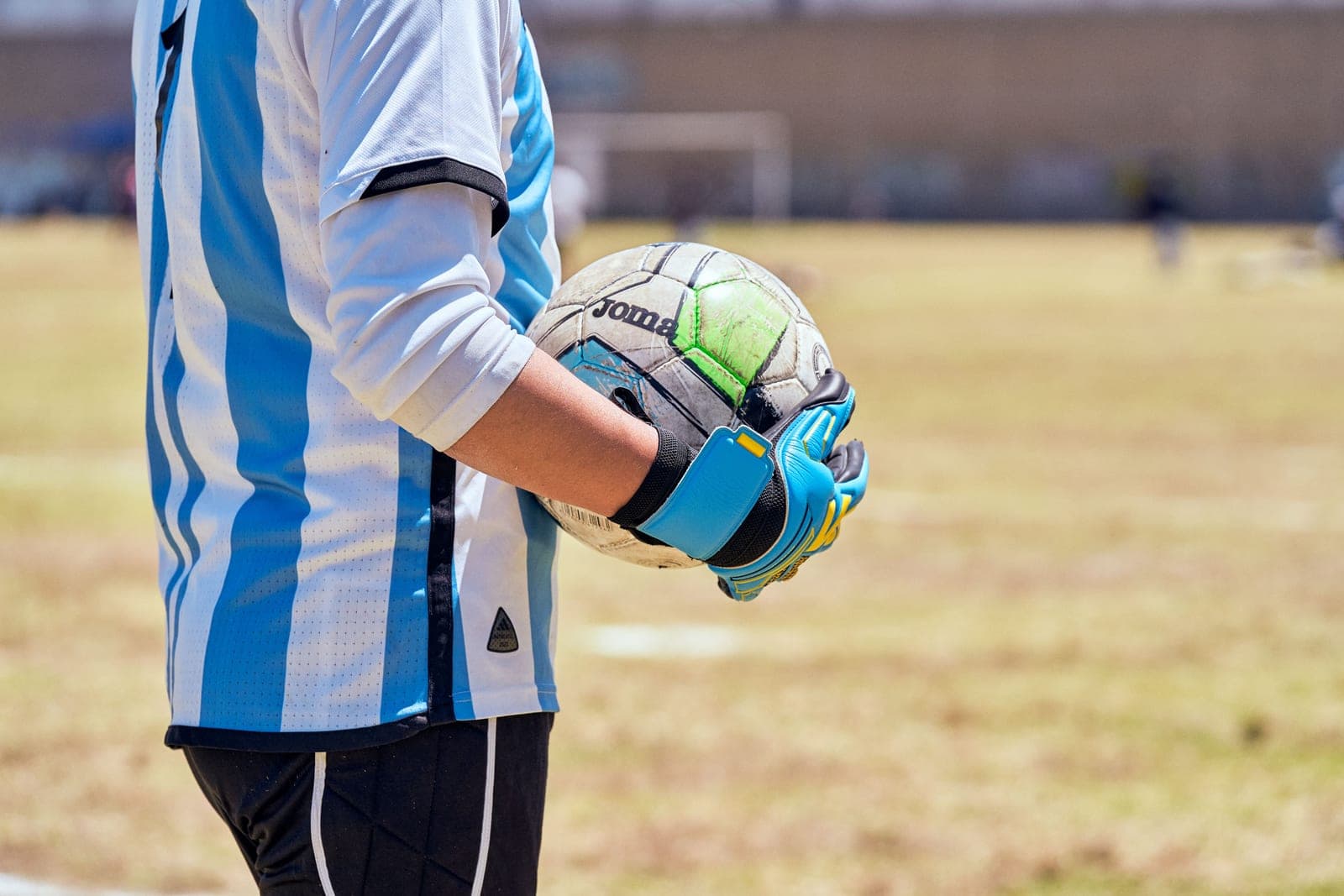
Nike
Nike Jr. Match Goalkeeper Gloves
The sensible glove for a rotating rec keeper, and not enough glove for a kid who plays the position properly.
Photos are licensed representative stock images, not the exact models.
Removable spines: the best of both?
Some finger-protection gloves have removable spines, which sounds like it resolves the whole argument. Two honest caveats.
First, a glove designed around spines is cut and constructed differently from one that is not, so removing them gives you a glove with the stiffness reduced rather than a glove that feels like a non-protective model.
Second, spines removed and left in a gear bag do not go back in, in our experience of how gear bags work. If you buy removable, expect the decision to be made once.
Still, for a kid who is unsure, it is a reasonable way to try both without buying twice.
What matters more than either option
Fit. A glove that does not let a keeper close their hand is worse than either choice above, and it is a far more common problem than inadequate finger protection.
Most junior keeper gloves are adult gloves scaled down, so the finger stalls end up the wrong length relative to the palm width and the glove bunches. Reusch's Attrakt range is built on a genuine youth last, which is why it appears at the top of both our glove roundups regardless of the finger-protection question.
Measure across the palm in inches, add one, and check they can make a fist. The size chart has the detail.
And the thing that actually prevents most injuries
Technique, which no glove supplies. A keeper who catches with the ball in the palms and the thumbs together is far less likely to take a shot on the fingertips than one reaching with splayed fingers.
That is a coaching matter rather than a purchase, and it is worth saying because it would be dishonest to present finger spines as the whole answer to an injury that is largely about how a young keeper is taught to catch.
Common questions
Do kids need finger protection in goalie gloves?
A kid who plays in goal every week, or who has already jammed or hyperextended a finger, yes. A kid who rotates in for a quarter, no — the spines stiffen the glove for a benefit they never accumulate enough exposure to need, and the stiffness is noticeable immediately.
What does Fingersave actually prevent?
A finger hyperextended or jammed by taking a shot on the fingertips rather than in the palm, which is the most common goalkeeping injury at youth level. The spines limit how far the finger can bend backwards. adidas calls it Fingersave; Reusch's version is Finger Support.
Do finger protection gloves feel worse?
Stiffer, and whether that is worse is individual. Some keepers barely notice; others say it changes how a catch feels. It is worth taking a kid's complaint seriously rather than insisting — a glove they play tentatively in is not protecting them well.
Are removable finger spines a good compromise?
A reasonable way to try both without buying twice, with two caveats. A glove designed around spines is cut differently, so removing them gives a less stiff protective glove rather than something that feels like a non-protective model. And spines removed once rarely go back in.
What matters more than finger protection in a goalie glove?
Fit. A glove that does not let a keeper close their hand is worse than either option, and it is far more common — most junior gloves are adult gloves scaled down, so the finger stalls are the wrong length relative to the palm. Measure the palm, add an inch, and check they can make a fist.
Sources
- Reusch — Attrakt goalkeeper gloves — Reusch's own description of the Finger Support system, AirVent ventilation and its youth sizing range.
- Dick's Sporting Goods — youth goalkeeper gloves — Verified current availability of the youth goalkeeper gloves named here and the manufacturers' published finger-protection descriptions.
- adidas — kids' soccer — Verified current availability of the adidas models named here, plus adidas's published material and construction claims.
Read next
- Best youth goalie gloves with finger protectionFinger-protection picks for a regular keeper, what the spines do, and how to size gloves properly.
- Best budget youth goalie glovesCheap glove picks for a rotating rec keeper, and exactly what the budget tier gives up.
- Youth goalie glove size chartGlove sizes by age and palm measurement, plus the fist test that tells you whether the fit works.
- Why do soccer goalies wear gloves?The three reasons keepers wear gloves, what a young keeper needs, and what the position actually asks.
- How to wash goalie glovesThe washing and drying routine that extends latex grip, and the one mistake that cracks a palm.
- U11–U12: nine-a-side, and the travel questionAges 10 to 12. Size 4 still, 9v9 format, and the level where travel-club gear diverges sharply from rec.