Goalkeeper
Why do soccer goalies wear gloves?
Three reasons, and grip is by far the biggest.
By Ryder M. · Published September 27, 2026
The short answer
- Grip, by far the biggest reason — the latex palm holds a wet ball far better than skin, which is the difference between a catch and a fumble.
- Protection, against a hard shot on the fingers and against the ground when diving.
- Padding across the palm, which takes some of the sting out of a shot — and matters for a young keeper's confidence.
This page is mostly for the parent whose kid has just been volunteered for goal and has no idea what the position involves. It is also useful if you have been asked to buy gloves and want to know what you are actually buying.
1. Grip, which is most of it
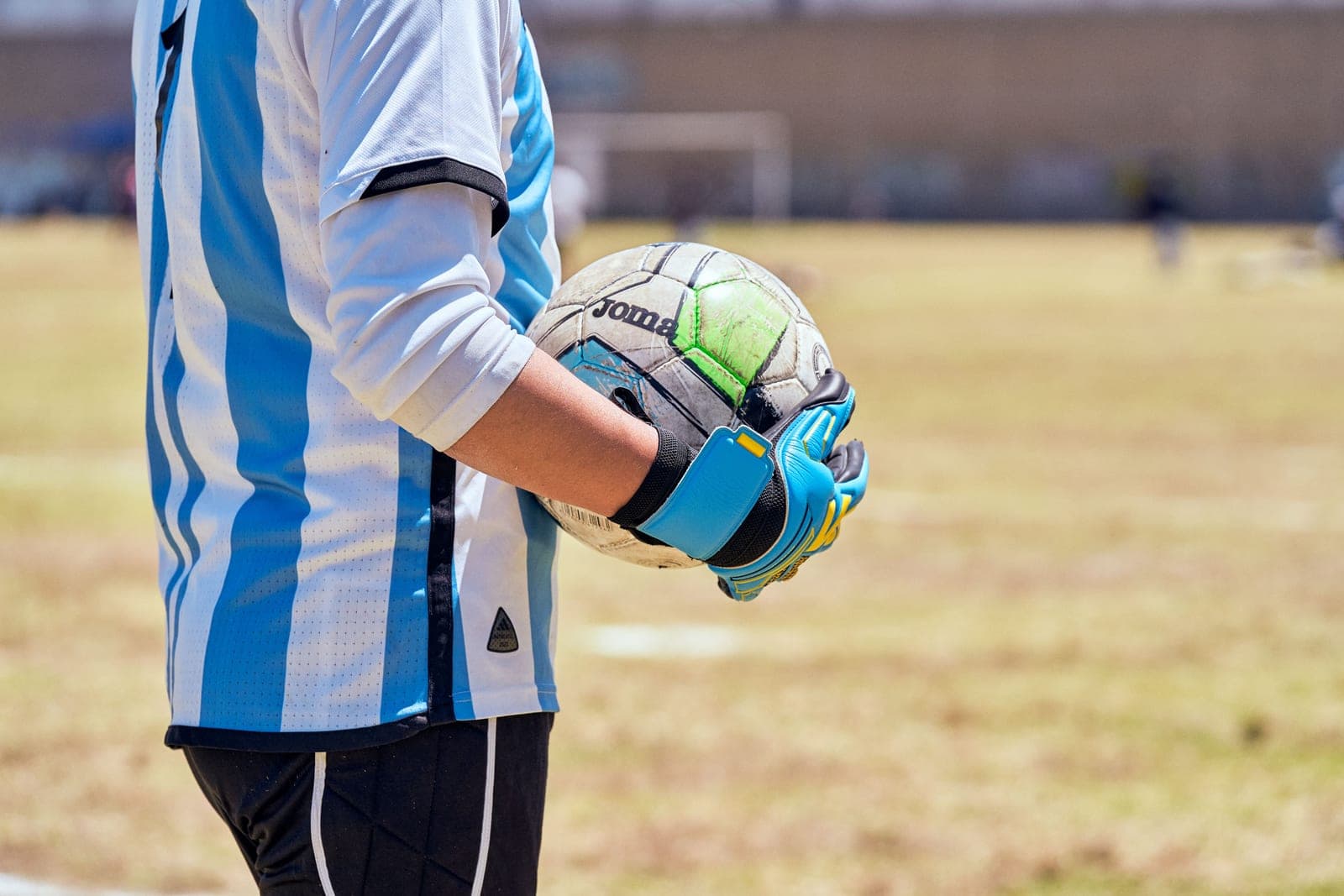
The palm of a keeper glove is soft latex, and soft latex is tacky in a way skin is not — particularly against a wet ball. On a rainy Saturday morning, a bare hand on a soaked size 4 ball is close to useless, and a latex palm holds it.
That is the whole reason keeper gloves exist, and it is why the palm is the part that wears out. It also explains a piece of advice that seems backwards: keepers keep their gloves slightly damp during play, because latex grips better damp than bone dry.
For a young keeper, the practical consequence is that grip quality is the thing worth having, and it degrades over a season. See how to wash goalie gloves.
2. Protection
Two distinct kinds, and only one of them needs an extra feature.
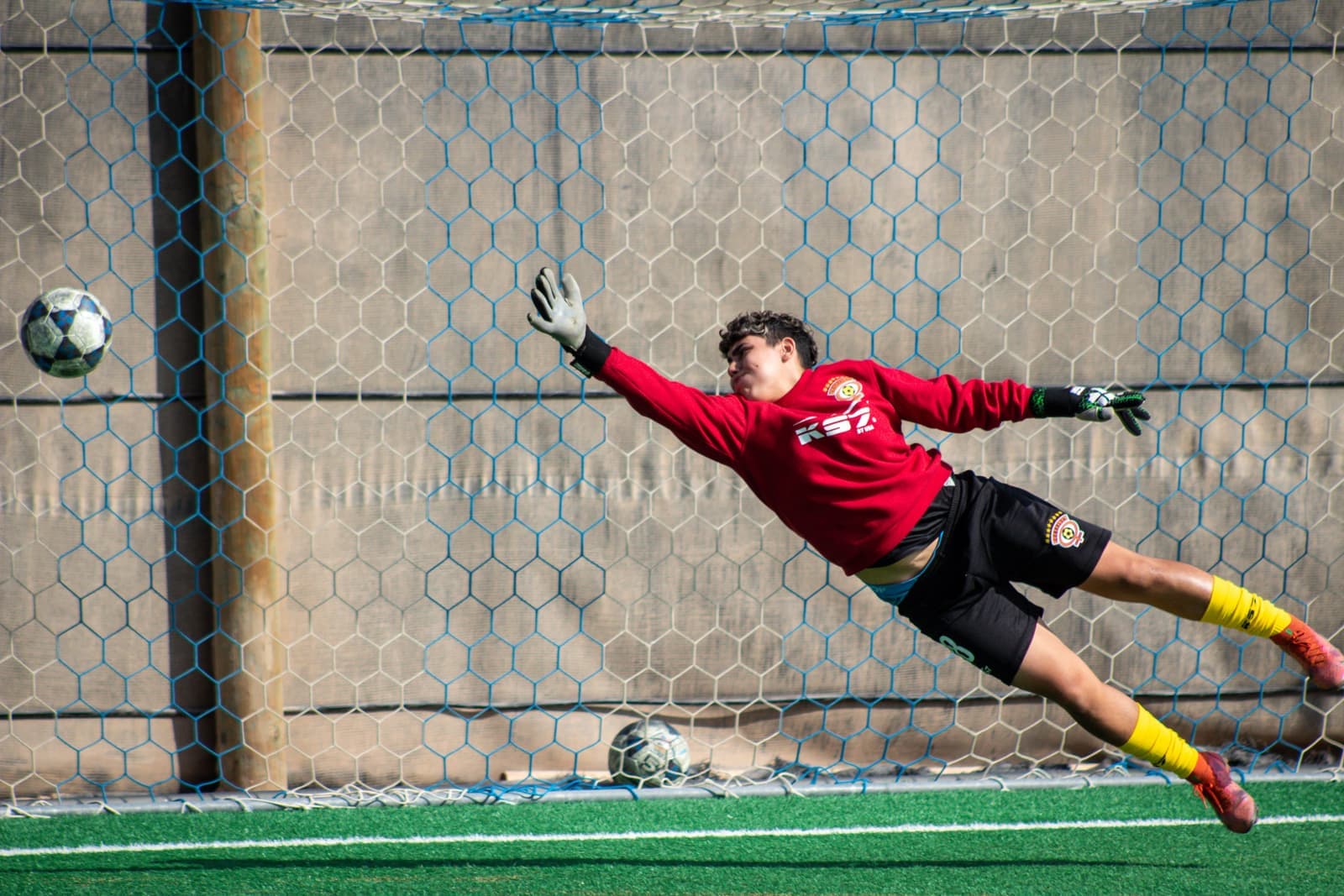
Against the ground. Keepers dive. The backs of the hands and the fingers take contact with grass, turf and occasionally gravel, and a glove is simply a layer between them. Every glove does this.
Against the ball. A shot taken on the fingertips rather than in the palm can hyperextend or jam a finger, which is the most common goalkeeping injury at youth level. Some gloves add spines up the back of the fingers to limit how far they bend backwards — adidas calls it Fingersave, Reusch calls it Finger Support.
Whether a kid needs that depends on how much they play in goal. The comparison page works through it.
3. Padding, and confidence
The latex and foam across the palm absorb some of the impact of a shot. In physical terms the effect is modest. In practical terms it matters more than it sounds, because a young keeper who expects a catch to hurt will flinch, and a keeper who flinches does not catch.
That is not a sentimental point. Confidence is a bigger determinant of whether a nine-year-old keeps their eyes open and hands together than any glove specification, and padding that makes catching feel manageable is doing real work.
Do young keepers actually need gloves?
In organized play, yes — most leagues expect a keeper to wear them, and in wet weather they are genuinely necessary rather than optional.
For a kid taking a turn in goal in a U8 rec game, a basic pair is completely sufficient. Grip and a little palm padding is all that is required, and finger spines are aimed at a shot power that does not exist at that age. See the budget picks.
Where to start, depending on how much they play in goal
Nike
Nike Jr. Match Goalkeeper Gloves
The sensible glove for a rotating rec keeper, and not enough glove for a kid who plays the position properly.
adidas
adidas Youth Predator Goalkeeper Gloves
A fine first glove to find out whether your kid actually wants to be a keeper.
Reusch
Reusch Attrakt Grip Evolution Finger Support Junior
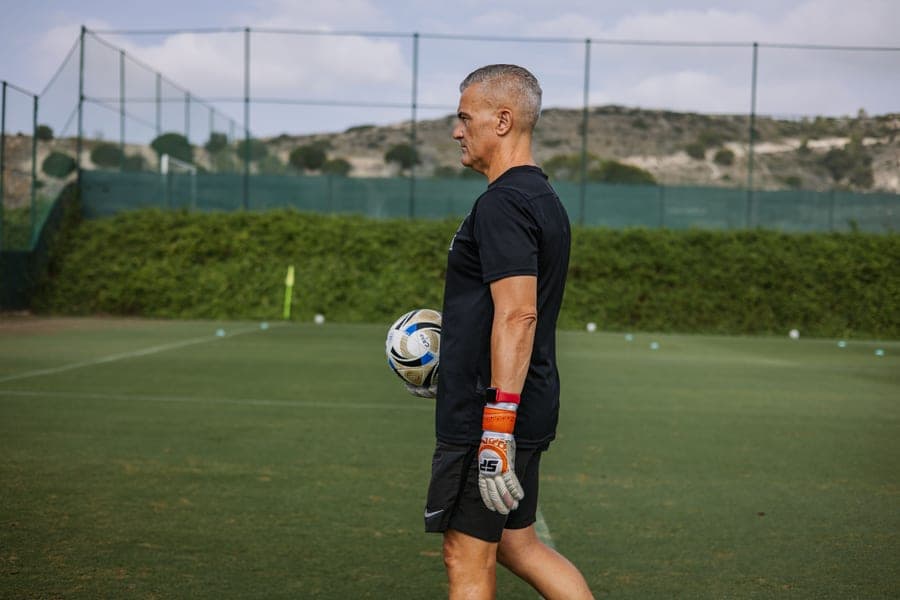
The best-fitting youth keeper glove here, and the right pick for a kid who genuinely plays in goal every week.
Photos are licensed representative stock images, not the exact models.
What the position asks of a young keeper
Worth knowing if your kid is about to try it, because the demands are different from every other position and it catches kids out.
- Long periods of nothing, then something sudden. Concentration is the hardest part at youth level, harder than any technique.
- Communicating, out loud, to teammates who are facing away. This is genuinely difficult for a quiet kid.
- Using their hands, which is a completely different skill from everything they have practiced.
- Being the last line. A mistake in goal is visible in a way a mistake in midfield is not, and that is a lot to carry at nine.
Which is why rotating every kid through goal is good practice in rec soccer: it spreads that load, and it tells you who actually wants it.
What else a keeper needs
Less than the catalogs suggest. From about U12, padded goalkeeper pants and a padded long-sleeve top are genuinely useful on hard ground, because diving repeatedly on a dry pitch is what stops kids wanting to dive. Below that, ordinary long training pants do the same job.
Everything else — specialist keeper socks, undershirts, arm sleeves — is optional and at youth level mostly cosmetic. A keeper still needs the standard kit: cleats, shin guards, socks. See the gear by level checklists for their age group.
Common questions
Why do soccer goalies wear gloves?
Three reasons. Grip, mainly — the latex palm holds a wet ball far better than skin, which is the difference between a catch and a fumble. Protection second, against a hard shot on the fingers and against the ground when diving. And palm padding takes some of the sting out of a shot, which matters for a young keeper's confidence.
Do young goalkeepers need special gloves?
They need gloves, and for a rotation keeper a basic pair is completely sufficient — grip and a little palm padding is all that is required. Finger-protection spines are aimed at a shot power that does not exist at U8, and they stiffen the glove for no benefit at that age.
Why do goalies wet their gloves?
Because latex grips better slightly damp than bone dry. Keepers splash or spray their palms before going in goal, and it genuinely improves grip while also reducing abrasion, since dry latex scuffs more readily against a dry ball. A small water bottle in the bag is enough.
What is the hardest part of playing goalkeeper for a kid?
Concentration, usually — long periods of nothing followed by something sudden, which is harder at youth level than any technique. Communicating out loud to teammates facing away is a close second, and being visibly the last line is a lot to carry at nine.
What gear does a youth goalkeeper need besides gloves?
The standard kit — cleats, shin guards, socks — plus padded keeper pants and a padded long-sleeve top from about U12 on hard ground, where diving repeatedly is what stops kids wanting to dive. Below that, ordinary long training pants do the same job. Everything else is largely cosmetic at youth level.
Sources
- Reusch — Attrakt goalkeeper gloves — Reusch's own description of the Finger Support system, AirVent ventilation and its youth sizing range.
- Dick's Sporting Goods — youth goalkeeper gloves — Verified current availability of the youth goalkeeper gloves named here and the manufacturers' published finger-protection descriptions.
- adidas — kids' soccer — Verified current availability of the adidas models named here, plus adidas's published material and construction claims.
- Nike — kids' soccer cleats and shoes — Verified that each Nike model named on this page is currently sold, and the source for Nike's own published upper, plate and surface descriptions.
Read next
- Best budget youth goalie glovesCheap glove picks for a rotating rec keeper, and exactly what the budget tier gives up.
- Best youth goalie gloves with finger protectionFinger-protection picks for a regular keeper, what the spines do, and how to size gloves properly.
- Youth goalie glove size chartGlove sizes by age and palm measurement, plus the fist test that tells you whether the fit works.
- How to wash goalie glovesThe washing and drying routine that extends latex grip, and the one mistake that cracks a palm.
- Best soccer rebounders for kidsRebounder picks by age and yard size, and why a rebounder often beats a goal as the first purchase.
- U9–U10: size 4, seven-a-side, and a goalkeeperAges 8 to 10. The ball goes up to size 4, the format goes to 7v7, and someone has to play in goal.