Goalkeeper
Do goalkeepers wear shin guards?
Yes, and they have to. The useful question is which ones, because the position wants something different.
By Ryder M. · Published October 17, 2026
The short answer
Yes — shin guards are compulsory for goalkeepers. Law 4 lists shinguards among the compulsory equipment for every player and makes no exemption for the keeper. They must be of suitable material and appropriate size and covered entirely by the socks, exactly as for a field player. What a keeper can reasonably choose is the style: a low-profile strapped or sleeve guard suits the position better than a bulky ankle-disc pair.
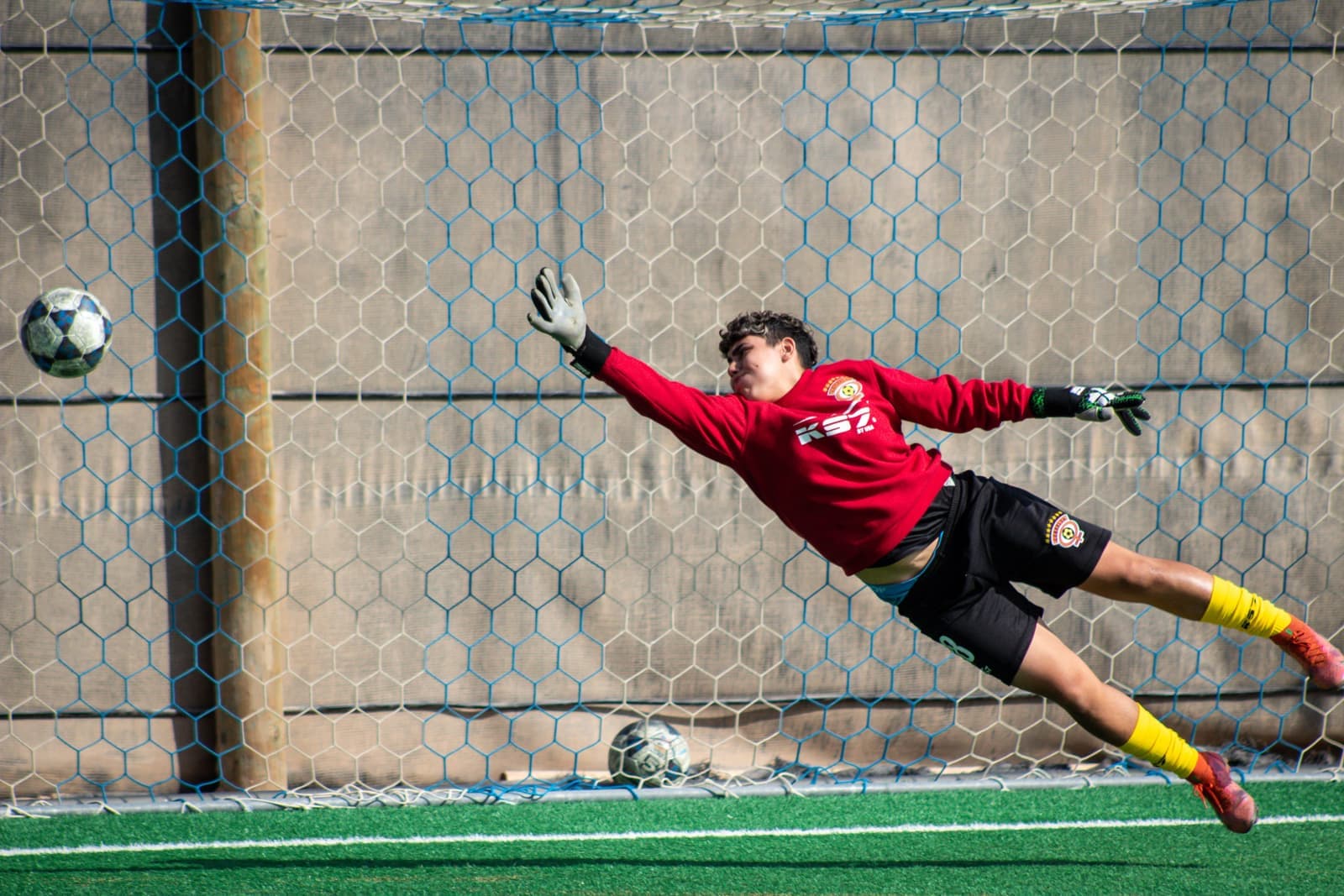
This gets asked because keepers so visibly do not need guards for the reason field players do. A goalkeeper is not being tackled. They are not in a sliding challenge. Most of a youth keeper's game is standing, and the rest is diving at a ball on the ground — so the stud-to-shin impact the whole category exists to absorb is the thing they meet least.
The Laws do not care, and on reflection they are right not to.
What the rule says
Law 4's compulsory equipment is a shirt, shorts, socks, footwear and shinguards. The guards must be of suitable material and appropriate size, and must be covered by the socks. The player is responsible for judging suitability.
Nothing in that list is qualified by position. The Law treats a goalkeeper differently in three other ways — a keeper must wear colors distinguishable from the other players and the match officials, and is specifically permitted caps and tracksuit bottoms, with gloves named among the non-dangerous protective equipment allowed — and all three are additions rather than subtractions. There is no clause anywhere that removes the guards.
So a referee checking kit will expect them, and a keeper without them is not properly equipped. In youth soccer this is usually discovered at the worst moment: a field player rotating into goal at half time who has handed their guards to a substitute. Are shin guards required in soccer covers the rule in full.
Why it is a sensible rule anyway
- Keepers get kicked, just differently. A keeper collecting a low ball in a crowded six-yard box is reaching into the path of a swinging boot, with their shin leading. It is less frequent than a tackle and it is the same injury.
- Youth keepers are field players most of the time. At rec level kids rotate in and out of goal within a single game. A guard taken off for a half in goal is a guard that gets lost or forgotten before the rotation comes back round.
- Keepers go to ground constantly. Guards do not help much with abrasion, but a hard shell takes a knee-to-shin or a post-to-shin contact that a bare leg would not.
- The cost of wearing them is near zero. Unlike an outfield player, a keeper is not sprinting ninety minutes, so the weight and heat objection that drives older players toward minimal guards is weaker here, not stronger.
Which guard suits a keeper
This is the part where keepers genuinely do differ, and it points away from the guards a young field player should buy.
| Style | Keeper verdict | Why |
|---|---|---|
| Compression sleeve | Best for most keepers | Cannot migrate while diving, and it vanishes under the sock |
| Vented strapped shell, no ankle | Best rigid option | Protection without the cuff that catches when going down |
| Flexible sleeve pad | Good for older keepers | Coolest, and moves with a leg that is constantly bending |
| Bare slip-in | Workable with a tight sock | Migrates when a keeper hits the ground |
| Hard shell with ankle discs | Usually wrong for a keeper | The ankle cuff is bulk the position does not need |
The reasoning is the diving. A guard held in place only by a sock moves when a body hits the ground sideways, and a keeper does that more often in a game than a field player does in a season. That is the argument for a sleeve: the guard sits in a pocket and cannot travel round the leg. Slip-in vs ankle shin guards compares the styles in general, and how to stop shin guards slipping covers the fixes for a pair that already does.
Guards that work for a keeper
adidas
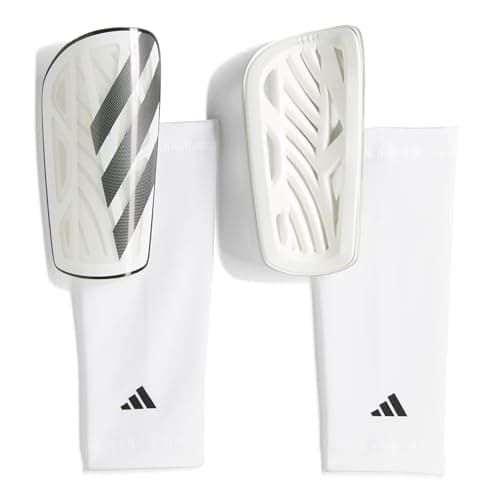
adidas Tiro League Shin Guards
The best compromise between the security of a strap and the low profile of a slip-in.
Mitre
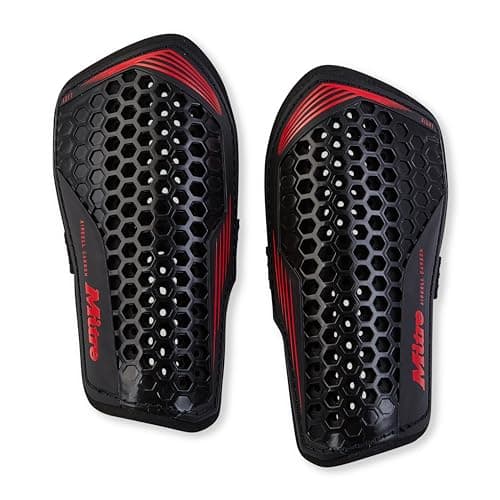
Mitre Aircell Carbon Shin Guards
A sensible middle option if you want strap security without the bulk of an ankle-disc guard.
$17.00View on Amazon#ad — we may earn a commission · price as of October 17, 2026
G-Form
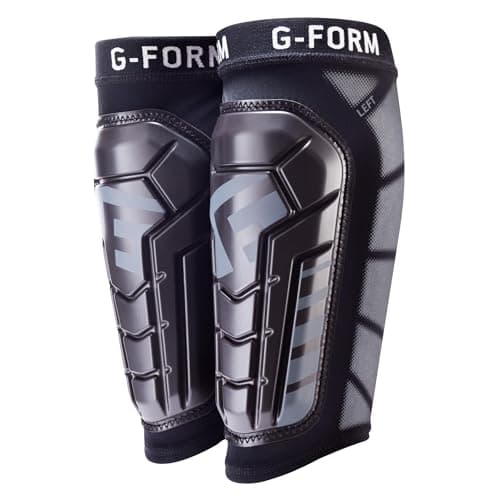
G-Form Pro-S Vento Shin Guards
Worth it for an older player who would otherwise wear the thinnest possible slip-in; not the safest choice for a beginner.
$27.86View on Amazon#ad — we may earn a commission · price as of October 17, 2026
Product photos come from each item’s current Amazon listing.
What keepers actually need that guards do not cover
If a keeper is complaining about their legs, guards are usually not the answer. Three other things are, and all of them are about the ground rather than about contact.
- Hips and knees. This is the real youth keeper problem, especially on turf. A padded outer pant is what addresses it — Storelli publishes 7 mm slow-rebound foam at hips and thighs and 5 mm Poron pads at the knees for the ExoShield GK pant, and the three-quarter version exists specifically because a full-length pant fights the shin guards on a youth player. Best youth goalkeeper pants is the roundup.
- Elbows. Padding above the elbow is almost absent from the youth keeper jersey category, which is worth knowing before paying up for a jersey expecting it. Best youth goalkeeper jerseys sets out which ones actually have it.
- Cold. A keeper is the stillest player on the field and the first to get cold, and that is a base-layer problem rather than a protection one. Best youth goalkeeper base layers covers it.
On footwear, there is a related myth worth clearing up: there is no such thing as a goalkeeper cleat. What a keeper needs from a boot is explosive push-off, secure footing on lateral movement and a soft distribution touch, and the plate should be matched to the playing surface rather than to the position. Best soccer cleats for goalkeepers goes into it.
The practical answer
Buy guards for your keeper the same way you would for a field player, size them by height so they run from just below the knee to just above the ankle bone, and bias the choice toward a sleeve or a low-profile strapped guard rather than an ankle-disc pair. Youth shin guard size chart has the conversion.
If your kid rotates between goal and the field, which most rec players do, that same guard covers both jobs — and the sleeve style has the incidental advantage of being hard to leave behind, because it is already on the leg under the sock rather than strapped on and taken off.
And if the objection is comfort rather than rules, the honest response is that the comfort gap between a modern sleeve guard and nothing is small, while the compliance gap is absolute. A keeper who will not wear an ankle-disc guard should be bought a sleeve, not excused — how long do shin guards last is the other half of that, because a guard that has been outgrown is both less protective and a kit-check problem.
Common questions
Do goalkeepers have to wear shin guards?
Yes. Law 4 lists shinguards among the compulsory equipment for every player — shirt, shorts, socks, footwear and shinguards — and makes no exemption for the goalkeeper. They must be of suitable material and appropriate size and covered entirely by the socks, exactly as for a field player.
Why do goalkeepers need shin guards if they are not tackled?
Because the injury still happens, just less often: a keeper collecting a low ball in a crowded six-yard box leads with the shin into the path of a boot. There are also practical reasons — youth keepers rotate back out to the field, keepers hit the ground constantly, and the comfort cost of wearing a modern low-profile guard in a position that does not sprint for ninety minutes is close to zero.
What shin guards are best for a goalkeeper?
A compression sleeve for most keepers, because the guard sits in a pocket and cannot migrate round the leg when a keeper hits the ground — which happens far more in this position. A vented strapped shell without an ankle cuff is the best rigid option. Ankle-disc guards are usually wrong for a keeper: the cuff is bulk the position does not need.
Can goalkeepers wear tracksuit bottoms instead?
They can wear tracksuit bottoms — Law 4 permits them specifically for goalkeepers — but that does not replace the shin guards. The keeper allowances in the Law are additions, not substitutions: caps and tracksuit bottoms are permitted and gloves are named among permitted protective equipment, and the compulsory equipment list still applies in full.
Do goalkeepers wear shin guards in futsal?
Yes, and the rule is if anything more explicit. The FA's Futsal Law 4 makes shinguards compulsory, requires them to be made of rubber, plastic or a similar approved material offering reasonable protection, and requires them to be covered entirely by the stockings. There is no keeper exemption there either.
What does a youth goalkeeper actually need besides guards?
Padding at the hips and knees is the real need, especially on turf — a padded outer pant rather than a base layer, and the three-quarter length exists because full-length pants fight shin guards on a youth player. After that, a long-sleeve jersey, warmth for a position that stands still, and gloves. There is no such thing as a goalkeeper cleat; the plate should match the surface.
Sources
- IFAB Laws of the Game — Law 4, The Players' Equipment — The Law text quoted on this site: undershorts and tights must be the same color as the main color of the shorts or the lowest part of the shorts, and players of the same team must wear the same color; shinguards must be of suitable material and appropriate size, covered by the socks, with the player responsible for their suitability; non-dangerous protective equipment of soft, lightweight padded material is permitted; and a player must not use equipment or wear anything that is dangerous, which must be removed rather than taped or covered. Law 4.3 is also the source for the kit-color rules quoted here: the two teams must wear colors that distinguish them from each other and the match officials, and each goalkeeper must wear colors that are distinguishable from the other players and the match officials. Law 4.4 names gloves, headgear, facemasks and knee and arm protectors of soft, lightweight padded material as permitted non-dangerous protective equipment, and separately permits goalkeepers caps and tracksuit bottoms.
- Coaching American Soccer — Law 4, The Players' Equipment — The Law 4 requirements quoted on this site: footwear is compulsory but cleats are not specified; shinguards must be of suitable material, appropriate size and covered by the socks, with the player responsible for suitability; a player must not use equipment that is dangerous; and the referee-level guidance that worn, pointed or exposed-shaft studs and shoes with sharp metal or pointed spikes are not permitted.
- The FA — Futsal Laws of the Game, Law 4: The Players' Equipment — The futsal equipment requirements quoted on this site: shinguards are compulsory, must be covered entirely by the stockings, must be made of rubber, plastic or a similar approved material, and must provide a reasonable degree of protection. Also the futsal footwear requirement — canvas or soft leather training or gymnastic shoes with soles of rubber or a similar material — which is why cleats are not legal futsal footwear.
- Storelli — ExoShield GK Pants — Storelli's published specification: 7 mm slow-rebound ImpactShield foam at hips and thighs, 5 mm Poron XRD pads at the knees, abrasion overlays on the slide zones, mesh ventilation panels, no base layer required, and youth sizes YS through YXL.
- Storelli — youth goalkeeper pants and leggings — The current youth range and stock check: the BodyShield Impact, NoBurn, NoBurn GK and CoolCore GK leggings, and the ExoShield GK and ExoShield GK 3/4 pants, with the padding description Storelli gives each one.
- FootballBoots.co.uk — best boots for goalkeepers — What a keeper actually needs from a boot — explosive push-off, secure footing on lateral movement, and a soft distribution touch — plus its position that keepers should match the plate to the playing surface rather than to the position.
Read next
- Are shin guards required in soccer?What Law 4 actually says about shin guards, the two conditions that get pairs rejected at a kit check, and where the rule is stricter than parents expect.
- Slip-in vs ankle shin guardsThe protection trade-off stated plainly, the age the answer flips, and the sleeve option in between.
- Youth shin guard size chartThe height-based size chart, how high guards should go, and the crouch test that confirms the fit.
- How long do shin guards last?How long a youth pair really lasts, the five signs that mean replace, why straps fail before shells do, and the storage habit that preserves both.
- Best youth goalkeeper pantsPadded and three-quarter keeper pants compared on published specs, plus the sizing mistake that puts the knee pad in the wrong place.
- Best youth goalkeeper base layersWhat a keeper actually needs under the kit, why the padded pant is a different purchase, and the three layers worth buying with the color rule that governs them.
- Best youth goalkeeper jerseysTwo padded budget jerseys, then the unpadded teamwear shirts — six youth keeper jerseys sorted by what each one actually protects rather than what it costs.
- Best soccer cleats for goalkeepersWhat a keeper actually needs from footwear, which junior lines deliver it, and why the plate matters more than the position.