Shin Guards
Are shin guards required in soccer?
Yes, everywhere, at every level. The interesting part is the two conditions attached.
By Ryder M. · Published October 17, 2026
The short answer
Yes. Law 4 of the Laws of the Game lists shinguards as compulsory equipment for every player at every level, including goalkeepers. Two conditions come with it: they must be of suitable material and appropriate size, and they must be covered entirely by the socks. The player — in youth soccer, the parent — is responsible for deciding whether a guard is suitable, and a referee can refuse one that is not.
This is one of the few pieces of soccer equipment with a genuine rule behind it rather than a convention. Cleats are not specified anywhere in the Laws — footwear is compulsory, the type is not. Shin guards are specified, and the specification is short enough to quote in full.
What the Law actually says
Law 4 lists the compulsory equipment as a shirt, shorts, socks, footwear and shinguards. On the guards themselves it adds three things:
- They must be made of a suitable material — in practice rubber, plastic or similar — and provide a reasonable degree of protection.
- They must be of appropriate size, which is the clause that rules out an adult guard on an eight-year-old's leg.
- They must be covered by the socks, entirely. This is the condition most often failed and the easiest to fix.
The Law also puts the judgment with the player: it is the player who is responsible for the suitability of their shinguards, not the referee and not the manufacturer. In youth soccer that responsibility is a parent's, which is the practical reason this page exists.
Note what the Law does not do. It sets no thickness, no material standard, no certification requirement and no test. There is no legal minimum a guard has to pass — only the requirement that it be suitable, appropriately sized and covered. CE and SATRA testing, where a manufacturer states it, is a voluntary claim rather than a rule.
Who it applies to
| Context | Required? | Source of the rule |
|---|---|---|
| Any match under the Laws of the Game | Yes, compulsory | IFAB Law 4 |
| Goalkeepers | Yes — no exemption | IFAB Law 4 |
| Futsal | Yes, compulsory | FA Futsal Law 4 |
| Indoor and arena leagues | Usually, by league rule | The league's own rules |
| Youth club and rec training | Almost always, by club rule | The club, not the Laws |
| Backyard and pickup | No rule applies | — |
The goalkeeper row surprises people most often. There is no keeper exemption in Law 4: a keeper is a player and the compulsory equipment list applies. The rest of a keeper's kit is treated separately — Law 4 permits caps and tracksuit bottoms, and names gloves among the non-dangerous protective equipment allowed — but the guards are not optional. Do goalkeepers wear shin guards covers how keepers actually handle that in practice.
Practice is the other place the answer gets fuzzy, and it is fuzzy because the Laws do not govern training at all. Whether guards are required at a Tuesday session is a club decision, and clubs differ. Do you need shin guards for soccer practice goes through the reasoning either way.
Guards that satisfy the Law without a fight
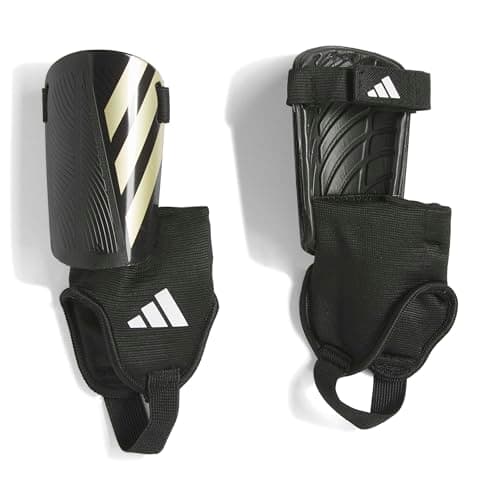
adidas
adidas Tiro Match Shin Guards Kids
The best first pair of shin guards for a young rec player, precisely because it protects the ankle too.
$14.99View on Amazon#ad — we may earn a commission · price as of October 17, 2026
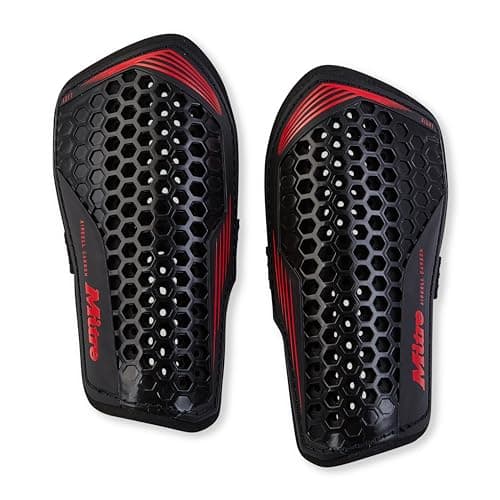
Mitre
Mitre Aircell Carbon Shin Guards
A sensible middle option if you want strap security without the bulk of an ankle-disc guard.
$17.00View on Amazon#ad — we may earn a commission · price as of October 17, 2026
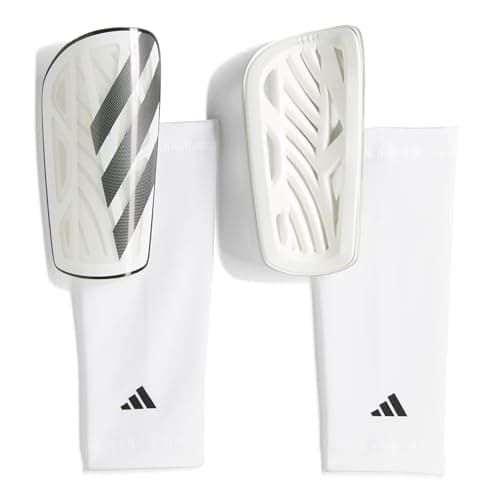
adidas
adidas Tiro League Shin Guards
The best compromise between the security of a strap and the low profile of a slip-in.
Product photos come from each item’s current Amazon listing.
The two ways a pair gets rejected
In youth soccer a referee's kit check is usually quick and usually about two things.
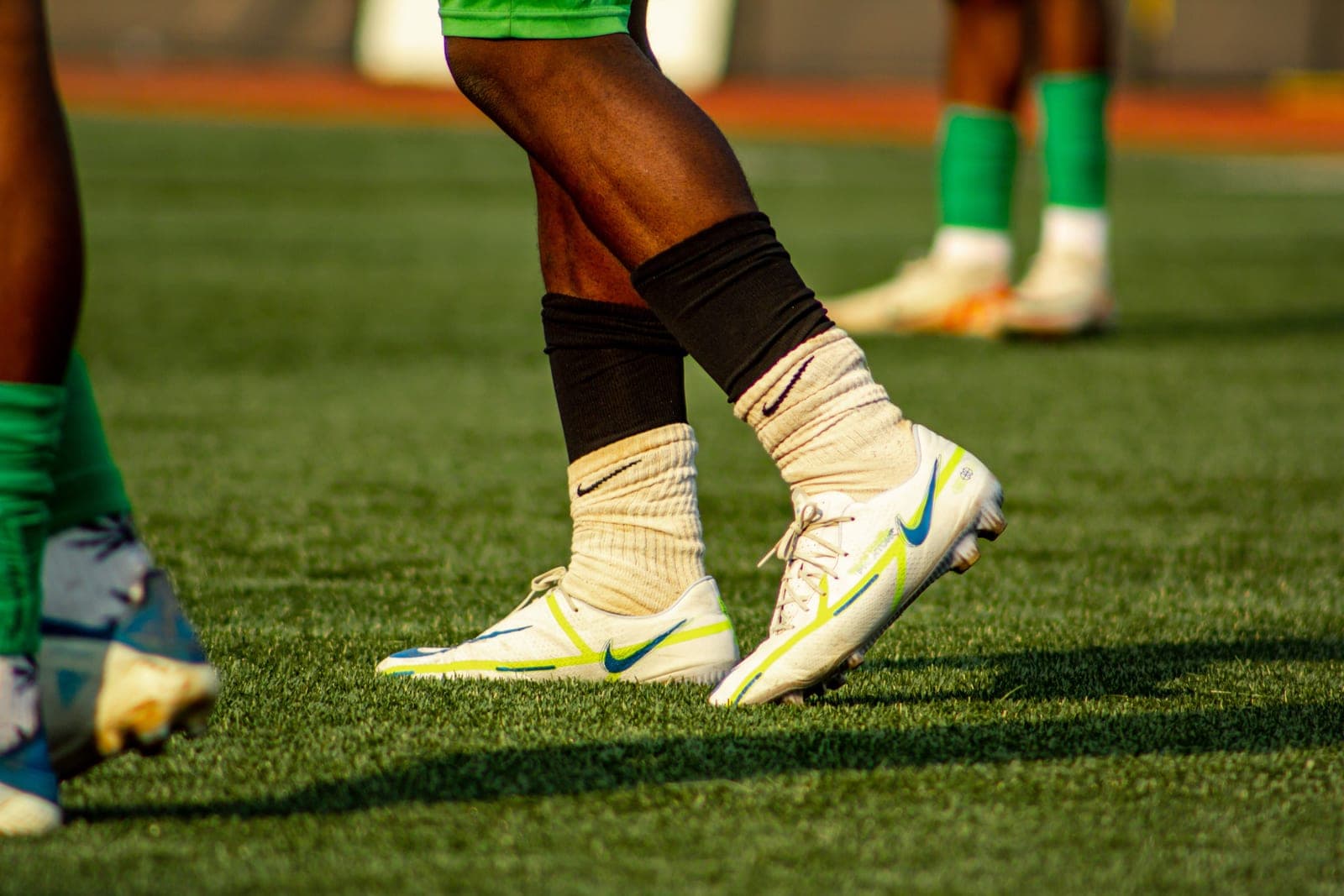
- The guard is visible above or below the sock. This is the common one, and it is almost always a sizing problem rather than a cheating one: a guard too long for the leg sticks out at the top, and a guard worn over the sock is a straightforward fail. The fix is the right size and the right order — guard first, sock over it.
- The guard is obviously wrong for the player. An adult guard on a small child, a cracked shell, or a piece of improvised padding. The Law's words are suitable material and appropriate size, and the referee has the latitude to say no — and a separate obligation to remove anything dangerous rather than let it be taped over.
What does not get checked, in practice, is thickness or brand. A thin slip-in guard and a thick ankle-disc guard are equally legal if both are sized right and covered. The choice between them is a protection decision for the family, not a compliance one — slip-in vs ankle shin guards weighs them up.
Why the rule exists
The shin is the one part of a soccer player that is bone with almost nothing over it, directly in the path of a boot. Unlike most sports injuries, a shin contact injury is mechanically trivial to prevent — a few millimeters of plastic absorbs almost all of it — which is exactly why it is the only pad the Laws make compulsory.
The age profile matters too. US Youth Soccer's small-sided formats put the youngest players in small spaces with many touches, which is the environment where kicks land on legs rather than on the ball. That is the argument for ankle protection at U6 through U9 specifically, and for dropping it later — the contact pattern changes as the game spreads out.
Law 4 also permits other protective equipment, as long as it is non-dangerous and made of soft, lightweight padded material — headgear, facemasks, knee and arm protectors are all named. So a nervous player can wear more than the minimum. What they cannot do is wear less.
The practical version, by age
- U6 to U9. Guards with attached ankle protection, because at this age the contact genuinely is on the ankles and the player is not fast enough to be slowed by the bulk. Best shin guards for toddlers covers the youngest end.
- U10 to U12. A strapped guard without an ankle cuff is the sweet spot — secure, cooler and less intrusive. Best shin guards for 10 year olds is the roundup for this band.
- U13 and up. Whatever the player will actually wear, within the Law. A sleeve or a low-profile guard worn every game beats a thick one left in a bag, and the compliance bar is the same for both.
- Futsal, at any age. Compulsory and the same sock rule applies, with a stronger case for a low profile. Best shin guards for futsal has the picks.
And the thing that undoes all of it: a guard the child takes off. A legal, correctly sized, well-covered guard that a kid removes at half time because it is hot is doing nothing. That is the real argument for buying the pair a player likes rather than the most protective one on the shelf — within the Law, the guard that gets worn is the guard that works.
Common questions
Are shin guards mandatory in soccer?
Yes. Law 4 of the Laws of the Game lists shinguards among the compulsory equipment — shirt, shorts, socks, footwear and shinguards — for every player at every level. Two conditions attach: they must be of suitable material and appropriate size, and they must be covered entirely by the socks. The player, or in youth soccer the parent, is responsible for judging suitability.
Do goalkeepers have to wear shin guards?
Yes. There is no keeper exemption in Law 4 — a goalkeeper is a player and the compulsory equipment list applies in full. The keeper-specific allowances in the Law are additions rather than subtractions: caps and tracksuit bottoms are permitted, and gloves are named among the non-dangerous protective equipment allowed.
What kind of shin guards does the rule require?
Less than people assume. The Law requires suitable material — rubber, plastic or similar — an appropriate size, and full coverage by the socks. It sets no thickness, no material standard and no certification test. A thin slip-in and a thick ankle-disc guard are equally legal if both are sized right and covered, so the choice between them is a protection decision rather than a compliance one.
Can a referee refuse my kid's shin guards?
Yes, on two grounds. If the guard is not covered by the socks it fails the explicit requirement. If it is obviously not of suitable material or appropriate size — an adult guard on a small child, a cracked shell, improvised padding — the referee can say no, and has a separate duty to have dangerous equipment removed rather than taped or covered over.
Are shin guards required at practice?
The Laws of the Game govern matches, not training, so this is a club decision rather than a rule. Most youth clubs require them at every session, for the simple reason that the contact at practice is the same as the contact in a game. Check with the coach; the default assumption should be yes.
Are shin guards required in indoor soccer and futsal?
In futsal, yes and explicitly: the FA's Futsal Law 4 makes shinguards compulsory, requires rubber, plastic or a similar approved material, and requires them to be covered entirely by the stockings. Other indoor and arena formats run under their own league rules rather than the Futsal Laws, so the requirement comes from the league — but it is nearly always there.
Can you wear other padding in soccer?
Yes, within limits. Law 4 permits non-dangerous protective equipment made of soft, lightweight padded material, and names headgear, facemasks, and knee and arm protectors specifically. So a player can wear more than the minimum. What is not allowed is anything dangerous, which must be removed rather than taped over, and wearing less than the compulsory list.
Sources
- IFAB Laws of the Game — Law 4, The Players' Equipment — The Law text quoted on this site: undershorts and tights must be the same color as the main color of the shorts or the lowest part of the shorts, and players of the same team must wear the same color; shinguards must be of suitable material and appropriate size, covered by the socks, with the player responsible for their suitability; non-dangerous protective equipment of soft, lightweight padded material is permitted; and a player must not use equipment or wear anything that is dangerous, which must be removed rather than taped or covered. Law 4.3 is also the source for the kit-color rules quoted here: the two teams must wear colors that distinguish them from each other and the match officials, and each goalkeeper must wear colors that are distinguishable from the other players and the match officials. Law 4.4 names gloves, headgear, facemasks and knee and arm protectors of soft, lightweight padded material as permitted non-dangerous protective equipment, and separately permits goalkeepers caps and tracksuit bottoms.
- Coaching American Soccer — Law 4, The Players' Equipment — The Law 4 requirements quoted on this site: footwear is compulsory but cleats are not specified; shinguards must be of suitable material, appropriate size and covered by the socks, with the player responsible for suitability; a player must not use equipment that is dangerous; and the referee-level guidance that worn, pointed or exposed-shaft studs and shoes with sharp metal or pointed spikes are not permitted.
- The FA — Futsal Laws of the Game, Law 4: The Players' Equipment — The futsal equipment requirements quoted on this site: shinguards are compulsory, must be covered entirely by the stockings, must be made of rubber, plastic or a similar approved material, and must provide a reasonable degree of protection. Also the futsal footwear requirement — canvas or soft leather training or gymnastic shoes with soles of rubber or a similar material — which is why cleats are not legal futsal footwear.
- US Youth Soccer small-sided playing formats — Player counts, game lengths and format progression (4v4, 7v7, 9v9, 11v11) by age group.
- AYSO — Size of Ball and Field by Age Division — Official ball sizes, circumference and weight ranges, and field dimensions by age division. Used for every ball-size and field-size figure on this site.
Read next
- Do you need shin guards for soccer practice?Why the Laws are silent on practice, what clubs actually require, the one session type where guards matter most, and the cheap second pair that solves it.
- Do you need shin guards for indoor soccer?Whether indoor leagues require guards, why the smaller pitch argues for them, and what style to wear.
- Do shin guards go under socks?The Law 4 requirement, why it exists, and how to get a sock over a guard on a thin leg without it sliding.
- Slip-in vs ankle shin guardsThe protection trade-off stated plainly, the age the answer flips, and the sleeve option in between.
- Best shin guards for futsalWhy futsal needs a lower-profile guard than outdoor soccer, the four pairs that work on a hard court, and what the Futsal Laws actually require.
- How long do shin guards last?How long a youth pair really lasts, the five signs that mean replace, why straps fail before shells do, and the storage habit that preserves both.
- Youth shin guard size chartThe height-based size chart, how high guards should go, and the crouch test that confirms the fit.
- Do goalkeepers wear shin guards?Why there is no keeper exemption in the Laws, what a keeper actually needs from a guard, and which style fits a position that spends its time on the ground.