Heads up: we earn a commission if you buy through our links, at no extra cost to you. It never changes which product we recommend — here’s how that works.
The short answer
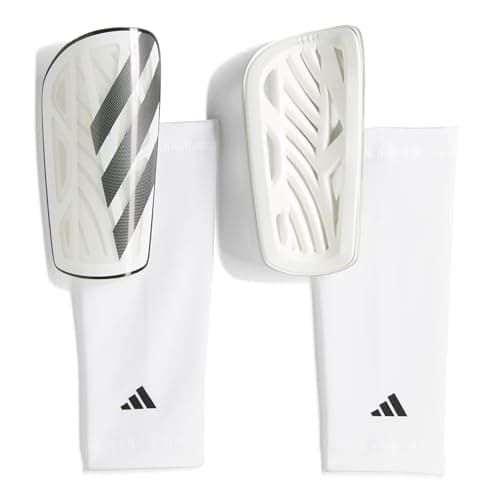
For most ten-year-olds the best shin guard is a sleeve-style guard — the adidas Tiro League is the pick, because the guard sits in a pocket that cannot migrate round the leg and it is low-profile enough that a ten-year-old will not fight you about it. Size by height, not age: a 10-year-old is usually a size S or M. A strapped guard with ankle padding still protects more if your kid plays in defense.
Ten is the hinge year for shin guards. At seven you buy the most protective pair you can find and your kid wears it because you said so. At ten they have opinions, their teammates have opinions, and a guard they find bulky will spend the season in the bag with the strap still fastened. Protection that stays in the bag protects nothing, which is why this page is sorted by what gets worn rather than purely by what blocks the most impact.
What actually changes at this age
Three things, and only one of them is about the guard. The game moves to 9v9 on a bigger field, so contact arrives at speed rather than in a six-kid pile. Kids become aware of what the older players wear, and older players wear as little as they can get away with. And the leg finally gets long enough that a guard sized for a seven-year-old digs into the knee when they crouch.
What has not changed is the rule. Shin guards are compulsory, they must be of suitable material and appropriate size, and they must be covered by the socks — and the Law puts the responsibility for whether they are suitable on the player, not the referee. A ten-year-old who picks a guard the size of a credit card has satisfied nobody's definition of appropriate size, and that is a conversation worth having before you get to the store.
Start here
Pick by your kid’s level
The right answer changes with the level, not just the shoe size. Find your kid’s bracket and start there.
The sleeve holds the guard in an integrated pocket, so it cannot rotate round the shin mid-game the way a bare slip-in does. Low enough in profile that a ten-year-old does not feel like they are wearing a cast.
If your kid plays in defense or is on the receiving end of a lot of contact, this is the mid-weight strapped guard with a genuinely vented shell — though note it has no ankle cover at all, so an ankle-disc guard is the pick if the ankle is the worry.
Shin guard sizing is height-based, not age-based, and ten is the age where that difference starts to bite — a short ten-year-old and a tall one are two sizes apart. A guard should run from just below the knee to just above the ankle bone. Too long and the top edge digs in when they crouch to tie a lace, which is the single most common reason a kid refuses to wear a pair that fits everywhere else.
The middle three bands of the height chart, which is where nine to eleven year olds sit. The full chart runs XXS to XL.
Player height
Typical size
What this usually means at 10
4 ft 0 in - 4 ft 6 in (122-137 cm)
S
A smaller ten-year-old, and the size most nine-year-olds are still in
4 ft 6 in - 5 ft 0 in (137-152 cm)
M
The common size at 10 and 11 — most of this age group lands here
5 ft 0 in - 5 ft 6 in (152-168 cm)
L
A tall ten-year-old, or a player who has already hit a growth spurt
Scroll the table sideways on a narrow screen.
Sleeve-style guards add a second measurement, because the sleeve has to fit the calf as well as the shin. A very slim or very sturdy leg can need a size either way from what the height band says. The youth shin guard size chart has the full conversions and the checks worth running before the first game.
Quick picks
Tap any row to jump to the full write-up. The price in each button is the one Amazon reported on the date stamped under it — tap through for today’s number, which is the only one that can be relied on.
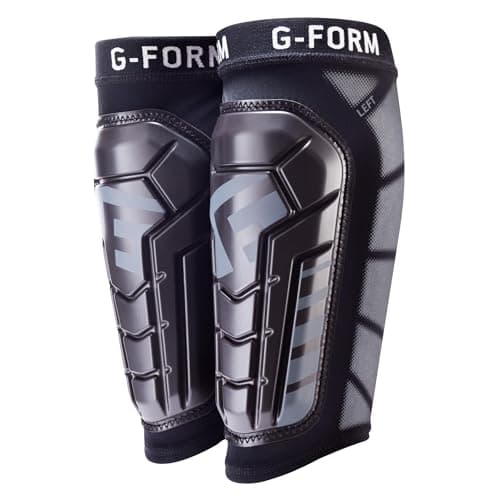
G-Form Pro-S Vento Shin GuardsWorth it for an older player who would otherwise wear the thinnest possible slip-in; not the safest choice for a beginner.
U11–U12, U13+ travel & club
Sleeve with flexible pad
Sized by calf circumference as well as height — measure, do not guess, because a loose sleeve defeats the design..
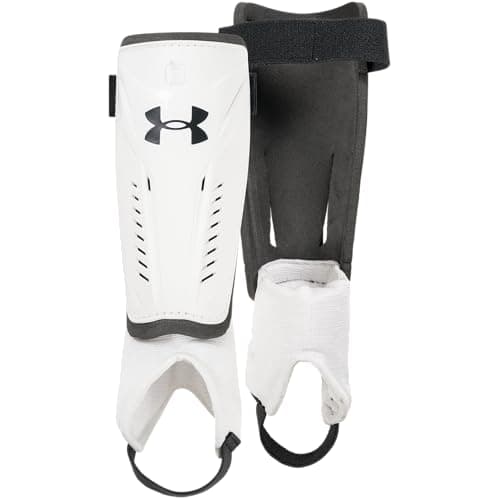
Under Armour Challenge Youth Shin GuardsThe right guard when protection is the priority — a young defender, a nervous beginner, or a kid who has already taken a bad knock.
Product photos come from each item’s current Amazon listing.
The three styles, and what each one costs you
There are only three real choices at this age, and the trade-off runs the same way in every direction: the more a guard protects, the less willingly a ten-year-old wears it.
The same comparison the style page makes, read specifically for nine to eleven year olds.
Strapped with ankle
Sleeve
Slip-in
Protection
Most
Middle
Least
Will a 10-year-old wear it?
Sometimes
Usually
Always
Stays where you put it
Yes
Yes
Only with a tight sock
Ankle coverage
Yes
No
No
Best case at this age
A defender, or a kid who has been hurt
The default
A fast player who would otherwise wear nothing
Scroll the table sideways on a narrow screen.
The reason the sleeve wins the default slot here is narrow and practical. A bare slip-in depends entirely on sock tension to stay in place, and a ten-year-old's sock tension is not a reliable engineering input. A sleeve puts the guard in a pocket, so it stops migrating round the calf without adding a strap to argue about. Slip-in vs ankle shin guards works through the full comparison if you want the longer version.
1. adidas
adidas Tiro League Shin Guards
The best compromise between the security of a strap and the low profile of a slip-in.
Best for
A U10+ player who keeps losing guards out of their socks
Levels
U9–U10 · U11–U12 · U13+ travel & club
Type / surface
Compression sleeve
How it fits
Sized by height like other guards, but the sleeve also has to fit the calf — a very slim or very sturdy leg may need a size either way.
What we like
The sleeve solves the slip-in problem properly: the guard cannot migrate round the leg mid-game
Lower profile than a strapped guard while being far more secure than a bare slip-in
Where it falls short
The sleeve has to be pulled on before the sock, which is one more step a distracted kid will get wrong
Warmer than a slip-in, and sleeves need washing as often as socks
Manufacturer’s published specs
Compression sleeve style with the guard held in an integrated pocket
No external strap
Youth and adult sizing
These are the manufacturer’s own claims, not measurements we took.
Plenty of parents move a ten-year-old out of ankle guards because that is what ten-year-olds want, and then spend the season watching them take studs on the ankle bone. Four situations where the bulkier pair is still the right call:
They play center-back or fullback. Defenders block shots and make tackles, which is exactly where ankle contact comes from.
They have already taken a bad knock. A nervous player who trusts their gear commits to the ball; one who does not pulls out of tackles. Confidence is worth more than grams.
The league is physical. Some rec divisions are gentle and some are not, and you know which one yours is by week three.
They are small for their age. A smaller player in a 9v9 game takes contact from bigger bodies, and the guard is the cheapest thing you can change about that.
Price, honestly
Shin guards are the cheapest piece of protective equipment in youth soccer and the one most likely to be bought twice in a season, because a ten-year-old loses one of a pair with impressive regularity. That makes the budget logic different from cleats: there is no version of this purchase where spending heavily is the obvious move.
The two things worth paying for are a shell thick enough to feel solid when you flex it in your hands, and a retention system that matches your kid — a sleeve or a strap rather than bare sock tension. Everything above that is weight and ventilation, which matter to a committed U12 and not to a rec ten-year-old. If budget is the binding constraint, the slip-in picks and the ankle guard picks both include cheaper options than anything on this page.
One cost that is easy to forget: guards last longer than one season at this age only if they get dried out rather than left in the bag. Reusch's own care instructions for a hard-shell guard are to brush off dirt, wipe with a damp cloth, use no solvents, keep them out of strong heat and sunlight, and store them somewhere dry and ventilated — because otherwise, in the manufacturer's own words, the performance of the guard reduces significantly. How to wash shin guards covers the routine that keeps a pair usable.
Before you buy, it is worth ten minutes on how a shin guard should fit — the checks there are the difference between a pair that gets worn and a pair that gets argued about every Saturday. And if the guards keep ending up at the ankle by halftime, how to stop shin guards slipping is the fix.
Common questions
What size shin guards does a 10 year old need?+
Size by height rather than age. Most ten and eleven year olds are between 4 ft 6 in and 5 ft 0 in and take a size M; a smaller ten-year-old takes an S and a tall one an L. The guard should run from just below the knee to just above the ankle bone, and if the top edge digs in when they crouch, it is too long.
Do 10 year olds need ankle shin guards?+
Not necessarily, but keep them a year longer if your kid plays in defense, is small for their age, plays in a physical division, or has already taken a bad knock. For everyone else a sleeve-style guard is the better trade at this age, because it protects most of what an ankle guard protects and actually gets worn.
What are the best shin guards for a 10 year old?+
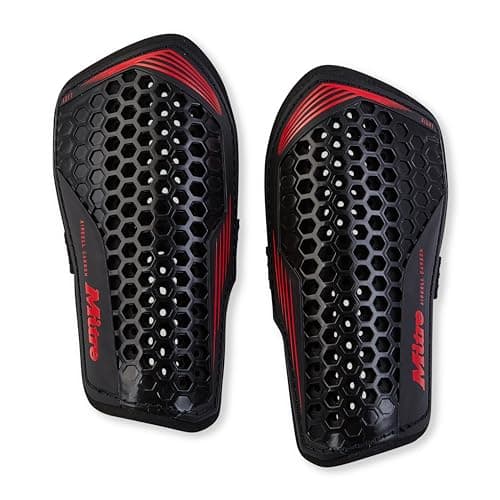
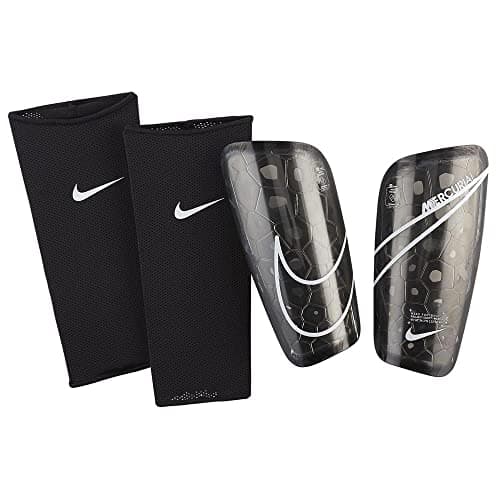
A sleeve-style guard for most players — the adidas Tiro League holds the guard in an integrated pocket so it cannot rotate round the leg, and it is low-profile enough that a ten-year-old will keep it on. For a defender or a player taking a lot of contact, a mid-weight strapped guard with ankle padding such as the Mitre Aircell Carbon protects more without the full bulk of the Nike Charge.
Are slip-in shin guards safe for a 10 year old?+
They are legal and they are the least protective style available. A slip-in covers less area and depends entirely on sock tension to stay in place, which is a weak point at this age. If your kid will only wear a slip-in, a slip-in they wear beats an ankle guard in the bag — but a sleeve gets you most of the low profile with none of the migration.
Do shin guards have to be covered by the socks?+
Yes. Law 4 requires shin guards to be of suitable material and appropriate size and to be covered by the socks, and it makes the player responsible for whether their guards are suitable. A guard sitting outside the sock is not compliant, which is one more argument for the sleeve-and-sock order rather than improvising with tape.
How often should 10 year old shin guards be replaced?+
When they are outgrown, cracked, or the retention has stopped working — not on a schedule. At nine to eleven the usual reason is height: a guard that was right last spring will be digging into the knee by the following season. Keeping them dry and out of the heat is what decides whether a pair survives long enough to be outgrown rather than degraded.
Sources
IFAB Laws of the Game — Law 4, The Players' Equipment — The Law text quoted on this site: undershorts and tights must be the same color as the main color of the shorts or the lowest part of the shorts, and players of the same team must wear the same color; shinguards must be of suitable material and appropriate size, covered by the socks, with the player responsible for their suitability; non-dangerous protective equipment of soft, lightweight padded material is permitted; and a player must not use equipment or wear anything that is dangerous, which must be removed rather than taped or covered. Law 4.3 is also the source for the kit-color rules quoted here: the two teams must wear colors that distinguish them from each other and the match officials, and each goalkeeper must wear colors that are distinguishable from the other players and the match officials. Law 4.4 names gloves, headgear, facemasks and knee and arm protectors of soft, lightweight padded material as permitted non-dangerous protective equipment, and separately permits goalkeepers caps and tracksuit bottoms.
Coaching American Soccer — Law 4, The Players' Equipment — The Law 4 requirements quoted on this site: footwear is compulsory but cleats are not specified; shinguards must be of suitable material, appropriate size and covered by the socks, with the player responsible for suitability; a player must not use equipment that is dangerous; and the referee-level guidance that worn, pointed or exposed-shaft studs and shoes with sharp metal or pointed spikes are not permitted.
Reusch — Shinguard Attrakt Supreme (care instructions) — A manufacturer's own care instructions for a hard-shell shinguard, quoted on this site: remove dirt with a soft brush and wipe with a damp cloth; do not use solvents or other cleaners as they may cause damage; do not expose the product to excessive heat or strong sunlight; store in a dry and ventilated area, otherwise the performance of the shinguard reduces significantly.
Nike — kids' soccer cleats and shoes — Verified that each Nike model named on this page is currently sold, and the source for Nike's own published upper, plate and surface descriptions.
adidas — kids' soccer — Verified current availability of the adidas models named here, plus adidas's published material and construction claims.