Goals
Soccer goal vs rebounder: which first?
It comes down to one question: does your kid have somebody to play with?
By Ryder M. · Published September 27, 2026
Heads up: we earn a commission if you buy through our links, at no extra cost to you. It never changes which product we recommend — here’s how that works.
The short answer
| Buy first | If | Because |
|---|---|---|
| Rebounder | Your kid mostly plays alone | It returns the ball, so solo practice is repetition instead of fetching |
| Goal | Siblings, neighbors or a willing parent | A goal needs a second person, and with one it produces games |
| Combined unit | U11+ and budget allows | Panel-swap units cover both without buying twice |
| Neither yet | They still need cleats, a ball or shin guards | Gear they play in comes before gear they practice with |
Most advice on this question compares the products. The more useful comparison is of the situations, because the same two products are right and wrong depending on who else is in the yard.
Choose a goal if…
- There is a second player. A sibling, a neighbor, a parent who will go in goal. This is the deciding factor.
- Your kid is young — U6 to U9. At that age they want games rather than drills, and a rebounder is a drill machine.
- Shooting is what they enjoy. Some kids just want to hit the ball hard at something.
See the pop-up picks for younger kids and the goals for teens picks for U12 and up.
Choose a rebounder if…
- Your kid practices alone. An only child, or siblings who are not interested. This is the strongest case for a rebounder.
- They are U9 or older. Rebound drills need enough patience and control to be satisfying, which arrives around then.
- First touch is the thing to develop. A rebounder produces hundreds of controlled receptions in a session; a goal produces none.
- The yard is small. A rebounder can sit against a fence and works at close range.
See the rebounder picks.
The maths on repetition
Worth spelling out, because it is the real argument for a rebounder and it is rarely made concretely.
A kid alone with a goal shoots, walks to the net, collects the ball, walks back, shoots. Call it fifteen seconds of walking per touch. In half an hour that is maybe a hundred shots, most of it walking.
A kid alone with a rebounder receives the ball back within a second or two. The same half hour is several hundred controlled touches. For developing first touch and passing weight — which is what actually improves a young player — that difference is the whole point.
A goal beats a rebounder on enjoyment when there is somebody to play against. Alone, it loses badly on both enjoyment and value.
The combined units
Two approaches exist and they solve different problems.
| Approach | What it does | Best for |
|---|---|---|
| Panel swap | One frame, swap between a goal net and a rebound surface | A U11+ player who does both shooting and passing work |
| Goal plus integrated backstop | A goal with netting extending above and around it, which also returns the ball | A small yard with neighbors — the misses stop in your yard |
The panel-swap approach — QuickPlay's Kickster being the example — is fast enough that the swap genuinely happens mid-session rather than being theoretical. The backstop approach — Open Goaaal — solves the constraint that actually limits backyard practice, which is where missed shots go.
One of each
Franklin Sports
Franklin Sports Adjustable Soccer Rebounder
The right first rebounder: cheap, adjustable, and enough for a U8 to U11 to get real repetitions.
Franklin Sports
Franklin Sports Blackhawk Portable Soccer Goal
The right first goal for a young player, sized honestly for the ages where it earns its keep.
QuickPlay
QuickPlay Kickster 2-in-1 Soccer Goal / Rebounder 8x5
The best two-in-one for an older player who does most of their extra work alone.
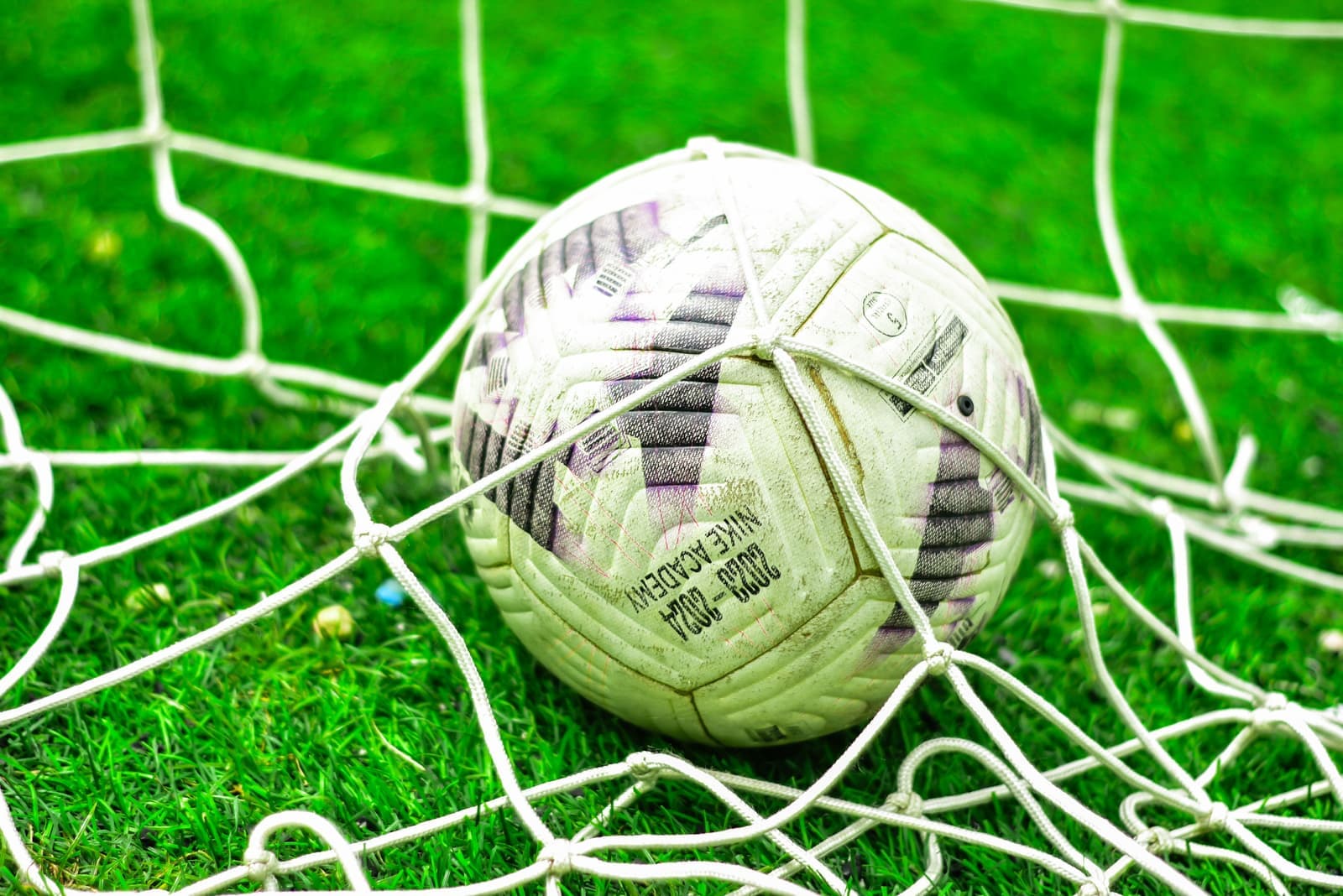
Photos are licensed representative stock images, not the exact models.
Choose neither, if…
Worth saying, because this category has the highest prices on the site and it is easy to buy out of order.
If your kid still needs cleats that fit, a ball in the right size, or shin guards, buy those first. A goal is a good purchase and a poor substitute for the gear they need to play in at all. The gear by level pages list what each age group actually needs.
And if they are under about U7, a ball and a bit of open grass genuinely is enough. A goal is nice; it is not what is holding them back.
Whichever you buy: anchor it
And buy a second ball
Whichever you choose, the limiting factor becomes retrieval — a ball in the hedge ends the session. A cheap second ball keeps a kid playing, and at the price of a yard ball it is the best value add-on in this category. See the ball size chart.
Common questions
Should I buy a soccer goal or a rebounder first?
If your kid has somebody to play with, buy the goal — games are what they actually want. If they mostly practice alone, buy the rebounder, because it returns the ball and turns a solo session into several hundred touches rather than a hundred shots and a lot of walking.
Is a rebounder better than a goal for skill development?
For a solo player, clearly yes. A rebounder produces hundreds of controlled receptions in a half-hour session where a goal produces shots followed by walking. For first touch and passing weight — the things that actually improve a young player — that difference is the whole argument.
Are combined soccer goal and rebounder units any good?
The panel-swap kind is, for a U11 or older player — the swap is fast enough that it happens mid-session rather than in theory, so one purchase covers shooting and passing. The goal-plus-backstop kind solves a different problem: where the missed shots go, which is what actually limits practice in a small yard.
What age should you buy a backyard soccer goal?
A small pop-up makes sense from about U6, and a rebounder from about U9 when a kid has the patience for rebound drills. Below U7, a ball and some open grass genuinely is enough — a goal is nice but it is not what is holding them back.
How much space do you need for a backyard goal or rebounder?
Measure the run-up behind the shooting position, not just the goal footprint — a goal you cannot take a proper shot at ends up unused. A rebounder is the better choice for a small yard, since it works at close range and can sit against a fence.
Sources
- US CPSC — Guidelines for Movable Soccer Goals — Tipover fatality and injury figures, and the CPSC's specific anchoring, counterweighting and storage recommendations. The source for every safety figure on the goal pages.
- Open Goaaal USA — soccer goals and rebounders — Verified current availability and the manufacturer's description of the 3-in-1 goal, rebounder and backstop system.
- QuickPlay — Kickster 2-in-1 goal / rebounder — QuickPlay's published dimensions and its description of the swappable rebounder panel.
Read next
- Best soccer rebounders for kidsRebounder picks by age and yard size, and why a rebounder often beats a goal as the first purchase.
- Best pop-up soccer goalsPortable pop-up picks for U6 to U10, honest about the narrow age window where they work.
- Best backyard soccer goals for teens8x5 and larger goals that survive a teenager, and why anchoring matters more as the goal gets bigger.
- What size backyard soccer goal do you need?Goal size by player age and by yard, the run-up measurement people skip, and official sizes for reference.
- How to anchor a backyard soccer goal safelyThe CPSC tipover figures, the anchor types that work on grass and hard surfaces, and how to secure a goal not in use.
- Gear by levelThe full kit list for every age group from U6 through travel club.