Goals
What size backyard soccer goal do you need?
Match the goal to the player, then check your yard — including the run-up, which most people skip.
By Ryder M. · Published September 27, 2026
The short answer
| Player age | Backyard goal size | Why |
|---|---|---|
| U6–U9 | 4 x 3 ft | A target that takes aim to hit at that size |
| U9–U12 | 6 x 4 ft | Bigger player, bigger strike |
| U12+ | 8 x 5 ft or larger | Needs placement, not just contact |
Two measurements decide this, and most people only take one. The first is the player — a goal that is too small stops being a target and too large stops being a challenge. The second is the yard, and specifically the run-up, which is what people forget.
Measure the run-up, not just the footprint
Everyone measures whether the goal fits. Far fewer measure whether there is room to shoot at it.
A kid needs distance in front of a goal to take a proper strike — for a U8 that is maybe five or six yards, for a teenager considerably more. A goal squeezed against a fence with two yards of lawn in front of it is a goal nobody can shoot at, and it ends up as a clothes horse.
So measure three things: the goal's width, its depth (which for a deep-framed goal is substantial), and the clear distance in front of it. If the third number is small, a rebounder is the better purchase — it works at close range. See the rebounder picks.
Official goal sizes, for reference
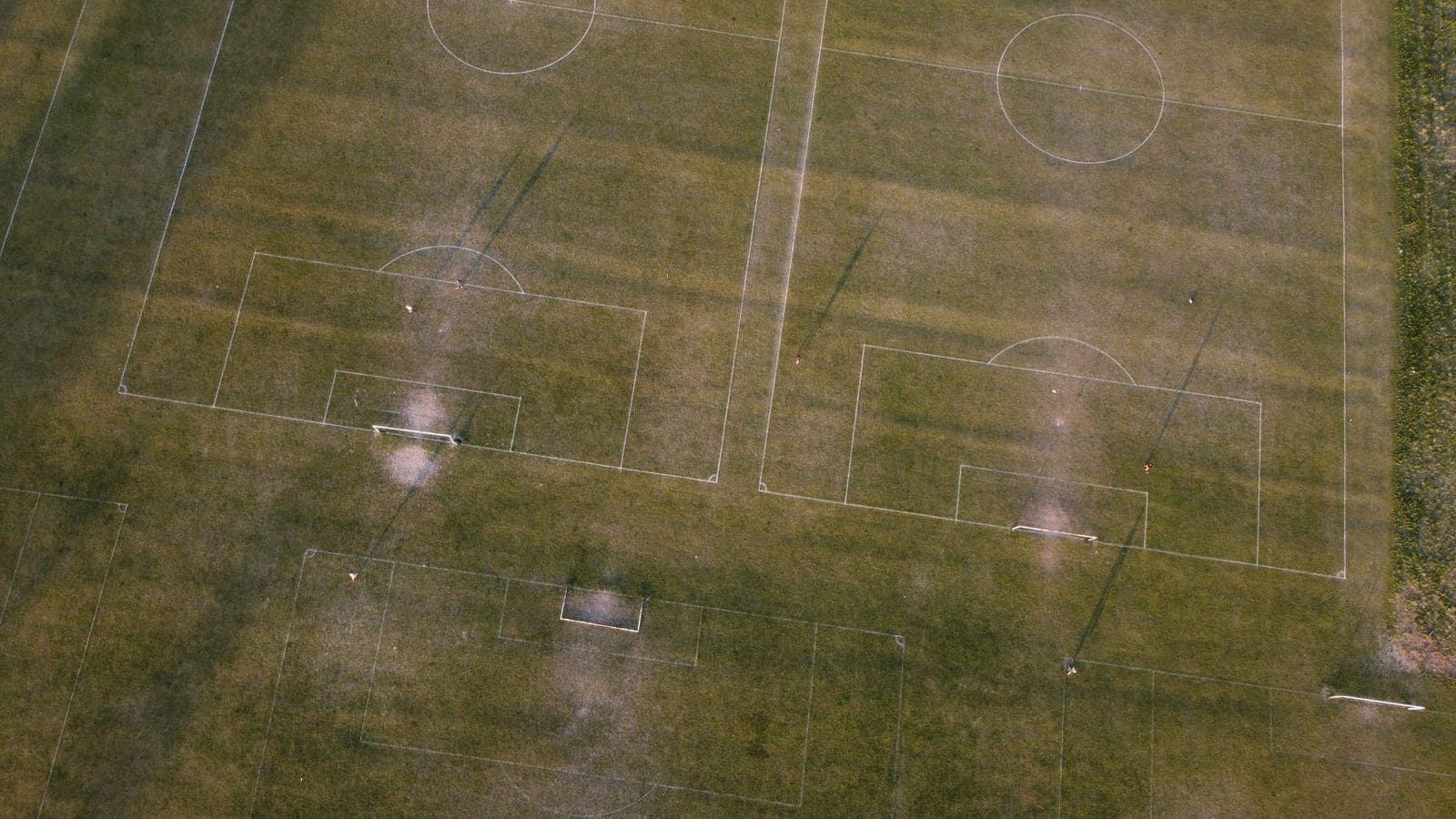
You are not fitting a regulation goal in a yard, but it is useful to know what your kid actually plays on, since it explains why a 4x3 stops working. AYSO's published standards set field dimensions of roughly 55–65 yards long for the 9U and 10U divisions, 70–80 yards for 11U and 12U, and 100–130 yards from 13U — with goal sizes scaling accordingly.
A full adult goal is 8 yards wide by 8 feet high. Nothing in a yard approaches that, which is fine — the point of a backyard goal is repetition, not simulation.
The two failure modes
Too small for the player
The commoner mistake, usually because a goal was bought when a kid was six and they are now eleven. A 4x3 goal is about four feet wide; an eleven-year-old with arms out covers most of that. Hitting it is no longer an achievement, so it stops being interesting.
Signs it has happened: the goal is still up but nobody shoots at it, or your kid has started shooting at something else.
Too big for the yard
Less common and more expensive. An 8x5 needs a genuinely large flat area plus run-up, and the frames rely on even tension so the ground needs to be reasonably level. In a small or sloping yard, a big goal is awkward to erect and awkward to use.
If the yard is the constraint rather than the budget, the honest answer is a smaller goal plus a backstop, or a rebounder — not a large goal squeezed in.
Depth is a size dimension too
Width and height get the attention; depth decides how much time your kid spends walking. A flat pop-up is a net across a frame, so shots rebound straight back down the yard. A fold-up frame giving the net roughly three feet of pocket keeps the shots that go in.
That is worth budgeting yard space for, because it roughly halves the fetching — which is the thing that actually ends backyard sessions.
One goal at each size
Franklin Sports
Franklin Sports Blackhawk Portable Soccer Goal
The right first goal for a young player, sized honestly for the ages where it earns its keep.
NET PLAYZ
NET PLAYZ Soccer Goal
The pick if your main complaint about a backyard goal is chasing the ball; the depth genuinely solves that.
QuickPlay
QuickPlay Kickster 2-in-1 Soccer Goal / Rebounder 8x5
The best two-in-one for an older player who does most of their extra work alone.
Photos are licensed representative stock images, not the exact models.
Two small goals or one big one?
For U6 to U9, two small pop-ups beat one larger goal and it is rarely suggested. Two goals facing each other is a small-sided pitch, which produces games rather than shooting practice — and games are what young kids want. At pop-up prices the second goal is a small addition that makes the first far more useful.
For a teenager, one properly sized goal. Two small ones do not solve the problem that a small goal is not a target.
Where the missed shots go
The third measurement nobody takes. In an ordinary suburban yard, a missed shot from a ten-year-old clears the fence, and from a teenager it clears it comfortably. What is behind the goal decides whether practice is sustainable: a hedge is fine, a road or a neighbor's window is not.
If the answer is bad, a goal with an integrated backstop is the fix, and it is the main reason those systems cost what they do. See the goals for teens picks.
Whatever size: anchor it
Common questions
What size backyard soccer goal do I need?
Match it to the player: 4x3 feet for roughly U6 to U9, 6x4 through U12, and 8x5 or larger from U13. Then check the yard — including the clear distance in front of the goal, not just its footprint, because a goal you cannot take a proper shot at ends up unused.
What is a good backyard soccer goal size for an 8 year old?
A 4x3 foot goal. At eight that is still a target which takes aim to hit, and it is small enough not to dominate an ordinary lawn. Expect to outgrow it around ten or eleven, when an eleven-year-old can cover most of that width standing still.
How much space do you need for a backyard soccer goal?
Three measurements: the goal's width, its depth — which is substantial on a deep-framed goal — and the clear run-up in front of it. If the run-up is small, a rebounder is the better purchase, since it works at close range against a fence.
What size is a regulation soccer goal?
A full adult goal is 8 yards wide by 8 feet high, and nothing that fits in a yard approaches it. That is fine — a backyard goal exists for repetition rather than simulation. Youth goal sizes scale down with the field dimensions, which AYSO publishes by age division.
Is it better to have two small goals or one big one?
For U6 to U9, two small ones. Two pop-ups facing each other gives a small-sided pitch, which produces games rather than shooting practice, and games are what young kids want. For a teenager, one properly sized goal — two small ones do not fix a small goal not being a target.
Sources
- AYSO — Size of Ball and Field by Age Division — Official ball sizes, circumference and weight ranges, and field dimensions by age division. Used for every ball-size and field-size figure on this site.
- US CPSC — Guidelines for Movable Soccer Goals — Tipover fatality and injury figures, and the CPSC's specific anchoring, counterweighting and storage recommendations. The source for every safety figure on the goal pages.
- Open Goaaal USA — soccer goals and rebounders — Verified current availability and the manufacturer's description of the 3-in-1 goal, rebounder and backstop system.
- QuickPlay — Kickster 2-in-1 goal / rebounder — QuickPlay's published dimensions and its description of the swappable rebounder panel.
Read next
- Best pop-up soccer goalsPortable pop-up picks for U6 to U10, honest about the narrow age window where they work.
- Best backyard soccer goals for teens8x5 and larger goals that survive a teenager, and why anchoring matters more as the goal gets bigger.
- How to anchor a backyard soccer goal safelyThe CPSC tipover figures, the anchor types that work on grass and hard surfaces, and how to secure a goal not in use.
- Soccer goal vs rebounder: which first?The decision table for goal versus rebounder, the combined units, and the case for waiting.
- Best soccer rebounders for kidsRebounder picks by age and yard size, and why a rebounder often beats a goal as the first purchase.
- U9–U10: size 4, seven-a-side, and a goalkeeperAges 8 to 10. The ball goes up to size 4, the format goes to 7v7, and someone has to play in goal.