Heads up: we earn a commission if you buy through our links, at no extra cost to you. It never changes which product we recommend — here’s how that works.
The short answer
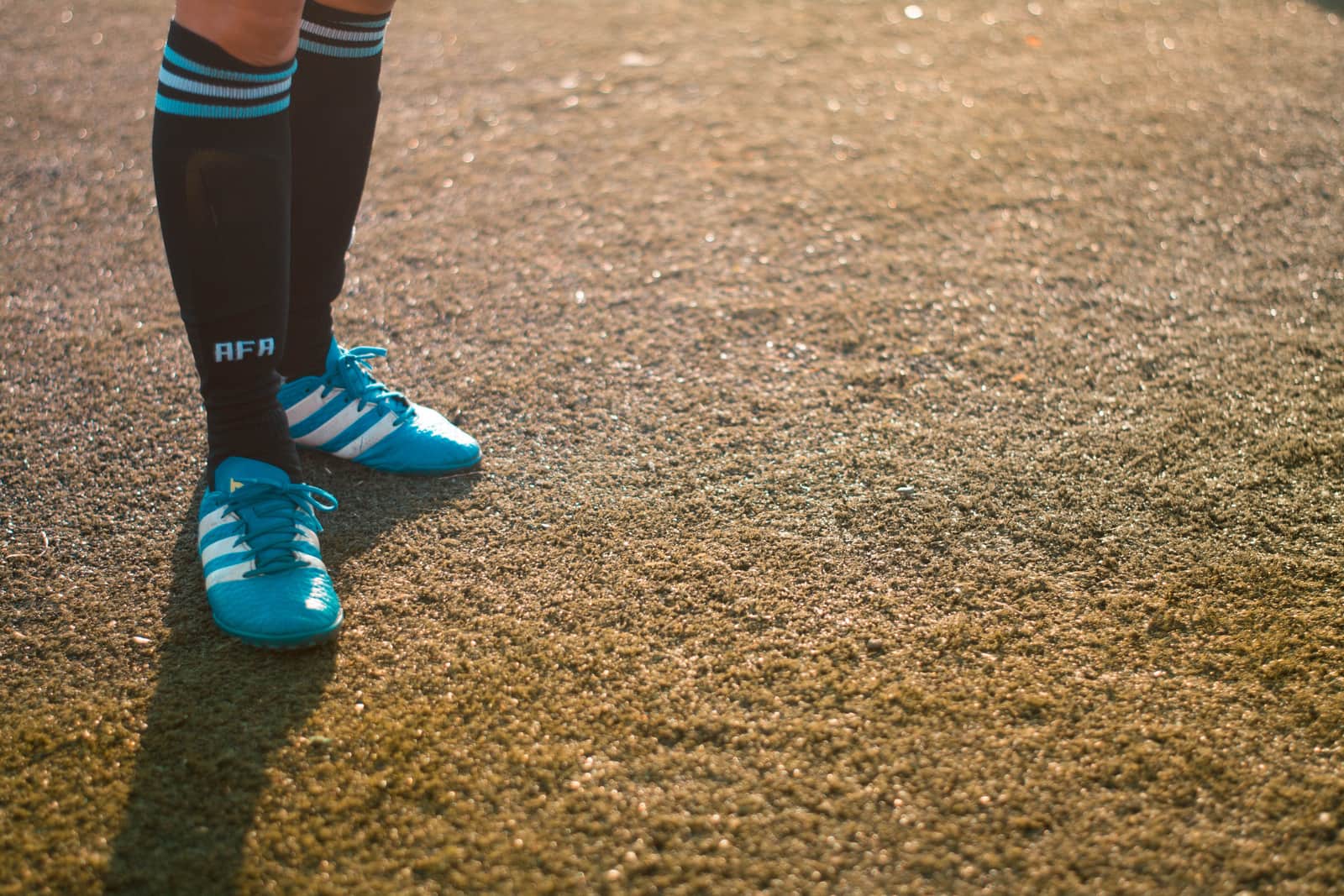
A turf outsole uses many short rubber studs instead of a few long ones, spreading a player's weight across the whole foot rather than concentrating it on stud points. On artificial turf that is the single biggest comfort difference available, and the main reason a second pair is worth buying for weekly turf training.
Turf shoes are the most commonly skipped purchase in youth soccer and one of the most justified. The typical American pattern is games on grass, training on artificial turf — and most kids do both in the one pair of firm-ground cleats bought for Saturday.
That works, in the sense that they can play. But firm-ground studs do not sink into artificial turf. They sit on top of it and take the child's whole weight through a handful of small points, over and over, which is uncomfortable at eight and a genuine source of foot and heel soreness at ten and eleven.
Start here
Pick by your kid’s level
The right answer changes with the level, not just the shoe size. Find your kid’s bracket and start there.
The default turf pick: same upper as the firm-ground Club at the same price point, on a turf outsole. Narrow Mercurial last, so for an average or slim foot.
The turf shoe for a broad foot. Noticeably roomier than the Mercurial turf option, with a softer upper for the long repetitive touches turf training involves.
The budget turf option, and the right call for a younger player — cheapest route into a proper turf outsole from a major brand, with a wide forgiving forefoot.
Tap any row to jump to the full write-up. We do not show prices because we do not hold live pricing — the button opens the current Amazon listing so you see today’s number rather than last month’s.
#
Product
Best for
Surface
Fit notes
Price
1
Nike Jr. Mercurial Vapor 16 Club TurfThe right second pair once a kid is training on artificial turf every week, and a bad only-pair if games are on grass.
U7–U8 rec, U9–U10, U11–U12, U13+ travel & club
TF (turf)
Same narrow Mercurial last as the firm-ground Club.
PUMA Jr. Future Play TT TurfThe most comfortable junior turf shoe here, with the least protection — a fine trade for training, less so for a competitive match.
Product photos are licensed representative stock images, not photographs of the exact model.
What a turf outsole actually is
Worth being precise, because the labels are confusing and three different things get called 'turf shoes' in casual conversation.
Label
Outsole
For
TF / TT (turf)
Many short rubber nubs across the whole sole
Artificial turf, and short mown grass
AG (artificial grass)
More studs than FG, shorter and hollow
Long-pile third-generation artificial grass
FG (firm ground)
Few long studs, widely spaced
Natural grass only
IN / IC (indoor)
Flat non-marking gum sole, no studs
Gym floors, futsal courts
Scroll the table sideways on a narrow screen.
The important distinction for parents: TF and AG are not the same thing. AG cleats have studs and are built for the long-pile artificial grass used on full-size pitches. TF shoes have nubs and are built for the shorter, harder artificial turf most indoor and training facilities use. If your kid trains on a hard sand-filled surface, TF is what you want.
Comfort underfoot. The spread-load outsole is why kids stop complaining about their feet after turf sessions. This is the main reason to buy.
They double as ordinary shoes. A turf shoe looks like a sneaker and can be worn to school. Practically, that means it gets used far more hours than a cleat ever will, which changes the cost calculation.
A second pair means neither pair stays wet. At three or four sessions a week, one pair never dries out. Alternating roughly doubles the life of both.
Better grip on hard turf. Firm-ground studs on a hard surface can be slippery as well as uncomfortable, because they never get purchase.
When a turf shoe is the wrong only-pair
One clear case: if games are on natural grass, especially wet natural grass, a turf shoe is not enough. The short nubs cannot bite into soft ground and your kid will slip.
If you can only buy one pair and the schedule is mixed, buy a multi-ground (MG) or FG/AG cleat rather than either extreme. It is a compromise in both directions and it is adequate in both — which for one pair is the right answer. The Nike Mercurial Vapor Club MG and PUMA Ultra Play FG/AG both do this; see the 8 year olds picks.
Sizing turf shoes
Two differences from cleats worth knowing. Turf shoes generally run slightly more forgiving in width at the same nominal size, because there is no rigid stud plate defining the footprint — so a kid who is tight in a Mercurial cleat may be fine in the Mercurial turf shoe.
And they should fit snugger than a cleat. There is no stud plate stabilizing the foot, so a sloppy fit in a turf shoe means the foot slides on every change of direction. Same thumb's width at the toe, but pull them properly tight. See how cleats should fit.
1. Nike
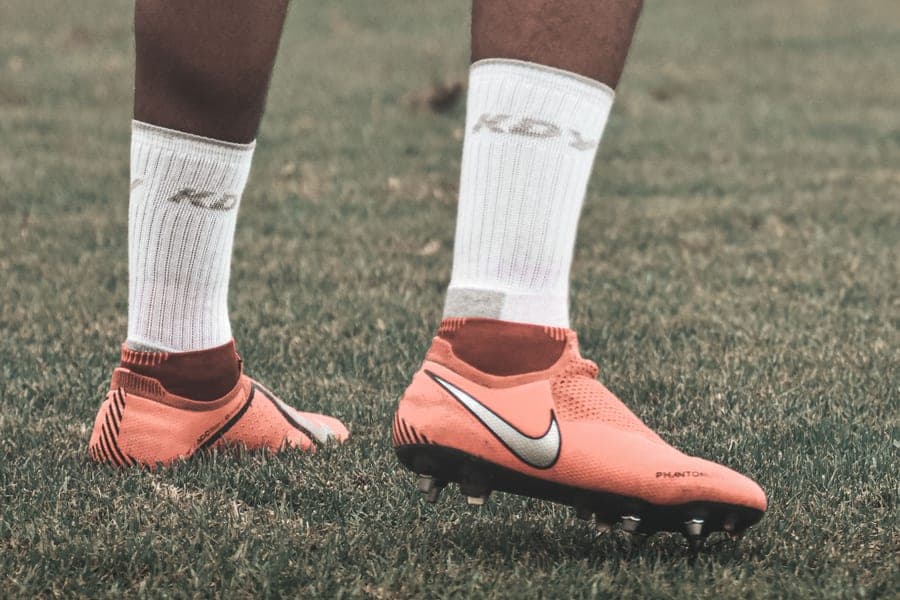
Nike Jr. Mercurial Vapor 16 Club Turf
The right second pair once a kid is training on artificial turf every week, and a bad only-pair if games are on grass.
Best for
Turf training and indoor-outdoor winter sessions, U8+
Levels
U7–U8 rec · U9–U10 · U11–U12 · U13+ travel & club
Type / surface
TF (turf)
How it fits
Same narrow Mercurial last as the firm-ground Club. True to length.
What we like
The turf outsole spreads load across the whole foot, which is the single best thing you can do about turf-related heel and arch soreness
Wearable off the field, so a kid will actually keep them on after training
Where it falls short
Useless on wet natural grass — the short studs will not bite
Buying turf shoes means a second pair to store, lose and outgrow
Manufacturer’s published specs
Turf outsole with many short rubber studs rather than molded cleats
Same Mercurial 16 Club upper as the firm-ground version (Nike)
Little kids' and big kids' sizing
These are the manufacturer’s own claims, not measurements we took.
Only if they train on artificial turf regularly. For a mixed schedule with one pair, a multi-ground or FG/AG plate is the sensible compromise. For weekly turf training, a turf outsole spreads load across the whole foot rather than concentrating it on studs, which is the biggest comfort improvement available in youth soccer footwear.
Can you wear turf shoes on grass?+
On short, dry, mown grass, yes — turf shoes grip that surface perfectly well. On longer or wet natural grass, no: the short nubs cannot bite into soft ground and your kid will slip. If games are on real grass, turf shoes should not be the only pair.
What is the difference between turf and artificial grass cleats?+
Turf shoes (TF or TT) have many short rubber nubs and are built for the shorter, harder artificial turf used at most training facilities. Artificial grass cleats (AG) have actual studs — more of them, shorter and hollow compared with firm-ground — and are built for the long-pile third-generation artificial grass on full-size pitches.
Are turf shoes better for kids' feet?+
On artificial turf, generally yes. The outsole distributes a player's weight across the whole foot rather than concentrating it on a handful of stud points, which is why kids stop complaining about sore feet after turf sessions. On natural grass the reverse applies — studs are what that surface is designed around.
How should youth turf shoes fit?+
Snugger than cleats. There is no stud plate stabilizing the foot in a turf shoe, so a loose fit means the foot slides on every change of direction. Keep the same thumb's width beyond the longest toe, but lace them properly tight.
Nike — kids' soccer cleats and shoes — Verified that each Nike model named on this page is currently sold, and the source for Nike's own published upper, plate and surface descriptions.
adidas — kids' soccer — Verified current availability of the adidas models named here, plus adidas's published material and construction claims.
Vizari Sports — youth cleats and indoor shoes — Verified the Vizari models named here are currently sold, including the toddler size range and the indoor line, plus Vizari's published material claims.