Heads up: we earn a commission if you buy through our links, at no extra cost to you. It never changes which product we recommend — here’s how that works.
The short answer
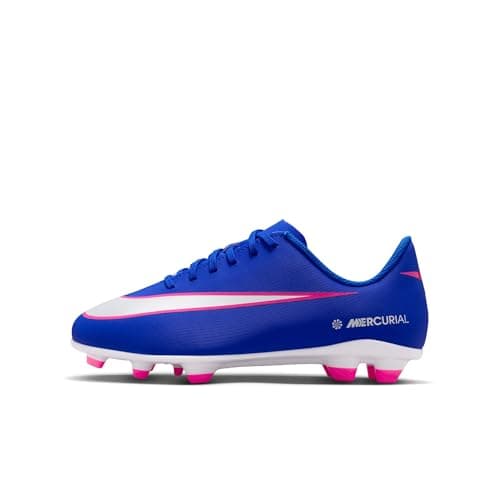
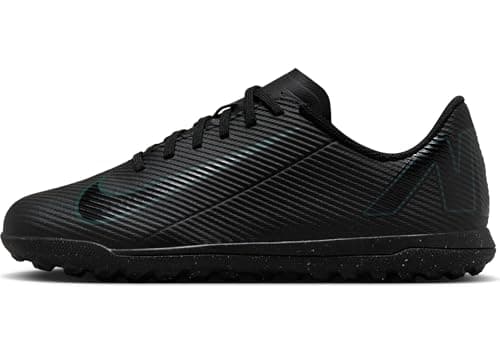
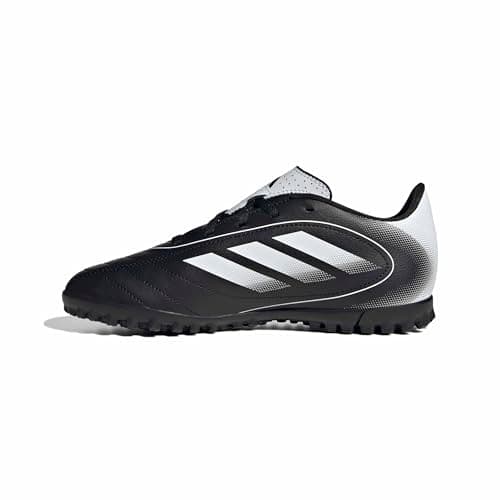
On genuinely hard, baked ground the right answer is more studs, not longer ones. For most youth players that means a turf outsole: the adidas Goletto IX Turf is the cheap, sensible pick and the Nike Mercurial Vapor 16 Club Turf the better-made one. If games have to be played in cleats, a multi-ground plate like the Nike Vapor 16 Club MG spreads the load far better than a firm-ground plate does. Avoid long firm-ground studs on concrete-dry fields.
Hard ground is the surface nobody shops for. Parents buy firm-ground cleats in spring, the field dries out in July and August, and the same shoe that gripped beautifully in May is suddenly a set of six stilts on a surface that will not let them in. The kid comes off sore and nobody connects the two.
There is a category abbreviation for this — HG, hard ground — and it is worth knowing that it is largely a European and Asian market label. It is scarce in US junior ranges, which is why the practical answer on this page is a plate you can actually buy rather than a letter you will not find.
What hard ground does to a firm-ground plate
A firm-ground plate is designed around a stud sinking in. The grass yields, the stud goes down, and the load spreads through the sole of the foot as the plate beds in. Take the yield away and nothing beds in: the studs stay proud, the shoe rides on six points, and every step lands on those six points.
Pressure under the forefoot. Six long studs holding up a child on a surface that will not compress is a small contact patch carrying a lot of load. Kids describe this as the cleats feeling hard, not as pain, which is why it goes unreported.
Grip that arrives in jerks. A stud that cannot penetrate either slips or catches. Neither is what a player wants mid-turn.
Stud wear. Long studs on hard ground wear blunt and uneven, and Law 4 guidance is explicit that worn, pointed or exposed-shaft studs are not permitted. A season on baked fields can genuinely retire a plate.
Aches the next day. Repeated hard landings through a thin sockliner is the usual explanation for a kid who is fine during the game and complaining on Sunday.
What to buy instead
Three tiers, from cheapest to most committed.
Stud counts and surface ratings are each manufacturer's own description of the plate, not measurements we have taken.
Option
Studs
Best when
Watch out for
Turf outsole (TF/TT)
Dozens of small rubber nubs
Dry summer training, hard municipal fields, any practice session
Some leagues require cleats for games
Multi-ground (MG)
More and shorter than FG
One pair covering a season that bakes dry mid-summer
Still a stud plate — not as forgiving as rubber
Firm ground (FG)
Fewer, longer
Soft or watered grass
The wrong shoe on baked ground
Soft ground (SG)
Six to eight long, often metal
Wet, muddy natural grass only
Restricted in most youth leagues
Scroll the table sideways on a narrow screen.
Start here
Pick by your kid’s level
The right answer changes with the level, not just the shoe size. Find your kid’s bracket and start there.
The cheapest route into a proper turf outsole from a major brand, and the right first answer for a dry municipal field. Cushioning is thin, so budget for an insole if your kid complains about hard ground.
The one-pair compromise when the league wants cleats for games. The multi-ground plate has more and shorter studs than a firm-ground one, which is exactly the direction a baked field calls for.
A better-made turf shoe than the entry tier, on the same Mercurial last as the cleats, so a kid moving between a game pair and a practice pair is not relearning the fit. Narrow — not for a broad foot.
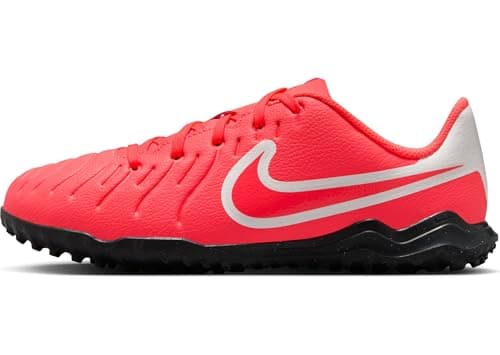
The turf pick for a wider foot. The Tiempo last is the most generous Nike makes, which matters on a hard surface where a pinched forefoot has nowhere to go.
Tap any row to jump to the full write-up. The price in each button is the one Amazon reported on the date stamped under it — tap through for today’s number, which is the only one that can be relied on.
#
Product
Best for
Surface
Fit notes
Price
1
adidas Goletto IX TurfA defensible way to get a second pair without spending twice; add an insole if your kid complains about hard turf.
U6, U7–U8 rec, U9–U10
TF
Generous width, true length — same last behavior as the firm-ground Goletto..
Nike Jr. Mercurial Vapor 16 Club TurfThe right second pair once a kid is training on artificial turf every week, and a bad only-pair if games are on grass.
U7–U8 rec, U9–U10, U11–U12, U13+ travel & club
TF (turf)
Same narrow Mercurial last as the firm-ground Club.
Product photos come from each item’s current Amazon listing.
The turf-shoe objection, answered
The obvious complaint about recommending turf shoes for hard ground is that plenty of leagues expect cleats for games. That is true, and it does not change the recommendation much, because the hours are not evenly split. A youth player trains two or three times for every game they play, and training is where the baked-field problem actually bites. A turf pair for practice and whatever the league requires for games is the right shape of answer.
Where a single pair has to cover everything, multi-ground is the compromise that handles a dry field best. MG vs FG soccer cleats sets out what that plate gives up, and best soccer cleats for turf and grass is the roundup for a genuinely split schedule.
1. adidas
adidas Goletto IX Turf
A defensible way to get a second pair without spending twice; add an insole if your kid complains about hard turf.
Best for
The budget turf pair, U6–U10
Levels
U6 — first kicks · U7–U8 rec · U9–U10
Type / surface
TF
How it fits
Generous width, true length — same last behavior as the firm-ground Goletto.
What we like
Cheapest route into a proper turf outsole from a major brand
Wider forefoot than the Nike junior turf equivalents
Where it falls short
Thin cushioning, which partly undermines the reason for buying turf shoes in the first place
Outsole rubber wears smooth faster than pricier turf shoes
Manufacturer’s published specs
Turf version of adidas's entry-level junior boot
Synthetic upper
Rubber turf outsole
These are the manufacturer’s own claims, not measurements we took.
The safest default cleat for a rec player between U7 and U12, as long as the foot is average width or narrower.
Best for
The default first real cleat, U7 through U12
Levels
U7–U8 rec · U9–U10 · U11–U12
Type / surface
MG (multi-ground)
How it fits
Runs true to length but narrow. Order the regular size with a thumb's width at the toe and do not go up a full size to buy time — the heel will slip and blister.
What we like
Multi-ground plate means one pair covers a rec season split between grass and turf fields
The Club tier is the cheapest step into the Mercurial line, so the shoe looks like what the older kids wear without the Academy or Pro price
Wide size run from little kid up through big kid, so siblings can stay in one model
Where it falls short
Narrow through the midfoot like most of the Mercurial line — a genuinely wide foot will feel it
Synthetic upper does not stretch and mold the way leather does, so it will not grow with the foot at all
Manufacturer’s published specs
Synthetic leather upper with textured detailing for grip on the ball (Nike)
Molded studs on a plastic plate, rated by Nike for natural grass and artificial grass
Low-top collar
Sold in little kids' and big kids' sizing
These are the manufacturer’s own claims, not measurements we took.
Hard ground is a cushioning problem as much as a traction problem, and the cheapest fix is often not a different shoe. The entry-level turf shoes here — the Goletto IX Turf in particular — have thin cushioning, which partly undermines the reason for buying turf shoes in the first place. An insole is a few dollars against the price of another pair of shoes.
Two pages cover the rest of this properly: best cushioned soccer cleats for kids is the roundup for a player who lands heavily, and best soccer cleats for Sever's disease matters here specifically, because heel pain in a growing child is both common and aggravated by repeated hard impact. If your kid has started limping after dry-season sessions, read that one before buying anything.
Socks are the other quiet variable. A hard, dry field means a hot, dry foot sliding inside a shoe, and that is the chafing mechanism the American Academy of Dermatology describes as the cause of blisters: moisture-wicking rather than cotton, and a proper fit rather than a loose one. Best soccer socks to prevent blisters covers what works.
When the field is hard enough to stop playing
Worth saying, because a gear page should: there is a point where no shoe is the answer. A field baked to the point of cracking is a surface that will not absorb a fall, and no plate changes that. That is a conversation with a coach rather than a shopping decision, and it is more common at the end of a dry summer than most leagues admit.
Short of that, the practical routine is simple. Check the plate before the season rather than after it — blunt, uneven studs are both slower and a Law 4 problem. Keep a turf pair for the hardest weeks. And if a kid who was fine in May is sore in August, look at the ground before you look at the kid. When to replace kids' soccer cleats covers what worn-out actually looks like.
Common questions
What cleats are best for hard ground?+
Ones with more and shorter studs rather than fewer and longer ones. In US junior sizes that usually means a turf outsole — the adidas Goletto IX Turf or the Nike Mercurial Vapor 16 Club Turf — or a multi-ground plate if games require cleats. A firm-ground plate is the wrong shoe on baked ground because the studs cannot sink in, so the load rides on six points.
Are HG cleats a real category?+
Yes, but mostly outside the US. HG means hard ground, and the plate sits between firm ground and turf: more studs, shorter than FG. It is common in European and Asian ranges and scarce in US junior lines, which is why the practical answer here is a turf outsole or a multi-ground plate you can actually buy in your kid's size.
Can you use firm-ground cleats on a dry, hard field?+
You can, and it is what most kids end up doing, but it is uncomfortable and it wears the plate. The studs stay proud instead of bedding in, so the shoe rides on a small contact patch and grip arrives in jerks. If the dry spell lasts more than a couple of weeks, a turf pair for training is a better use of money than toughing it out.
Do turf shoes work for games on hard ground?+
They work well on the surface and may not be allowed by the league, which is the real constraint. Most youth leagues expect cleats for matches. Since kids train two or three times for every game, the sensible split is a turf pair for practice and whatever the league requires for games, with a multi-ground plate as the single-pair compromise.
Why does my kid's heel hurt after playing on hard fields?+
Repeated hard impact through a thin sole is the usual mechanism, and in a growing child it is worth taking seriously rather than treating as a shoe problem. Sever's disease — calcaneal apophysitis — is a common cause of heel pain in active children and is aggravated by exactly this kind of loading. Our page on cleats for Sever's disease covers it, and persistent heel pain is a reason to see a clinician rather than buy insoles.
Does an insole fix hard-ground discomfort?+
Often, and it is the cheapest thing to try. The entry-level turf shoes have thin cushioning, which partly defeats the point of buying them, and a replacement insole costs a fraction of another pair of shoes. It does not change the traction problem, so it is a complement to the right plate rather than a substitute for it.
Sources
Nike — kids' soccer cleats and shoes — Verified that each Nike model named on this page is currently sold, and the source for Nike's own published upper, plate and surface descriptions.
adidas — kids' soccer — Verified current availability of the adidas models named here, plus adidas's published material and construction claims.
Vizari — guide to soft ground soccer cleats — A manufacturer's description of soft-ground construction: six to eight studs, often metal or metal-and-plastic, frequently replaceable, built for wet, muddy or soft natural grass so the longer studs penetrate deeper. Used for what SG cleats are, not for whether a child should wear them.
Coaching American Soccer — Law 4, The Players' Equipment — The Law 4 requirements quoted on this site: footwear is compulsory but cleats are not specified; shinguards must be of suitable material, appropriate size and covered by the socks, with the player responsible for suitability; a player must not use equipment that is dangerous; and the referee-level guidance that worn, pointed or exposed-shaft studs and shoes with sharp metal or pointed spikes are not permitted.
American Academy of Dermatology — how to prevent and treat blisters — Board-certified dermatologists' published guidance, and the source for the blister-prevention facts on this site: blisters are caused by chafing and are prevented by preventing chafing; to prevent blisters on the feet, wear nylon or moisture-wicking socks, and if one pair does not help, try two pairs; shoes should fit properly and be neither too tight nor too loose; avoid cotton in activewear because cotton soaks up sweat and moisture, which leads to friction and chafing; adhesive moleskin or soft bandages help at problem areas; stop the activity if there is pain, discomfort or redness; most blisters heal on their own in one to two weeks; and a blister should be left unpopped and loosely covered rather than drained.