Roughly ages 3 to 5
U6 first kicks: what your kid actually needs
Less than you have been told, and probably not cleats.
By Ryder M. · Published September 27, 2026
Heads up: we earn a commission if you buy through our links, at no extra cost to you. It never changes which product we recommend — here’s how that works.
The short answer
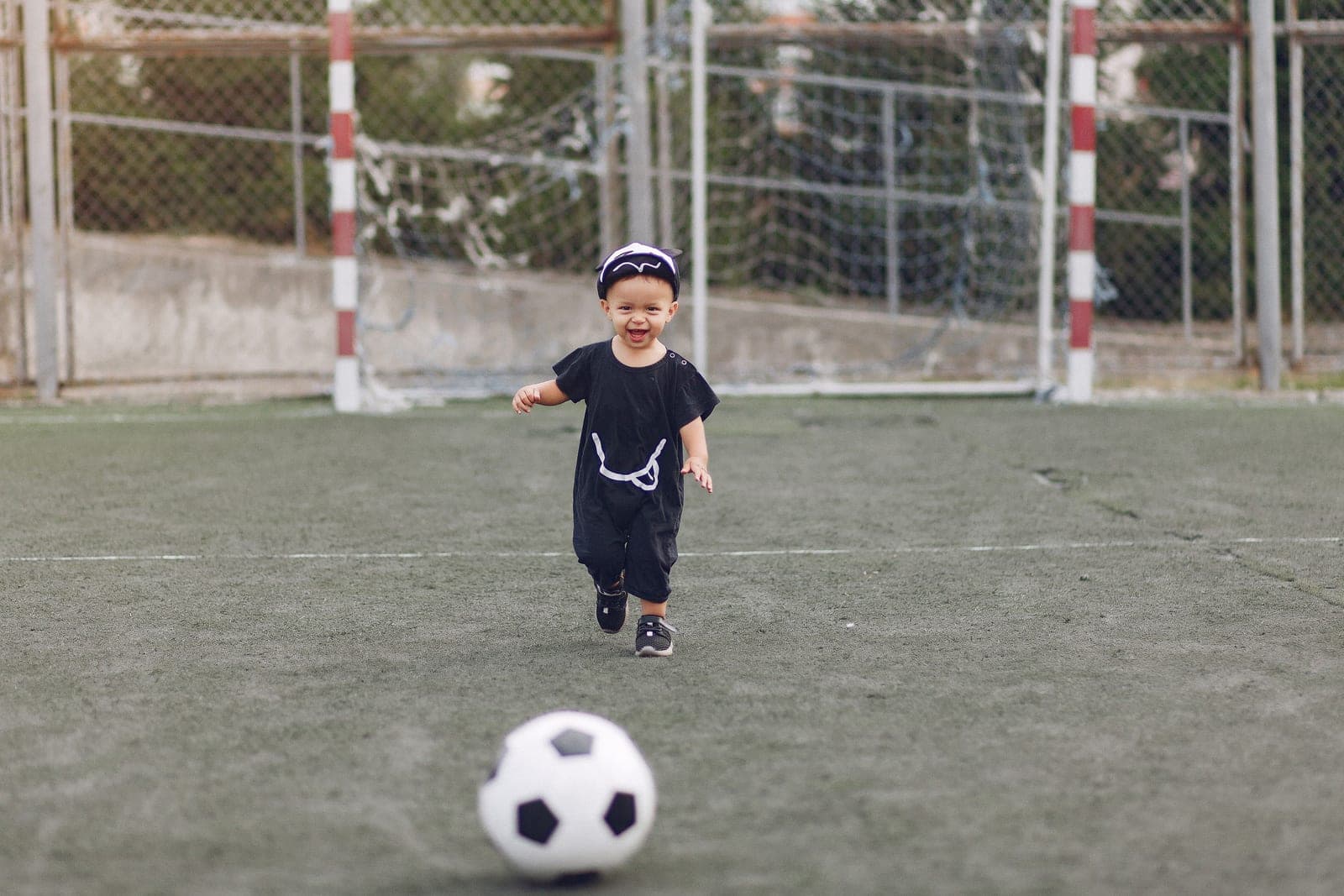
No, most 4 year olds do not need soccer cleats. U6 programs typically play on short grass with a size 3 ball, and cleats are rarely required. Turf shoes or sneakers grip fine, cost less, and can be worn to school. Buy shin guards and a size 3 ball first, and check your league's rules before spending on footwear.
This is the level where families spend the most money on the least necessary equipment, and it is not their fault. A four-year-old signs up for soccer, a parent looks at what soccer players wear, and buys a small version of it. Then the season turns out to be six Saturday mornings of dribbling round cones, the cleats are outgrown before the last one, and the shin guards were the only thing that ever mattered.
What U6 soccer actually looks like
US Youth Soccer's small-sided standards put the youngest bracket at 4v4 with no goalkeeper, on a pitch around 25 to 35 yards long by 15 to 25 wide, with a size 3 ball and no offside rule. Games run in short segments rather than two long halves.
In practice that means: a small pitch, short grass, very little sustained running, and a lot of standing. Nobody is sprinting for fifty yards or turning hard on wet turf. That is why the equipment requirements are so light — the physical demands that justify specialist footwear are simply not there yet.
The U6 kit list
Three things, and only the first two are certain:
Start here
Pick by your kid’s level
The right answer changes with the level, not just the shoe size. Find your kid’s bracket and start there.
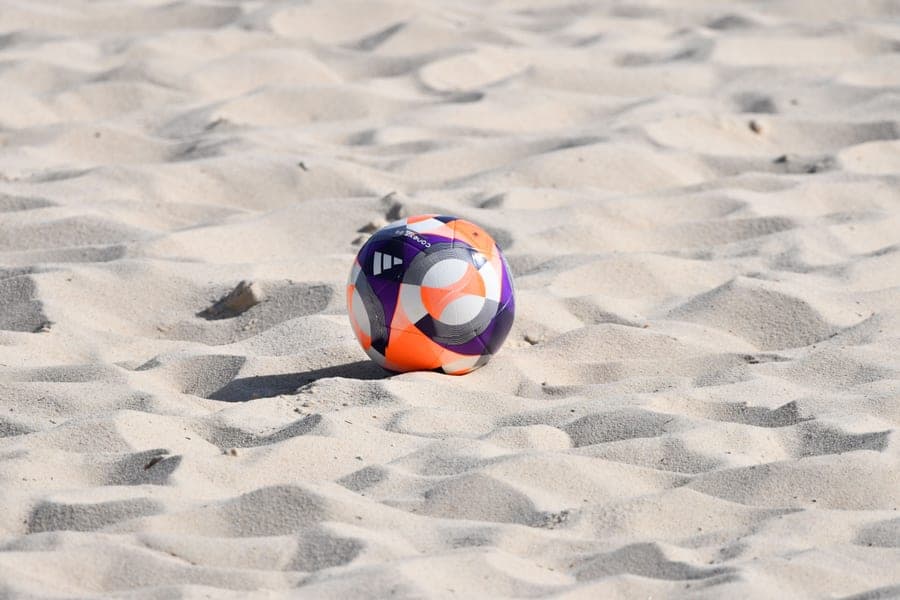
adidas Starlancer Club
A size 3 ball with a butyl bladder, so it holds air between sessions instead of needing a pump every time. Check the size on the ball itself, not the box.
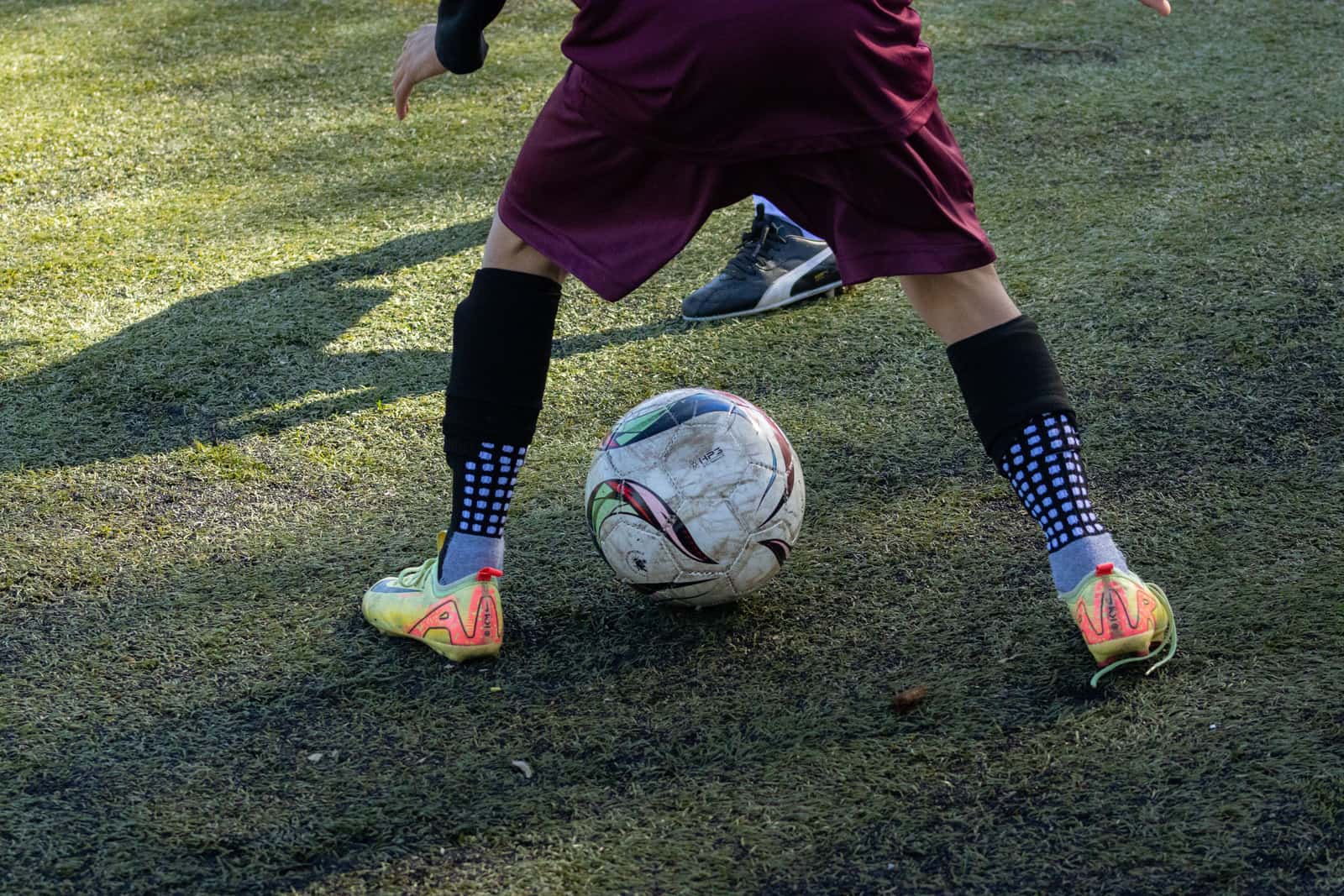
adidas Tiro Match Shin Guards Kids
Strapped shin guards with attached ankle padding. At this age kids kick each other's ankles constantly and nothing stays put in a loose sock.
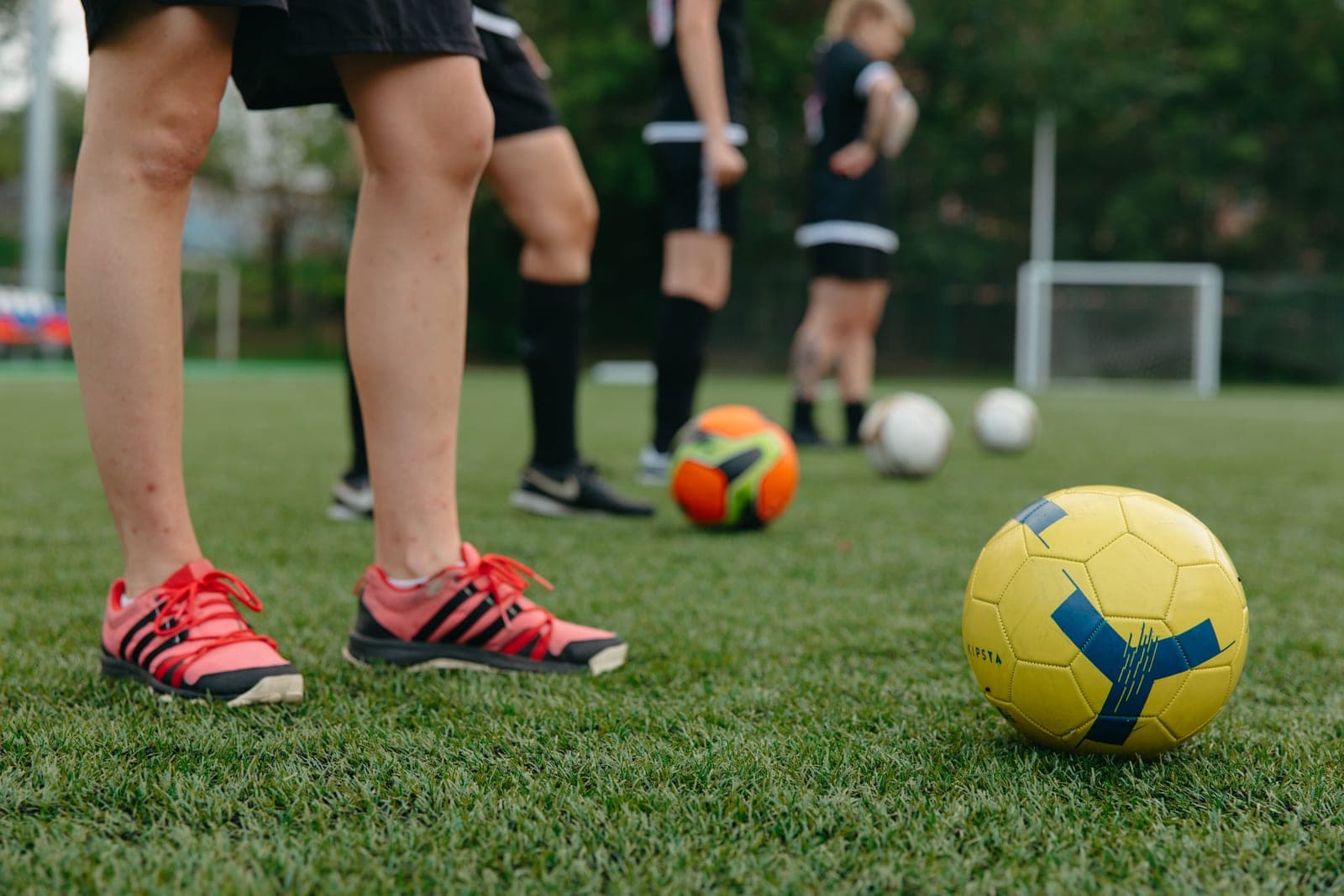
Vizari Palomar Firm Ground
If your league does require cleats, this is the sensible answer: genuine toddler sizing, cheap enough to buy at the actual current size rather than sizing up.
Do they need cleats yet? Probably not.
Check your league's rules first, because some require them and that settles it. But if the rules are silent, the honest answer at U6 is that cleats are usually the wrong first purchase.
- Short grass does not need studs. Most U6 programs play on well-mown fields where a sneaker or turf shoe grips perfectly well.
- A cleat that is too big is a hazard. Because feet at this age grow fast and cleats are outgrown quickly, parents size up to stretch the purchase. On a three-year-old that is a trip risk, not a saving.
- Turf shoes get worn more. A pair of turf shoes can be worn to school and to the park. A pair of cleats can be worn on a field for forty minutes a week.
- You will spend the money next year anyway. At U7 or U8, when they are genuinely running, cleats start to matter. Waiting costs nothing and saves a pair.
If you do want footwear that is a step up from sneakers without going to cleats, a laceless turf shoe is the sweet spot at this age — no laces to come undone mid-game, and grip suited to short grass. The laceless picks cover the options, and the toddler cleats page covers what to buy if your league insists.
The ball is the purchase that matters most
If you buy one thing well at U6, buy the ball. It is the piece of equipment your kid will use outside of organized soccer, and at this age almost all the development happens in a yard rather than at a practice. A size 3 ball that holds air is worth more than any amount of footwear.
Size 3 is correct through U8, so a good one lasts three years. AYSO's published standards put size 3 as the smallest standard size, used across the youngest divisions. If you do not own a pump, buy a ball bundle — the ball arrives deflated and nobody warns you. See the size 3 ball picks and the full size by age chart.
Shin guards: the one non-negotiable
Almost every organized program requires them, and at this age they are genuinely doing something. Four-year-olds playing 4v4 in a small space kick each other's legs and ankles a lot, mostly by accident and mostly around the ankle rather than the shin.
Get a strapped guard with attached ankle protection rather than a slip-in. Slip-ins rely on a tight sock to stay put, and no four-year-old is wearing a tight sock correctly. Size them by height, not age — the guard should reach from just below the knee to just above the ankle bone. The ankle guard picks and the size chart have the detail.
What to skip entirely at U6
- Goalkeeper gloves. There is no goalkeeper in 4v4.
- Grip socks. A four-year-old's foot is not sliding meaningfully inside a shoe, and the money is better spent elsewhere.
- A team bag. A carrier bag works. They own three items.
- A match-quality ball. Nothing about a hand-stitched ball reaches a four-year-old.
- An expensive backyard goal. A cheap pop-up is all a U6 needs, and even that is optional. See the pop-up picks if you want one — and read the anchoring guidance, because the CPSC has documented deaths from goals tipping onto children.
What comes next
At U7–U8 the ball stays size 3 but the running increases, and that is the point where cleats genuinely start to earn their place. That is also the level where laces become the defining daily problem of youth soccer.
Common questions
Do 4 year olds need soccer cleats?
Usually not. Most U6 programs play on short grass where sneakers or turf shoes grip perfectly well, and many leagues do not require cleats at all. Check your league's rules first — if they require them, buy an inexpensive pair in the measured size. If they do not, spend the money on a size 3 ball and shin guards instead.
Do toddlers need soccer cleats?
No. For a toddler-age program, sneakers are fine and often safer — a cleat bought a size too big to last longer is a genuine trip hazard on a three-year-old. Vizari is one of the few brands with genuine toddler cleat sizing if your program does require them.
What size soccer ball for a U6?
Size 3. That covers U6 through U8, so one good size 3 ball lasts roughly three seasons. Check the size printed on the ball rather than trusting the packaging, and make sure you own a pump — balls ship deflated.
What does a beginner soccer player need?
At U6, three things: a size 3 ball, shin guards with ankle protection, and whatever footwear your league requires — which is often nothing special. Add a water bottle. Everything else on the shelf can wait, and some of it can wait for years.
Do you need shin guards at U6?
Almost certainly yes — nearly every organized program requires them, and at this age they genuinely prevent bruises. Get a strapped pair with attached ankle padding rather than slip-ins, because slip-ins depend on a tight sock and a four-year-old will not keep one up.
Sources
- US Youth Soccer small-sided playing formats — Player counts, game lengths and format progression (4v4, 7v7, 9v9, 11v11) by age group.
- AYSO — Size of Ball and Field by Age Division — Official ball sizes, circumference and weight ranges, and field dimensions by age division. Used for every ball-size and field-size figure on this site.
- US CPSC — Guidelines for Movable Soccer Goals — Tipover fatality and injury figures, and the CPSC's specific anchoring, counterweighting and storage recommendations. The source for every safety figure on the goal pages.