Goalkeeper
Youth goalie glove size chart
Measure the palm, add an inch, then check they can make a fist.
By Ryder M. · Published September 27, 2026
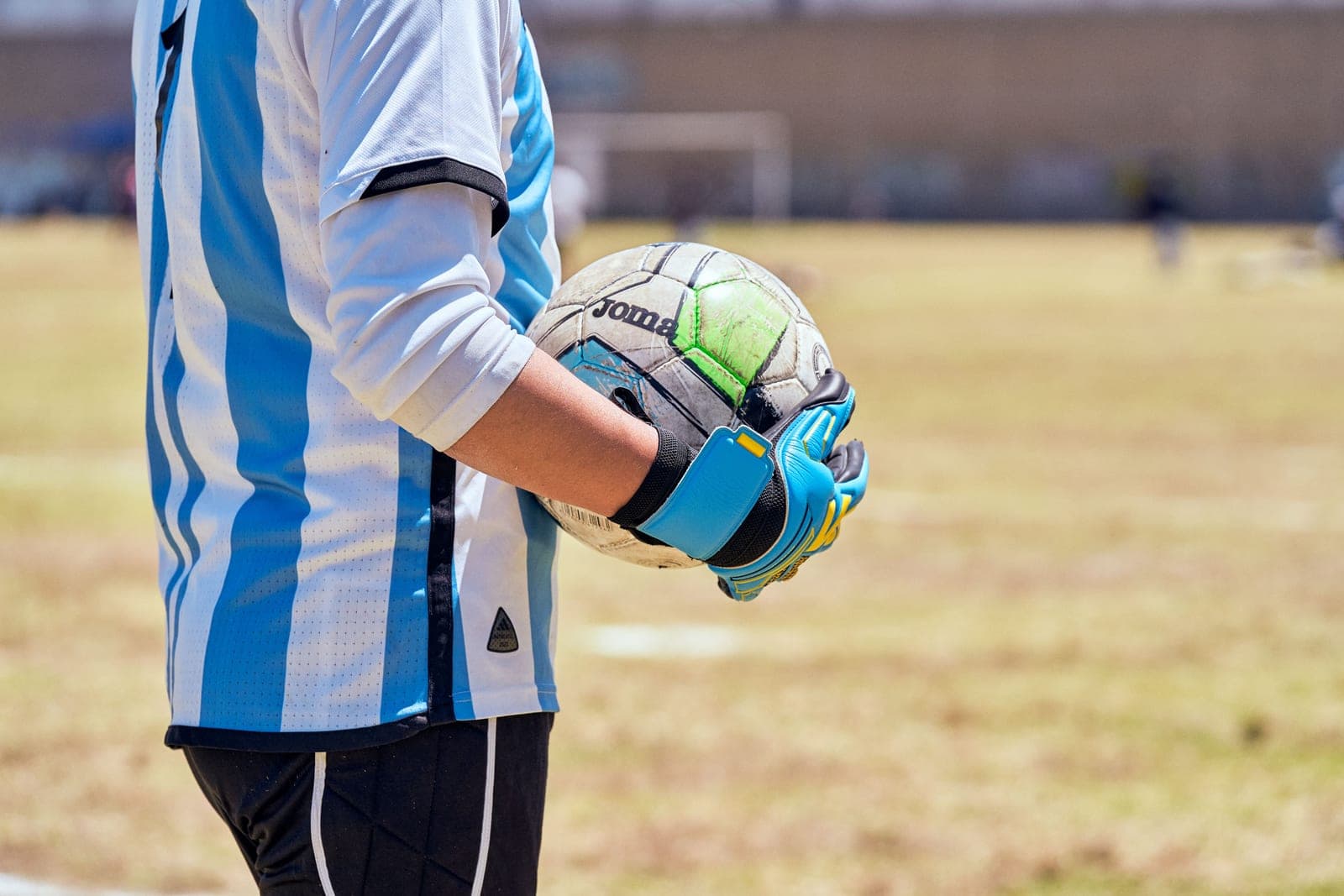
The short answer
| Glove size | Palm width (inches) | Approx. age |
|---|---|---|
| 3 | About 2 | 4–6 |
| 4 | About 3 | 6–8 |
| 5 | About 4 | 8–10 |
| 6 | About 5 | 10–12 |
| 7 | About 6 | 12–14 |
| 8 | About 7 | 14+ |
Sizes are approximate and vary between manufacturers — check the specific brand's chart. Hand size at a given age varies enormously, which is why the palm measurement is the number that matters and the age column is only a starting point.
How to measure
- Measure across the palm at its widest point, just below the knuckles, in inches. Use the dominant hand if they differ.
- Add about one inch to that measurement. The result is the glove size.
- Check the gap: with the glove on, there should be roughly a fingertip's space beyond the end of the longest finger.
- The fist test: have them make a fist. If they cannot close the hand comfortably, the glove is too small or too stiff — whatever the chart said.
The fist test is the one that actually matters. A keeper has to close their hand around a ball, and a glove that prevents it makes them worse at the one thing the position requires.
Why the extra inch
A keeper glove is meant to fit snugly but not tightly, with a small amount of space at the fingertips. The space matters for two reasons: it lets the finger flex without the latex bunching, and it gives a little room for the glove to compress on impact rather than transmitting the whole force to the fingertip.
Too tight and they cannot make a fist. Too loose and the glove moves independently of the hand, which means less grip and less control on a catch.
Junior sizing vs adult small
Worth knowing at U12 and above, where this catches people out.
Most junior keeper gloves are adult gloves scaled down, which means the proportions are off — the finger stalls end up the wrong length relative to the palm width. That is why a lot of twelve and thirteen-year-olds fit badly in both an adult small and a generic junior glove.
Reusch's Attrakt range is built on what the brand describes as a true youth sizing range, and for a thirteen-year-old it frequently fits better than an adult small does. Measure rather than assuming they have graduated out of youth sizing. See the finger protection picks.
Do not size up
The commonest sizing mistake here, and it is worse in keeper gloves than in almost any other piece of gear.
An oversized keeper glove means the hand cannot close inside it, the latex sits away from the fingers so grip is reduced, and the glove rotates on the hand during a dive. All three make a keeper worse, and the last one is how a finger gets caught.
Buy the size that fits now. Keeper gloves are a consumable anyway — the latex wears out within a season of regular use — so a pair that fits for one season has not been wasted.
Cut, briefly
You will see gloves described by cut — flat, roll finger, negative, hybrid. For youth keepers this is genuinely not worth agonizing over: the differences are about how much latex contacts the ball and how snug the fit feels, and at youth level the effect is small relative to getting the size right.
If you want a single guideline: a flat or hybrid cut is the most forgiving and the most widely available in youth sizing. Leave the rest until they are older and have an opinion.
Gloves with genuine youth sizing
Reusch
Reusch Attrakt Grip Evolution Finger Support Junior
The best-fitting youth keeper glove here, and the right pick for a kid who genuinely plays in goal every week.
adidas
adidas Youth Predator Match Fingersave Goalkeeper Gloves
The right choice specifically when finger injuries are the concern — and a slightly stiff glove is the price of that.
Nike
Nike Jr. Match Goalkeeper Gloves
The sensible glove for a rotating rec keeper, and not enough glove for a kid who plays the position properly.
Photos are licensed representative stock images, not the exact models.
When to re-check
At the start of each season, and whenever you replace the gloves — which for a regular keeper is roughly annually, since the latex wears out before the fit does.
Hands grow more slowly than feet, so a keeper glove usually outlasts a pair of cleats. The limiting factor is grip rather than size, which is a different replacement trigger from the rest of the kit. How to wash goalie gloves covers extending the grip life.
Buying without the child present
A palm measurement in inches is the number to ask for, and it survives brand differences better than a glove size does. A parent can send it in a text.
If you cannot get one, keeper gloves are a poor gift choice — like cleats, they are useless in the wrong size. A ball at the right size for their age fits anybody. See the gift ideas.
Common questions
What size goalie gloves for a 10 year old?
Usually a size 5 or 6, but measure rather than assume — hand size at ten varies a lot. Measure across the palm at its widest point in inches and add about one to get the glove size, then check there is roughly a fingertip's gap beyond the longest finger.
What size goalie gloves for a 12 year old?
Commonly a size 6 or 7, depending on the hand rather than the birthday. At this age a lot of kids fall between a junior and an adult small, and the youth-specific ranges — Reusch's in particular — often fit a twelve-year-old better than an adult small does.
What size soccer goalie gloves do I need?
Measure across the palm at its widest point, just below the knuckles, in inches, and add about one inch. That number is the glove size. Then check the fit two ways: roughly a fingertip's gap beyond the longest finger, and they can comfortably make a fist.
How to measure youth soccer goalie gloves?
Palm width at the widest point, just below the knuckles, in inches, using the dominant hand. Add about one inch for the glove size. The extra room lets the finger flex without the latex bunching and lets the glove compress on impact rather than transmitting force to the fingertip.
Should goalie gloves be tight or loose?
Snug but not tight, with a small amount of space at the fingertips. Too tight and the keeper cannot make a fist, which is the one thing the position requires. Too loose and the glove moves independently of the hand, reducing grip and rotating during a dive.
Sources
- Reusch — Attrakt goalkeeper gloves — Reusch's own description of the Finger Support system, AirVent ventilation and its youth sizing range.
- Dick's Sporting Goods — youth goalkeeper gloves — Verified current availability of the youth goalkeeper gloves named here and the manufacturers' published finger-protection descriptions.
- adidas — kids' soccer — Verified current availability of the adidas models named here, plus adidas's published material and construction claims.
Read next
- Best youth goalie gloves with finger protectionFinger-protection picks for a regular keeper, what the spines do, and how to size gloves properly.
- Best budget youth goalie glovesCheap glove picks for a rotating rec keeper, and exactly what the budget tier gives up.
- How to wash goalie glovesThe washing and drying routine that extends latex grip, and the one mistake that cracks a palm.
- Goalie gloves with or without finger protectionThe injury finger spines prevent, the feel they cost, and a decision table for which kids need them.
- Why do soccer goalies wear gloves?The three reasons keepers wear gloves, what a young keeper needs, and what the position actually asks.
- U9–U10: size 4, seven-a-side, and a goalkeeperAges 8 to 10. The ball goes up to size 4, the format goes to 7v7, and someone has to play in goal.