Cleats
How should kids' soccer cleats fit?
Snug everywhere, a thumb's width at the toe, and no heel lift. Check it with your hands, not by asking.
By Ryder M. · Published September 27, 2026
The short answer
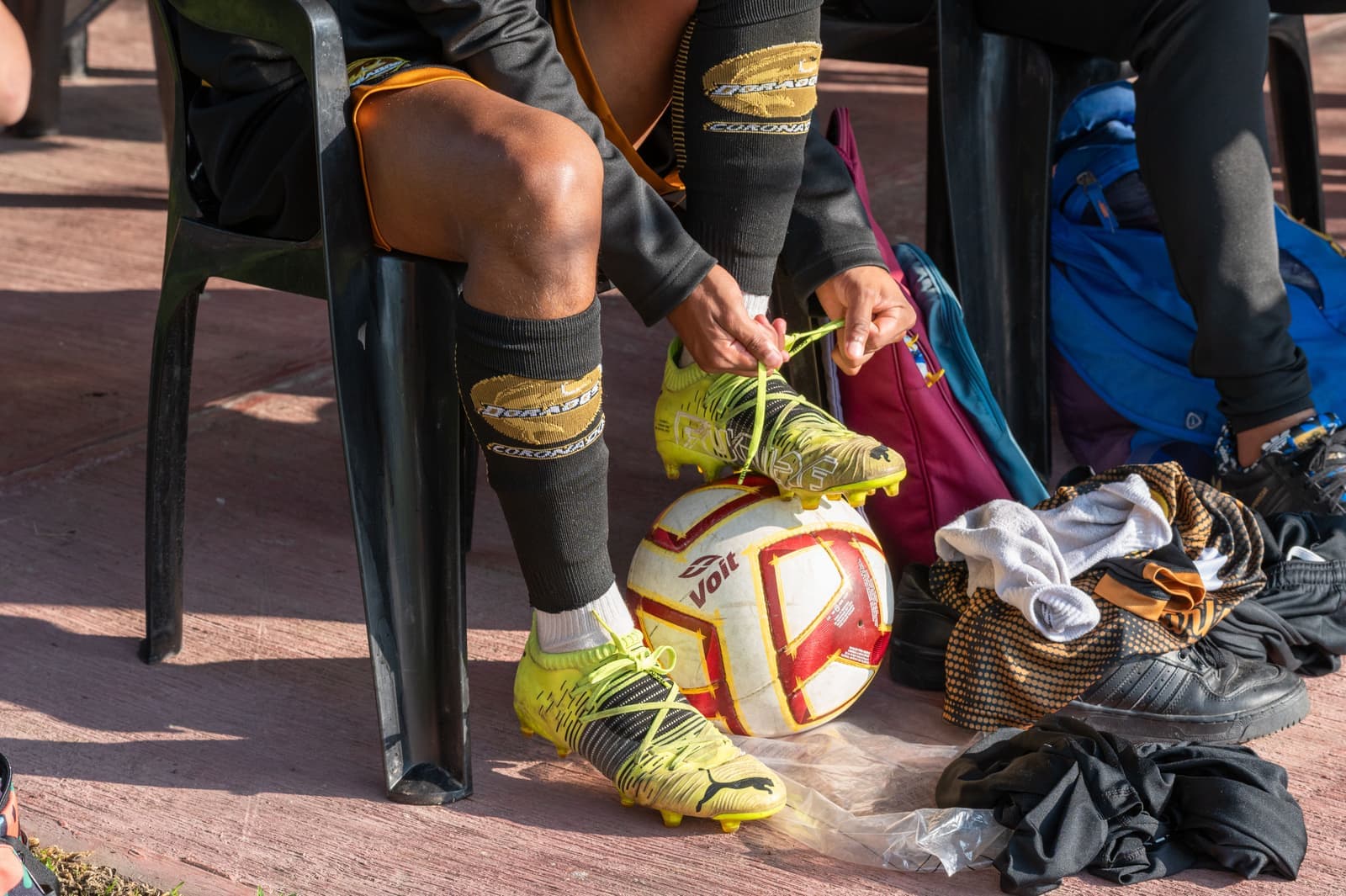
A kid's soccer cleat should have about a thumb's width (1 cm) between the longest toe and the end, be snug across the midfoot with no side pressure, and show no heel lift when they walk. Check it standing, in a soccer sock, late in the day — and check it with your hands, because a kid who wants the cleats will say they fit.
The last part is not a joke. Ask a nine-year-old whether the cleats they picked out fit and the answer is yes, regardless of the truth. Ask them again two weeks later when they have a blister and the answer becomes different. So the checks below are all things you do rather than things you ask.
The four checks
1. The thumb test — length
With the cleat on and laced, and your kid standing with weight on the foot, press down at the very end of the cleat and find the longest toe. There should be roughly a thumb's width of space beyond it — about a centimeter.
Less than that and they are already too short. Much more and the foot will slide forward, which puts the stud plate under the wrong part of the foot and lifts the heel. One centimeter, not two.
2. The pinch test — width
Pinch the upper across the widest part of the foot, over the ball. On a correctly fitting cleat you should be able to gather a small amount of material. If the upper is stretched tight over the foot with nothing to pinch, it is too narrow.
Important: if it is too narrow, the fix is a wider line, not a bigger size. Going up a size adds length and very little width, so you end up with a cleat that is too long and still too tight. See the wide feet page.
3. The heel test — hold
Have them walk a few steps, then jog on the spot. Watch the back of the cleat: the heel should stay down. Any visible lift means the cleat is too long or the heel shape does not suit the foot, and heel lift is the single most reliable predictor of a blister.
PUMA junior models are worth checking specifically here — they run a snug heel that suits some feet and slips on others.
4. The crease test — flex point
Have them rise onto their toes. The cleat should bend where their foot bends, at the ball of the foot. If the crease forms behind that, the cleat is too long; if the foot is bending before the shoe wants to, it is too short.
The conditions matter as much as the tests
- Late in the day. Feet swell over a day, and the swollen foot is the one that has to fit at the end of a game.
- In a soccer sock. A thick over-the-calf sock takes up real volume, and a fit checked in a thin school sock is not the fit they will play in.
- Standing, with weight on the foot. Feet lengthen under load. A flat foot lengthens noticeably.
- Both feet. Most people have one foot slightly larger. Fit the larger one.
What a correctly fitting cleat feels like
Worth setting expectations, because a soccer cleat fits differently from a sneaker and parents often read a correct fit as too tight.
A cleat should feel snug and held — closer to a glove than to a sneaker. There should be no movement of the foot inside it, and it will feel firmer than an everyday shoe. What it should not feel is pressure at any specific point: no pinching at the sides, no pressure across the top, no toes touching the end.
Snug is correct. Tight is not. The difference is whether the sensation is all over or in one place.
Signs the fit is wrong after a few sessions
Sometimes the fit checks out and problems show up anyway. What each symptom usually means:
| Symptom | Usually means |
|---|---|
| Blisters on the heel | Heel lift — cleat too long, or wrong heel shape |
| Blisters on the toes or a bruised nail | Too short, or foot sliding forward |
| Red marks along the sides of the foot | Too narrow — change line, not size |
| Pressure across the top of the foot | High foot volume — try looser lacing or skip a lace hole |
| They keep taking them off | Believe them. Something is wrong. |
Cleats with the most forgiving fit
adidas
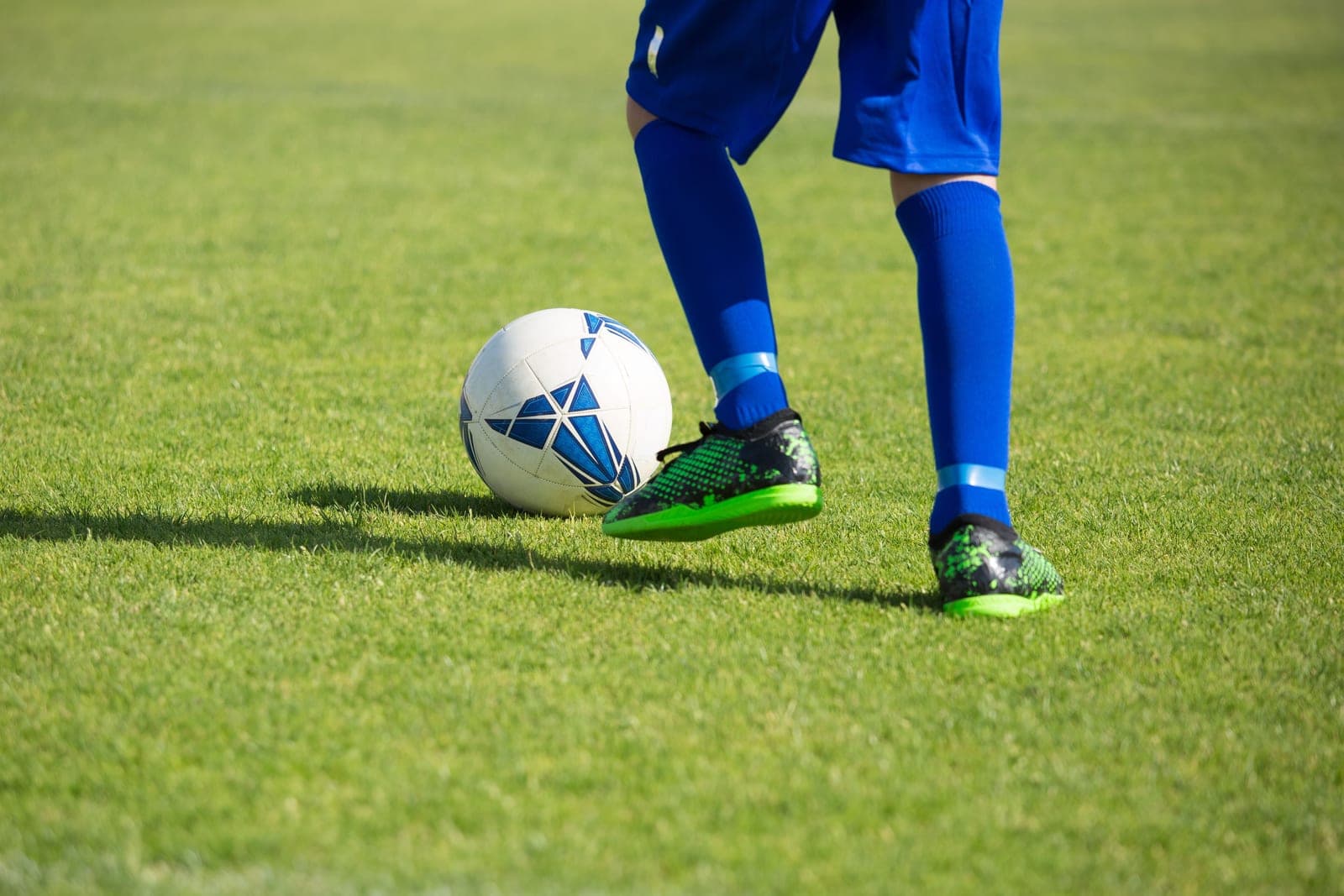
adidas Jr. Copa Pure.3 Firm Ground
The best mainstream junior cleat for a wide foot, and a real help to a player still learning first touch.
adidas
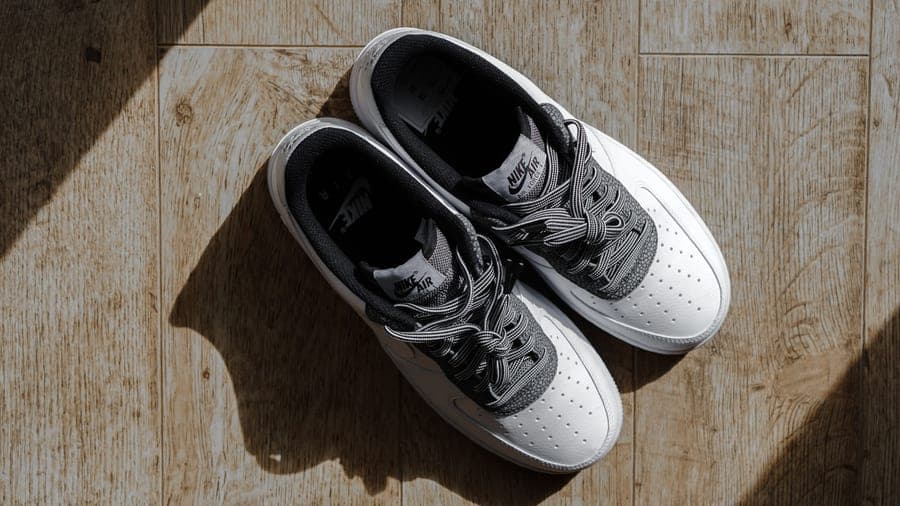
adidas Goletto VIII Firm Ground
The sensible answer when the honest requirement is a cleat that survives one rec season and costs as little as possible.
Nike
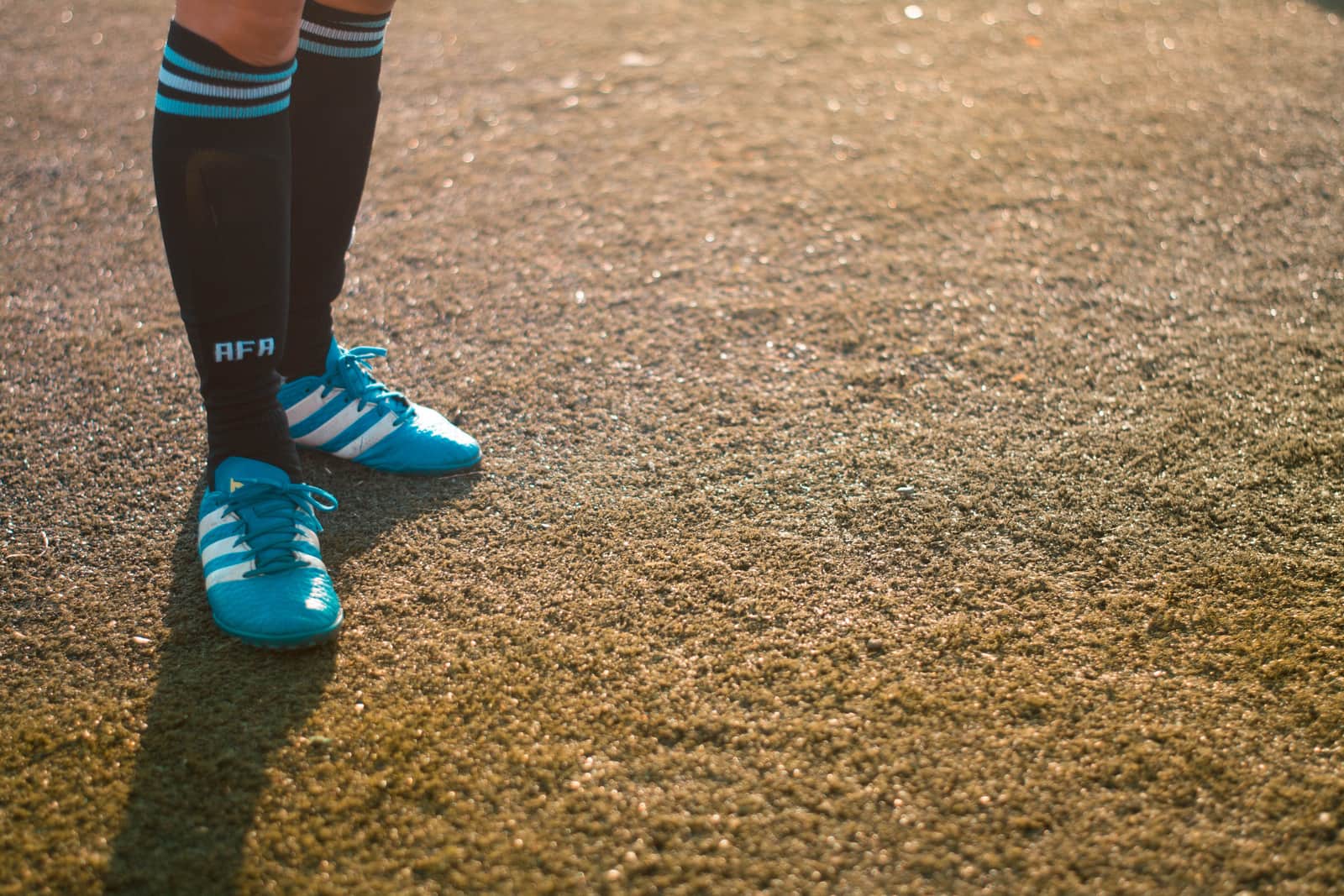
Nike Jr. Phantom GX II Academy FG/MG
The better Nike choice for a midfielder or defender who needs a reliable striking surface more than a few grams saved.
Photos are licensed representative stock images, not the exact models.
How often to re-check
Every couple of months during the season, and at the start of every season. Kids between 6 and 12 routinely move a full size in six months, and they will not tell you — a cleat gets gradually tighter and they adapt to it until something hurts.
The thumb test takes fifteen seconds and is the whole check. If the thumb's width has gone, the cleats are finished regardless of how they look. When to replace kids' soccer cleats covers the other signs.
Common questions
How should kids soccer cleats fit?
Snug all over with about a thumb's width — roughly a centimeter — between the longest toe and the end of the cleat, no heel lift when they walk, and no pressure at any single point. Check it standing, with a soccer sock on, late in the day.
Should soccer cleats be tight or loose for kids?
Snug, which is not the same as tight. A cleat should hold the foot with no internal movement — closer to a glove than a sneaker — but there should be no pinching at the sides and no toes touching the end. Snug all over is correct; pressure in one place is not.
How do I know if my kid's soccer cleats are too small?
Press at the end of the cleat while they stand in it: if there is not about a centimeter beyond the longest toe, they are too small. Other signs are blisters on the toes, a bruised toenail, or the shoe creasing behind the ball of the foot when they rise onto their toes.
How to buy kids soccer cleats without trying them on?
Measure heel to longest toe in centimeters, standing, with a soccer sock on, and use that number rather than a shoe size — it survives brand differences. Then adjust for the brand: PUMA junior runs short, Nike Mercurial runs narrow, adidas Copa and Goletto run wide.
Why do my kid's new cleats give them blisters?
Most often heel lift, which means the cleat is too long or the heel shape does not suit the foot. Blisters on the toes point the other way — too short, or the foot sliding forward. If the fit checks out and the cleats are simply new, it may just be break-in; see how to break in soccer cleats.
Sources
- Nike — kids' soccer cleats and shoes — Verified that each Nike model named on this page is currently sold, and the source for Nike's own published upper, plate and surface descriptions.
- adidas — kids' soccer — Verified current availability of the adidas models named here, plus adidas's published material and construction claims.
- Vizari Sports — youth cleats and indoor shoes — Verified the Vizari models named here are currently sold, including the toddler size range and the indoor line, plus Vizari's published material claims.
Read next
- Youth soccer cleat size chartUS, EU and centimeter conversions with approximate ages, plus how each brand's junior sizing actually runs.
- When to replace kids' soccer cleatsThe four signs a pair is finished, how often replacement actually happens, and what to check every two months.
- How to break in soccer cleatsFive steps to break cleats in without blisters, and why the water trick is a bad idea on modern uppers.
- Best youth soccer cleats for wide feetWhich lines genuinely run wide, which only claim to, and why sizing up makes a width problem worse.
- Best soccer cleats for 8 year oldsCleat picks for an 8 year old by foot width and surface, plus when the step up in price is actually worth it.
- U7–U8 rec: the first real kitAges 6 to 8. Still a size 3 ball, but this is where the first real pair of cleats earns its place.