Cleats
How to lace soccer cleats
Lacing is the only free fit adjustment a cleat has, and most people only ever use one pattern.
By Ryder M. · Published October 10, 2026
The short answer
- Heel slipping? Heel lock lacing — feed each lace through the top eyelet on the same side, then cross through the opposite loop.
- Foot too wide? Wide foot lacing — skip a set of eyelets at the bottom, then cross above the gap.
- Pressure on the instep? High arch lacing — run the lace straight up the same side instead of crossing over.
- One sore spot? Window lacing — skip the eyelet beside it to open a window.
A cleat has exactly one adjustment that costs nothing, and almost everybody uses it in exactly one way. Criss-cross from the bottom, pull tight, tie a bow. That pattern is fine for a foot that matches the last, and it is the wrong tool for the four problems above — each of which has a published fix that takes two minutes.
These are not soccer-specific tricks. They come from Nike's own lacing guide for running shoes, and they work the same way on a cleat because the mechanics are the same: laces pull the upper down onto the foot, and where you route them decides where the pressure lands.
Standard lacing, done properly
Worth a paragraph because the baseline is where most fit problems actually start. Thread the lace through the bottom eyelets with equal lengths on both sides, then crisscross progressively up the shoe, tightening as you go, and tie at the top with comfortable tension. The two parts people skip are starting with the lengths equal — which is why so many cleats end up with one long and one short end — and tightening as you go rather than only at the top, which leaves the forefoot loose no matter how hard the bow is pulled.
Heel lock lacing, for a heel that lifts
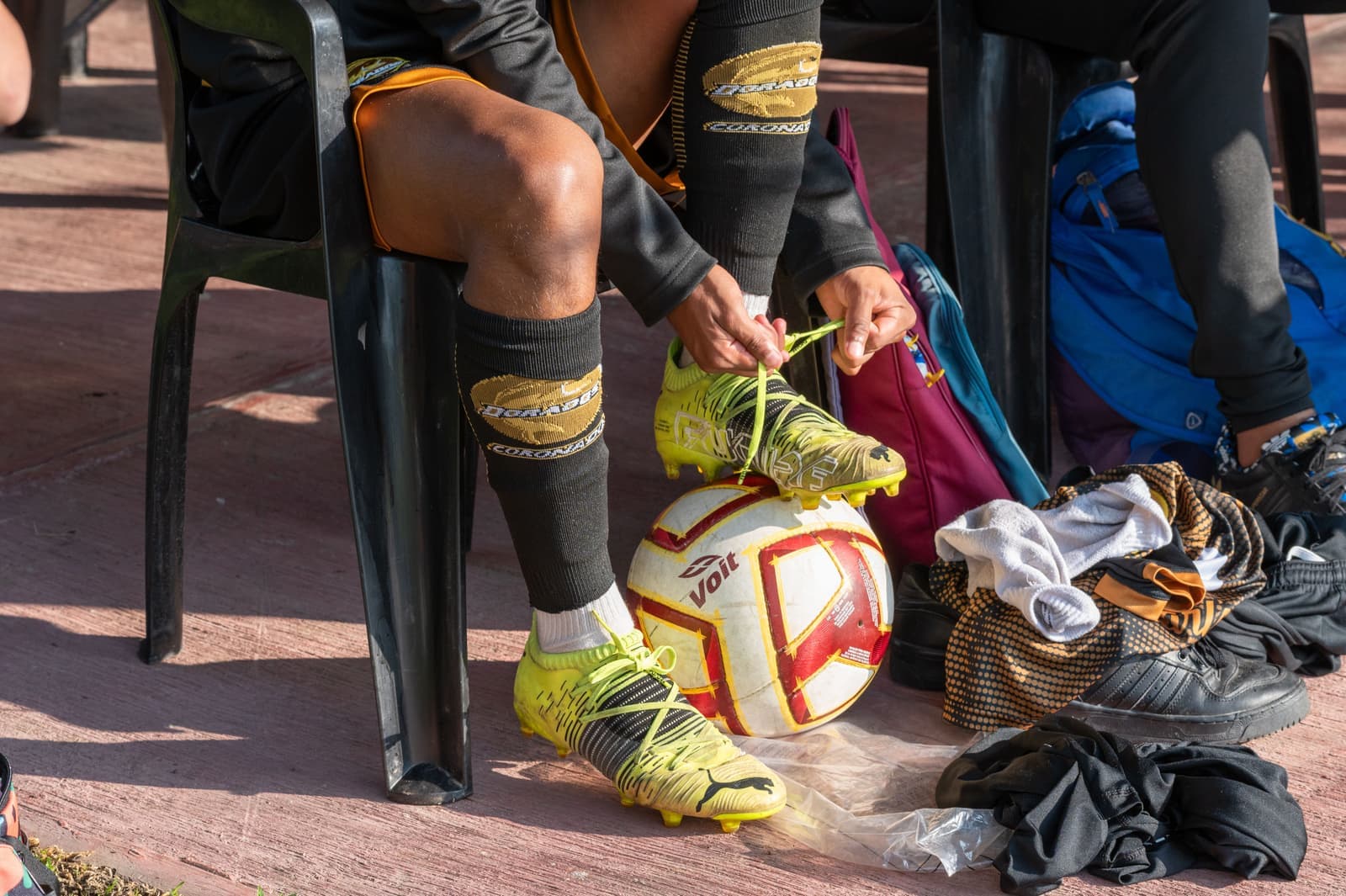
The most useful pattern on this page, and the fix for the most common complaint. If a kid's heel comes up out of the cleat when they walk or run, the foot is sliding — which is where blisters, lost first touches and black toenails come from.
- Lace normally up to the second-to-last set of eyelets.
- Feed each lace end through the top eyelet on the same side, creating a small loop on each side rather than crossing over.
- Cross the ends over and feed each through the loop on the opposite side.
- Pull tight until the heel feels secure, then tie as usual.
Nike's own description of what this achieves is worth quoting as the reason to bother: it creates a firm grip around the heel, minimizing movement and preventing blisters. That is the mechanism behind the most predictable blister in youth soccer, which is why best soccer socks to prevent blisters sends people back here.
The runner's loop is a close cousin and works the same way: build a loop on each side at the top eyelets by threading from the outside in, then cross each loop to the opposite side and feed it through the other loop before pulling tight.
Cleats worth lacing properly
Nike
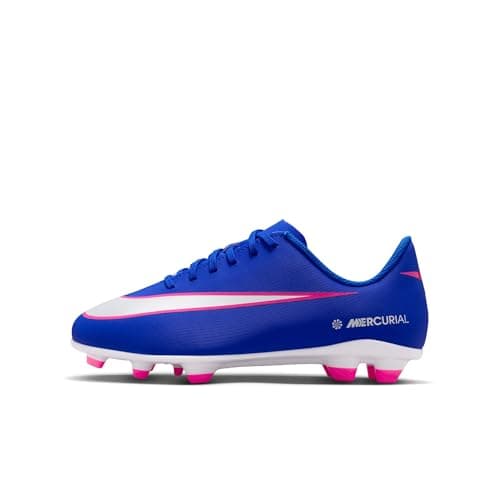
Nike Jr. Mercurial Vapor 16 Club MG
The safest default cleat for a rec player between U7 and U12, as long as the foot is average width or narrower.
$60.88View on Amazon#ad — we may earn a commission · price as of October 16, 2026
adidas
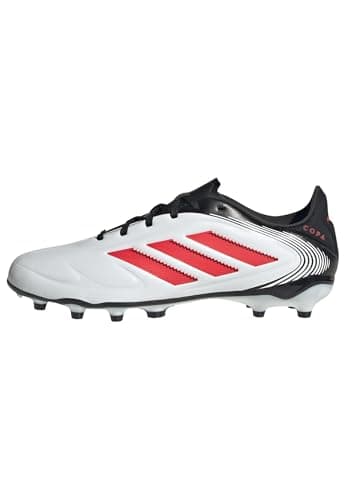
adidas Copa Pure 3 League Firm Ground (Kids)
The best mainstream junior cleat for a wide foot, and a real help to a player still learning first touch.
$60.00View on Amazon#ad — we may earn a commission · price as of October 16, 2026
PUMA
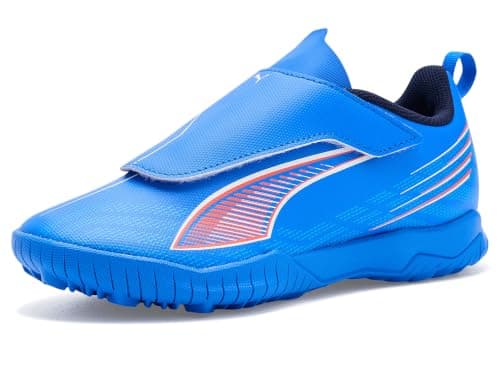
PUMA Ultra 6 Play Hook and Loop Turf
The better no-laces option for a narrow foot, with the caveat that the strap is a wear item.
$40.30$45.00−10%View on Amazon#ad — we may earn a commission · price as of October 16, 2026
Product photos come from each item’s current Amazon listing.
Wide foot and high arch lacing
These two matter a great deal in soccer specifically, because soccer cleats are rarely sold in width letters at all. Lacing is the width adjustment the category does not otherwise offer.
- Wide foot lacing. Skip a set of eyelets at the bottom and cross the laces above the gap, then continue normally to the top. Nike describes this as expanding the width of the midfoot region to comfortably accommodate wider feet.
- High arch lacing. Lace normally until the middle, then feed each lace straight up through the next eyelet on the same side rather than crossing over, repeating on both sides to the top. This relieves pressure points on the top of the foot.
- Window lacing. When one specific spot hurts, skip the eyelet beside it and run the lace diagonally to the next pair, opening a small window over the sore area.
What none of these can do is widen the toe box, because there are no laces over the toes. If the pinch is at the little toe, the cleat is the wrong line and lacing will not rescue it. Do soccer cleats come in wide sizes covers which lines run wide, and best soccer cleats for wide feet is the shortlist.
Two lace holes at the top
A lot of cleats have a second, slightly offset eyelet near the top, and parents reasonably wonder whether they have been ignoring half the shoe. They have not: the second hole is there to make heel lock lacing possible. Lace up through the first of the two, then use the second for the lock loop described above. If the heel is not slipping, the extra hole does nothing and can be left empty.
The same logic applies to cleats with a fold-over tongue or a collar. Lace to the top as normal, fasten whatever the shoe adds over the top of it, and do not try to use the collar as the tightening mechanism — it is a cover, not a closure.
Laces that are too long, and the one thing not to do
Junior cleats ship with laces built for the largest size in the run, so on a small pair there is often a foot of extra lace. Three things that work, in order of preference: double-knot and tuck the ends under the crossed laces; take one more turn around the shoe before tying; or replace them with shorter laces, which cost almost nothing.
The thing not to do is tie the excess around the ankle. It concentrates pressure on a joint, it comes undone unpredictably, and it is the kind of improvisation Law 4's general prohibition on dangerous equipment exists to cover. Tuck, do not wrap.
If no pattern makes the cleat fit, the cleat is wrong rather than the lacing. How should kids' soccer cleats fit is the page that settles it, and if the player cannot tie laces at all yet, girls' laceless soccer cleats and best laceless soccer cleats for kids cover the alternatives — with the warning that a laceless cleat gives up every adjustment on this page.
Common questions
How do you lace soccer cleats?
Thread the lace through the bottom eyelets with equal lengths on both sides, crisscross progressively up the shoe tightening as you go, and tie at the top with comfortable tension. Tightening as you go is the part people skip — pulling only at the bow leaves the forefoot loose no matter how hard you pull.
How do you stop your heel slipping in soccer cleats?
Heel lock lacing. Lace normally to the second-to-last eyelets, feed each lace end through the top eyelet on the same side to make a loop, cross the ends and feed each through the opposite loop, then pull tight. Nike describes it as creating a firm grip around the heel that minimizes movement and prevents blisters.
How do you lace soccer cleats with two holes at the top?
The second hole exists for heel lock lacing. Lace up through the first of the pair as normal, then use the second one for the lock loop — through the top eyelet on the same side, crossed over and fed through the opposite loop. If the heel is not slipping, you can leave the extra hole empty.
How do you lace soccer cleats for wide feet?
Skip a set of eyelets at the bottom and cross the laces above the gap, then continue normally. Nike's own guide describes this as expanding the width of the midfoot region to accommodate wider feet. It will not widen the toe box, so a pinch at the little toe means the cleat line is wrong rather than the lacing.
What do you do with soccer cleat laces that are too long?
Double-knot and tuck the ends under the crossed laces, take an extra turn around the shoe before tying, or replace them with shorter laces. Do not tie the excess around the ankle — it concentrates pressure on a joint, comes undone unpredictably, and is exactly the kind of improvisation the equipment rules discourage.
How tight should soccer cleats be laced?
Tight enough that the foot does not move inside the shoe, loose enough that nothing is numb or pinching. Tighten progressively from the bottom rather than all at the bow, and check it by having the player walk and stop: if the heel lifts, use heel lock lacing rather than pulling the bow harder.
Sources
- Nike — how to lace running shoes — Nike's own lacing guide and the source for every lacing pattern described on this site: standard criss-cross lacing for a snug fit across the top of the foot; heel lock lacing, which feeds each lace through the top loop on the same side then crosses them through the opposite loop, to create a firm grip around the heel that minimizes movement and prevents blisters; wide foot lacing, which skips a set of eyelets at the bottom to expand the midfoot region; high arch lacing, which runs the lace straight up the same side instead of crossing over, to relieve pressure on the top of the foot; window lacing, which skips an eyelet to open a window around a pressure point; and runner's loop lacing, which builds a loop on each side at the top eyelets and crosses them through each other.
- American Academy of Dermatology — how to prevent and treat blisters — Board-certified dermatologists' published guidance, and the source for the blister-prevention facts on this site: blisters are caused by chafing and are prevented by preventing chafing; to prevent blisters on the feet, wear nylon or moisture-wicking socks, and if one pair does not help, try two pairs; shoes should fit properly and be neither too tight nor too loose; avoid cotton in activewear because cotton soaks up sweat and moisture, which leads to friction and chafing; adhesive moleskin or soft bandages help at problem areas; stop the activity if there is pain, discomfort or redness; most blisters heal on their own in one to two weeks; and a blister should be left unpopped and loosely covered rather than drained.
- Under Armour — how to buy soccer cleats for kids — A manufacturer's own buying guide, and the source for the statement that kids' soccer cleats are unisex and sized to normal shoe size, plus its guidance on leaving about half an inch at the toe and fitting with match socks on.
- Coaching American Soccer — Law 4, The Players' Equipment — The Law 4 requirements quoted on this site: footwear is compulsory but cleats are not specified; shinguards must be of suitable material, appropriate size and covered by the socks, with the player responsible for suitability; a player must not use equipment that is dangerous; and the referee-level guidance that worn, pointed or exposed-shaft studs and shoes with sharp metal or pointed spikes are not permitted.
- Nike — kids' soccer cleats and shoes — Verified that each Nike model named on this page is currently sold, and the source for Nike's own published upper, plate and surface descriptions.
Read next
- How should kids' soccer cleats fit?The thumb's-width rule and four hands-on fit checks — because asking a kid whether shoes fit does not work.
- How to break in soccer cleatsFive steps to break cleats in without blisters, and why the water trick is a bad idea on modern uppers.
- Do soccer cleats come in wide sizes?Why soccer cleats rarely come in width letters, which lines run wide, and the lacing and sizing fixes for a broad foot.
- Best youth soccer cleats for wide feetWhich lines genuinely run wide, which only claim to, and why sizing up makes a width problem worse.
- Best soccer socks to prevent blistersWhich soccer socks reduce blisters, why cotton is the thing to eliminate first, and the cleat and lacing fixes that do more than any sock.
- Best laceless soccer cleats for kidsNo-laces options for kids who cannot tie them yet, plus the width catch and the free fix for laced cleats.