Goalkeeper
How to wash goalie gloves
Rinse after every session, and never dry them on a radiator. That is most of it.
By Ryder M. · Published September 27, 2026
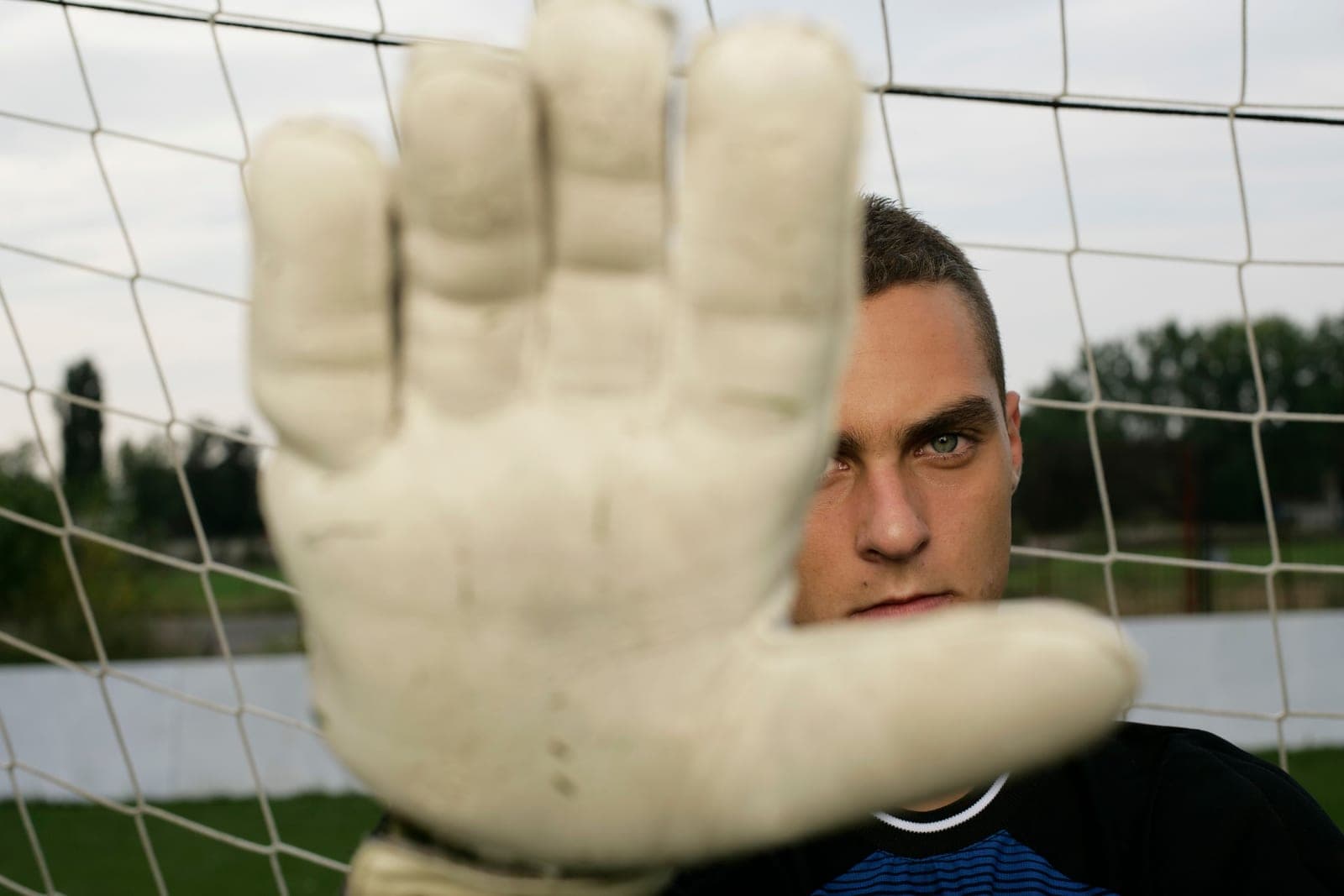
The short answer
- Rinse the palms in lukewarm water after play, working out any grit with your fingers.
- Add a drop of mild soap if they are properly dirty. No detergent, no bleach.
- Press the water out between your hands — never wring or twist them.
- Air dry palm-up, away from direct heat and out of direct sunlight.
- Once dry, store them palm-to-palm in a bag with the fingers straight rather than folded.
Keeper gloves are the one piece of youth soccer gear where the maintenance genuinely determines how long they last, because the thing that wears out — soft latex on the palm — responds directly to how it is treated.
Why latex needs this
Goalkeeper grip comes from soft latex, and soft latex is designed to be slightly tacky. Three things destroy that tackiness: abrasion, heat, and drying out.
Abrasion happens in play and cannot be avoided, though rinsing grit and turf pellets off reduces it substantially — left on the palm, they grind in on the next use. Heat and drying out are entirely avoidable and are what most people get wrong.
The drying mistake
Direct sunlight has the same effect more slowly, so dry them indoors or in shade. And the second mistake is the opposite: gloves left damp in a closed gear bag grow mold and start to smell, and the smell does not come out.
Air, room temperature, palm-up so the latex is exposed. That is all it needs.
Damp is good during play
Counter-intuitive and genuinely useful: latex grips better slightly damp than bone dry. Professional keepers spray or splash their palms before a game, and it is worth teaching a young keeper to do the same.
A small water bottle in the bag, a splash on each palm before they go in goal, and the grip is noticeably better. It also reduces abrasion, since dry latex scuffs more readily against a dry ball.
After a turf session specifically
Artificial turf is the fastest way to wear out a keeper glove, because the rubber crumb is abrasive and it gets embedded in the latex.
Rinse after every turf session without exception, and work the crumb out of the palm with your fingers under running water rather than just wetting the surface. Crumb left in the latex grinds against it on the next use and against the ball, which accelerates the wear in both directions.
What not to do
| Don't | Because |
|---|---|
| Machine wash them | The agitation and spin tear latex and separate the seams |
| Use detergent or bleach | Both strip the latex and harden it |
| Wring or twist them | Cracks the latex at the flex points |
| Dry on a radiator or in a dryer | Hardens and cracks the palm — the main way gloves get ruined |
| Store them damp in a bag | Mold, and a smell that does not come out |
| Store them folded | Creases in the latex become cracks |
The smell
Keeper gloves smell because they spend their life damp inside a bag — it is a drying problem rather than a dirt problem, so the fix is drying rather than washing harder.
Get them out of the bag the moment they get home and dry them properly, every time. If a pair has already gone bad, rinsing with a little mild soap and drying thoroughly helps; nothing recovers a pair that has been left damp in a bag for a fortnight.
How long should a pair last?
For a keeper playing every week, roughly a season of usable grip, less on artificial turf and concrete. That is not a defect — the latex is a consumable and a glove that gripped well and then wore out worked as designed.
The single most effective way to extend it is not a washing technique: it is a cheap second pair for training. Most abrasion happens in training, so keeping the match pair out of it roughly doubles their useful life, and at youth prices two cheap pairs often costs less than one good pair replaced early. See the budget picks.
A match pair and a training pair
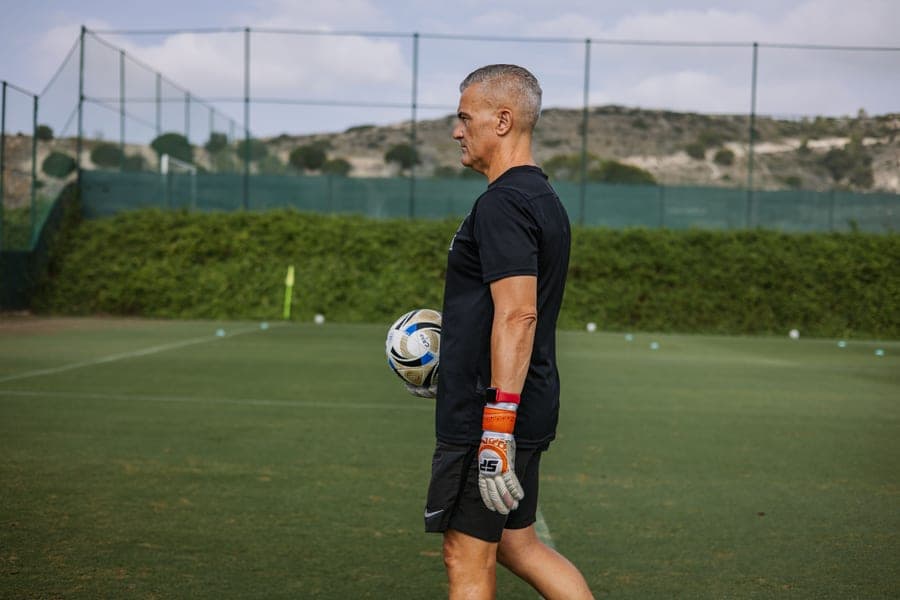
Reusch
Reusch Attrakt Grip Evolution Finger Support Junior
The best-fitting youth keeper glove here, and the right pick for a kid who genuinely plays in goal every week.
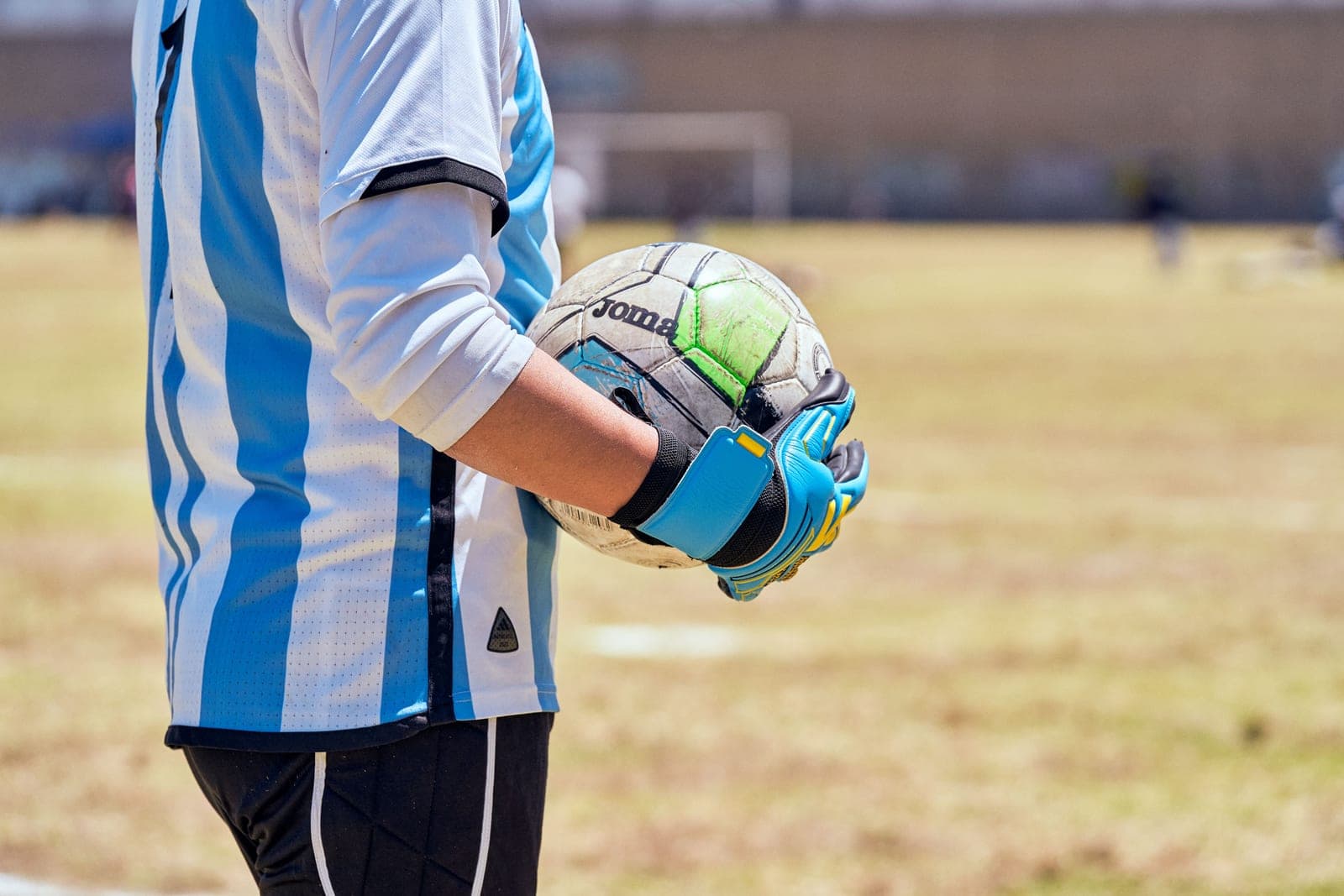
Nike
Nike Jr. Match Goalkeeper Gloves
The sensible glove for a rotating rec keeper, and not enough glove for a kid who plays the position properly.
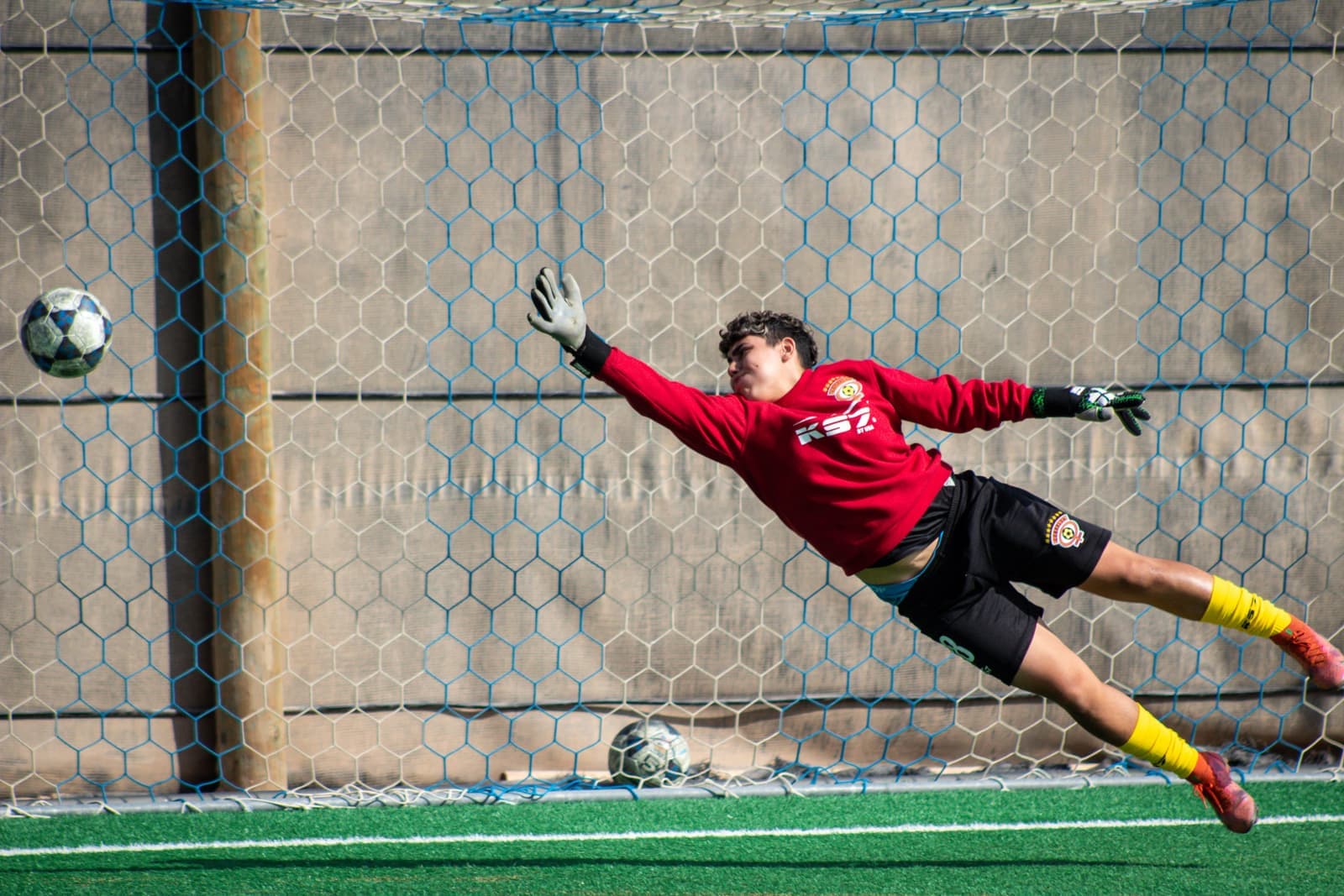
adidas
adidas Youth Predator Goalkeeper Gloves
A fine first glove to find out whether your kid actually wants to be a keeper.
Photos are licensed representative stock images, not the exact models.
When gloves are finished
- The palm is smooth where it used to be tacky, and a damp splash no longer restores any grip.
- The latex has cracked or is flaking at the flex points.
- A seam has opened, so the glove no longer holds its shape on the hand.
- They have outgrown them — check with the fist test, per the size chart.
Worn-out match gloves make perfectly good training gloves, which is the cheapest version of the two-pair strategy: promote the new pair to matches and demote the old one.
Common questions
Can you wash soccer goalie gloves?
Yes, and you should. Rinse the palms in lukewarm water after play, working out any grit with your fingers, with a drop of mild soap if they are properly dirty. Press the water out rather than wringing, and air dry palm-up away from direct heat.
Can you put goalie gloves in the washing machine?
No. The agitation and spin cycle tear latex and separate the seams, and detergent strips the latex and hardens it. Hand rinsing takes two minutes and is the only method that does not shorten the glove's life.
How do you dry goalie gloves?
Air dry them palm-up at room temperature, away from direct heat and out of direct sunlight. Never on a radiator or in a tumble dryer — direct heat hardens latex and cracks it, and a cracked palm does not grip. This is the most common way a good pair gets ruined.
Should goalie gloves be wet or dry when playing?
Slightly damp. Latex grips better damp than bone dry, which is why keepers splash their palms before going in goal. It also reduces abrasion, since dry latex scuffs more readily against a dry ball. A small water bottle in the bag is enough.
How long do youth goalie gloves last?
For a keeper playing weekly, roughly a season of usable grip — less on artificial turf and concrete, which are abrasive. The latex is a consumable, so a pair that gripped well and then wore out worked as designed. A cheap second pair for training roughly doubles the match pair's life.
Sources
- Reusch — Attrakt goalkeeper gloves — Reusch's own description of the Finger Support system, AirVent ventilation and its youth sizing range.
- Dick's Sporting Goods — youth goalkeeper gloves — Verified current availability of the youth goalkeeper gloves named here and the manufacturers' published finger-protection descriptions.
- adidas — kids' soccer — Verified current availability of the adidas models named here, plus adidas's published material and construction claims.
Read next
- Best youth goalie gloves with finger protectionFinger-protection picks for a regular keeper, what the spines do, and how to size gloves properly.
- Best budget youth goalie glovesCheap glove picks for a rotating rec keeper, and exactly what the budget tier gives up.
- Youth goalie glove size chartGlove sizes by age and palm measurement, plus the fist test that tells you whether the fit works.
- Why do soccer goalies wear gloves?The three reasons keepers wear gloves, what a young keeper needs, and what the position actually asks.
- How to clean soccer cleatsThe five-minute post-game routine, how to deal with turf pellets, and the two drying mistakes that wreck a pair.
- U11–U12: nine-a-side, and the travel questionAges 10 to 12. Size 4 still, 9v9 format, and the level where travel-club gear diverges sharply from rec.