Goalkeeper
How long do goalie gloves last?
Palm wear is not a defect — it starts on the first save. What matters is what you do about it.
By Ryder M. · Published October 10, 2026
The short answer
There is no fixed answer, and manufacturers say so: latex wear is normal and can start from the very first save. Lifespan depends on surface, volume of saves, cut and care. A youth keeper playing weekly on grass with a proper wash-and-dry routine can get a season from a pair; the same glove trained in on artificial turf may be smooth in weeks. Replace when the palm goes smooth, not when it tears.
This is the question that produces the most unnecessary arguments between parents and retailers. A pair of keeper gloves with a worn palm after six weeks looks like a faulty product. It usually is not. Grip latex is a soft natural material chosen precisely because it is soft, and the same property that makes it stick to a ball makes it abrade on everything else.
The four things that decide lifespan
Manufacturer guidance is consistent on what actually drives latex degradation, and none of the four factors is the price of the glove.
- Surface. Gloves are predominantly designed for natural surfaces unless a specialist 3G or astro latex is named. Playing on artificial turf places the latex under much higher stress, so it wears much quicker.
- Volume of saves — which is really a question of how busy the defense in front of them is. A keeper on a team that concedes shots all game wears gloves faster than one who touches the ball six times.
- Cut. Negative-cut gloves show wear on the fingers and thumbs quicker than roll finger or classic fits, because the tighter construction puts those areas under more stress. It is a stated trade-off for the fit, not a fault.
- Care. Manufacturers are explicit that durability ratings assume the care routine is followed — and the single biggest controllable factor is whether the latex is allowed to dry out and go brittle between sessions.
There is a fifth that almost nobody counts: pushing up off the ground with the palms. A young keeper does it dozens of times a session, and it is pure abrasion with no save attached. Glove makers specifically recommend using fists in training instead. It is free and it makes a measurable difference.
| Situation | What to expect | What to do about it |
|---|---|---|
| Weekly rec games on grass | A season, often more | One pair is fine. Wash after use, dry naturally |
| Club training on artificial turf | Weeks to a couple of months of grip | A cheap training pair plus a match pair |
| Negative cut, heavy use | Fingers and thumbs go first | Expect it — or train in a roll finger pair |
| Left wet in a kit bag | Brittle latex, early tearing | Wash and dry after every session, palms apart |
Four signs a pair is finished
- The palm has gone smooth. This is the real end of life and it happens long before the latex is physically gone. Texture is what grips; once it has polished off, the glove is a mitten.
- They slip on a dry ball. Latex needs to be slightly damp to work at its best, but a healthy glove still grips dry. One that does not has nothing left on the palm.
- The latex is hard or cracking at the fingertips. That is dried-out latex rather than worn latex, and it is a care failure. It cannot be reversed.
- The closure no longer holds the glove still. A glove that rotates on the hand during a dive reduces grip, reduces control, and is how a finger gets caught.
Holes in the backhand or a split gusset are different — that is damage, not wear, and worth raising with the retailer. Palm abrasion is not.
What to replace them with
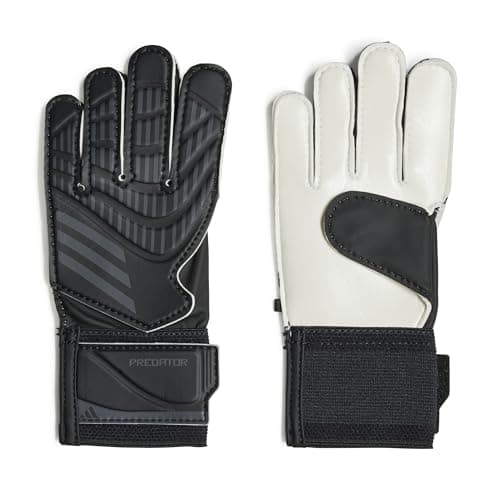
adidas
adidas Youth Predator Training Goalkeeper Gloves
A fine first glove to find out whether your kid actually wants to be a keeper.
$23.60View on Amazon#ad — we may earn a commission · price as of October 16, 2026
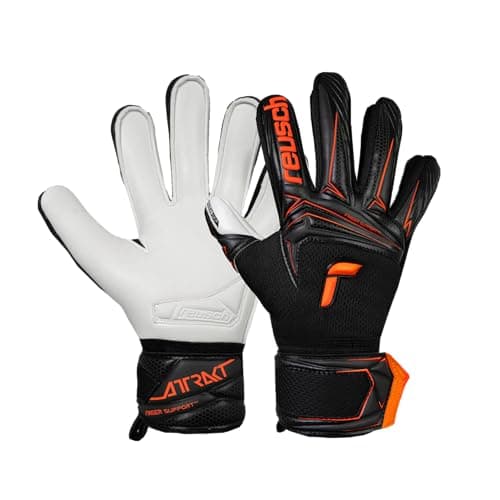
Reusch
Reusch Attrakt Advance Finger Support Junior
The best-fitting youth keeper glove here, and the right pick for a kid who genuinely plays in goal every week.
$54.99View on Amazon#ad — we may earn a commission · price as of October 16, 2026
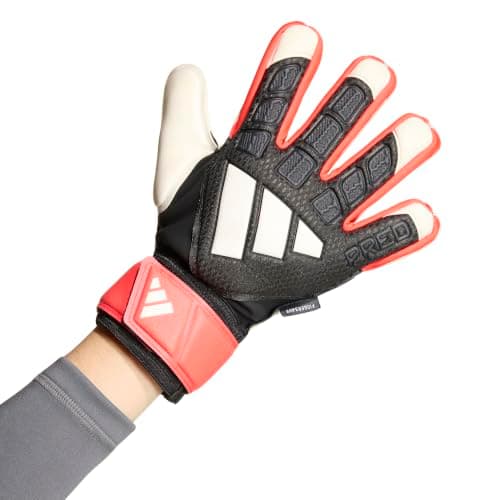
adidas
adidas Youth Predator Match Fingersave Goalkeeper Gloves
The right choice specifically when finger injuries are the concern — and a slightly stiff glove is the price of that.
$36.28$45.00−19%View on Amazon#ad — we may earn a commission · price as of October 16, 2026
Product photos come from each item’s current Amazon listing.
How to get more out of the next pair
The care routine glove makers publish is short, and following it is the difference between a pair that lasts a season and a pair that lasts a month. The whole thing takes two minutes after a session.
- Pre-wash a new pair before first use and let them dry naturally. This removes manufacturing preservatives from the latex and activates it, which is also why a new glove feels slick out of the bag.
- Dampen the palms occasionally during play. Latex is not designed to be dry, which is why professionals squirt water on their gloves mid-game.
- Wash immediately after use in warm water, maximum 30C, rubbing the latex gently under water.
- Squeeze the water out — never twist — then wrap in a towel and press rather than scrubbing, which tears latex.
- Dry naturally, away from direct heat or sunlight. Heat and UV dry the latex out and make it brittle. No radiators, no hair dryers, no car dashboards.
- Store cool, dry and with the palms not touching. Palms left pressed together stick, and peeling them apart tears the latex.
One thing not to do: store them unwashed. Sweat and dirt left on latex degrade it, and a glove that goes into a bag damp and dirty comes out stiff. How to wash goalie gloves has the full wash, and how to break in goalie gloves covers the pre-wash in detail.
When a youth keeper outgrows before wearing out
Below about U12 this is the usual outcome, and it changes the buying logic entirely: if a glove will be outgrown in a season, there is no payoff for buying one that would have lasted three. That is the argument for the budget end of the range at those ages, and manufacturers position their entry latex exactly that way — gloves to be used and abused while a keeper develops technique.
From about thirteen or fourteen the hand stops changing size every few months, and for the first time build quality affects how long you own the glove rather than how good it feels. That is the point at which spending more starts to pay for itself, and it is covered properly in best goalie gloves for high school soccer.
If the hours are on artificial grass either way, the turf glove picks are the right place to start, and the budget youth glove picks are honest about what the cheap end gives up.
Common questions
How long should a pair of goalie gloves last?
There is no fixed figure, and manufacturers state that latex wear is normal and can start from the very first save. A youth keeper playing weekly on grass with a proper wash-and-dry routine can get a season from a pair. The same glove used for training on artificial turf may lose its grip in weeks.
Why do my goalie gloves wear out so fast?
Four reasons, in order of impact: the surface, because artificial turf puts the latex under much higher stress than grass; the volume of saves; the cut, since negative cuts wear at the fingers and thumbs faster than roll finger cuts; and care, because latex allowed to dry out goes brittle. A fifth is pushing up off the ground with the palms instead of the fists.
When should you replace goalie gloves?
When the palm has gone smooth, which happens well before the latex is physically gone. Other signs: they slip on a dry ball, the fingertip latex is hard or cracking, or the closure no longer stops the glove rotating on the hand. A glove that moves on the hand during a dive is how a finger gets caught.
Is palm wear on goalkeeper gloves normal?
Yes. Glove makers say so explicitly — latex is a soft natural material subject to wear and abrasion, and it can start showing from the first game as easily as the fifteenth. Abrasion on the palm is wear, not a defect. Holes in the backhand or a split gusset are damage and worth raising with the retailer.
Can you restore grip on old goalie gloves?
No. Washing restores grip on a glove that is dirty, and pre-washing activates a new one, but once the palm texture has polished smooth the thing that gripped is physically gone. Grip spray makes a new glove tacky; it does not bring an old one back.
How do you make goalie gloves last longer?
Pre-wash before first use, dampen the palms occasionally during play, wash immediately after use in water no hotter than 30C, squeeze rather than twist the water out, dry naturally away from heat and sunlight, and store cool with the palms not touching. In training, push up off the ground with fists rather than palms.
Sources
- The One Glove Co — goalkeeper glove care guide — A glove manufacturer's own care guide and the source for the glove-care facts quoted on this site: pre-wash a new pair before first use and let them dry naturally, to remove manufacturing preservatives from the latex and activate it; dampen the palms occasionally in use because 'latex is not designed to be dry'; wash immediately after use in warm water at a maximum of 30C, squeeze rather than twist the water out, and dry naturally away from direct heat or light, since heat and UV dry the latex out and make it brittle; wrap in a towel and press rather than scrub; allow about 24 hours to dry, then store cool and out of direct sunlight with the palms not touching, because palms left in contact stick together and tear when peeled apart; never store them unwashed. Also the source for the wear facts: latex wear is normal and 'can even start from the very first save'; latex degradation depends on the surface and the volume of saves; gloves are predominantly designed for natural surfaces unless a specialist 3G/astro latex is specified, and 'if you are using a goalkeeper glove on an artificial surface such as 3G or astro turf you will be placing a higher level of stress on the latex, therefore it will wear much quicker'; negative-cut gloves show wear on the fingers and thumbs quicker than looser cuts because of the tighter fit and internal stitching, while roll finger and classic-fit cuts fare better; and using the palms to push up off the ground in training adds avoidable wear.
- The One Glove Co — goalkeeper glove latex guide — A manufacturer's latex guide, cited for two points: that its durability ratings explicitly assume the care routine is followed and that 'durability depends on how well you care for them and what surface you play on', and that entry-level latex is positioned for kids and recreational players to 'be used and abused' while technique develops rather than as a compromise.
- One Glove — goalkeeper glove cut guide — A glove manufacturer's own cut guide and the source for the cut definitions quoted on this site: flat palm has external stitched gussets between fingers and palm with one piece of latex attached to the back and is 'known for great latex coverage on the ball'; roll finger connects the backhand directly to the palm with no gussets so the latex rolls around the fingers, giving 'a fairly spacious fit that provides a lot of latex coverage on the ball'; negative is built like a flat cut but with the stitching and gussets inside the glove, which 'provides a much tighter and snug fit with control on the ball that is more true to your hand'. Also the source for the snugness ranking — flat and roll finger at the loose end, negative at the snug end — and for hybrids combining a negative lower section with a roll-finger or flat upper.
- Reusch — Attrakt goalkeeper gloves — Reusch's own description of the Finger Support system, AirVent ventilation and its youth sizing range.
Read next
- How to wash goalie glovesThe washing and drying routine that extends latex grip, and the one mistake that cracks a palm.
- How to break in goalie glovesWhy new keeper gloves feel slick, the pre-wash that activates the latex before the first game, and the four mistakes that ruin a new pair.
- Best goalie gloves for turfKeeper glove picks for turf and artificial grass, where match latex wears out in weeks — and the two-pair strategy that costs less than one good pair.
- Best budget youth goalie glovesCheap glove picks for a rotating rec keeper, and exactly what the budget tier gives up.
- Goalie glove cuts explained: flat, roll finger and negativeWhat flat, roll finger, negative and hybrid cuts actually change about a glove, which cut each of our picks uses, and why a child's hand size matters more than the cut name.