Goalkeeper
Goalie glove cuts explained: flat, roll finger and negative
The word on every listing that nobody explains, and why it is a fit decision rather than a skill one.
By Ryder M. · Published October 9, 2026
Heads up: we earn a commission if you buy through our links, at no extra cost to you. It never changes which product we recommend — here’s how that works.
The short answer
A glove's cut is how the palm is joined to the backhand, and it decides how snug the glove feels. Negative puts the seams inside for the tightest, most hand-true fit. Flat palm and roll finger put more latex around the fingers in a roomier glove. Hybrids mix the two. For most young keepers, negative or a hybrid fits best.
Every goalkeeper glove listing leads with a cut name, usually with no explanation, and parents buying a first or second pair have no way to tell whether it matters. It does matter, but not in the way the marketing implies: the cut changes the fit of the glove, and fit is the whole ball game on a child's hand.
What a cut actually is
A goalkeeper glove is two pieces: a latex palm and a backhand. The cut is simply how those two pieces are stitched together, and specifically what happens at the sides of the fingers. Put the seam on the outside and the glove gets roomier. Put it on the inside and the glove gets tighter. Wrap the palm latex around the finger instead of seaming it and you get more latex on the ball but a baggier glove.
That is the entire concept. Nothing about the cut changes the grip compound, the finger protection, the padding or the price tier — those are separate decisions that happen to be sold on the same box.
| Cut | Where the seams are | Fit | Latex on the ball | Suits |
|---|---|---|---|---|
| Flat palm | Outside, between finger and palm | Loosest | Wide coverage | Wider hands; a classic feel |
| Roll finger | None — latex rolls around the finger | Roomy | Most coverage | A hand that fills the glove |
| Negative | Inside the glove | Snuggest | Good, but less wrap | Small or slim hands |
| Hybrid | Mixed — negative lower, roll or flat upper | Between the two | Good | Most keepers, most of the time |
Flat palm
The oldest construction and still the most common on starter gloves. One piece of latex forms the palm, and external stitched gussets sit on the outside between the fingers and the palm. A manufacturer cut guide describes it as known for great latex coverage on the ball, with the loosest fit of any cut and what it calls a classic feel.
What that means in a parking lot on a Saturday: a flat palm glove feels like a glove. There is some space in it, the fingers do not feel pinned, and a kid who has never worn keeper gloves will put it on and not complain. That is exactly why it is the construction most entry-level youth gloves use.
The cost is precision. The space that makes it comfortable is also space between the latex and the finger, and a glove that moves slightly on the hand is a glove that catches slightly less predictably. On a rotating rec keeper this is not worth thinking about. On a designated keeper it eventually is.
Roll finger
A roll finger glove has no gussets at all. The backhand connects straight to the palm, so the palm latex rolls around the outside of each finger. The same cut guide calls the result a fairly spacious fit that provides a lot of latex coverage on the ball — the most latex contact of any cut.
It is the classic keeper look and it has a real following among older players. For a child it is usually the wrong pick, for one blunt reason: roll finger needs a hand big enough to fill it. The rolled latex only works when it is pulled tight around the finger, and on a hand that is too small for the glove the latex sits off the finger entirely and the whole advantage inverts.
Roll finger also wears faster on the finger sides, because the latex that used to be protected by a seam is now the outside surface of the glove. On concrete or artificial turf that is a visible difference within weeks.
Negative
A negative cut is built like a flat palm with the stitching and gussets moved to the inside of the glove. The cut guide's description of the result is the clearest statement of why it exists: it provides a much tighter and snug fit with control on the ball that is more true to your hand. On a snugness scale it sits at the opposite end from flat and roll finger.
This is the cut most modern youth gloves use, and it is usually the right one for a child. A young keeper's hand is small, slim and still growing, and negative is the construction that removes dead space instead of adding it. A glove with no slack cannot rotate on the hand during a dive, which is the thing that actually causes jammed fingers.
Two honest drawbacks. Internal seams sit against the finger, so a cheap negative glove with coarse stitching can rub — this is the one place where paying a little more is about comfort rather than performance. And because there is no slack, a negative glove has no tolerance for being bought a size large to grow into. Which you should not be doing anyway.
Hybrids, and why most good youth gloves are one
Hybrid cuts combine a negative lower section with a roll finger or flat upper, which is how a brand gets the snug fit of a negative with the latex wrap of a roll finger. There is no standard naming, so every brand invents its own label and the only way to know what is inside is to read the construction description rather than the cut name.
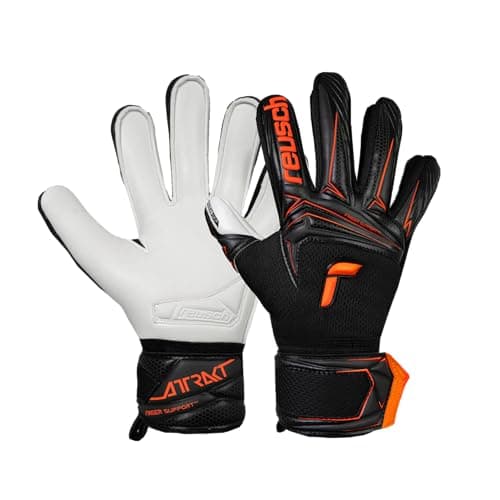
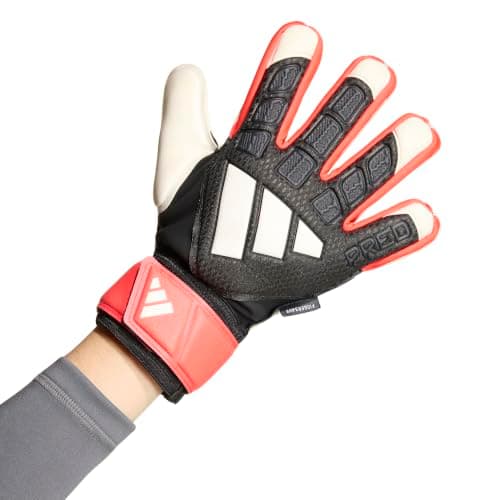
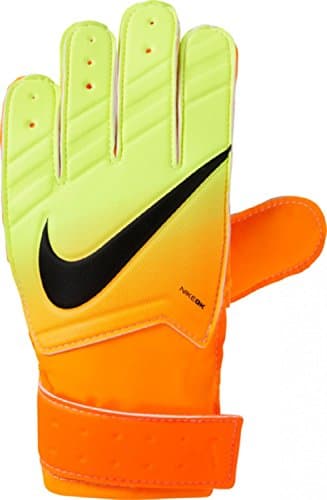
Reusch's junior Attrakt Advance Finger Support is a good example of what that looks like on the shelf. It is listed as an Evolution Negative Cut, described as seamlessly rolling the latex around the fingertips for a snug fit and direct control of the ball — a negative-cut fit with a roll-finger treatment at the tips. adidas lists the junior Predator Match Fingersave as a negative cut, and Nike's kids' Match glove is a flat cut, also described as a traditional cut. Three gloves, three different answers, all sold to the same ten-year-old.
Our picks, and the cut each one uses
Reusch
Reusch Attrakt Advance Finger Support Junior
The best-fitting youth keeper glove here, and the right pick for a kid who genuinely plays in goal every week.
$54.99View on Amazon#ad — we may earn a commission · price as of October 16, 2026
adidas
adidas Youth Predator Match Fingersave Goalkeeper Gloves
The right choice specifically when finger injuries are the concern — and a slightly stiff glove is the price of that.
$36.28$45.00−19%View on Amazon#ad — we may earn a commission · price as of October 16, 2026
Nike
Nike Jr. Match Goalkeeper Gloves
The sensible glove for a rotating rec keeper, and not enough glove for a kid who plays the position properly.
$20.00View on Amazon#ad — we may earn a commission · price as of October 16, 2026
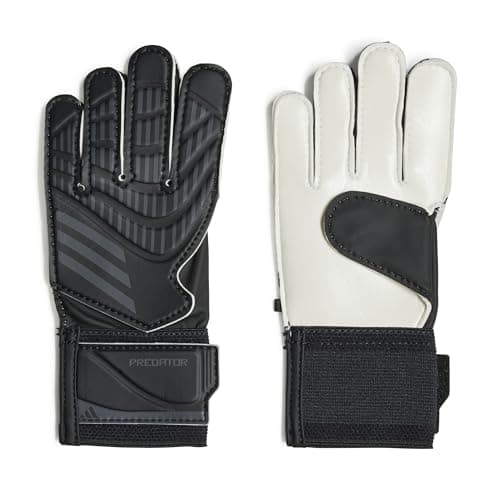
adidas
adidas Youth Predator Training Goalkeeper Gloves
A fine first glove to find out whether your kid actually wants to be a keeper.
$23.60View on Amazon#ad — we may earn a commission · price as of October 16, 2026
Product photos come from each item’s current Amazon listing.
Which cut should a young keeper be in?
Start from the hand, not the cut. The sequence that actually works:
- Get the size right first. Measure across the palm at its widest point in inches and add about one. A correctly sized glove in the wrong cut beats a badly sized glove in the right one by a wide margin — the youth goalie glove size chart has the conversions.
- Default to negative or a negative-based hybrid for anyone under about thirteen. Small, slim hands need dead space removed, not added.
- Consider flat palm for a rotating rec keeper, where comfort and price matter more than precision and nobody is going to notice the difference.
- Leave roll finger until the hand is bigger, and until the player cares enough to have an opinion about it.
- Then do the fist test. With the glove on, close the hand. If they cannot make a comfortable fist, the glove is wrong whatever the chart and the cut name said.
How the cut interacts with finger protection
This is the one place the two decisions genuinely touch. Finger spines stiffen the glove, and a stiff glove in a loose cut moves as a unit on the hand, which is the worst combination available — the protection works and the glove slides. In a snug cut the spines stay aligned with the fingers they are protecting.
That is why most youth gloves with finger protection are built on negative or hybrid cuts. Reusch's Finger Support spines are described as adapting to the shape of the finger to allow a natural grasping motion, which only holds if the glove is holding the finger in the first place. adidas's junior Fingersave spines are fixed and non-exchangeable in a glove listed as a negative cut, for the same reason.
Whether a child needs finger protection at all is a separate question, and the answer is mostly about how often they play in goal — finger protection vs no finger protection and the finger protection picks cover it.
What the cut does not change
- Grip. That is the latex compound, and a soft grip latex grips better and wears faster in any cut.
- Durability. Mostly latex grade and surface. The one cut-specific effect is that roll finger exposes the finger-side latex to abrasion.
- Protection. Spines, punching foam and wrist support are separate features that appear across all cuts.
- Whether they will wear it. That is sizing and seam comfort, which is why the fist test outranks everything on this page.
And no cut extends the life of the latex. Keeper gloves are a consumable in every construction — the grip goes within a season of regular use, faster on hard or artificial surfaces. How to wash goalie gloves slows it down; nothing stops it.
Checking the cut on a glove you already own
Turn the glove inside out, or run a finger down the side of the index finger from the tip to the palm. If you feel a raised seam on the outside of the glove, it is a flat palm. If you feel a seam only on the inside, it is a negative. If there is no seam at all and the latex is continuous around the finger, it is a roll finger. If the lower finger is seamed inside and the tip is wrapped, it is a hybrid.
Worth doing once, because it tells you what a kid already likes. A keeper who loves their current gloves and hates the replacement has usually been moved between cuts without anybody noticing, and matching the old cut fixes it faster than buying a third pair. If the pair you are replacing was outgrown rather than disliked, the best budget youth goalie gloves page is the sensible next stop, and the age-ten glove picks split the choice by how often the child is actually in goal.
Whichever cut you land on, a new pair grips worse than the one it replaced until it has been washed once — how to break in goalie gloves explains why, and it is the step most parents never hear about.
Common questions
What does cut mean on goalkeeper gloves?
The cut is how the latex palm is joined to the backhand of the glove, and specifically where the seams sit at the sides of the fingers. Seams on the outside make a roomier glove, seams on the inside make a tighter one, and no seams at all means the latex wraps around the finger. It changes the fit, not the grip, the padding or the protection.
What is the difference between negative cut and flat cut goalie gloves?
They are built the same way with the seams in different places. A flat cut has external gussets between the fingers and palm, which gives the loosest fit of any cut and wide latex coverage. A negative cut moves the same stitching inside the glove, which a manufacturer cut guide describes as giving a much tighter and snug fit with control that is more true to your hand.
What is the best glove cut for a young goalkeeper?
Negative, or a negative-based hybrid, for most keepers under about thirteen. A child's hand is small and slim, and negative is the construction that removes dead space rather than adding it — which also stops the glove rotating on the hand during a dive. Flat palm is a reasonable choice for a rotating rec keeper, where comfort and price matter more than precision.
Is roll finger good for kids?
Usually not. Roll finger only works when the hand is big enough to pull the rolled latex tight around the finger; on a hand that is too small, the latex sits off the finger and the extra coverage it is bought for disappears. It also wears faster at the finger sides, because the latex there is the outside surface of the glove rather than being protected by a seam.
Does the glove cut affect grip?
No. Grip comes from the latex compound on the palm, and a softer grip latex grips better and wears faster in every cut. The cut affects how much latex is in contact with the ball and how closely the glove follows the hand, which is a fit question rather than a grip one.
How do I tell what cut my goalie gloves are?
Run a finger down the side of the index finger from tip to palm. A raised seam on the outside is a flat palm, a seam only on the inside is a negative, no seam at all with continuous latex around the finger is a roll finger, and seamed inside at the base with a wrapped tip is a hybrid. Worth checking before you replace a pair your kid liked.
Sources
- One Glove — goalkeeper glove cut guide — A glove manufacturer's own cut guide and the source for the cut definitions quoted on this site: flat palm has external stitched gussets between fingers and palm with one piece of latex attached to the back and is 'known for great latex coverage on the ball'; roll finger connects the backhand directly to the palm with no gussets so the latex rolls around the fingers, giving 'a fairly spacious fit that provides a lot of latex coverage on the ball'; negative is built like a flat cut but with the stitching and gussets inside the glove, which 'provides a much tighter and snug fit with control on the ball that is more true to your hand'. Also the source for the snugness ranking — flat and roll finger at the loose end, negative at the snug end — and for hybrids combining a negative lower section with a roll-finger or flat upper.
- Reusch Attrakt Advance Finger Support Junior goalkeeper gloves — The retailer spec sheet for the junior Reusch glove this site recommends, and the source for its cut: an Evolution Negative Cut, described as wrapping the latex around the fingertips for a second-skin feel and improved ball control, with Grip Advance latex, DURAGUARD reinforcement in the high-wear zones, integrated Finger Support that stabilizes all fingers and the thumb, AIRVENTSYSTEM mesh panels, and a construction Reusch states is tailored specifically to junior keepers.
- KeeperSport — adidas Predator Match Fingersave Junior — The retailer spec sheet for the junior adidas Predator Match Fingersave, and the source for its cut: listed as a negative cut (NC), flat-stitched, with Soft Grip Pro palm latex, fixed non-exchangeable Fingersave finger spines against hyperextension, a latex thumb wrap, a rib-mesh-and-latex backhand, a punching zone and a half-wrap wrist strap with an elastic band.
- Unisport — Nike Goalkeeper Gloves Match (kids) — The retailer spec sheet for the kids' Nike Match glove, and the source for its cut: a flat cut, also described as a traditional cut, with 3 mm soft latex for ball feel and a Tri-Vario closure. Also the source for the retailer positioning it as a starter or training glove.
- Dick's Sporting Goods — youth goalkeeper gloves — Verified current availability of the youth goalkeeper gloves named here and the manufacturers' published finger-protection descriptions.
Read next
- Youth goalie glove size chartGlove sizes by age and palm measurement, plus the fist test that tells you whether the fit works.
- Goalie gloves with or without finger protectionThe injury finger spines prevent, the feel they cost, and a decision table for which kids need them.
- Best youth goalie gloves with finger protectionFinger-protection picks for a regular keeper, what the spines do, and how to size gloves properly.
- Best budget youth goalie glovesCheap glove picks for a rotating rec keeper, and exactly what the budget tier gives up.
- Best goalie gloves for 10 year oldsWhy a ten-year-old's glove depends on whether they are the designated keeper, the size most of them need, and when finger protection starts to earn its price.
- How to wash goalie glovesThe washing and drying routine that extends latex grip, and the one mistake that cracks a palm.
- Why do soccer goalies wear gloves?The three reasons keepers wear gloves, what a young keeper needs, and what the position actually asks.