All ages
Rec vs travel soccer: what gear actually changes
Less than the club shop suggests, and not the things you would guess.
By Ryder M. · Published September 27, 2026
Heads up: we earn a commission if you buy through our links, at no extra cost to you. It never changes which product we recommend — here’s how that works.
The short answer
- Volume, not level, is what changes the gear. Four sessions a week breaks cheap cleats; one does not.
- A second pair of footwear stops being a luxury, because one pair never dries out.
- Cushioning and plate quality start mattering, so the middle tier beats the bottom one.
- The ball, shin guards and socks barely change — buy the same things, just more of them.
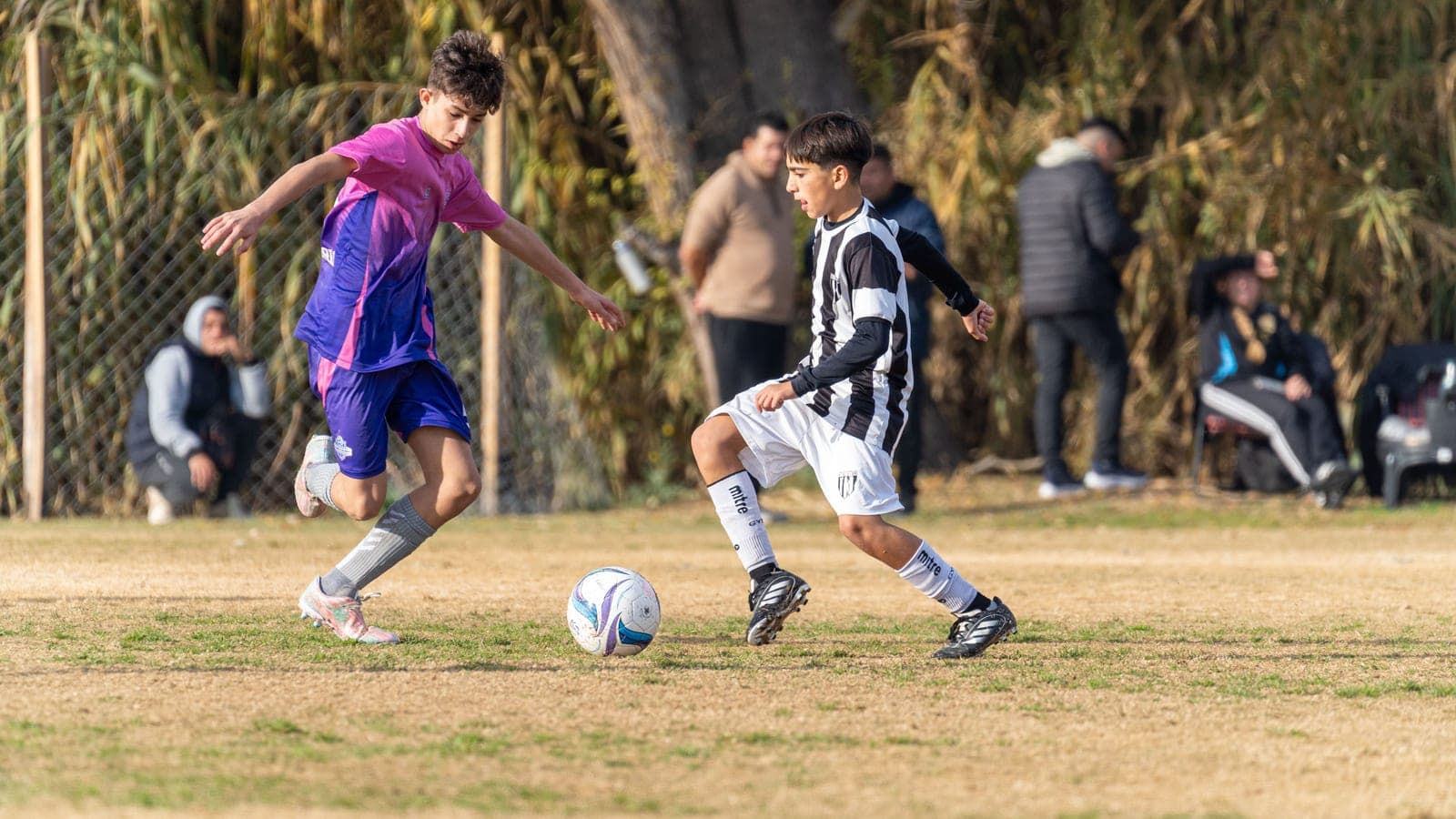
When a kid moves from rec to a travel club, the gear conversation usually starts in the wrong place — with whether they need better cleats. The more useful question is what changes about their week, because that is what actually determines what breaks.
What actually changes
| Rec | Travel / club | |
|---|---|---|
| Sessions per week | 1–2 | 3–5 |
| Surfaces | Mostly one | Grass, turf, sometimes indoor |
| Season length | 8–10 weeks | Often most of the year |
| Travel | Local | Regional — kit lives in a bag |
| What this breaks | Very little | Footwear, socks, patience |
Notice what is not on that list: the ball size, the shin guard requirement, the basic kit. Those are set by the age group, not by the level. A U10 travel player and a U10 rec player use the same size 4 ball on the same size pitch.
What genuinely needs upgrading
1. Footwear, and mostly for volume rather than performance
The bottom-tier cleat that comfortably survives one session a week starts failing at four. The sockliner flattens, the upper creases through at the flex point, and the kid starts noticing their feet late in a session. Moving up one tier — entry to Academy, roughly — buys a better plate, a better upper and meaningfully more cushioning underfoot.
Note this is a durability and comfort argument, not a performance one. The Pro tier is a performance step and a poor purchase for most travel players: firm-ground only, thinner, and considerably more expensive on a foot with months left in it.
2. A second pair, because drying time is real
This is the upgrade that surprises people and matters most. At three or four sessions a week, a single pair of cleats never dries out between uses. A permanently damp cleat rots at the stitching and smells, and the kid's feet suffer.
A second pair — usually turf shoes, since most midweek club training is on artificial turf — solves the drying problem and roughly doubles the life of the good pair. Two mid-tier pairs frequently costs less over a year than one top-tier pair replaced early.
3. More socks, which is unglamorous and completely real
Soccer socks come off soaked and take a day to dry. At four sessions a week, two pairs means one is always damp. Three or four pairs is the actual requirement, and they are cheap. See the sock picks.
4. A bag that separates the cleats
Club kit lives in a bag most of the week rather than being unpacked after each Saturday. Wet cleats packed in with clothes ruins the clothes and keeps the cleats wet. A dedicated shoe compartment is the one bag feature worth insisting on. See the bag picks.
What does not need upgrading
- Shin guards. The style choice is driven by age and preference, not level. A travel U10 and a rec U10 want the same guard. See the comparison.
- The ball size. Set by age group, identical either way. See ball size by age.
- Ball quality, below about U12. A hand-stitched match ball does nothing for a nine-year-old whether they are at a club or not.
- Anything sold on the basis that a professional wears it. A signature colorway costs more and performs identically.
The two genuine performance upgrades, and when
Two things are real performance products rather than durability upgrades, and both become defensible around U12 at travel volume:
- Grip socks. They reduce foot movement inside the cleat, which is a real cause of blisters and mis-hit first touches. Expensive, worn under the team sock, and largely wasted below this volume. Are grip socks worth it covers the trade.
- A match-quality ball. From about U12 a player striking a ball properly notices the flight difference. See the size 4 and size 5 picks.
What the upgrade actually looks like

Nike
Nike Jr. Mercurial Vapor 16 Academy FG/MG
Worth the step up only when the volume of play justifies it — two or three sessions a week, not one Saturday game.
Nike
Nike Jr. Mercurial Vapor 16 Club Turf
The right second pair once a kid is training on artificial turf every week, and a bad only-pair if games are on grass.
adidas
adidas Copa Zone Cushion V Over-the-Calf Socks
The safe default. If your kid wears slip-in shin guards, the grip through the calf is the reason to pick these.

Nike
Nike Academy Team Soccer Backpack
The right basic kit bag: it separates the cleats, it fits a child, and it does not cost a fortune.
Photos are licensed representative stock images, not the exact models.
The cost, stated honestly
Two mid-tier pairs of footwear, four pairs of socks and a decent bag. That is the real gear delta between rec and travel — and it is considerably less than the club shop's recommendations, and considerably less than the club fees themselves. Most of the money in travel soccer is not the equipment.
If you want the age-specific version of all of this, the level pages have the kit list worked out for each bracket: U6, U7–U8, U9–U10, U11–U12 and U13+.
Common questions
What is the difference between rec and travel soccer?
Rec soccer is local, usually one game and one practice a week, over a season of eight to ten weeks, with teams formed without tryouts. Travel or club soccer involves tryouts, three to five sessions a week, regional fixtures and a season covering most of the year. The format and ball size for a given age group are the same in both.
Does travel soccer need better cleats?
It needs more durable cleats, which is a slightly different thing. One tier up from entry level buys a better plate, upper and sockliner, which matters at four sessions a week. The top tier is a performance step that most travel players do not need and cannot justify on a growing foot.
How many pairs of cleats does a travel player need?
Two, and it is less about performance than about drying time. At three or four sessions a week a single pair never dries between uses, which rots the upper. A grass pair and a turf pair covers most club schedules — add indoor shoes if there is a futsal season, since indoor facilities require non-marking flat soles.
Is the ball size different for travel soccer?
No. Ball size is set by age group, not by level — size 3 through U8, size 4 for U9 to U12, size 5 from U13. A travel U10 and a rec U10 play with the same size 4 ball.
What does moving to travel soccer actually cost in gear?
Realistically: two mid-tier pairs of footwear, three or four pairs of socks and a bag with a shoe compartment. That is the honest delta. It is far less than the club fees, and far less than a club shop's suggested list.
Sources
- AYSO — Size of Ball and Field by Age Division — Official ball sizes, circumference and weight ranges, and field dimensions by age division. Used for every ball-size and field-size figure on this site.
- US Youth Soccer small-sided playing formats — Player counts, game lengths and format progression (4v4, 7v7, 9v9, 11v11) by age group.