Balls
How to choose a soccer ball for your kid
Three checks, in order. Below about U12 you can ignore everything else.
By Ryder M. · Published September 27, 2026
The short answer
- Check the size against the age group — size 3 for U8 and below, size 4 for U9–U12, size 5 from U13.
- Check it has a butyl bladder, which holds air for weeks rather than days.
- Decide where it will live. A yard ball needs a nylon-wound carcass; a bag ball does not.
Soccer balls are sold with a long list of specifications, most of which are irrelevant to a kid under about twelve. This page is mostly about what to ignore.
Check 1: the size
Non-negotiable and set by the age group rather than by preference.
| Age group | Size | AYSO figures |
|---|---|---|
| U6–U8 | 3 | Smallest standard size |
| U9–U12 | 4 | 25.0–26.5 in, 12–14 oz |
| U13+ | 5 | 26.5–28.0 in, 14–16 oz |
Two practical notes. Check the size printed on the ball itself rather than trusting the packaging, which is frequently ambiguous in the youth market. And a few leagues shift the boundaries by a year, so check your club if nobody has told you. The full chart has the detail.
Check 2: the bladder
This is the one specification that genuinely affects your daily life, and it is the one buried lowest in most product descriptions.
| Bladder | Air retention | Means in practice |
|---|---|---|
| Butyl | Weeks | Pump it roughly monthly. The ball is always ready. |
| Latex | Days | Pump before nearly every session. The ball is often flat. |
Latex bladders have a slightly softer feel, which is why match balls sometimes use them. For a kid's ball that is irrelevant and the air retention is not: a ball that needs pumping before every use is a ball that does not get used spontaneously, which defeats the point of owning one.
Check 3: where it will live
A ball that lives outside has a different job from one that lives in the gear bag, and the honest answer is you want both.
- Outside ball — wants a nylon-wound carcass, which is what keeps it round after a season against a wall. Should be cheap, because it will be left in the rain and eventually lost.
- Bag ball — goes to training and games. Can be nicer, because it lives in a bag rather than a hedge.
One ball trying to do both means either the good ball gets wrecked or your kid has nothing to kick about with at home — and at every age below U12, kicking about at home is where most of the development happens.
What you can safely ignore below U12
- Seam construction. Thermally bonded seams are genuinely more durable and waterproof than machine stitching. A nine-year-old will not notice, because noticing requires striking the ball cleanly and repeatedly.
- Match-ball certification. Relevant to competition rules, irrelevant to a rec player.
- Panel count and shape. Marketing, for this purpose.
- The professional a ball is associated with. Costs more, performs identically.
- The color, except that a bright ball is easier to find in long grass, which is a genuinely underrated feature.
From about U12, the first two start mattering — see the size 4 and size 5 pages for where the crossover is.
Balls that pass all three checks
adidas
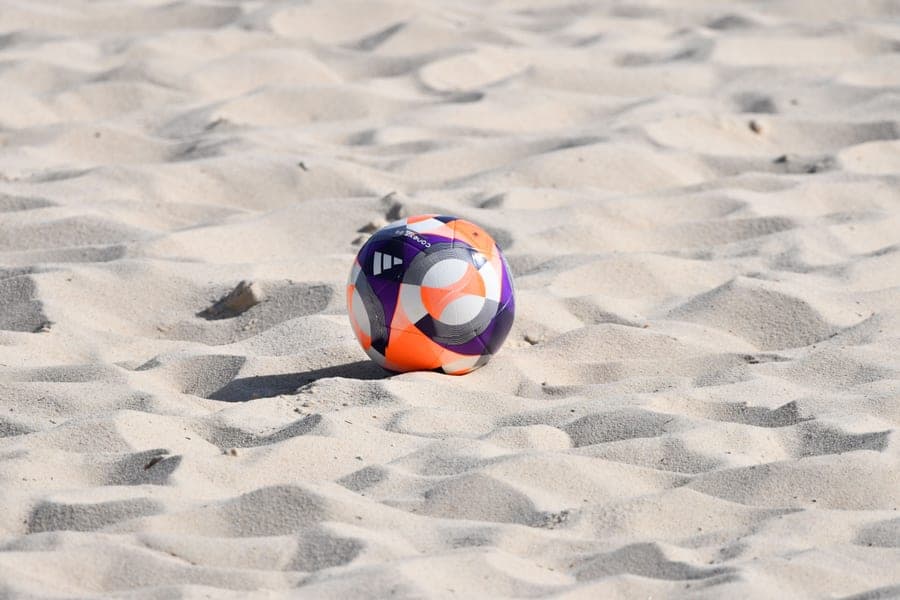
adidas Starlancer Club
The sensible default youth ball — right size range, right price, air stays in.
adidas
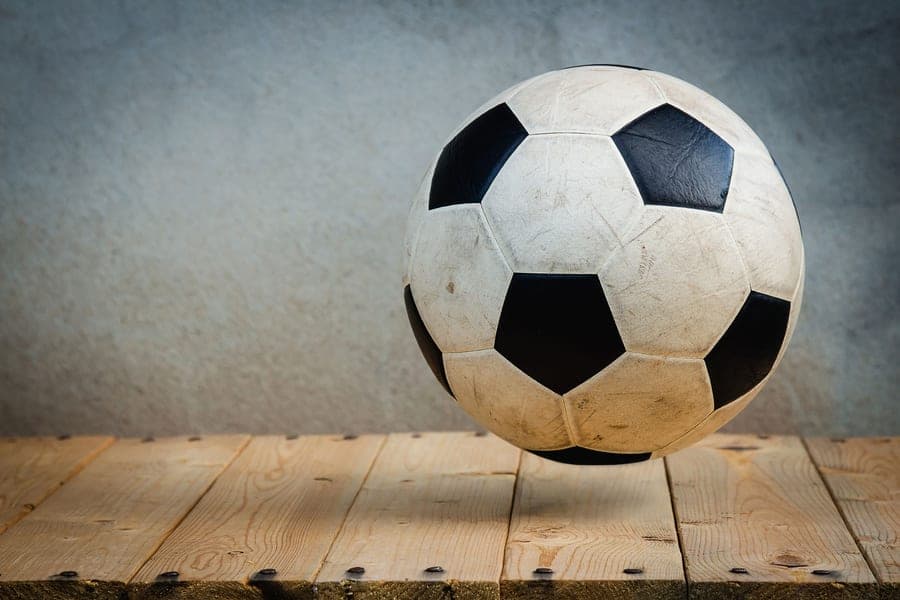
adidas Starlancer V
The one to buy if the ball is going to live in the yard rather than the gear bag.

adidas
adidas Starlancer Package Soccer Ball
The right first purchase for a brand-new soccer family, purely because of the pump.
Photos are licensed representative stock images, not the exact models.
Buy a pump. Genuinely.
Every ball arrives deflated, and nobody tells you. If you do not own a pump, buy a bundle that includes one — it costs less than buying both separately.
Then inflate to the middle of the pressure range printed next to the valve, which is stated on the ball and differs between balls. Over-inflated, a ball gets hard and unpleasant to strike or head, which genuinely puts young kids off. Under-inflated it goes sluggish and the seams flex more than they should. Without a gauge: a properly inflated ball barely dents under firm thumb pressure.
Indoor is a different purchase entirely
If there is a winter futsal season, none of the above applies. Futsal balls have a deliberately low bounce and their own sizing convention, where futsal size 3 means under-13 rather than U8. See the indoor and futsal picks.
Common questions
How do you buy a good soccer ball?
Three checks in order: the size against the age group, whether it has a butyl bladder so it holds air, and whether it needs a nylon-wound carcass because it will live outside. Below about U12 you can ignore seam construction, match-ball certification and panel count entirely.
What is the best size for a soccer ball?
There is no single best size — it is set by age group. Size 3 for U6 through U8, size 4 for U9 through U12, and size 5 from U13 onward. The bands exist as a development tool: a ball too heavy for a player teaches them to toe-poke rather than strike properly.
Does an expensive soccer ball make a difference for kids?
Below about U12, very little. What matters at those ages is that the ball holds air and stays round, which a cheap butyl-bladder ball does. From around U12 a player can strike cleanly enough to notice flight consistency, and that is when match-ball construction starts being worth the money.
What is a butyl bladder and why does it matter?
It is the inner air chamber, and butyl holds air for weeks where latex holds it for days. In practice that decides whether you pump the ball monthly or before every session — and a ball that needs pumping before every use is a ball that never gets picked up spontaneously.
How many soccer balls does a kid need?
Two, doing different jobs. One that lives in the gear bag and goes to training and games, and one that lives outside and gets left in the rain. Trying to make one ball do both means either the good ball gets wrecked or there is nothing to kick about with at home.
Sources
- AYSO — Size of Ball and Field by Age Division — Official ball sizes, circumference and weight ranges, and field dimensions by age division. Used for every ball-size and field-size figure on this site.
- adidas — kids' soccer — Verified current availability of the adidas models named here, plus adidas's published material and construction claims.
- Select Sport — futsal balls — Select's futsal range including the age-graded Talento models, and Select's own description of the low-bounce bladder construction.
Read next
- Best size 3 soccer ballsSize 3 picks for U6 through U8, the bladder difference that matters, and why you need a pump.
- Best size 4 soccer ballsSize 4 picks for U9 through U12, and the point where a match-quality ball starts earning its money.
- Best size 5 soccer ballsSize 5 picks for U13 upward, including budget options, and why quality finally justifies itself here.
- Best indoor and futsal soccer balls for kidsFutsal ball picks by age, why the low bounce matters, and how futsal sizing differs from outdoor.
- Gear by levelThe full kit list for every age group from U6 through travel club.
- Best gifts for youth soccer playersGift ideas sorted by how much you know about the kid — and what to avoid buying without a size.