Heads up: we earn a commission if you buy through our links, at no extra cost to you. It never changes which product we recommend — here’s how that works.
The short answer
Best overall: the Daball Kid and Toddler Soccer Ball, size 1 — a genuine toddler ball that arrives with a pump, which is the part families forget.
Best for indoors: the Botabee 3-pack of 4.75-inch soft mini balls, because the limiting factor indoors is the lamp, not the player.
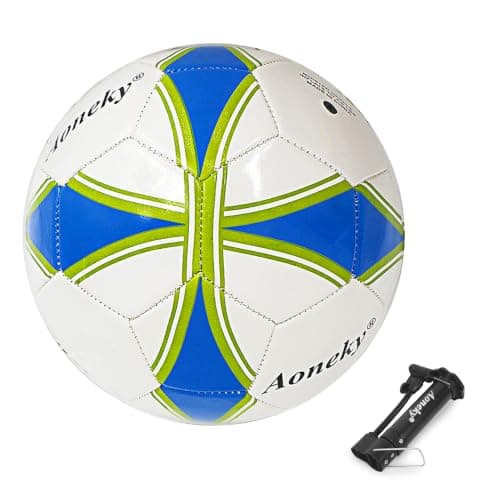
Best for a first team session: the Aoneky size 3 ball with pump, since a U6 program will ask for a size 3 and not a size 1.
Budget pick: the SPDTECH mini size 2 — the cheapest practice mini here, and a size 2 rather than a size 1.
The trap: a licensed mini ball is a souvenir with a badge on it. Lovely gift, wrong purchase if the child needs a ball to kick.
This is a different question from which size a player needs, because a toddler is not yet in a size chart. US youth soccer's published ball-size tables start at the youngest organized age division with a size 3; below that there is no governed size, which means the decision is yours and it turns on where the ball will be used rather than on how old the child is.
Three honest answers depending on the situation, and they are genuinely different purchases.
Pick by where it will be kicked
Below the youngest organized age division there is no governed ball size, so the decision is about environment rather than age. A program's own equipment list always overrules a row here.
Situation
Buy
Why
Indoors, living room, hallway
A soft mini, about 4 to 5 inches
It will hit a lamp. A soft foam-cored ball does not break things or faces
Backyard, age 2 to 4
A size 1 toddler ball
Small enough for a short leg to swing past without tripping over it
Joining a U6 program
A size 3
What the program will ask for; a size 1 is a skills ball, not a team ball
A gift for a kid with a favorite player
A licensed size 1 mini
It is a souvenir and it is fine as one. Just do not expect it to be the ball they practice with
Juggling and foot-skills practice, older sibling
A size 1 skills ball
A deliberately small ball exaggerates the error, which is the point
Scroll the table sideways on a narrow screen.
The row families most often get wrong is the third. A size 1 ball is a wonderful thing for a three-year-old in a yard and the wrong thing to turn up at a first U6 session with, because the session will be played with a size 3. If you are buying for a child about to start a program, buy the size 3 and keep the size 1 as the indoor ball. Size 1 vs size 3 soccer ball is the direct comparison.
How we sorted these
Safety indoors comes first. For the indoor pick, a soft construction outranks everything else. A hard mini ball in a hallway is a broken lamp and a crying child.
A pump counts as part of the purchase. Inflatable toddler balls arrive soft and most families do not own a pump. Two picks here include one and we say so.
Souvenir or ball, stated plainly. Licensed minis are good gifts and poor practice balls. They are on the page, labeled as what they are.
A named budget pick. Toddler interest in soccer is not guaranteed to last a month, so the cheapest workable option gets called out.
Quick picks
Tap any row to jump to the full write-up. The price in each button is the one Amazon reported on the date stamped under it — tap through for today’s number, which is the only one that can be relied on.
Nothing to size, but check the printed pressure range next to the valve rather than guessing — budget minis run a lower range than a match ball and over-inflating one splits the seam..
Product photos come from each item’s current Amazon listing.
The picks in full
1. Daball
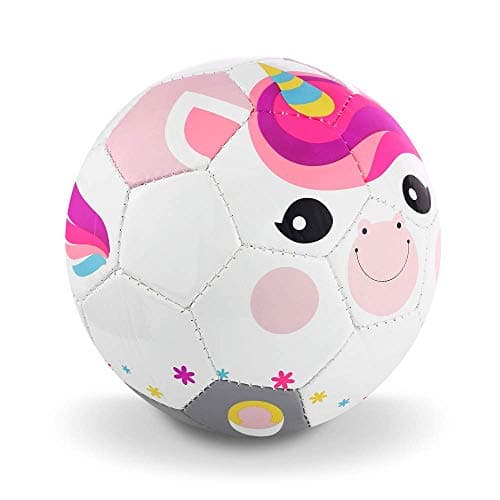
Daball Kid and Toddler Soccer Ball - Size 1, Pump and Gift Box Included
The right first ball for a toddler and the wrong ball for a player — and the included pump is the reason to choose it over a bare mini.
Best for
A first ball for a two- to four-year-old, before any team
Levels
U6 — first kicks
Type / surface
Size 1 toddler ball, pump included
How it fits
Nothing to size on the ball. The relevant sizing is the child: this is right from about two until they join a team, at which point the league's size 3 requirement takes over entirely.
What we like
It is the only ball here that ships with a pump, which matters more than it sounds — every ball arrives deflated and discovering that on a birthday morning is its own small disaster
A size 1 is the right scale for a child who is not yet on a team and whose stride is about a foot long
The gift box means it does not need wrapping, which is a genuine feature for a present
Where it falls short
Strictly a pre-team ball: once a child joins a U6 side they need a size 3, and this does not bridge to that
Character colorways date fast and a four-year-old's taste changes faster
Daball publishes no cover or bladder material, so expect toy-grade air retention and keep the pump
Manufacturer’s published specs
Size 1 (Daball)
Pump included (Daball)
Gift box included (Daball)
Sold for kids and toddlers (Daball)
These are the manufacturer’s own claims, not measurements we took.
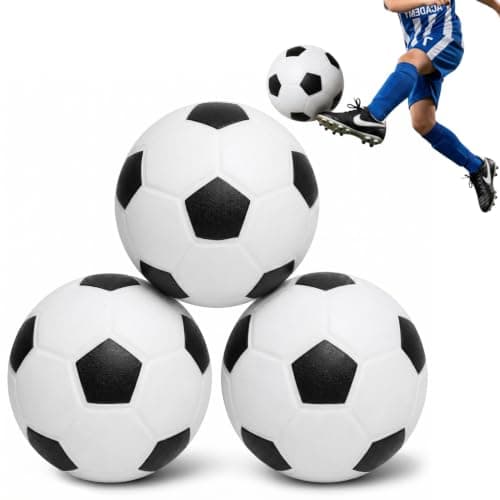
[3 PACK] Mini Soccer Balls for Kids, Soft Soccer Ball for Indoor & Outdoor, 4.75 Inch
The indoor toy pick, bought for the three-pack and the softness. Nothing here is training equipment, and the listing does not claim it is.
Best for
Indoors, and for a toddler who will throw one at a window
Levels
U6 — first kicks · U7–U8 rec
Type / surface
4.75 in soft mini balls, three per pack
How it fits
Nothing to size. Worth being clear with yourself about the purpose: this is the ball for a hallway and a three-year-old, and it does not cross over into practice at any age.
What we like
Three balls means a game indoors keeps going when one goes behind the sofa, which is the actual constraint on indoor play
Soft and light enough that a hard shot inside a house is an annoyance rather than a broken lamp
The right scale for a two- to five-year-old's foot, and cheap enough to lose one without caring
Where it falls short
A soft, light ball teaches nothing about striking a real one — this is a toy, and buying it as a skills ball will disappoint
At 4.75 in it is smaller than every other mini here, so it behaves almost nothing like a size 3
Soft covers tear rather than scuff, and on a driveway they do not last
Manufacturer’s published specs
4.75 in diameter (Botabee)
Three balls per pack (Botabee)
Soft and lightweight, listed for indoor and outdoor play (Botabee)
These are the manufacturer’s own claims, not measurements we took.
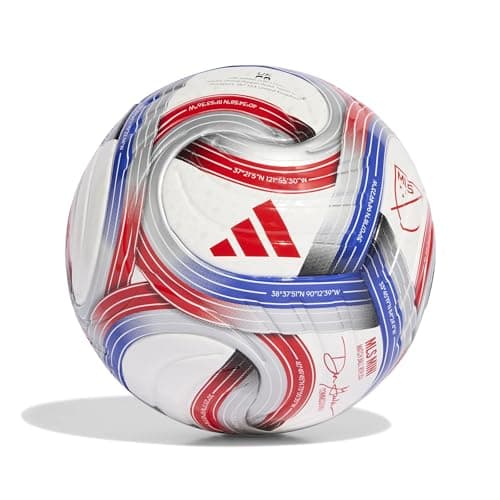
The gift mini. Buy it for a kid who wants a ball they like looking at, and buy the Select if the point is practice.
Best for
A gift, a stocking, and yard kickabouts at any age
Levels
U6 — first kicks · U7–U8 rec · U9–U10 · U11–U12 · U13+ travel & club
Type / surface
Size 1 licensed mini ball
How it fits
Nothing to size. One honest note for parents of young children: a size 1 is small enough to be a car-footwell ball, which is both why kids love them and why they disappear.
What we like
The best-looking ball on this list by some distance, and for a gift that is the specification — a kid who likes how a ball looks carries it around, which is the point
adidas mini balls are a long-running line rather than a one-season novelty, so colorways come and go but the product keeps existing
Holds air better than the souvenir-grade minis because it is built as a ball first and a graphic second
Where it falls short
It is a licensed mini, not a training tool — the graphics are the reason to buy it and nothing about the construction is aimed at drills
adidas publishes no circumference for it, so 'size 1' is all you get and size 1 varies between makers
The colorway is tied to a season, so the one you see may not be the one that arrives next year
Manufacturer’s published specs
Size 1 (adidas)
MLS graphics (adidas)
Machine-stitched mini ball construction (adidas)
These are the manufacturer’s own claims, not measurements we took.
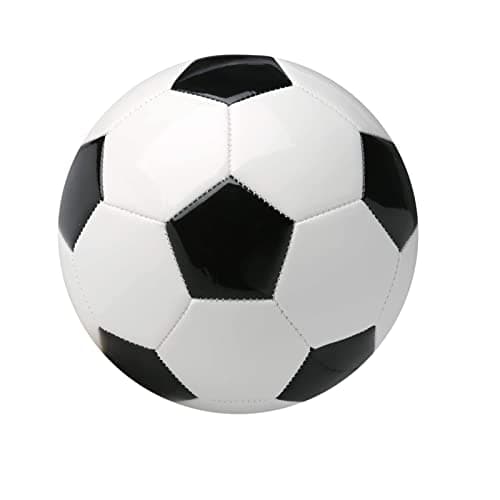
SPDTECH Soccer Ball Mini Size 2 Classic White Black Thicker PU, 5.9 inch Diameter
The cheap experiment. Buy it to find out whether a mini gets used, then buy the Select if the answer is yes.
Best for
The cheapest practice mini, and a size 2 rather than a size 1
Levels
U7–U8 rec · U9–U10 · U11–U12
Type / surface
Size 2 mini ball, PU cover
How it fits
Nothing to size, but check the printed pressure range next to the valve rather than guessing — budget minis run a lower range than a match ball and over-inflating one splits the seam.
What we like
Publishes a diameter, which means you can work out that at 5.9 in it is roughly 18.5 in around — a real number in a category that almost never gives one
A size 2 is a sensible middle ground: harder than a size 3 and more forgiving than a size 1, which suits a U8 to U10 player working on touch
The cheapest ball on this list, which makes it the low-risk way to find out whether your kid will use a mini at all
Where it falls short
SPDTECH is an unknown brand with no soccer history, and PU cover claims on a budget mini are unverifiable
A size 2 is an odd size to own — no division plays with one, and a player who likes it will eventually want a size 1 for the harder version
Expect toy-grade air retention; a mini that holds pressure for a season is the exception at this price
Manufacturer’s published specs
Size 2 (SPDTECH)
5.9 in diameter (SPDTECH)
PU cover, described as thicker and tight-weaved (SPDTECH)
These are the manufacturer’s own claims, not measurements we took.
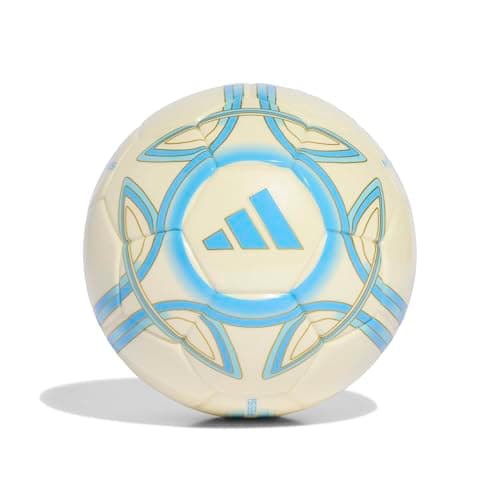
adidas Unisex-Adult Mess Mini Soccer Ball, IvorySemiBlueBurstIceyBlue, 1
Buy it when the player is the point. If you want practice out of a mini ball, the Select skills trainer is the same money spent better.
Best for
A kid who has a favorite player, more than a kid who needs a ball
Levels
U6 — first kicks · U7–U8 rec · U9–U10 · U11–U12 · U13+ travel & club
Type / surface
Size 1 licensed mini ball
How it fits
Nothing to size. Worth noting that signature minis get treated as keepsakes rather than equipment, which is fine — just do not expect it to be the ball that gets kicked.
What we like
The signature line is the entire appeal and it works — this is the mini a kid asks for by name rather than one you choose for them
Same adidas mini construction as the MLS ball, so you are paying for the graphic rather than accepting a worse ball
Small and cheap enough to be a reward or a tournament souvenir rather than a planned purchase
Where it falls short
You are paying a few dollars more than the MLS mini for a name, with no construction difference stated
Signature colorways rotate every season and the specific one pictured may be replaced
Like every licensed mini here, it is not a training ball and nothing about it is aimed at drills
Manufacturer’s published specs
Size 1 (adidas)
Part of adidas's Messi collection (adidas)
Mini ball construction (adidas)
These are the manufacturer’s own claims, not measurements we took.
This is the only genuinely technical decision on the page. A soft ball — foam-cored or very low-pressure — is slower, safer indoors, and does not need a pump. An inflatable ball behaves like a real soccer ball, which is what you want outdoors, and needs inflating correctly to behave at all.
The common failure is an inflatable toddler ball left at the pressure it arrived in, which is almost always too low. An underinflated ball barely moves when kicked, and a three-year-old reads that as not being able to kick. One pump with a gauge fixes it permanently: best soccer ball pumps ranks them and how to inflate a soccer ball covers the method, including using a thin needle and inflating slowly, as ball makers' own care instructions advise.
If you want both — and most families end up with both — buy the soft mini for indoors and one inflatable for the yard. That is roughly $25 total and it covers every situation a four-year-old will create.
At this age the ball only has to be small enough to swing a leg past and soft enough to survive the house.
What a toddler does not need
A match ball. There is no toddler match. A FIFA mark on a ball for a three-year-old is money spent on a certification nobody will check.
Cleats, in most cases. Programs at this age rarely require them and often discourage them — do toddlers need soccer cleats goes through what Law 4 actually requires, and best toddler soccer cleats is there if the answer turns out to be yes.
Two balls of the same kind. One soft, one inflatable. A second size 1 ball is just a second size 1 ball.
What they do need, if a program is starting, is shin guards — and toddler sizing in that category is genuinely awkward. Best shin guards for toddlers covers it, and the U6 first kicks level page is the whole kit list for the age group.
When to move up
When the child joins a program, move to whatever size the program uses — a size 3 in nearly every case. Keep the small ball; it stops being the main ball and starts being the indoor ball, which is a longer career than most toddler purchases get.
If you want the small-ball logic for an older player, it does not disappear: deliberately small balls exaggerate technical error, which is why they persist as skills balls. Best mini soccer balls is the page for that, and best soccer balls for juggling is the full-size version of the same idea.
Common questions
What size soccer ball is best for a toddler?+
Size 1 for a two to four year old kicking around at home, because it is small enough for a short leg to swing past without tripping over it. There is no governed size below the youngest organized age division — the published US youth tables start at size 3 — so the decision is about environment rather than age. If the child is about to join a program, buy the size 3 the program will use and keep the size 1 for indoors.
What is the best soccer ball for a 3 year old?+
The Daball Kid and Toddler Soccer Ball in size 1 is our pick: a genuine toddler ball that arrives with a pump, which is the part most families do not have. For indoor play a soft mini such as the Botabee 4.75-inch three-pack is the safer choice, because the limiting factor indoors is the furniture rather than the child.
Should a toddler use a soft or inflatable soccer ball?+
Both, for different places. A soft foam-cored ball is slower and safe indoors and never needs inflating. An inflatable ball behaves like a real soccer ball, which is what you want in a yard — but it has to be inflated properly, and the most common complaint about toddler balls is really an underinflated ball that barely moves when kicked. A pump with a gauge solves it permanently.
Is a size 1 soccer ball too small for a 5 year old?+
For home kickabouts it is fine and genuinely fun. For a team session it is the wrong ball — a U6 program will use a size 3, and turning up with a size 1 means the child cannot join in the drills properly. By five, most children are better served by a size 3 as the main ball with the size 1 kept for indoors and foot-skills play.
Are licensed mini soccer balls good for toddlers?+
They are good gifts and mediocre practice balls. A licensed size 1 mini is a souvenir with a badge on it: usually hard-covered, often displayed rather than kicked, and not built around a toddler's needs. If the child has a favorite player and wants the ball, buy it as the gift it is and buy a separate ball for actually kicking.
What else does a toddler need to start soccer?+
Much less than it looks. Shin guards if a program requires them, which is often the first thing asked for and the hardest to size at this age. A toddler-height goal, which is cheaper and more fun than a full-size one. Cleats usually not — programs at this age rarely require studs, and a turf shoe or sneaker is often the better footwear. Our U6 level page is the complete kit list.
Sources
AYSO — Size of Ball and Field by Age Division — Official ball sizes, circumference and weight ranges, and field dimensions by age division. Used for every ball-size and field-size figure on this site.
IFAB Laws of the Game — Law 2, The Ball — The official size 5 specification quoted on this site: circumference between 68 cm (27 in) and 70 cm (28 in), weight between 410 g (14 oz) and 450 g (16 oz) at the start of the match, and pressure equal to 0.6-1.1 atmosphere at sea level, which the Law itself states as 8.5-15.6 lbs per square inch.
Select Sport — soccer balls — Select's current ball range, used to confirm that its outdoor balls start at size 3 and that its size 1 offering is a mini ball sold alongside the skills range rather than as a match ball.
Molten — ball care instructions — A ball manufacturer's published care instructions, and the source for the ball-care facts on this site: always use a thin inflation needle to avoid damaging the valve, and inflate slowly to the pressure printed on the ball; a very dirty synthetic-leather ball is cleaned with plenty of water and a mild detergent, never left immersed in detergent, and rinsed and drained thoroughly; detergent chemicals may fade the colors; the ball is then left to dry in a well-ventilated place out of the sun, and never dried with a hair dryer or similar appliance; store it in a cool dry place away from direct sunlight; never leave a ball in high temperatures or humidity such as a car trunk in summer, which costs it its tuned shape and deteriorates the carcass; leather protection creams and sprays must not be used because they make the surface slippery; and rotating two or more balls extends the life of each.
adidas — kids' soccer — Verified current availability of the adidas models named here, plus adidas's published material and construction claims.