Heads up: we earn a commission if you buy through our links, at no extra cost to you. It never changes which product we recommend — here’s how that works.
The short answer
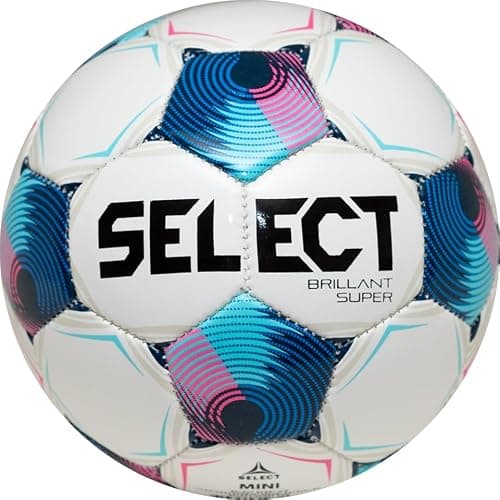
For practice: the Select Brillant Super Skills Trainer (size 1) — the only one here a match-ball maker sells as a skills tool.
For the hardest version: the Capelli Sport 18-inch mini, which publishes its actual circumference and is smaller than most size 1 balls.
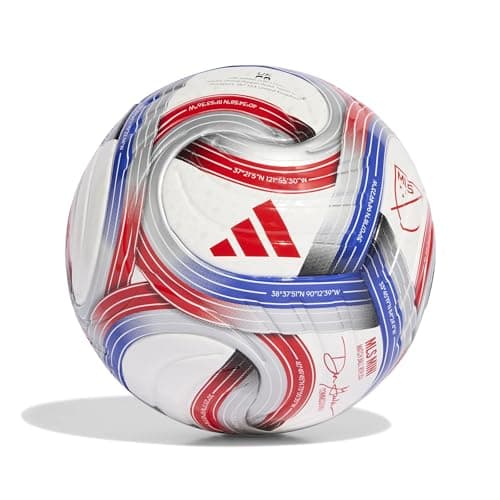
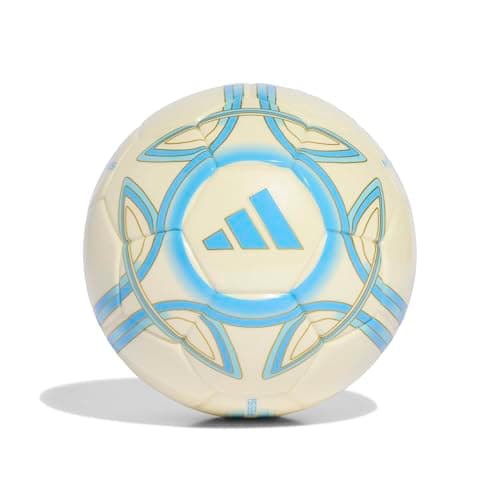
For a gift: an adidas mini — MLS or Messi. Buy it for how it looks, which is a legitimate reason.
For a toddler: the Daball size 1 with a pump, because the pump is the part everyone forgets.
Never for a game. AYSO's published ball table starts at size 3. No age division anywhere plays with a size 1.
A mini soccer ball is the most misunderstood purchase in the category, because two completely different products are sold under one label. One is a training tool for footwork and juggling. The other is a souvenir with a crest on it. They cost roughly the same, the listings look nearly identical, and buying the wrong one is how a parent ends up with a gold ball that scuffs on the first touch.
If what you need is whether a mini is the right ball at all, size 1 vs size 3 soccer ball answers that first and the answer is blunt: for a child who has joined a team, buy the size 3. This page starts after that decision, from a parent who wants a mini anyway and needs to know which one.
First, the rule: no division plays with one
AYSO's published size table starts at size 3 — that is the ball for 6U and 8U, with size 4 from 10U and size 5 from 14U. There is no division, anywhere in the table, that plays with a size 1 or a size 2. And at the top of the game, IFAB's Law 2 specifies a match ball of 68 to 70 cm circumference and 410 to 450 g, which is a size 5 and nothing else.
So a mini ball is never a kit-list item. It is an optional extra, and that changes what you should be comparing: not 'is this a good soccer ball' but 'is this ball good at the one job I am buying it for'. There are three such jobs.
The category genuinely splits this way, and almost no listing says which column it belongs in. The division is the most useful thing to know before you buy.
What you want it for
What to look for
What to ignore
Footwork and juggling practice
Sold as a skills or training ball; a published circumference
Graphics, licensing, crests
A gift a kid will carry around
A colorway or player they care about
Construction specs — they do not matter here
A first ball for a toddler
A pump in the box, and soft enough for indoors
Anything about skills or drills
Team signatures and awards
A finish you can write on
Everything about playability
Scroll the table sideways on a narrow screen.
Start here
Pick by your kid’s level
The right answer changes with the level, not just the shoe size. Find your kid’s bracket and start there.
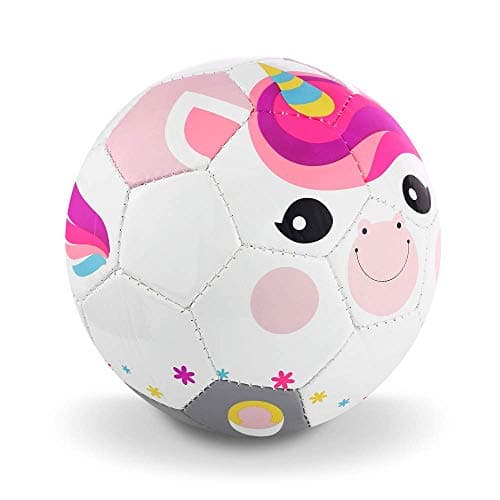
Daball Kid and Toddler Soccer Ball - Size 1, Pump and Gift Box Included
The right scale for a child whose stride is about a foot long, and the only ball here that ships with a pump. At this age a mini is a toy and that is the correct use of one.
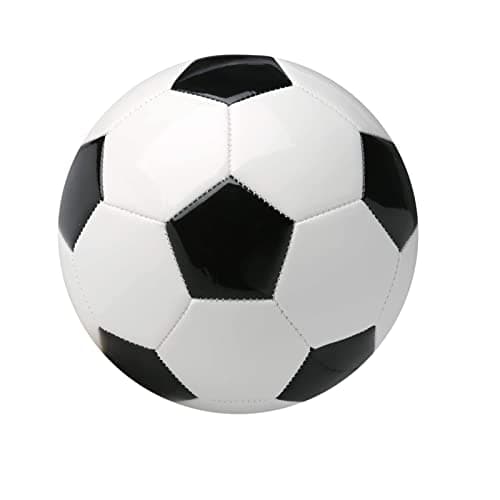
SPDTECH Soccer Ball Mini Size 2 Classic White Black Thicker PU, 5.9 inch Diameter
A size 2 is the sensible middle: harder than the size 3 they play with, more forgiving than a size 1. Cheap enough to find out whether your kid will use a mini at all before spending more.
Select Brillant Super Skills Trainer Mini Soccer Ball for Skills Training, Juggling, Size 1
This is the age the skills ball starts working — a player who can strike a size 3 cleanly gets real feedback from a size 1. Below here a mini mostly rolls under the car.
Select Brillant Super Skills Trainer Mini Soccer Ball for Skills Training, Juggling, Size 1
Same ball, more use. By U11 a player practicing alone can get genuine juggling volume out of a size 1, which is the one thing a mini does better than a full-size ball.
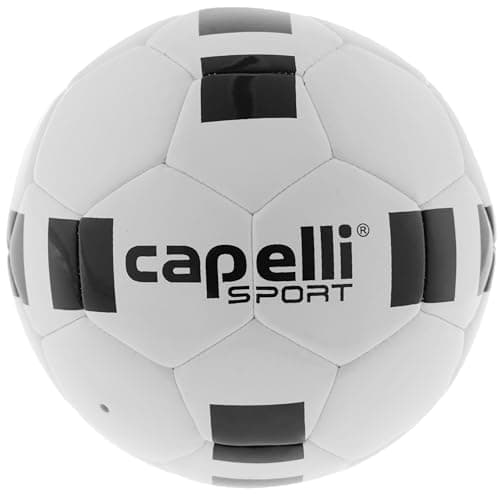
Capelli Sport 18-Inch Mini Training Soccer Ball for Drills, Skill Building and Footwork
At 18 in around it is the hardest ball here and the only one with a stated size, which makes it the right pick for an older player who wants the drill to be difficult.
Tap any row to jump to the full write-up. The price in each button is the one Amazon reported on the date stamped under it — tap through for today’s number, which is the only one that can be relied on.
Nothing to size, but check the printed pressure range next to the valve rather than guessing — budget minis run a lower range than a match ball and over-inflating one splits the seam..
Product photos come from each item’s current Amazon listing.
Why a smaller ball helps at all
The argument for a mini is not complicated and it is not marketing. A smaller ball has a smaller sweet spot, so a touch that would be forgiven on a size 4 misses on a size 1. Practice on the harder version and the easier one feels generous. It is the same reasoning behind practicing with a size 4 as an adult, taken one step further.
The limits are worth stating as plainly. A mini weighs far less than a match ball, so it does nothing for the feel of a real strike, and it will not teach a player how a size 5 behaves in the air. It trains the foot, not the shot. The site's juggling picks cover the full-size balls, which are the better buy if juggling toward match conditions is the goal.
There is also an age floor, and it is the part most gift guides skip. Below about U9 a mini usually produces less practice rather than more: the ball is too small to control, the failures are constant, and a seven-year-old stops. A size 3 that a child can actually keep under control does more for their development than a harder ball they give up on.
1. SELECT
Select Brillant Super Skills Trainer Mini Soccer Ball for Skills Training, Juggling, Size 1
The mini ball to buy if the point is practice rather than a gift — sold as a skills trainer by a brand that makes match balls, at a price that makes it an easy addition.
Best for
Footwork and juggling practice, U9 and up
Levels
U9–U10 · U11–U12 · U13+ travel & club
Type / surface
Size 1 mini skills ball
How it fits
Nothing to size, but there is an age floor rather than a ceiling. A size 1 rewards a player who can already strike a ball cleanly; give one to a six-year-old and it mostly rolls under the car.
What we like
It is the only ball in this roundup that a maker with a match-ball reputation sells as a training tool rather than a souvenir, and that is the whole distinction that matters when buying a mini ball
A size 1 forces cleaner contact than a size 4 or 5 — you cannot scuff a juggle and get away with it, which is why skills coaches use them
Cheap enough to own alongside a full-size ball rather than instead of one
Where it falls short
Not legal or useful for a game at any age — AYSO's published ball table starts at size 3, so this never replaces the match ball
A mini ball is unforgiving in a way that frustrates younger players; below about U9 it tends to produce less practice rather than more
Select publishes no construction detail for this ball on the listing, so there is nothing to compare against the match balls in their own line
Manufacturer’s published specs
Size 1 (Select)
Sold specifically as a skills training and juggling ball (Select)
Part of Select's Brillant line (Select)
These are the manufacturer’s own claims, not measurements we took.
Capelli Sport 18-Inch Mini Training Soccer Ball for Drills, Skill Building and Footwork
The pick for an older player who wants the hardest version of the drill, and the only mini here that tells you its actual size.
Best for
Close-control drills for a U11+ player, and the smallest ball here
Levels
U11–U12 · U13+ travel & club
Type / surface
18 in circumference mini training ball
How it fits
Nothing to size. Treat the 18 in figure as the point rather than a detail: it is roughly three-quarters the circumference of a size 3, which is a substantially harder ball to control than a typical mini.
What we like
Capelli publishes the actual circumference, which almost no mini ball listing does — 18 in is a real number you can compare against the 23 to 25 in of a size 3
Smaller than most size 1 balls, which makes it the hardest and therefore most useful ball here for a player working on first touch
Explicitly a training ball rather than a licensed souvenir, so the construction is aimed at being kicked
Where it falls short
At 18 in it is small enough that a mediocre touch simply misses, which is discouraging for anyone below about U11
Capelli states no bladder or cover material on the listing, so there is no way to judge how long it will hold air
One colorway and one size, so if it is the wrong ball for your player there is nothing adjacent to switch to
Manufacturer’s published specs
18 in circumference (Capelli Sport)
Sold for drills, skill building and footwork (Capelli Sport)
Listed for youth and adult players (Capelli Sport)
These are the manufacturer’s own claims, not measurements we took.
The gift mini. Buy it for a kid who wants a ball they like looking at, and buy the Select if the point is practice.
Best for
A gift, a stocking, and yard kickabouts at any age
Levels
U6 — first kicks · U7–U8 rec · U9–U10 · U11–U12 · U13+ travel & club
Type / surface
Size 1 licensed mini ball
How it fits
Nothing to size. One honest note for parents of young children: a size 1 is small enough to be a car-footwell ball, which is both why kids love them and why they disappear.
What we like
The best-looking ball on this list by some distance, and for a gift that is the specification — a kid who likes how a ball looks carries it around, which is the point
adidas mini balls are a long-running line rather than a one-season novelty, so colorways come and go but the product keeps existing
Holds air better than the souvenir-grade minis because it is built as a ball first and a graphic second
Where it falls short
It is a licensed mini, not a training tool — the graphics are the reason to buy it and nothing about the construction is aimed at drills
adidas publishes no circumference for it, so 'size 1' is all you get and size 1 varies between makers
The colorway is tied to a season, so the one you see may not be the one that arrives next year
Manufacturer’s published specs
Size 1 (adidas)
MLS graphics (adidas)
Machine-stitched mini ball construction (adidas)
These are the manufacturer’s own claims, not measurements we took.
Daball Kid and Toddler Soccer Ball - Size 1, Pump and Gift Box Included
The right first ball for a toddler and the wrong ball for a player — and the included pump is the reason to choose it over a bare mini.
Best for
A first ball for a two- to four-year-old, before any team
Levels
U6 — first kicks
Type / surface
Size 1 toddler ball, pump included
How it fits
Nothing to size on the ball. The relevant sizing is the child: this is right from about two until they join a team, at which point the league's size 3 requirement takes over entirely.
What we like
It is the only ball here that ships with a pump, which matters more than it sounds — every ball arrives deflated and discovering that on a birthday morning is its own small disaster
A size 1 is the right scale for a child who is not yet on a team and whose stride is about a foot long
The gift box means it does not need wrapping, which is a genuine feature for a present
Where it falls short
Strictly a pre-team ball: once a child joins a U6 side they need a size 3, and this does not bridge to that
Character colorways date fast and a four-year-old's taste changes faster
Daball publishes no cover or bladder material, so expect toy-grade air retention and keep the pump
Manufacturer’s published specs
Size 1 (Daball)
Pump included (Daball)
Gift box included (Daball)
Sold for kids and toddlers (Daball)
These are the manufacturer’s own claims, not measurements we took.
SPDTECH Soccer Ball Mini Size 2 Classic White Black Thicker PU, 5.9 inch Diameter
The cheap experiment. Buy it to find out whether a mini gets used, then buy the Select if the answer is yes.
Best for
The cheapest practice mini, and a size 2 rather than a size 1
Levels
U7–U8 rec · U9–U10 · U11–U12
Type / surface
Size 2 mini ball, PU cover
How it fits
Nothing to size, but check the printed pressure range next to the valve rather than guessing — budget minis run a lower range than a match ball and over-inflating one splits the seam.
What we like
Publishes a diameter, which means you can work out that at 5.9 in it is roughly 18.5 in around — a real number in a category that almost never gives one
A size 2 is a sensible middle ground: harder than a size 3 and more forgiving than a size 1, which suits a U8 to U10 player working on touch
The cheapest ball on this list, which makes it the low-risk way to find out whether your kid will use a mini at all
Where it falls short
SPDTECH is an unknown brand with no soccer history, and PU cover claims on a budget mini are unverifiable
A size 2 is an odd size to own — no division plays with one, and a player who likes it will eventually want a size 1 for the harder version
Expect toy-grade air retention; a mini that holds pressure for a season is the exception at this price
Manufacturer’s published specs
Size 2 (SPDTECH)
5.9 in diameter (SPDTECH)
PU cover, described as thicker and tight-weaved (SPDTECH)
These are the manufacturer’s own claims, not measurements we took.
Three of the balls here are not training tools and should not be bought as if they were, which is worth saying because every one of them appears in gift guides described as a way to improve touch.
A licensed adidas mini — MLS or a signature colorway — is a good gift and a mediocre drill ball. The graphics are the product. A kid who likes how a ball looks carries it everywhere, which has its own value, and that value is not footwork.
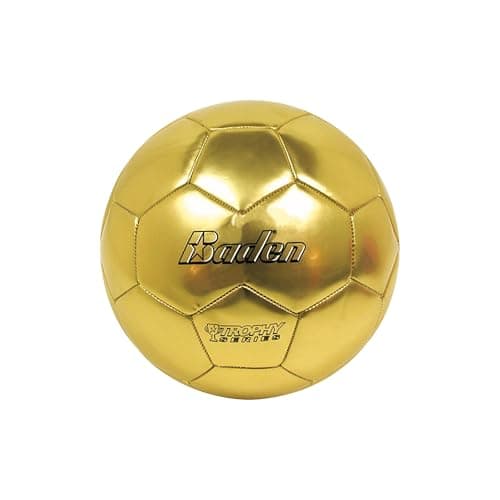
A trophy or autograph ball is a shelf item. The gold finish marks on the first touch, which is not a defect: Baden sells it for signatures, prizes and giveaways and says so. For an end-of-season team gift it beats a medal, because it stays visible instead of going in a drawer.
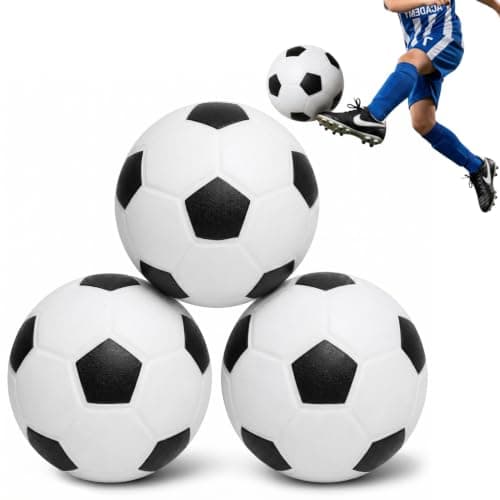
A soft foam multipack is an indoor toy, and a good one. Three balls means a hallway game survives one going behind the sofa. It teaches nothing about striking a real ball, and the listing does not claim it does.
None of that is criticism of the products. It is a criticism of how they are sold, and the fix is to know which column you are buying from before you click.
The gift and keepsake picks
adidas
adidas Unisex-Adult Mess Mini Soccer Ball, IvorySemiBlueBurstIceyBlue, 1
Buy it when the player is the point. If you want practice out of a mini ball, the Select skills trainer is the same money spent better.
Product photos come from each item’s current Amazon listing.
Pressure, pumps and the part that goes wrong
Mini balls arrive deflated like every other ball, and they are the ones most likely to be a gift — which is how a birthday morning turns into a search for a pump. Only one ball on this list ships with one.
They also run a lower pressure range than a match ball, and the printed range next to the valve is the one to use rather than any general rule. A mini inflated to size-5 pressure gets hard and splits at a seam, which on toy-grade construction happens quickly. How to inflate a soccer ball has the method, including wetting the needle, and the pump picks cover the hand pumps and gauges. Soccer ball PSI by size has the chart.
Expect toy-grade air retention from any mini at the bottom of the price range. None of the budget listings here states a bladder material, and an unstated bladder is almost always rubber rather than butyl — which means topping it up before every session rather than every few weeks. Keep the pump near the ball.
A solo trainer instead of a mini
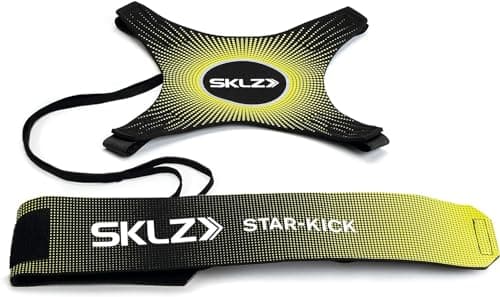
There is a related purchase worth knowing about, because it solves the problem a mini ball is often bought to solve. A solo trainer straps a ball to a waist belt with an elastic cord, so a kick returns to the feet instead of across a yard. SKLZ sells the Star-Kick with a size 1 ball included and states that it adjusts to fit size 3, 4 and 5 as well.
For a child practicing alone in a small space, the trainer does more than a loose mini does — the limiting factor on solo practice is retrieval, not ball size. If the mini ball you are considering is for a kid with nobody to play with, the training equipment picks and backyard soccer drills for kids are the better starting point.
The alternative to a loose mini
SKLZ
SKLZ Star-Kick Solo Soccer Trainer
The best value in youth soccer training gear, as long as you understand it is a touch and technique tool rather than a shooting one.
Product photos come from each item’s current Amazon listing.
What to skip
A mini for a child under about U9 who has joined a team. Buy a better size 3 instead. Best size 3 soccer balls is where that money goes further.
A mini as a replacement for a match-size ball. AYSO's table starts at size 3 and league rules will not bend for a mini. It is an addition, never a substitute.
A trophy ball for a kid who wants to play with it. The finish scuffs on the first touch and the disappointment is immediate.
A size 2, unless you specifically want the middle ground. No division plays with one, so a player who gets on with it will eventually want a size 1 for the harder version anyway.
Any mini sold on graphics when the stated purpose is practice. If a listing leads with a crest and says nothing about training, it is a souvenir, and that is fine as long as that is what you wanted.
And the honest summary of the category: a mini ball is a genuinely useful low-cost addition for a player from about U9 who already owns the right match-size ball, and a pleasant gift at any age. It is not a shortcut and nothing here will replace the ball on the kit list. The full size-by-age chart has that, and how to choose a soccer ball covers the ball that actually matters.
One qualification on everything above: if you are shopping for a two- to five-year-old rather than for a skills ball, the decision changes. Best soccer balls for toddlers splits it by where the ball will actually be used, because indoors a soft ball matters more than the size printed on it.
Common questions
What is the best mini soccer ball?+
For practice, the Select Brillant Super Skills Trainer in size 1 — it is the only ball in this category sold as a skills and juggling tool by a maker with a match-ball reputation. For the hardest version of the same drill, the Capelli Sport 18-inch mini, which publishes its actual circumference. For a gift, an adidas licensed mini, bought for how it looks rather than how it plays.
What age is a size 1 soccer ball for?+
There is no age division that plays with one — AYSO's published table starts at size 3, used for 6U and 8U. A size 1 is useful two ways: as a toy for a toddler who is not yet on a team, and as a footwork and juggling tool from about U9, once a player can strike a size 3 cleanly. Between those, it tends to produce less practice rather than more.
Does practicing with a mini ball actually help?+
For close control and juggling, yes — a smaller ball has a smaller sweet spot, so a sloppy touch misses instead of being forgiven, and the full-size ball feels generous afterward. It will not help with striking or with how a size 5 behaves in the air, because a mini weighs far less than a match ball. It trains the foot, not the shot.
How big is a size 1 soccer ball?+
There is no standard. AYSO publishes circumference and weight ranges for sizes 3, 4 and 5 and nothing for a mini, so size 1 balls vary between makers — typically somewhere around 18 to 20 in around. That is why a published figure is worth looking for: Capelli states 18 in for its mini and a budget size 2 here states a 5.9 in diameter, which works out to roughly 18.5 in around.
Can you use a mini soccer ball in a game?+
No. Every league sets its ball size by division and the smallest standard size is 3. At the top of the game, IFAB's Law 2 specifies a match ball of 68 to 70 cm circumference and 410 to 450 g, which is a size 5. A mini is a practice and play extra, not a substitute for the ball on the kit list.
Do mini soccer balls come with a pump?+
Almost never, and they arrive deflated like every ball. Only one ball on this page states a pump in the box. Mini balls also run a lower pressure range than a match ball, so use the range printed next to the valve rather than a general rule — over-inflating a toy-grade mini splits it at a seam.
Sources
AYSO — Size of Ball and Field by Age Division — Official ball sizes, circumference and weight ranges, and field dimensions by age division. Used for every ball-size and field-size figure on this site.
IFAB Laws of the Game — Law 2, The Ball — The official size 5 specification quoted on this site: circumference between 68 cm (27 in) and 70 cm (28 in), weight between 410 g (14 oz) and 450 g (16 oz) at the start of the match, and pressure equal to 0.6-1.1 atmosphere at sea level, which the Law itself states as 8.5-15.6 lbs per square inch.
Select Sport — soccer balls — Select's current ball range, used to confirm that its outdoor balls start at size 3 and that its size 1 offering is a mini ball sold alongside the skills range rather than as a match ball.
SKLZ — Star-Kick Solo Soccer Trainer — SKLZ's own product page: the neoprene ball glove fits size 3, 4 and 5 balls, the cord stretches to 18 feet, the waistband is tethered, and the stated purpose is to maximize touches by minimizing ball chasing. Also confirms current availability.