Goals
Backyard soccer drills for kids
The best backyard drill is the one a kid will do alone. That rules most of them out.
By Ryder M. · Published October 17, 2026
The short answer
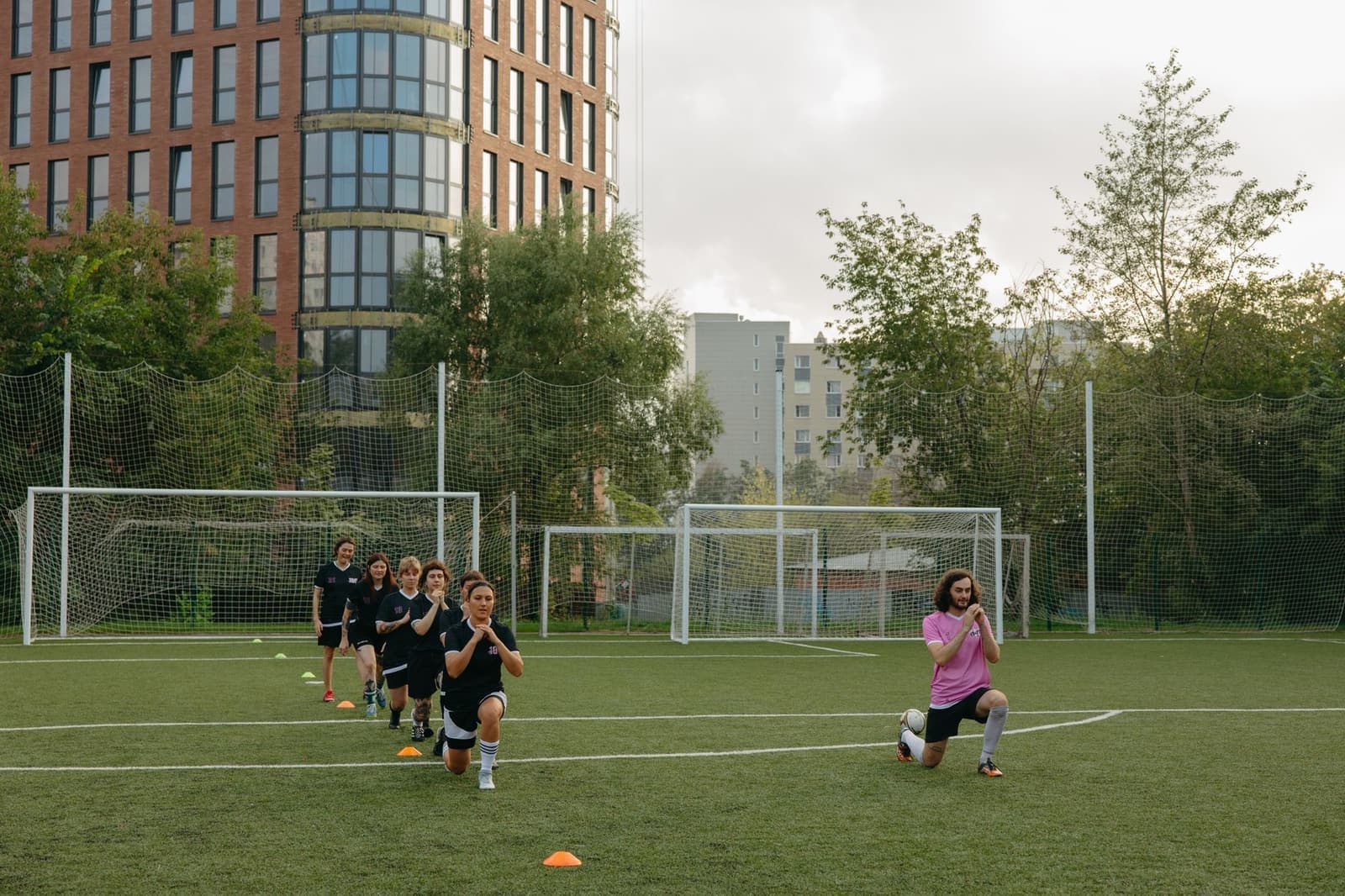
- U6-U8: cone gates, the wall pass, and stop-the-ball — all touch, no running patterns.
- U9-U10: a cone slalom, the four-corner turn, and a solo trainer for volume of touches.
- U11+: rebounder first touch, wall volleys, and a ladder or hurdle circuit as a warm-up rather than as practice.
- The rule that matters: a drill a kid will not do alone is not a backyard drill. Set it up so it runs without an adult.
Backyard soccer practice fails for one reason, and it is not a lack of drills. It fails because almost every drill in a coaching manual needs a second person — to pass, to retrieve, to time, to count. Give a nine-year-old a ball and a yard and what happens is ten minutes of enthusiasm followed by the ball going over a fence.
So the organizing principle here is self-sufficiency. Every drill below either returns the ball on its own or does not send it anywhere. That is also roughly the order of value: touches per minute is the metric that matters at youth ages, and ball-chasing is the thing that destroys it.
What to look for in a backyard drill
- It returns the ball. A wall, a rebounder or a tethered trainer. SKLZ's own description of the Star-Kick is exactly this: the stated purpose is to maximize touches by minimizing ball chasing, with a cord that stretches to 18 feet and a tethered waistband.
- It fits the actual yard. Most drills in books assume a half pitch. A cone gate needs two feet. Measure what you have before buying anything.
- It survives a lawnmower and a dog. Flat disc cones, collapsible cones and a ball. Anything with a frame has to be put away, which means it will not be.
- It does not need counting. A kid will do a thing until they are bored. They will not do twelve repetitions and then switch.
- It is quiet enough to allow. This is a real constraint in a yard with neighbors, and it is the whole argument for a backstop-style goal over a bare net.
The eight drills
| Drill | Ages | What it needs | What it builds |
|---|---|---|---|
| Cone gates | U6-U8 | Two cones, a ball | Dribbling under control, both feet |
| Stop the ball | U6-U8 | A ball, a flat patch | First touch and stopping, which nobody practices |
| The wall pass | U6+ | A wall and a ball | Passing accuracy and first touch, endlessly |
| Cone slalom | U9-U10 | Six to ten cones | Close control at speed |
| Four-corner turn | U9-U10 | Four cones | Turning with the ball instead of around it |
| Solo trainer volume | U8+ | A tethered solo trainer | Touches per minute, with no retrieving |
| Rebounder first touch | U10+ | A rebounder | Receiving a moving ball on the correct foot |
| Ladder or hurdle circuit | U11+ | A ladder or hurdles | Footwork rhythm — a warm-up, not a skill |
A word on the last row, because it is the one families over-invest in. Ladder work is popular and its benefits are narrower than the marketing implies: a controlled comparison published in Frontiers in Physiology in 2026 found that rope-ladder training's improvements were largely confined to rhythm, step frequency and basic coordination, with relatively limited transfer to reaction time and decision making. That study was in male collegiate basketball players aged 18 to 24, not youth soccer players, so read it as a caution rather than a verdict. A ladder is a good warm-up. It is not ball practice.
The four things that make a yard work
Kwik Goal
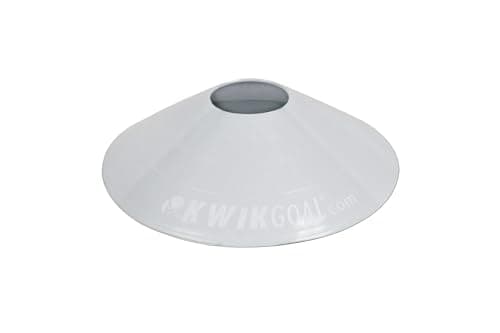
Kwik Goal Small Disc Cones (25-pack)
The single most useful thing you can put in a soccer bag, and the one piece of training gear that is genuinely right at every age.
$20.00View on Amazon#ad — we may earn a commission · price as of October 17, 2026
SKLZ
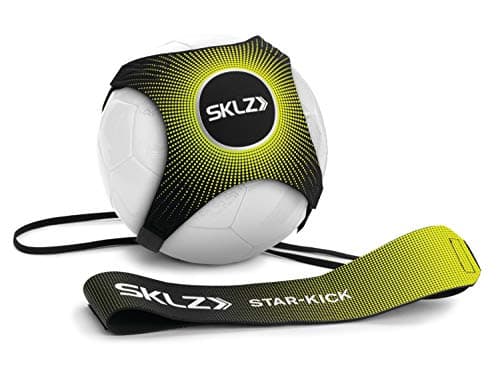
SKLZ Star-Kick Solo Soccer Trainer
The best value in youth soccer training gear, as long as you understand it is a touch and technique tool rather than a shooting one.
$14.99$19.99−25%View on Amazon#ad — we may earn a commission · price as of October 17, 2026
Franklin Sports
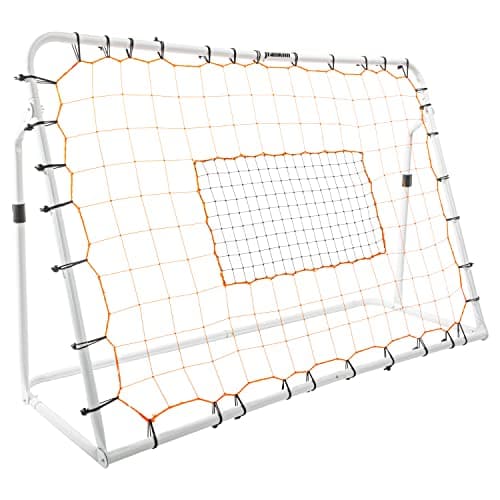
Franklin Sports Adjustable Soccer Rebounder
The right first rebounder: cheap, adjustable, and enough for a U8 to U11 to get real repetitions.
$99.99View on Amazon#ad — we may earn a commission · price as of October 17, 2026
Product photos come from each item’s current Amazon listing.
What to buy, in order
- Cones, first and cheapest. Kwik Goal's small disc cones come 25 to a pack at 2 inches high on a 7.5-inch base, in six colors — low enough to mow over and the first training purchase at any age. Taller cones are a different tool: QUICKPLAY's 9-inch slotted cones are rebounding PVC that compress when stepped on and spring back, non-marking indoors, and stated for ages 5 and up, which makes them the right choice for gates and mini goals rather than flat markers.
- A solo trainer, second. This is the item that changes a backyard from a place a ball gets lost into a place a kid practices. The Star-Kick's neoprene glove fits size 3, 4 and 5 balls and the cord stretches to 18 feet.
- A rebounder, third, and only if there is no usable wall. A wall is free and better. A rebounder's advantage is an adjustable angle, which lets a kid work on receiving a ball arriving at different heights.
- A ladder or hurdles, last, if at all. QUICKPLAY's adjustable hurdles have three settings at 6, 9 and 12 inches in breakaway polypropylene, stated for ages 5 and up. They are a warm-up tool and they are fun, which is a legitimate reason to own them — just not instead of a ball.
Best soccer training equipment for kids is the full roundup with the picks at each level, and best soccer rebounders for kids covers the rebounder choice properly.
Drills by age, in a bit more detail
U6 to U8: touches, not patterns
At this age the only thing worth practicing is the ball on the foot. Two cones a couple of feet apart make a gate; the drill is to dribble through it, turn, and come back, using both feet. Stop-the-ball is the underrated one: roll the ball, have them stop it dead under the sole, and repeat. Almost no young player can stop a moving ball cleanly, and it is the foundation of first touch.
Keep sessions to ten or fifteen minutes and stop before they want to. A size 3 ball is correct through U8 — best size 3 soccer balls has the picks, and a softer or smaller ball indoors is a separate decision covered in best indoor soccer goals for kids.
U9 to U10: control at speed, and volume
The slalom is the standard drill and it works: six to ten cones in a line, close control through and back. The four-corner turn is the better one and nobody does it — four cones in a square, dribble to each in turn, and the point is to turn with the ball rather than run around the cone. Add a solo trainer here if you are going to add one at all; the volume of touches it enables is the single biggest change available in a backyard.
U11 and up: receiving, striking, and honest limits
Wall volleys and rebounder first touch are the two that transfer. The skill is receiving a moving ball on the correct foot and doing something useful with it, which a wall produces hundreds of times in twenty minutes. Striking practice is where a backyard runs out of room — a 2.5-foot target does not teach placement, and past about U10 a mini goal is a toy rather than training. Best backyard soccer goals for teens covers what works at this age, and soccer goal vs rebounder weighs the two options against each other.
Safety and the neighbors
Two things, briefly, because a page about yards should say them.
If there is a goal in the yard, anchor it. The US Consumer Product Safety Commission's guidance on movable soccer goals exists because full-size goals tip over onto people, and its anchoring, counterweighting and storage recommendations are written for exactly the kind of frame that ends up in a backyard. A mini goal weighing a couple of pounds is not in that category; a full-size metal frame absolutely is. How to anchor a backyard soccer goal covers the method.
And the neighbors, which is the constraint that actually ends backyard practice. A ball over a fence twice is a conversation; a ball off a wall for twenty minutes every evening is a complaint. A backstop-style goal with an integrated net behind it solves the first problem, and timing solves the second. Best pop-up soccer goals and what size backyard soccer goal cover the equipment side.
One last practical note: cleats in a backyard are usually unnecessary and sometimes a bad idea. On dry, hard summer ground, studs that cannot sink in make the session uncomfortable — best soccer cleats for hard ground explains why. Sneakers or turf shoes are fine for most backyard work, and keeping the game cleats for games makes them last longer.
Common questions
What are good soccer drills to do in a backyard?
The ones that return the ball. Cone gates and stop-the-ball for U6 to U8, a cone slalom and a four-corner turn for U9 to U10, and wall passes or rebounder first touch from U10 up. A tethered solo trainer is the single best addition at any age above about U8 because it removes ball chasing, which is what destroys touches per minute in a small space.
What equipment do you need for backyard soccer practice?
Four things, in order of value: flat disc cones, a tethered solo trainer, a rebounder only if there is no usable wall, and a ladder or hurdles last if at all. Cones are the first training purchase at any age — a 25-pack of 2-inch disc cones is low enough to mow over. A wall is free and better than a rebounder.
How long should a backyard soccer session be?
Ten to fifteen minutes for U6 to U8, and stop before they want to. Older kids will go longer if the setup lets them — which is the argument for equipment that does not need an adult. A drill a child will not do alone is not a backyard drill, however good it looks in a coaching manual.
Are agility ladders worth it for young soccer players?
As a warm-up, yes. As ball practice, no. A controlled comparison published in Frontiers in Physiology in 2026 found rope-ladder training's gains were largely confined to rhythm, step frequency and basic coordination, with limited transfer to reaction time and decision making — though that study was in collegiate basketball players aged 18 to 24, not youth soccer players. Buy a ladder because it is fun, not instead of a ball.
Does a backyard count as real practice?
Yes, and the format is in its favour. US Youth Soccer's small-sided progression — 4v4 to 7v7 to 9v9 to 11v11 — exists because fewer players in a smaller space produce more touches per child. A backyard is the smallest-sided game there is. What it cannot teach is striking at a full-size target and anything that needs real space.
Should kids wear cleats in the backyard?
Usually not. On dry summer ground, long firm-ground studs cannot sink in and the session is uncomfortable, and keeping the game cleats for games makes them last considerably longer. Sneakers or turf shoes handle most backyard work, with the exception of wet grass where a bit of grip genuinely helps.
How do I stop the ball going over the fence?
A backstop, or a smaller target. A goal with an integrated net behind it is designed for exactly this and is the main reason parents in small yards buy one. Failing that, aim the practice at a wall rather than at a goal — a wall pass drill never produces a lost ball, which is also why it generates more touches per minute than shooting does.
Sources
- Kwik Goal — Small Disc Cones (6A10) — Kwik Goal's own listing for the 25-cone pack: 2 inches high on a 7.5-inch base, six colors, sold per color. Used to confirm current availability and every dimension quoted for the disc cones on this page.
- QUICKPLAY — Collapsible 9-inch Training Cones (set of 10) — QUICKPLAY's published specification for the 9-inch slotted cones: rebounding PVC that compresses when stepped on and springs back, non-marking indoors, stackable, stated for ages 5 and up, with a one-year warranty. Also the current stock check.
- QUICKPLAY — Adjustable Speed Hurdles (set of 6) — The three height settings (6, 9 and 12 inches), the high-impact polypropylene breakaway construction, the included carry bag and the stated age-5-and-up guidance. Also the current stock check.
- SKLZ — Star-Kick Solo Soccer Trainer — SKLZ's own product page: the neoprene ball glove fits size 3, 4 and 5 balls, the cord stretches to 18 feet, the waistband is tethered, and the stated purpose is to maximize touches by minimizing ball chasing. Also confirms current availability.
- SKLZ — speed and agility range (Quick Ladder and Speed and Agility Ladder Pro) — Current availability and the published specifications for both ladders: the Quick Ladder's 11 plastic rungs at 17 inches wide and 15 feet long with a carry bag, and the Speed and Agility Ladder Pro's webbing-free accordion fold, seven rungs at 17.25-inch spacing, extensible ends, low-profile edges and included stakes.
- Frontiers in Physiology (2026) — computerized agility training compared with rope ladder training — A controlled comparison in male collegiate basketball players aged 18-24 reporting that ladder training's improvements were largely confined to rhythm, step frequency and basic coordination, with relatively limited transfer to reaction time and decision making. Used for the honest limits of ladder work; the population is adult basketball players, not youth soccer, and the page says so.
- US Youth Soccer small-sided playing formats — Player counts, game lengths and format progression (4v4, 7v7, 9v9, 11v11) by age group.
- US CPSC — Guidelines for Movable Soccer Goals — Tipover fatality and injury figures, and the CPSC's specific anchoring, counterweighting and storage recommendations. The source for every safety figure on the goal pages.
Read next
- Best soccer training equipment for kidsCones, ladders, hurdles and solo trainers for backyard practice — what to buy first at each age, and the gear that sits in the garage unused.
- Best soccer rebounders for kidsRebounder picks by age and yard size, and why a rebounder often beats a goal as the first purchase.
- Soccer goal vs rebounder: which first?The decision table for goal versus rebounder, the combined units, and the case for waiting.
- Best pop-up soccer goalsPortable pop-up picks for U6 to U10, honest about the narrow age window where they work.
- What size backyard soccer goal do you need?Goal size by player age and by yard, the run-up measurement people skip, and official sizes for reference.
- How to anchor a backyard soccer goal safelyThe CPSC tipover figures, the anchor types that work on grass and hard surfaces, and how to secure a goal not in use.
- Best indoor soccer goals for kidsThree mini goals that work on a floor rather than in a yard, what size fits which room, and why the ball you pair with the goal decides whether it gets confiscated.
- Best soccer cleats for hard groundWhat hard ground does to a firm-ground plate, why more studs beats longer studs on a baked field, and the youth shoes that handle an August pitch.