Cleats
When to replace kids' soccer cleats
Four signs, and none of them is how the cleats look.
By Ryder M. · Published September 27, 2026
The short answer
- The thumb's width is gone — less than about a centimeter beyond the longest toe. This is the commonest and it ends a pair regardless of condition.
- The upper has split at the flex point across the ball of the foot.
- The studs are worn down or rounded off, so grip is unpredictable.
- The soleplate has lost its stiffness and flexes easily by hand in the wrong places.
For most kids between 6 and 12, cleats get replaced roughly every six to nine months — and almost always because the foot grew, not because the cleats wore out. That is worth knowing because it changes the shopping decision: paying for durability you will never reach is money gone.
The four signs, in order of how often they happen
1. They have run out of room
The dominant reason, by a long way. Kids move a full shoe size in six months routinely, and a cleat becomes too short gradually, so they adapt to it without saying anything.
The check takes fifteen seconds: with them standing in the cleat, press at the end and find the longest toe. Less than about a centimeter and they are done. Toes touching the end is well past done, and is what causes bruised toenails.
Do this every couple of months during the season rather than waiting for a complaint. How cleats should fit covers the other three fit tests.
2. The upper has split at the flex point
Cleats crease across the ball of the foot every stride, and that is where a synthetic upper eventually cracks and then splits. Once it has opened, water gets in on every wet session and the split only grows.
A crease is normal and appears within weeks. A crack you can see through is the end. This is the sign most likely to appear before growth does on a cheap cleat worn four sessions a week — which is the argument for a mid-tier pair at that volume, not a cheaper one.
3. The studs are worn down
Compare the studs to how they looked when new. Rounded-off or visibly shortened studs give unpredictable grip: they neither bite nor slide cleanly, which is how kids go over on a hard turn.
This happens faster than people expect if firm-ground cleats are being worn on artificial turf — FG studs are designed to sink into ground that gives, and a hard surface simply grinds them down. It is one of several reasons a turf pair is worth having; see firm ground vs turf.
4. The soleplate has gone soft
Hold the cleat by the heel and toe and twist gently. A healthy soleplate resists. One that twists easily, or that flexes in the middle rather than at the ball of the foot, has lost the stiffness that makes studs work — the plate is what transfers push-off into the ground.
This is the least common sign on youth cleats, because they rarely last long enough. It shows up on hand-me-downs.
How often, by age
| Age | Typical replacement | Driven by |
|---|---|---|
| 3–6 | Every season, sometimes twice | Growth, almost entirely |
| 6–10 | Every 6–9 months | Growth, with wear catching up at high volume |
| 10–13 | Every 6–12 months | Growth and wear roughly equally |
| 13+ | Once a season or less | Wear, as growth slows |
That last row is the point at which spending more per pair starts making sense — a cleat that lasts a full season of hard use can justify a better upper and plate. Below it, you are buying for a foot that will be a different size before the shoe is tired. The budget picks lay out what each price step actually buys.
What is not a reason to replace them
- They look scruffy. Scuffing is cosmetic. The softer uppers — the Copa Pure especially — look worn within weeks and play fine for months.
- A new colorway came out. The shoe underneath is identical. Last season's color is the single best way to save money in this category.
- A teammate has better ones. Worth naming because it is the real reason a lot of cleats get replaced early.
- They smell. That is a drying problem, not a wear problem. See the cleaning routine.
Hand-me-downs: when they are fine and when they are not
Passing cleats down between siblings is sensible and usually works. Two checks before you do.
Check the soleplate stiffness with the twist test, because a plate that has gone soft is the one failure that is invisible and does affect safety on a hard turn. And check whether the sockliner has compressed into the shape of the previous kid's foot — if it has, replace the sockliner rather than the cleat, which costs very little.
What does not transfer is fit. A cleat that fitted one kid's foot width does not automatically fit a sibling's, and a hand-me-down that is the wrong width is not a saving. See the wide feet page.
Sensible replacements at each volume
adidas
adidas Goletto VIII Firm Ground
The sensible answer when the honest requirement is a cleat that survives one rec season and costs as little as possible.
Nike
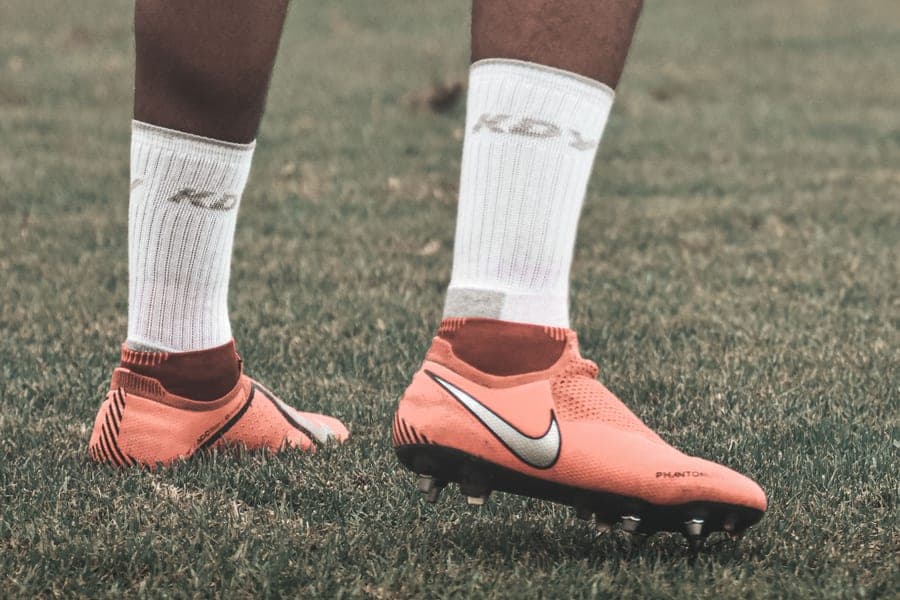
Nike Jr. Mercurial Vapor 16 Club MG
The safest default cleat for a rec player between U7 and U12, as long as the foot is average width or narrower.

Nike
Nike Jr. Mercurial Vapor 16 Academy FG/MG
Worth the step up only when the volume of play justifies it — two or three sessions a week, not one Saturday game.
Photos are licensed representative stock images, not the exact models.
Making a pair last longer
Three things genuinely extend the life of youth cleats, and none of them is expensive.
- Clean and dry them after each muddy session. Five minutes. The routine here.
- Do not wear them on pavement. Walking to the field in cleats grinds the studs down on concrete for no benefit at all.
- Alternate two pairs if they play three or more sessions a week. Neither pair stays wet, and both last roughly twice as long. See the turf picks.
Common questions
How often should you get new soccer cleats for a kid?
For most kids between 6 and 12, every six to nine months — and usually because their feet grew rather than because the cleats wore out. Check the fit every couple of months during the season: if there is not about a centimeter beyond the longest toe, they are finished regardless of condition.
When should soccer cleats be replaced?
When any of four things is true: the thumb's width of room at the toe has gone; the upper has split at the flex point across the ball of the foot; the studs are worn down or rounded off; or the soleplate twists easily by hand. How the cleats look is not on that list.
Are hand-me-down soccer cleats ok?
Usually yes, with two checks. Twist the cleat by heel and toe — a soleplate that has gone soft is the one invisible failure that matters on a hard turn. And check whether the sockliner has compressed to the previous kid's foot, in which case replace the liner rather than the cleat. Fit does not transfer between siblings automatically.
How do you know if soccer cleat studs are worn out?
Compare them with how they looked new: rounded off or visibly shortened means worn. The risk is unpredictable grip — worn studs neither bite nor release cleanly. Firm-ground studs wear down fast on artificial turf, because they are designed to sink into ground that gives.
Do soccer cleats wear out faster on turf?
Firm-ground cleats do, yes. The studs are made to sink into soft grass, and a hard artificial surface simply abrades them. That is one of several reasons a turf-specific pair is worth having if your kid trains on turf weekly — it also means neither pair stays permanently damp.
Sources
- Nike — kids' soccer cleats and shoes — Verified that each Nike model named on this page is currently sold, and the source for Nike's own published upper, plate and surface descriptions.
- adidas — kids' soccer — Verified current availability of the adidas models named here, plus adidas's published material and construction claims.
- Vizari Sports — youth cleats and indoor shoes — Verified the Vizari models named here are currently sold, including the toddler size range and the indoor line, plus Vizari's published material claims.
Read next
- How should kids' soccer cleats fit?The thumb's-width rule and four hands-on fit checks — because asking a kid whether shoes fit does not work.
- How to clean soccer cleatsThe five-minute post-game routine, how to deal with turf pellets, and the two drying mistakes that wreck a pair.
- Youth soccer cleat size chartUS, EU and centimeter conversions with approximate ages, plus how each brand's junior sizing actually runs.
- Best budget youth soccer cleatsCheap cleats that are actually worth buying, and exactly what each step up in price buys you.
- Best youth turf soccer shoesTurf shoe picks by age and width, and why the turf outsole does more for comfort than any upper.
- Firm ground vs turf vs artificial grass cleatsThe FG, AG, TF and MG decision table, whether one pair can cover a mixed schedule, and the cost of guessing wrong.