Heads up: we earn a commission if you buy through our links, at no extra cost to you. It never changes which product we recommend — here’s how that works.
The short answer
Futsal balls have a deliberately low bounce — Select fills the bladder with microfibre polyester specifically to kill the rebound — because the game is played on a hard surface in a small space. They also use their own sizing convention: futsal size 3 is for under-13 play, size 4 for 13 and up. It does not match outdoor sizing.
Two things surprise people about indoor soccer balls. First, the ball is genuinely different rather than just smaller. Second, the sizing numbers mean something else entirely, which is how families end up with the wrong ball while believing they checked.
The sizing, because it catches everybody
Futsal size
For
Roughly equivalent to
Junior / size 3
Players under 13
Outdoor size 3 in diameter, but heavier and much lower bouncing
Senior / size 4
Players 13 and up
Outdoor size 4 in diameter, again heavier and lower bouncing
Scroll the table sideways on a narrow screen.
So a futsal ball marked size 4 is the senior ball, not a U9–U12 ball. Senda's own guidance describes futsal junior as equivalent to a size 3 from other brands for players under 13, and futsal senior as equivalent to a size 4 for players 13 and older.
The clearest labeling in the category comes from Select's Talento range, which sidesteps the numbering entirely by grading by age: Talento 9 for U8–U9, Talento 11 for U10–U11, Talento 13 for U12–U13. If you want to remove the guesswork, that is the range to look at.
Start here
Pick by your kid’s level
The right answer changes with the level, not just the shoe size. Find your kid’s bracket and start there.
Age-graded across three models, which removes the sizing confusion entirely. Select's low-bounce bladder is the real thing rather than a resized outdoor ball.
Tap any row to jump to the full write-up. We do not show prices because we do not hold live pricing — the button opens the current Amazon listing so you see today’s number rather than last month’s.
#
Product
Best for
Surface
Fit notes
Price
1
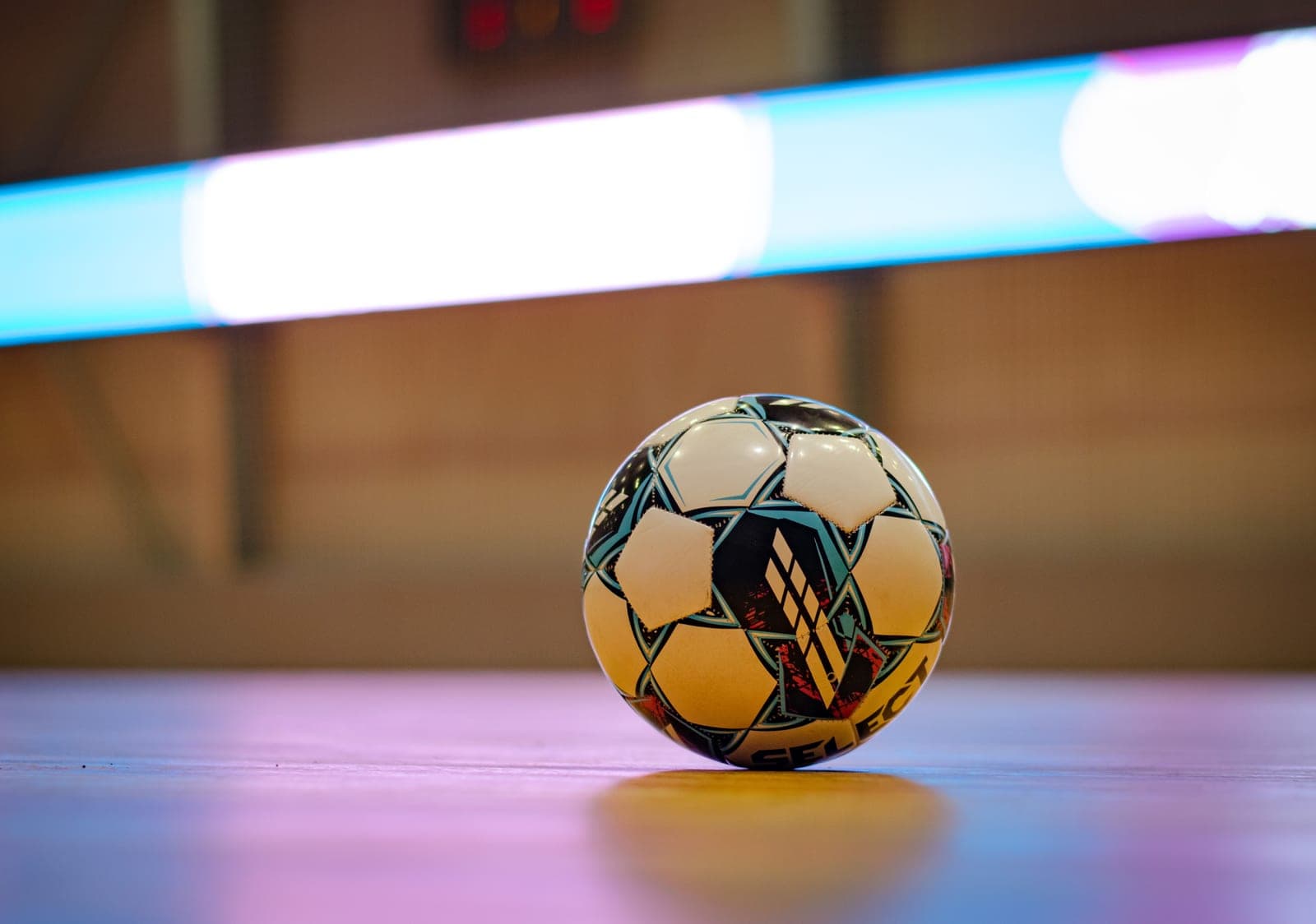
Select Talento Futsal BallThe right ball for a real indoor or futsal season, and the age-graded range removes the usual sizing confusion.
U7–U8 rec, U9–U10, U11–U12
Futsal (low bounce)
Pick by the model number, not by the outdoor size chart: Talento 9 for U8–U9, 11 for U10–U11, 13 for U12–U13..
Product photos are licensed representative stock images, not photographs of the exact model.
Why the low bounce matters
It is not a technicality. Futsal is played on a hard court in a small space, and a normal ball on that surface spends the session in the rafters — which means very little actual play and a lot of retrieving.
The low bounce keeps the ball on the floor, which is why futsal is so effective at developing close control. Kids get far more touches per minute than they do in outdoor soccer, and every one of them is a controlled touch rather than a chase. That is the genuine argument for a winter futsal season, and it depends on having the right ball.
Select achieves it with a butyl bladder filled with microfibre polyester, which the brand describes as producing an extremely low bounce that makes the ball easy to control.
Do you need one?
Depends what 'indoor soccer' means in your case, and the two are often confused:
Proper futsal, on a hard court with futsal rules — yes, and the league will usually specify the ball. A normal ball is genuinely unplayable.
Recreational indoor soccer on a gym floor or an indoor turf pitch — often not. Many programs just use a normal ball at the age-appropriate size. Ask before buying.
Indoor turf facilities in particular usually use ordinary outdoor balls, because the surface behaves more like grass than like a court.
What else changes indoors
Two things beyond the ball, and the first one will stop your kid getting on the court:
Footwear. Indoor facilities require a flat, non-marking gum sole. A turf shoe is usually refused at the door, because the nubs mark a sports floor. See the indoor shoe picks.
Shin guards. Most indoor leagues still require them, and a smaller pitch arguably makes them more useful — more tackles per minute and less space to avoid one. See do you need shin guards for indoor soccer.
One futsal ball is enough
Unlike outdoor balls, there is no case for a second futsal ball. It gets used on a clean indoor court for a defined season, so it does not get lost in hedges or left in the rain, and the low-bounce construction is wrong for outdoor use anyway — heavy and dead on grass.
Which also means: do not let a futsal ball become the yard ball. It is the wrong tool and it will teach your kid a strike that does not translate. Keep the outdoor ball for outdoors — see the size 3 and size 4 picks.
1. Select
Select Talento Futsal Ball
The right ball for a real indoor or futsal season, and the age-graded range removes the usual sizing confusion.
Best for
Indoor and futsal play, sized by age
Levels
U7–U8 rec · U9–U10 · U11–U12
Type / surface
Futsal (low bounce)
How it fits
Pick by the model number, not by the outdoor size chart: Talento 9 for U8–U9, 11 for U10–U11, 13 for U12–U13.
What we like
Age-graded across three models, which is unusually thoughtful and takes the guesswork out of indoor sizing
The genuinely low bounce is the whole point of a futsal ball and cheap indoor balls do not deliver it
Where it falls short
The heavy, low-bounce feel is wrong for outdoor grass play, so this cannot be the only ball
Costs more than a rec outdoor ball of the same nominal size
Manufacturer’s published specs
Butyl bladder filled with microfibre polyester for an extremely low bounce (Select)
Sold as Talento 9 for U8–U9, Talento 11 for U10–U11 and Talento 13 for U12–U13 (Select)
Purpose-built futsal ball rather than a resized outdoor ball
These are the manufacturer’s own claims, not measurements we took.
For proper futsal, use futsal sizing rather than outdoor sizing: futsal junior (often marked size 3) for players under 13, and futsal senior (size 4) for 13 and up. Select's Talento range removes the confusion by grading by age — Talento 9 for U8–U9 through Talento 13 for U12–U13.
What is the difference between a futsal ball and a soccer ball?+
A futsal ball has a deliberately low bounce, achieved by filling the bladder with material that kills the rebound, and it is heavier for its diameter. That keeps the ball on the floor of a hard court in a small space, which is why futsal develops close control so effectively. An outdoor ball on a futsal court spends the session in the air.
Can you use a regular soccer ball indoors?+
On indoor turf, usually yes — many indoor turf programs use ordinary outdoor balls because the surface behaves more like grass. For proper futsal on a hard court, no: a normal ball bounces too much to play with, and the league will generally specify a futsal ball.
Are futsal balls good for practice outdoors?+
Not really. The low-bounce construction that makes them excellent on a court makes them heavy and dead on grass, and the strike does not translate well. Keep the futsal ball for indoors and use an age-appropriate outdoor ball outside.
Do you need special shoes for indoor soccer as well?+
Yes. Indoor facilities require a flat non-marking gum sole, and a turf shoe is usually refused at the door because the nubs mark a sports floor. That makes indoor shoes a separate pair from both cleats and turf shoes — see the indoor shoe picks.
Sources
Select Sport — futsal balls — Select's futsal range including the age-graded Talento models, and Select's own description of the low-bounce bladder construction.