Heads up: we earn a commission if you buy through our links, at no extra cost to you. It never changes which product we recommend — here’s how that works.
The short answer
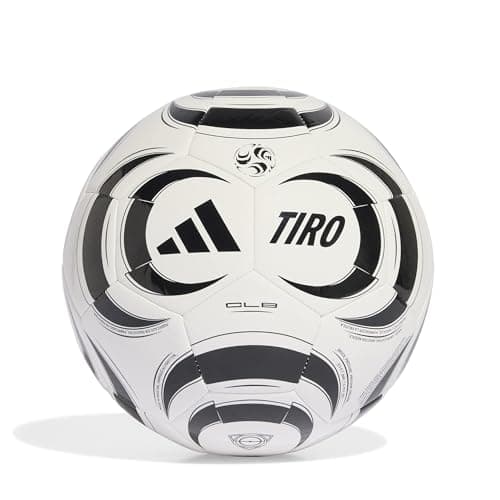
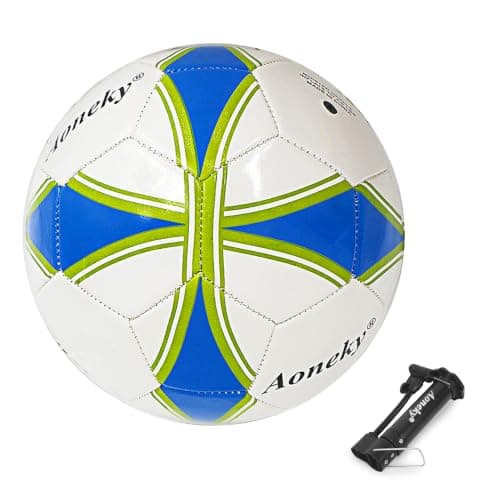
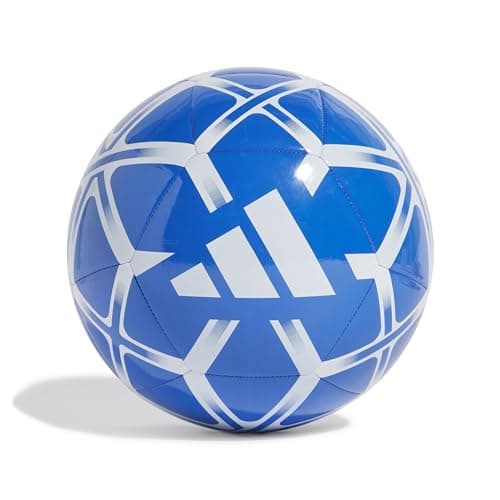
Under $25 the pick is the adidas Starlancer Club — the default rec ball at every size from 3 to 5, which is what the overwhelming majority of youth players should be kicking. The budget pick is the Aoneky size 3 soccer ball with pump, because a first ball that arrives with the pump you were going to have to buy anyway is the cheapest complete purchase here. Prices are read from the live Amazon listing when you load this page, with the date printed under each button.
About the prices: this page is built from the live price layer, not from list prices we typed in. Every pick was under $25 when Amazon last reported a price for it, and the as-of date renders under its button. Tap through for today's number before you buy.
Soccer balls are the category where a price cap is least painful. A ball has one job, the job is governed by a published specification, and nothing about being inexpensive prevents a ball from meeting it. Law 2 of the Laws of the Game sets a size 5 ball at 68 to 70 cm circumference, 410 to 450 grams, and 0.6 to 1.1 atmospheres — which the Law itself states as 8.5 to 15.6 pounds per square inch. A $20 ball and a $150 ball are held to the same numbers.
So the honest frame for this page is not what you give up, it is what you are not paying for: thermally bonded panels, a match-grade bladder and a FIFA mark. Below we say exactly what each of those is worth to a nine-year-old, which is less than their price.
How we sorted these
Under the cap on the live listing. Nothing qualifies on a list price. The price layer reads Amazon and stamps the date; a ball with no live price under $25 is off this page.
Size coverage first. Buying the wrong size is a far bigger mistake than buying the wrong tier, so the list spans sizes 3, 4 and 5 rather than giving you five size 5 balls.
Whether it survives outdoors. The real difference inside this band is how a ball copes with being left on a lawn, which is where every family's balls actually live.
A named cheapest-complete pick. Not the cheapest listing on Amazon, but the cheapest purchase that leaves you ready to play, pump included.
Quick picks
Tap any row to jump to the full write-up. The price in each button is the one Amazon reported on the date stamped under it — tap through for today’s number, which is the only one that can be relied on.
#
Product
Best for
Surface
Fit notes
Price
1
adidas Starlancer ClubThe sensible default youth ball — right size range, right price, air stays in.
U6, U7–U8 rec, U9–U10, U11–U12, U13+ travel & club
Sizes 3, 4 and 5
Check the size on the ball, not the box: size 3 is for roughly U8 and under, size 4 for U9–U12, size 5 from U13..
The one to buy if the ball is going to live in the yard rather than the gear bag.
Best for
A practice ball that lives outside, U7+
Levels
U7–U8 rec · U9–U10 · U11–U12 · U13+ travel & club
Type / surface
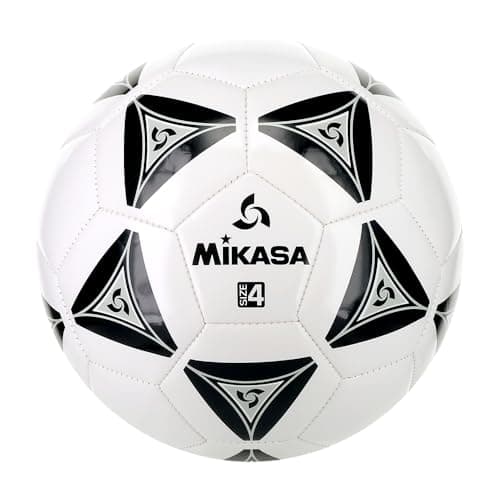
Size 4
How it fits
Size 4 is the U9–U12 match size. Confirm the size on the listing before buying — the colorways are listed separately and not every one carries every size.
What we like
Costs little enough that a ball lost over a fence is an annoyance rather than a replacement purchase
An adidas training ball rather than an unbranded one, so the cover and valve are to a known standard
Where it falls short
Heavier feel than a match ball, which is fine for practice and noticeable in a game
Listed in size 4 only, so it suits U9 upward rather than the youngest brackets
Manufacturer’s published specs
adidas's basic training ball, listed in size 4 (adidas)
Requires inflation on arrival
These are the manufacturer’s own claims, not measurements we took.
FIFA's quality program runs three marks and every certified ball passes the same seven tests — weight, circumference, roundness, bounce, water absorption, loss of pressure, and shape and size retention. The Pro mark means passing them under more demanding conditions, not passing extra tests.
What you are not paying for
What it actually is
Worth it for a youth player?
Thermally bonded panels
Panels fused rather than stitched, so the seams absorb less water
Marginal below U13; it matters in sustained rain
A match-grade bladder
Holds pressure longer and more evenly
Useful if nobody in the house owns a pump; otherwise no
A FIFA quality mark
Certification against seven lab tests at set tolerances
No, unless a league specifically requires a marked ball
A premium cover material
Softer first touch, less abrasion resistance
No. Youth balls get dragged on concrete, which favours a tougher cover
A licensed design
A club or player badge
Nothing technical. It is a gift decision, not a ball decision
Scroll the table sideways on a narrow screen.
The row that surprises people is the cover material. A premium ball is tuned for touch, and touch is not the limiting factor on a ball that spends its life on a driveway. A tougher, cheaper cover genuinely lasts longer in that environment, which is why best soccer balls for concrete exists as its own page.
Get the size right before you get the price right
A ball a size too big teaches a child to lean back and scoop, which is a hard habit to unlearn. The published bands are consistent across US youth soccer: size 3 for the youngest age groups, size 4 in the middle, size 5 from U13 upward. How to choose a soccer ball is the full version, and the size-specific roundups go deeper: best size 3 soccer balls, best size 4 soccer balls and best size 5 soccer balls.
If the comparison you are actually making is between two adjacent sizes, size 3 vs size 4 and size 4 vs size 5 are the pages for it.
Size before price, every time. An oversized ball costs a child more than a cheap cover ever will.
Two things worth more than the next $25
A pump with a gauge. Most balls families complain about are simply underinflated. One pump serves every ball in the house for years — best soccer ball pumps ranks them, and the PSI chart by size tells you where to stop.
And one habit: do not leave the ball in a hot car. Ball makers' own care instructions warn that high temperatures cost a ball its tuned shape and deteriorate the carcass, which is a far more common way a youth ball dies than being kicked too hard. How long do soccer balls last covers the rest.
Common questions
What is the best soccer ball under $25?+
The adidas Starlancer Club. It is sold in sizes 3, 4 and 5, which means one model covers a family from U6 through U13 and up, and it is the default recreational ball most youth players should be using. If you also need a pump, the Aoneky size 3 ball with pump included is the cheapest complete first purchase on this page.
Are cheap soccer balls any good?+
For youth soccer, yes. A ball is held to a published specification regardless of price: Law 2 sets a size 5 ball at 68 to 70 cm circumference, 410 to 450 grams and 0.6 to 1.1 atmospheres, and an inexpensive ball meets those numbers. What you are not paying for is thermally bonded panels, a match-grade bladder and a FIFA mark — none of which changes the outcome for a player under about U13.
What does a more expensive soccer ball actually give you?+
Four things, in descending order of usefulness to a child: panels that are fused rather than stitched, so the ball absorbs less water in sustained rain; a bladder that holds pressure longer; a softer cover that feels better on the first touch; and a FIFA quality mark. The softer cover is actively worse on concrete, and the FIFA mark only matters if a league specifically requires a marked ball.
What size soccer ball should I buy for my child?+
Size 3 for the youngest age groups, size 4 in the middle years and size 5 from about U13 upward — the published bands are consistent across US youth soccer. If you are between sizes, go down rather than up: an oversized ball teaches a child to lean back and scoop the ball, which is a habit that takes a long time to unlearn.
Do I need a FIFA approved soccer ball for youth soccer?+
Almost never. FIFA's quality program has three marks and every certified ball passes the same seven laboratory tests, with the Pro mark meaning those tests are passed under more demanding conditions rather than extra tests being added. Unless your league's rules specifically require a marked ball, the certification is not buying your player anything.
How long does a cheap soccer ball last?+
Longer than most people expect, provided it is inflated correctly and not cooked. The two things that kill youth balls are being left underinflated, which stresses the seams, and being left in a hot car, which manufacturers' own care instructions warn costs the ball its tuned shape and deteriorates the carcass. A pump with a gauge and a garage shelf will outlast any upgrade you could buy.
Sources
IFAB Laws of the Game — Law 2, The Ball — The official size 5 specification quoted on this site: circumference between 68 cm (27 in) and 70 cm (28 in), weight between 410 g (14 oz) and 450 g (16 oz) at the start of the match, and pressure equal to 0.6-1.1 atmosphere at sea level, which the Law itself states as 8.5-15.6 lbs per square inch.
AYSO — Size of Ball and Field by Age Division — Official ball sizes, circumference and weight ranges, and field dimensions by age division. Used for every ball-size and field-size figure on this site.
FIFA — the quality marks for footballs — The three FIFA quality marks (FIFA QUALITY PRO, FIFA QUALITY, FIFA BASIC), the seven laboratory tests every certified ball must pass — weight, circumference, roundness, bounce, water absorption, loss of pressure, and shape and size retention — and the fact that the Pro mark means passing those same seven tests under more demanding conditions rather than passing extra tests.
adidas — kids' soccer — Verified current availability of the adidas models named here, plus adidas's published material and construction claims.
Molten — ball care instructions — A ball manufacturer's published care instructions, and the source for the ball-care facts on this site: always use a thin inflation needle to avoid damaging the valve, and inflate slowly to the pressure printed on the ball; a very dirty synthetic-leather ball is cleaned with plenty of water and a mild detergent, never left immersed in detergent, and rinsed and drained thoroughly; detergent chemicals may fade the colors; the ball is then left to dry in a well-ventilated place out of the sun, and never dried with a hair dryer or similar appliance; store it in a cool dry place away from direct sunlight; never leave a ball in high temperatures or humidity such as a car trunk in summer, which costs it its tuned shape and deteriorates the carcass; leather protection creams and sprays must not be used because they make the surface slippery; and rotating two or more balls extends the life of each.