Heads up: we earn a commission if you buy through our links, at no extra cost to you. It never changes which product we recommend — here’s how that works.
The short answer
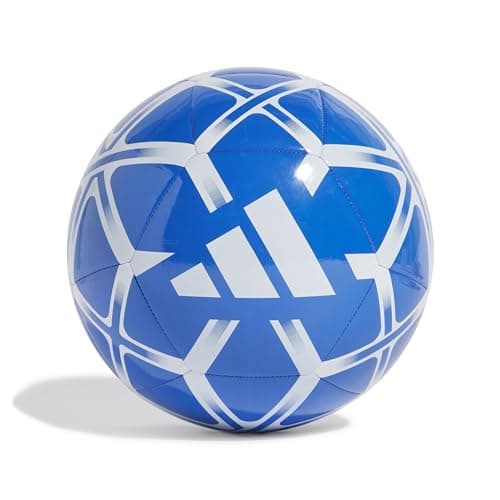
adidas — the safe default. The one brand that sells the same rec model in sizes 3, 4 and 5, so a family with two kids buys one thing twice.
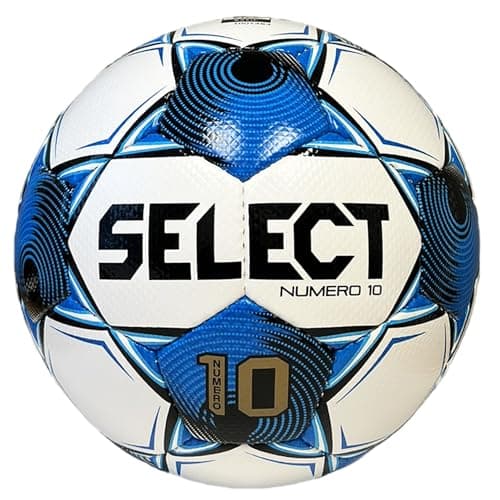
Select — the specialist. Danish, invented the 32-panel ball in 1962, and the brand to move to when a player is striking the ball properly, from about U12.
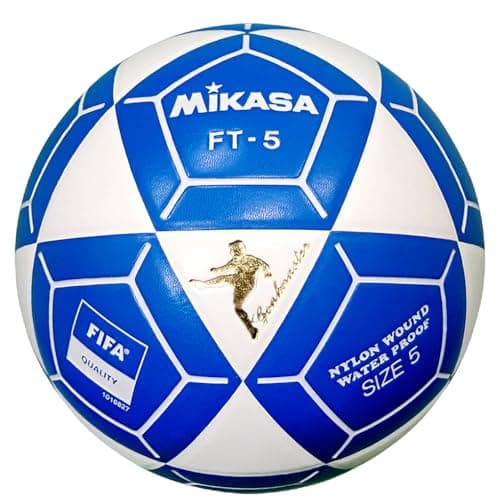
Mikasa — the durability pick. Heat-bonded covers at a stitched-ball price, but the youth size run is thin and one of its best-known balls is sold for footvolley.
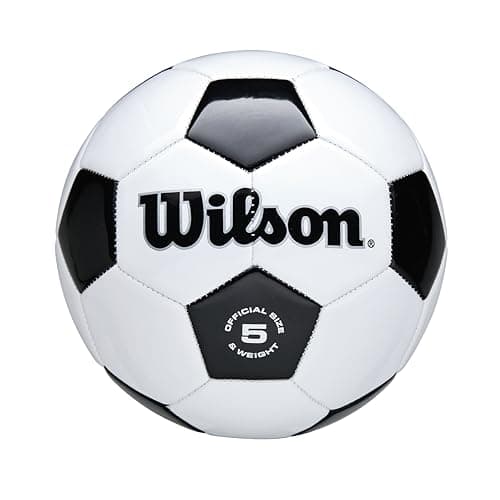
Wilson — the yard ball. Cheap, everywhere, and not the ball to take to a game.
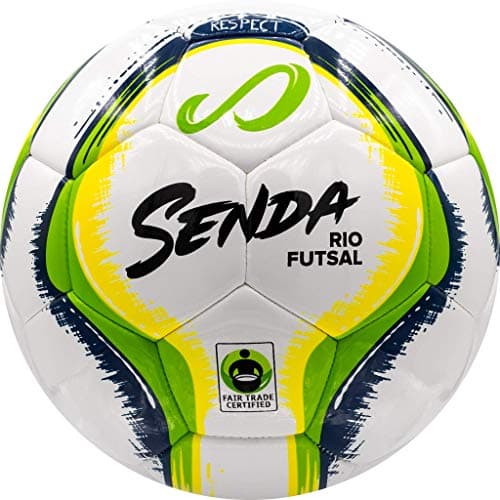
Senda — the ethics pick. Fair Trade Certified balls, strongest in futsal, with the narrowest distribution of the five.
The honest caveat: below about U10 the brand is close to irrelevant. Size and bladder decide the ball; the badge does not.
There is a version of this question that has a short answer and a version that does not. If your kid is six and needs a size 3 for Saturday mornings, the brand does not matter and anyone who tells you otherwise is selling something. If your kid is thirteen, trains three times a week and has started to notice how a ball comes off their foot, the brand is suddenly most of the purchase.
This page is about where the line between those two sits, and what each of the five brands a US parent actually runs into is genuinely good at. It is not a picks page — how to choose a soccer ball and the size roundups do that job. It is the page you read before you decide how much the name is worth.
Three things that beat brand, in order
Before any of the names below matter, three things decide whether a ball is right, and a correct answer on all three from a brand you have never heard of beats a wrong answer on any of them from a famous one.
The size. AYSO publishes the size by age division and leagues follow it: broadly size 3 up to about U8, size 4 for U9 through U12, size 5 from U13. A size 5 handed to a nine-year-old is the single most common youth ball mistake, and no brand fixes it.
The bladder. Butyl holds air for weeks; latex holds it for days. This is the difference between a ball that is ready on Saturday and a ball that needs finding a pump at 8 a.m. It costs almost nothing and almost no listing leads with it.
The construction. Machine-stitched, hand-stitched or thermally bonded, in roughly ascending order of price and water resistance. Training ball vs match ball covers what actually differs.
What the badge on the ball actually certifies
Most of the brand signaling on a ball is a FIFA mark, and it is worth knowing what one means before paying for it.
FIFA runs three marks — FIFA QUALITY PRO, FIFA QUALITY and FIFA BASIC — and every certified ball passes the same seven laboratory tests: weight, circumference, roundness, bounce, water absorption, loss of pressure, and shape and size retention. The Pro mark does not mean extra tests. It means passing those same seven under more demanding conditions.
Two consequences for a parent. First, a FIFA BASIC ball is a tested ball, not a failed one — Select's junior futsal ball carries exactly that mark and is the right ball for an U10 indoor season. Second, no FIFA mark at all is not disqualifying for a yard ball, but it does mean nobody has independently confirmed the ball is round or holds pressure, which is precisely what goes wrong with the cheapest tier.
adidas — the default, and the only full youth size run
adidas is the brand most US youth players end up with, and the reason is less glamorous than the marketing: it is the one that reliably sells the same recreational model across sizes 3, 4 and 5.
That sounds minor until you have two children in different age groups, or one child who moves from a size 3 to a size 4 between seasons. Buying the same ball in a bigger size means the feel does not change under them, which is worth more at these ages than any single specification. The rec-tier adidas balls use a machine-stitched polyurethane cover over a butyl bladder, which is the right combination of specifications at the price — air stays in, and the ball survives a season of concrete.
Where adidas is weakest is the middle. Its rec balls are honest rec balls and its match balls are priced as match balls, with less in between than Select offers. And the printed graphics scuff off long before the ball itself fails, which bothers children considerably more than it bothers the ball.
Buy adidas when: you want one ball model that follows a kid from U6 to U13, or you are buying for two kids at once.
Skip adidas when: you are buying a genuine match ball for a U13+ player and the alternative is a Select at the same money.
Select — the specialist, and the one with the receipts
Select is the brand with the most legitimate claim to knowing what it is doing with a football, and it is not a marketing claim. Select states it was founded in 1947 by Eigil Nielsen, a goalkeeper for the Danish national team; that in 1962 it introduced the 32-panel ball to make balls perfectly round; and that in 1974 it stopped using cowhide and produced the first hand-sewn synthetic leather ball. The 32-panel configuration it introduced became the world standard for decades, and Select says its balls still consist of 32 panels today.
In practice, Select is where you go when a player has outgrown the rec tier. Its all-round match and training balls are hand-stitched, hold their shape over far more hours than a machine-stitched ball, and are noticeably better in flight — which a U13 striking the ball properly will feel and a U8 will not.
Select is also the strongest of the five on indoor and futsal, because it splits its futsal range into Junior and Senior rather than selling one adult size. That matters: it is the difference between an U9 playing with a ball graded for their age and an U9 playing with an adult one.
Buy Select when: the player is about U12 or above, trains more than once a week, and the ball is theirs rather than the family's.
Skip Select when: the ball is going to live in a yard. Several times the price of a Starlancer buys nothing a nine-year-old can use.
Mikasa — durable, underrated, and awkward on sizes
Mikasa is best known in the US for other sports, which is why its soccer balls are consistently cheaper than their build suggests. The brand's heat-bonded covers take on much less water on a wet morning than a stitched ball at the same price, and its bladders are reliably better than the bargain tier.
The catch is the size run, and it is a real one for a youth buyer. Mikasa's best-known soccer-shaped ball, the FT5 Goal Master, is sold as the official footvolley ball — size 5, Mikasa Hyde cover, nylon-wound carcass — rather than as a youth soccer ball. It is a perfectly good ball for an older player on a hard surface. It is not a size 4, and there is no size 4 version of it.
So Mikasa is a brand to check listing by listing rather than to buy on the name. Where it has the size you need, it is the best durability per dollar of the five. Where it does not, no amount of brand quality helps.
Buy Mikasa when: the player is U13+, plays on concrete or in the wet, and you want a heat-bonded cover without paying match-ball money.
Skip Mikasa when: you need a size 3 or a size 4. Read the listing title before you assume one exists.
Wilson — the right ball to lose in a hedge
Wilson's place in youth soccer is narrow and genuinely useful: it is about as cheap as a real soccer ball gets, it is stocked in every big-box store in the country, and replacing it is trivially easy.
That is the entire case, and it is enough. Every family that plays soccer in the yard should own a disposable ball, and the correct amount to spend on a ball that will be kicked over a fence is as little as possible.
What it should not be is the ball a kid takes to a game. A machine-stitched entry ball loses air faster than a butyl-bladder one and needs pumping most weeks, and once it softens, the flight stops being consistent — which is exactly when a coach starts wondering why a player's passes are short. Wilson's youth sizing is also listed inconsistently across retailers, so check the printed size on the ball rather than the title on the box.
Buy Wilson when: you need a second ball for the yard, the park or the car, and you expect to lose it.
Skip Wilson when: it would be the only ball. The game ball should hold air.
Senda — the ethics pick, with a distribution problem
Senda is the one brand here with a reason to buy it that has nothing to do with how the ball plays. Senda states that its soccer and futsal balls have been Fair Trade Certified since the company's beginning, and in 2026 it introduced what it calls the world's first Fair Trade Certified soccer cleats. Its own description of what the certification covers is fair wages, safe and healthy workplaces, worker empowerment, community development and more transparent supply chains.
Ball stitching is an industry with a long and badly documented history on exactly those points, so a certification that applies to it is not a trivial marketing badge. It is worth saying plainly, though, that Senda's own Fair Trade page names no factory and no country, and does not break down where the premium goes. The claim is a certification, not an audit you can read.
On the field, Senda is strongest indoors — its futsal balls are the ones you see most — and weakest on distribution. A Senda is harder to find in the size you want than any other brand on this page, and its individual models often come in one size only, so the ball does not follow a child up through the age groups.
Buy Senda when: the sourcing matters to you, or you need a well-made indoor ball and can get the size you want.
Skip Senda when: you need a size that follows a growing player. Check availability before you commit to the brand.
The Amazon-only brands, honestly
Below the five names above sits a large tier of brands that exist mainly as marketplace listings — the Capellis, Badens, Aonekys and three-packs of mini balls. It is not a tier to dismiss, because it is where most of the genuinely small sizes live. The mini and size 1 category in particular is almost entirely made up of these brands, and the mini soccer ball picks are built from them for exactly that reason.
What you give up is consistency and recourse. A listing can change supplier between orders, specifications are often repeated from a template rather than measured, and FIFA marks are rare. For a souvenir ball, a skills ball or a first ball with a pump in the box, that is an acceptable trade. For the ball a child plays organized games with, it is not.
The five brands side by side
Size runs and tiers as the brands and their listings present them. Nothing here has been tested, measured or compared by us, and this site publishes no scores.
Brand
Youth size run
Price tier
Strongest at
The honest limitation
adidas
Sizes 3, 4 and 5 in one model
Budget to mid
Being the right answer for most families
Little between rec and match tiers; graphics scuff early
Select
Good, and split Junior/Senior for futsal
Mid to premium
Match-quality feel and indoor sizing
Wasted money below about U11
Mikasa
Thin — check each listing
Budget to mid
Heat-bonded durability per dollar
Its best-known ball is a size 5 footvolley ball
Wilson
Youth sizes, inconsistently listed
Cheapest
Being disposable
Loses air; flight goes off once soft
Senda
Often one size per model
Mid
Fair Trade certification and futsal
Hardest of the five to find in the size you need
Scroll the table sideways on a narrow screen.
Which brand at which level
Mapped against AYSO's published ball sizes by age division. Leagues vary — the club's own rule always wins over a chart.
Level
What the ball is for
Brand that fits
Why
U6
Learning the ball exists
adidas or Wilson, size 3
Brand is irrelevant; the size and a bladder that holds air are the whole purchase
U7–U8
First real season, size 3
adidas
One model you can rebuy a size up next year
U9–U10
Size 4, twice-weekly use
adidas, or Mikasa if the size exists
Durability starts mattering; feel still does not
U11–U12
Size 4, real training volume
Select, adidas for the spare
The age the hand-stitched ball starts to be felt
U13+
Size 5, match and training
Select; Mikasa on hard surfaces
Flight consistency is now the purchase
Indoor / futsal, any age
Low bounce
Select or Senda
The two that size futsal balls for children rather than adults
Scroll the table sideways on a narrow screen.
Quick picks
Tap any row to jump to the full write-up. The price in each button is the one Amazon reported on the date stamped under it — tap through for today’s number, which is the only one that can be relied on.
#
Product
Best for
Surface
Fit notes
Price
1
adidas Starlancer ClubThe sensible default youth ball — right size range, right price, air stays in.
U6, U7–U8 rec, U9–U10, U11–U12, U13+ travel & club
Sizes 3, 4 and 5
Check the size on the ball, not the box: size 3 is for roughly U8 and under, size 4 for U9–U12, size 5 from U13..
Mikasa FT5 Goal MasterA durable, slightly overlooked ball for an older player, and the heat-bonded cover is the real reason to pick it over a stitched rec ball.
Whether it is the right size. The most expensive brand in the world in a size 5 is the wrong ball for a nine-year-old. Check the size by age first, every time.
Whether it holds air. Bladder material is rarely in the title and is most of what decides whether the ball is usable on Saturday. How to inflate a soccer ball covers the pressure it should hold once it does.
Whether it suits the surface. A stitched ball on concrete wears out fast whatever the badge says — best soccer balls for concrete is a surface question, not a brand one.
How long it will last. That is mostly about where it is kept and how it is inflated, and how long soccer balls last is the honest answer.
Whether your kid will like it. The ball a child chooses the color of gets used. This is not a small factor at U8.
Backyard goals work the same way and the honest answer there is messier — best soccer goal brands for kids is the goal-brand version of this page, including the two brands that sell the same licensed frame under different names.
Common questions
What is the best soccer ball brand for kids?+
adidas, for most families. It is the one brand that reliably sells the same recreational model in sizes 3, 4 and 5, so a ball can be rebought a size up without the feel changing, and its rec balls pair a machine-stitched polyurethane cover with a butyl bladder that holds air for weeks. From about U12, when a player can feel the difference, Select is the brand worth moving to.
Does the brand of soccer ball matter for young kids?+
Barely, below about U10. At those ages the size, the bladder and whether the ball is inflated correctly decide everything a child will notice. From roughly U11 or U12, when players start striking the ball properly, construction and flight consistency begin to matter and the brand starts to earn its price.
Is Select a good soccer ball brand?+
Yes, and it is the specialist of the group. Select states it was founded in 1947 by Danish national team goalkeeper Eigil Nielsen, introduced the 32-panel ball in 1962 to make balls perfectly round, and produced the first hand-sewn synthetic leather ball in 1974. Its hand-stitched balls hold shape over far more hours than machine-stitched ones. The limitation is price: below about U11 a Select buys very little a child can use.
What does the FIFA mark on a soccer ball mean?+
FIFA runs three marks — FIFA QUALITY PRO, FIFA QUALITY and FIFA BASIC — and every certified ball passes the same seven laboratory tests: weight, circumference, roundness, bounce, water absorption, loss of pressure, and shape and size retention. The Pro mark means passing those same seven tests under more demanding conditions, not passing extra ones. A FIFA BASIC ball is a tested ball, and is appropriate for youth play.
Are Fair Trade soccer balls worth it?+
Senda states its soccer and futsal balls have been Fair Trade Certified since the company's beginning, covering fair wages, safe workplaces, worker empowerment, community development and more transparent supply chains. Ball stitching has a long history of problems on exactly those points, so the certification is meaningful. Worth noting honestly: Senda's own page names no factory or country and does not break down where the premium goes.
Is Mikasa a good brand for youth soccer balls?+
For durability per dollar, yes — its heat-bonded covers resist water better than stitched balls at the same price. The problem for a youth buyer is the size run. Its best-known model, the FT5 Goal Master, is sold as the official footvolley ball in size 5 and has no size 4 version, so Mikasa is a brand to check listing by listing rather than to buy on the name.
Are cheap Amazon-brand soccer balls any good?+
For a yard ball, a skills ball or a mini ball, often yes — that tier is where most of the genuinely small sizes live. What you give up is consistency: a listing can change supplier between orders, specifications are frequently templated rather than measured, and FIFA marks are rare. For the ball a child uses in organized games, buy a brand that publishes a size run.
Sources
Select Sport — the history of Select — Select's own account of itself, and the source for every Select claim on the ball-brands page: founded in 1947 by Danish national team goalkeeper Eigil Nielsen; introduced the 32-panel ball in 1962 to make balls perfectly round; stopped using cowhide in 1974 and produced the first hand-sewn synthetic leather ball; and states its balls still consist of 32 panels today.
Senda Athletics — Fair Trade Certified — Senda's own Fair Trade page, and the source for the Senda claims on the ball-brands page: that its soccer and futsal balls have been Fair Trade Certified since the company's beginning, that it introduced what it calls the world's first Fair Trade Certified soccer cleats in 2026, and its stated description of what the certification covers — fair wages, safe and healthy workplaces, worker empowerment, community development and more transparent supply chains. The page names no factory or country.
Walmart — Mikasa FT5 Goal Master, Official Footvolley Ball — The retailer listing carrying Mikasa's own product copy for the FT5 Goal Master, and the source for the point made on the ball-brands page that this ball is sold as the official footvolley ball rather than as a soccer match ball: size 5, Mikasa Hyde cover, nylon-wound carcass, waterproof molded triangle pattern.
FIFA — the quality marks for footballs — The three FIFA quality marks (FIFA QUALITY PRO, FIFA QUALITY, FIFA BASIC), the seven laboratory tests every certified ball must pass — weight, circumference, roundness, bounce, water absorption, loss of pressure, and shape and size retention — and the fact that the Pro mark means passing those same seven tests under more demanding conditions rather than passing extra tests.
AYSO — Size of Ball and Field by Age Division — Official ball sizes, circumference and weight ranges, and field dimensions by age division. Used for every ball-size and field-size figure on this site.
Select Sport — futsal balls — Select's futsal range including the Junior and Senior Jinga models, and Select's own description of the low-bounce bladder construction.