Team Kit
Youth soccer sock size chart
Socks are the one piece of kit sized by the foot, not the child. Here is why that still goes wrong.
By Ryder M. · Published October 30, 2026
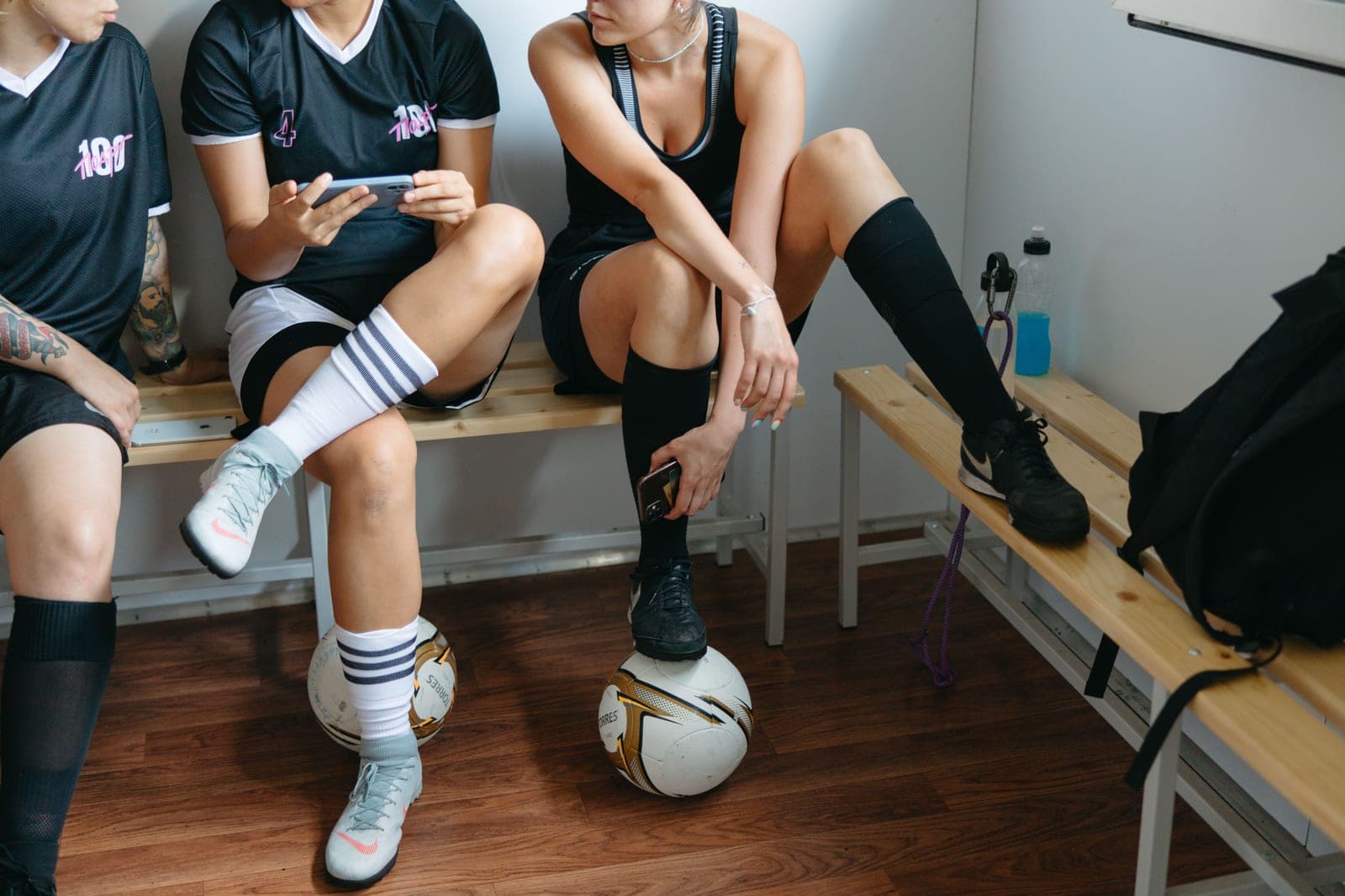
The short answer
| Sock size | US kids' shoe size | Roughly |
|---|---|---|
| XS | 12T–2 | U6 and most U7s |
| S | 1–4 (Nike: 3Y–5Y) | U8 to U10 |
| M | 4.5–8 | U11 and up |
| L | Men's 8–12 | Older teens and adults |
Soccer socks are sized by shoe size, never by age. The bands above are Soccer Village's published general chart; individual brands shift them, so check the chart for the brand you are actually buying.
Every other size chart on this site answers a question about a child: how tall, how old, how long is the foot. Socks are the exception. A soccer sock is sized by shoe size, and that is the whole rule — the sock that fits a size 3Y foot fits it whether that foot belongs to a tall eight-year-old or a small eleven-year-old.
Which should make this the easiest purchase in the bag. It is not, for one reason: the brands publish different charts, and they disagree with each other by as much as two shoe sizes on the same letter. A size Small is not a size Small.
The charts, side by side
These are the published figures from Soccer Village, a soccer specialist that lists the brands separately rather than averaging them into one table. Read down the column for the brand you are buying, not across.
| Sock size | General | Nike | adidas | PUMA |
|---|---|---|---|---|
| XS | Kids 12T–2 | Kids 13C–3Y | Kids 12T–2 | Kids 12T–2 |
| S | Kids 1–4 | Kids 3Y–5Y | Kids 2.5–5 | Kids 1–4 |
| M | Kids 4.5–8 | Kids 5Y–7Y | Women's 5–10 | Men's 5–8 |
| L | Men's 8.2–12 | Men's 8–12 | Men's 6–12 | Men's 9–12 |
| XL | Men's 12+ | Men's 12–15 | Men's 12–15 | Men's 12+ |
A second chart that disagrees
This is worth showing rather than hiding, because it is the reason sock sizing feels unreliable. Authentic Soccer publishes an adidas-specific table that does not match the one above:
| adidas size | Soccer Village says | Authentic Soccer says |
|---|---|---|
| XS | Kids 12T–2 | Kids 9c–1Y |
| Small | Kids 2.5–5 | Kids 13c–4Y |
| Medium | Women's 5–10 | 5Y–8.5 |
| Large | Men's 6–12 | Men's 9–13+ |
The practical consequence: do not buy a sock size from memory, and do not buy it from a chart you found for a different brand. Find your kid's current shoe size, then read the chart on the listing in front of you.
When you are between sizes, go up
This is the opposite of the rule for cleats, and the reason is the shin guard.
A soccer sock has a second job beyond covering the foot. Under Law 4 of the Laws of the Game, shinguards must be covered by the socks — so the sock has to come up over the guard and stay there for ninety minutes of running. A sock a half size too small does not fail at the foot. It fails at the top, by rolling down over the guard in the second half, and a guard that is not covered is a referee's problem as well as a comfort one.
Retailers are explicit that soccer socks are built to stretch — Authentic Soccer's own guidance is that long soccer socks stretch very far to get a tight fit and are designed to come up to the knee at the very least. A sock one band too big stretches less and still fits. A sock one band too small runs out of leg.
The exception: a sock so oversized that the heel pocket sits under the ankle will bunch inside the cleat and cause exactly the blisters you bought good socks to avoid. One band up is the rule. Two is a different problem.
A level-by-level starting point
You should still buy by the measured shoe size. But if you are ordering for a team and need a starting point, this is what the shoe sizes in our youth soccer cleat size chart work out to against the general sock chart above.
| Level | Typical shoe size | Sock size to start from | What to watch |
|---|---|---|---|
| U6 (ages 4–6) | 11C–13C | XS | Many brands' XS is their floor — below 12T you may be buying a non-soccer sock |
| U7–U8 | 13C–2Y | XS, moving to S | This is the band where the two adidas charts disagree — read the listing |
| U9–U10 | 3Y–4Y | S | Nike's S (3Y–5Y) covers this cleanly; adidas's S stops at 5 |
| U11–U12 | 5Y–6Y | S or M | Nike still has a kids' M here. Most other brands have moved you into adult sizing |
| U13+ | 7Y and up | M | Adult sizing from here, and the calf width matters more than the foot |
The dimension nobody checks: the calf
Sock charts are built entirely around the foot, and for a young child that is fine. From about U12 it stops being the whole story, because an over-the-calf sock sized to a 6Y foot assumes a leg that goes with a 6Y foot — and a growth spurt separates those two things for a year or more.
What that looks like in practice: the foot fits, the sock will not stay up, and the parent concludes the sock is bad. It is the wrong size for the leg. If your player is tall for their shoe size, go up a band and accept a slightly loose foot, because the alternative is a sock that lives at the top of the shin guard rather than over it.
Sock cuffs also lose elasticity faster than the rest of the sock does, so a pair that held position in September may not in March. That is a wear problem, not a sizing one, and the fix is a new pair rather than a bigger one.
Grip socks are sized differently, and mostly not for kids
Grip socks have become normal at the older end of youth soccer, and the sizing question changes completely when you buy one.
The TRUsox 3.0 crew — the model most often asked about — is listed at Soccer Village in Small, Medium, Large and Extra Large, with no junior or kids size in the run at all. TRUsox's own range is built around its IN//EX grip pads, which only work if the sock is tight enough to hold the foot, so an oversized grip sock is not a grip sock. For most players below roughly U12, the honest answer is that the product does not come in their size.
Whether they are worth it at all once they do fit is a separate question, and are grip socks worth it answers it properly.
How many pairs, and what size to buy spares in
Three pairs is the working number for a season: one in the wash, one in the bag, one on the child. Clubs that specify a match sock usually allow a plain training sock for practice, which is where the cheap pairs go.
One seasonal note: a thicker winter sock is not the fix for a cold player, because the sock has to fit inside a cleat that was sized with a normal sock in it. The warmth goes elsewhere — best youth soccer cold weather gear for the layers and best cold weather soccer gloves for kids for the hands, which is the complaint you will actually hear.
Do not stock up a size ahead. Socks are the one item where buying for next season is tempting and pointless — the cuff elastic degrades in storage, they are cheap enough that the saving is small, and a child's shoe size at this age moves far enough in a year that the guess is usually wrong anyway.
Socks worth the size check
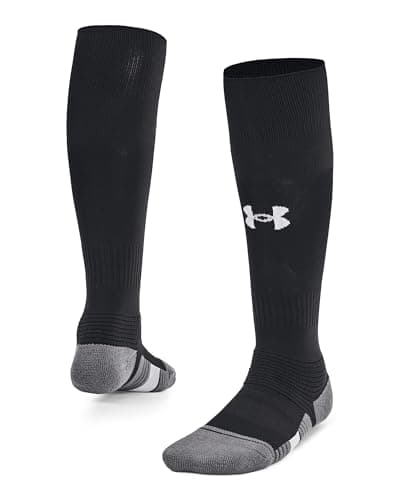
Under Armour
Under Armour Youth Magnetico Over-the-Calf Socks
The sock to buy when slip-in guards keep sliding, and the one that actually comes in a child's size.
$13.00View on Amazon#ad — we may earn a commission · price as of November 11, 2026
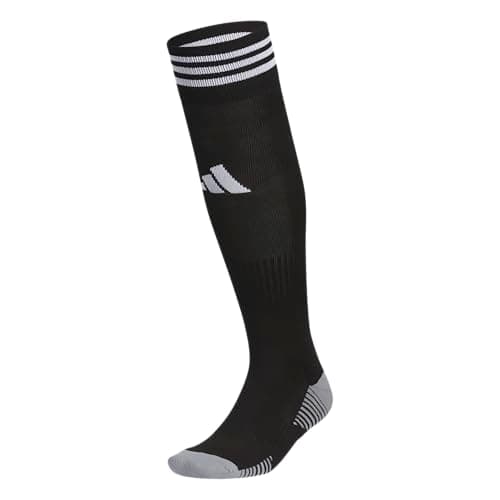
adidas
adidas Copa Zone Cushion Over-the-Calf Socks
The safe default. If your kid wears slip-in shin guards, the grip through the calf is the reason to pick these.
$10.00$16.00−38%View on Amazon#ad — we may earn a commission · price as of November 11, 2026
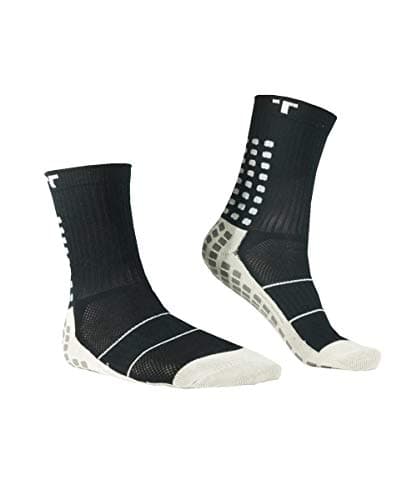
TRUsox
TRUsox 3.0 Cushioned Crew Grip Socks
A real performance product, and genuinely hard to justify below about U12 or for a once-a-week player.
$49.97View on Amazon#ad — we may earn a commission · price as of November 11, 2026
Product photos come from each item’s current Amazon listing.
Sizing mistakes that keep happening
- Buying by age. Every sock chart on this page is keyed to shoe size. Age appears on none of them, and a brand that advertises socks 'for ages 8–10' is guessing at the foot.
- Reusing a brand's letter across brands. A Nike Medium is a kids' 5Y–7Y. A PUMA Medium is a men's 5–8. Same letter, different product.
- Sizing down for a snug fit. The sock has to clear the shin guard. A tight foot and a short leg is the wrong trade.
- Assuming the team sock is the only sock. Most clubs specify a match sock and nothing else, so training socks are your choice — and that is where to put the money you saved.
- Washing hot and tumble drying. The quickest way to turn a correctly sized sock into one that slides down. Elastic and heat do not mix, and grip-sock pads stiffen outright.
Common questions
What size soccer socks does my kid need?
Buy by shoe size, not by age. On Soccer Village's published general chart, XS covers US kids 12T–2, S covers 1–4, and M covers 4.5–8. Individual brands shift those bands — Nike's Small is 3Y–5Y and its Medium is still a kids' size at 5Y–7Y, while adidas moves into adult sizing one band earlier — so check the chart on the listing you are buying from.
Are youth soccer socks sized by age?
No. Every published soccer sock chart is keyed to shoe size, and none of them use age. Age ranges on a listing are the seller's estimate of which foot usually goes with which birthday, and foot size at a given age varies enormously. Measure the foot, convert to a US shoe size, then read the sock chart.
Should I size up or down in soccer socks?
Up, if you are between bands. A soccer sock has to come up over the shin guard and stay there, because Law 4 requires shinguards to be covered by the socks. A sock a half size too small fails at the top of the leg rather than at the foot. The only limit is that a sock big enough for the heel pocket to sit under the ankle will bunch in the cleat.
Why are adidas and Nike sock sizes different?
Because each brand builds its own size run and they do not align. Nike's kids' run goes XS 13C–3Y, S 3Y–5Y, M 5Y–7Y. adidas's published kids' run is XS 12T–2 and S 2.5–5, then moves to adult sizing. There is also more than one published adidas chart in circulation — one retailer lists adidas Small as kids 2.5–5, another as 13c–4Y — which is why reading the chart on the specific listing beats remembering a letter.
Do grip socks come in kids' sizes?
Mostly not. The TRUsox 3.0 crew is listed at Soccer Village in Small, Medium, Large and Extra Large with no junior size, and a grip sock only works when it is tight enough to hold the foot, so buying an oversized one defeats the product. Below roughly U12 the realistic answer is that it does not come in their size.
How many pairs of soccer socks does a kid need?
Three is the working number for a season — one in the wash, one in the bag, one being worn. Most clubs specify a match sock and leave training socks to you, so buy the specified pair once and put the rest of the budget into plain training socks. Do not buy a size ahead: cuff elastic degrades in storage and the size guess is usually wrong by the time it is needed.
Sources
- Soccer Village — sock size charts by brand — The specialist retailer's published sock charts, and the source for every brand-by-brand sock figure on the sock size chart page. General sock sizing: XS covers US kids 12T-2, S covers US kids 1-4, M covers US kids 4.5-8 and US men's 4.5-8. Nike: XS covers US kids 13C-3Y, S covers 3Y-5Y, M covers 5Y-7Y and US men's 6-8, L covers US men's 8-12. adidas: XS covers US kids 12T-2, S covers US kids 2.5-5 and US women's 4-6.5, L covers US men's 6-12. PUMA: XS covers US kids 12T-2, S covers US kids 1-4, M covers US men's 5-8. Used as the primary evidence that the same letter size is a different foot in each brand.
- Authentic Soccer — soccer sock sizing by soccer shoe size — A second published sock chart, used on the sock size chart page as the cross-check that the charts disagree. Its adidas-specific table reads XS/Toddler 9c-1Y, Junior/Youth Small 13c-4Y, Intermediate/Youth Large/Men's 5Y-8.5, Men's 9-13+. Also the source for the retailer's own statement that long soccer socks stretch far to get a tight fit and are designed to come to the knee at minimum.
- Soccer Village — TRUsox 3.0 crew length cushion sock — The retailer listing for the TRUsox 3.0 crew, and the source for the statement that it is offered in Small, Medium, Large and Extra Large only, with no junior or kids size in the run.
- TRUsox — 3.0 performance grip socks — TRUsox's own description of the IN//EX grip technology and the range's construction.
- IFAB Laws of the Game — Law 4, The Players' Equipment — The Law text quoted on this site: undershorts and tights must be the same color as the main color of the shorts or the lowest part of the shorts, and players of the same team must wear the same color; shinguards must be of suitable material and appropriate size, covered by the socks, with the player responsible for their suitability; non-dangerous protective equipment of soft, lightweight padded material is permitted; and a player must not use equipment or wear anything that is dangerous, which must be removed rather than taped or covered. Law 4.3 is also the source for the kit-color rules quoted here: the two teams must wear colors that distinguish them from each other and the match officials, and each goalkeeper must wear colors that are distinguishable from the other players and the match officials. Law 4.4 names gloves, headgear, facemasks and knee and arm protectors of soft, lightweight padded material as permitted non-dangerous protective equipment, and separately permits goalkeepers caps and tracksuit bottoms.
Read next
- Best youth soccer socksSock picks that actually hold slip-in shin guards, plus whether grip socks are worth the money.
- Are grip socks worth it for youth soccer?What grip socks actually do, when the cost pays off, and why they are hard to justify below U12.
- Best soccer socks to prevent blistersWhich soccer socks reduce blisters, why cotton is the thing to eliminate first, and the cleat and lacing fixes that do more than any sock.
- Do shin guards go under socks?The Law 4 requirement, why it exists, and how to get a sock over a guard on a thin leg without it sliding.
- Youth shin guard size chartThe height-based size chart, how high guards should go, and the crouch test that confirms the fit.
- Youth soccer cleat size chartUS, EU and centimeter conversions with approximate ages, plus how each brand's junior sizing actually runs.
- Youth soccer jersey sizingWhy jerseys run small, whether to size up, how much they shrink, and what to do mid-growth-spurt.
- Best cold weather soccer gloves for kidsField-player gloves for a cold season, ranked by the one thing that decides them: whether a child can still take a throw-in wearing them. Eight picks from silk liners to thermal fleece, with the honest downside on every one.