Heads up: we earn a commission if you buy through our links, at no extra cost to you. It never changes which product we recommend — here’s how that works.
The short answer
Buy in this order: a long-sleeve base layer under the jersey, then thin liner gloves, then tights if it is genuinely freezing. The base layer does the most work for the least money because it makes the kit your kid already owns usable in October. Check your league's rules before buying tights — many require them to match the shorts.
Youth soccer in most of the country runs straight through the cold half of the year, and the kit does not change. Short sleeves, shorts, socks to the knee, decided by the club in July. Everything you buy in October has to work around that.
Which simplifies the shopping a lot, because it rules out most of what gets marketed as winter sports gear. A ski jacket is not the answer. Thin layers that fit under a jersey are.
The order to buy in
A long-sleeve base layer top. One purchase, worn under the jersey, covers the arms and the neck. This is the item that changes a cold morning most.
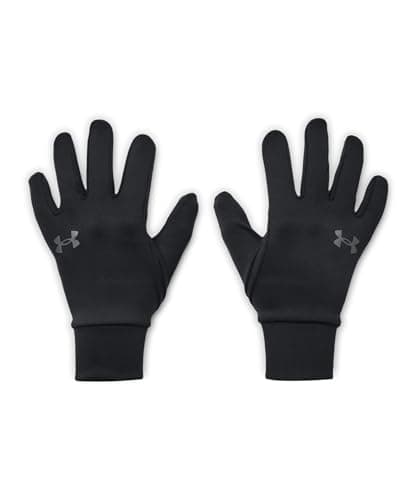
Thin gloves. The complaint you actually hear from kids is about hands, not torsos. Thin enough to take a throw-in properly.
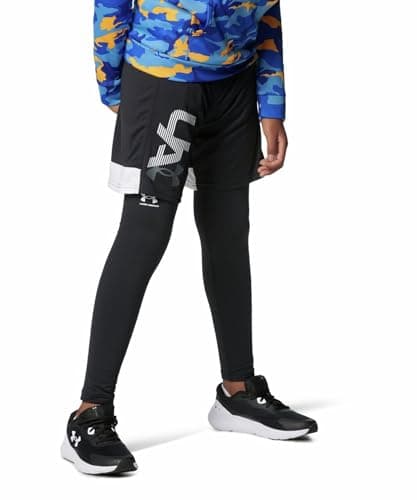
Tights or leggings. Only below roughly 40 degrees, and only after checking the league rule.
A hat or snood for the sideline. Worth owning, not worth a product recommendation — anything warm works, and substitutes spend more time cold than players do.
Notice what is not on that list: a heavier jersey, a thicker sock, or anything described as thermal and bulky. Bulk under a jersey restricts the shoulder, and a kid who cannot move properly plays worse and gets colder.
Why a base layer beats a sweatshirt
Two reasons, and the second is the one parents underestimate.
First, construction. Under Armour's ColdGear fabric is dual-layer — a brushed interior for warmth and a smooth fast-drying exterior — which is how a thin garment is warm at all. A cotton sweatshirt is warm when dry and cold the moment it is wet.
Second, sweat. A kid who plays hard in a cold-weather layer is wet within fifteen minutes, and then stands still at halftime. That is the moment they get cold, and it is why the mesh panels matter: Under Armour puts stretch-mesh at the back and underarms of the ColdGear mock top specifically to vent it. A base layer without ventilation becomes a wet towel.
Start here
Pick by your kid’s level
The right answer changes with the level, not just the shoe size. Find your kid’s bracket and start there.
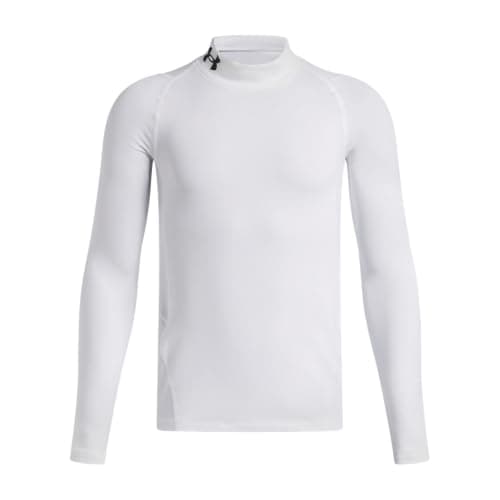
Under Armour Boys' ColdGear Armour Mock Long Sleeve
The single most useful cold-weather purchase at any age: it goes under the jersey the club already chose, and the mock neck covers the gap a round-neck jersey leaves.
Tap any row to jump to the full write-up. The price in each button is the one Amazon reported on the date stamped under it — tap through for today’s number, which is the only one that can be relied on.
Product photos come from each item’s current Amazon listing.
The league rule on tights, before you buy any
Law 4 is specific, and it is stricter than most parents expect: undershorts and tights must be the same color as the main color of the shorts or the lowest part of the shorts, and players of the same team must wear the same color. That is the Law itself, not a local by-law.
So the practical sequence is: find out what color the team's shorts are and what the team has agreed on, then buy that color. Black is the commonest answer because black shorts are commonest, and it is not a safe default. One email to the team manager settles it, and it is worth sending before the purchase rather than after.
This rule applies to matches. Training is almost always unrestricted, so a pair of tights that is the wrong color for games is still useful midweek.
Gloves: thin beats warm
This is counterintuitive and it is the right call. A warm glove is a thick glove, and a thick glove means a kid cannot take a throw-in properly or control a ball with their hands at all.
Under Armour sells the Storm Kids' Liner as exactly that — a thin fitted liner to wear alone or under a heavier pair — with a water-repellent treatment and touchscreen-capable fingertips. It is not a warm glove below freezing and the brand does not claim it is. For most of a US youth season it is enough, and it is cheap enough that losing a pair over a winter is survivable.
Goalkeepers are a separate case entirely. A keeper needs actual goalie gloves, not a liner — see the finger-protection picks — and a cold keeper also wants the padded keeper pants that cover the hips and knees.
What about socks?
Resist the thicker sock. A cleat is fitted to the foot with match socks on, and adding a thicker sock in October makes a cleat that fitted in September too tight — which is a worse cold-weather problem than thin socks, because a tight cleat restricts circulation and makes feet colder.
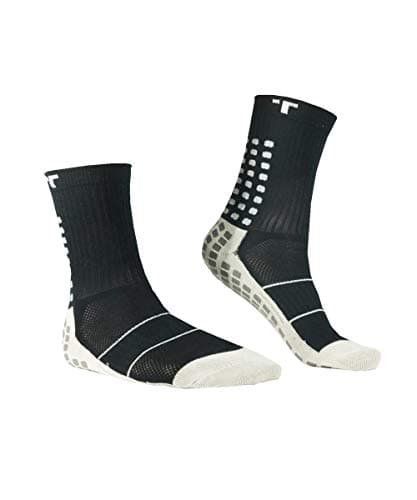
Two spare pairs of ordinary match socks in the bag beat one thick pair, because dry socks are the actual fix. The sock picks and grip socks cover the rest, and the cleat fit guide explains why sock thickness is part of the fit.
The socks that already fit the cleats
adidas
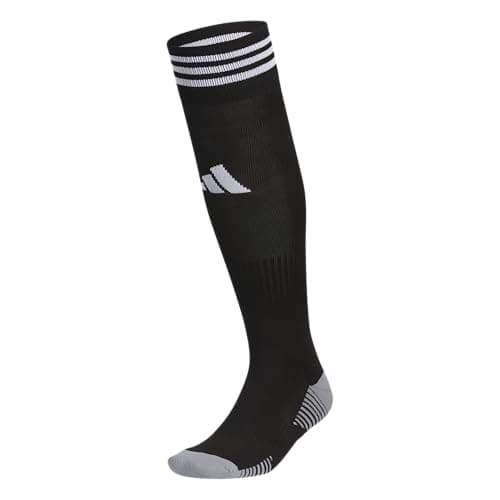
adidas Copa Zone Cushion Over-the-Calf Socks
The safe default. If your kid wears slip-in shin guards, the grip through the calf is the reason to pick these.
Product photos come from each item’s current Amazon listing.
Cold and wet together
The hardest combination, and the one most of a US autumn actually is. Nothing in a youth soccer range is waterproof — cleats included — so the plan is layers that stay warm when damp and a complete dry change in the bag.
On footwear, wet grass is a grip problem rather than a warmth problem, and the answer is a firm-ground plate rather than a thicker shoe. Cleats for rain and wet grass covers it, including how to dry a soaked pair without wrecking the upper.
What we would not buy
A bulky thermal top. It restricts the shoulder under a jersey, and the kid plays worse and ends up colder.
Cotton anything. Warm dry, cold wet, and it stays wet for the whole second half.
A heavier soccer sock. It changes the cleat fit, which is the last thing you want in the cold.
Hand warmers for a field player. Fine on the bench, nowhere to put them once they are on.
1. Under Armour
Under Armour Boys' ColdGear Armour Mock Long Sleeve
The single most useful cold-weather purchase: it makes the kit a kid already owns usable in October.
Best for
The layer that goes under the jersey, U9 and up
Levels
U9–U10 · U11–U12 · U13+ travel & club
Type / surface
Base layer top
How it fits
Cut tight. Under Armour says true to size and to size up for more room. A loose base layer does not work, so go by current chest size rather than buying a season ahead.
What we like
The brushed inside is what makes a thin layer warm, so it fits under a jersey instead of replacing one
Mesh at the back and underarms is the detail that stops a base layer becoming a sweat trap once a kid starts running
A mock neck covers the gap a round-neck jersey leaves, which is where kids actually feel cold
Where it falls short
Under Armour describes the fit as tight — snug with no squeeze — and some kids will not tolerate that at all
Costs more than a supermarket thermal top that is most of the way as warm standing still
What should kids wear to soccer practice when it is cold?+
A long-sleeve base layer under the jersey, thin gloves, and tights only if it is genuinely freezing. Avoid cotton and avoid bulk — a thick layer restricts the shoulder under a jersey and a kid who cannot move properly ends up colder. A dry spare top in the bag matters more than upgrading the one they are wearing.
Are soccer tights allowed in games?+
Yes, with a color condition that is in the Law itself. Law 4 requires undershorts and tights to be the same color as the main color of the shorts or the lowest part of the shorts, and players on the same team must all wear the same color. So check what color the team's shorts are and what the team has agreed before buying. Training is almost always unrestricted, so a pair in the wrong color still gets used midweek.
What is the best base layer for youth soccer?+
A thin dual-layer top with ventilation. Under Armour's ColdGear boys' mock long sleeve uses a brushed interior for warmth with a fast-drying exterior, plus stretch-mesh back and underarm panels — which is the detail that stops a base layer becoming a wet towel once a kid starts running. The mock neck also covers the gap a round-neck jersey leaves.
Should kids wear gloves for soccer?+
Yes, and thin ones. Hands are the thing kids actually complain about in the cold, but a thick glove makes taking a throw-in or controlling a ball by hand awkward. A thin liner glove is the right trade for most of a US youth season. Goalkeepers need real goalie gloves rather than liners.
Do kids need thicker socks for cold weather soccer?+
No, and it usually backfires. Cleats are fitted with match socks on, so a thicker sock makes a cleat that fitted in September too tight — and a tight cleat restricts circulation, which makes feet colder rather than warmer. Two spare pairs of ordinary match socks in the bag is the better answer.
How cold is too cold for youth soccer?+
That is a decision for the league and the coach rather than a number we would put on a page, and most leagues publish a cold-weather and wind-chill policy. What we can say about equipment: below roughly 40 degrees, add leg cover; standing players need more layering than running ones, so substitutes and keepers should be kitted more warmly than the outfield players.
Sources
Under Armour — ColdGear Boys' Mock Long Sleeve (1366373) — Under Armour's published specification: dual-layer ColdGear fabric with a brushed interior and fast-drying exterior, stretch-mesh back and underarm ventilation panels, four-way stretch, odor control, a mock neck, a dropped shaped hem, 87% polyester / 13% elastane, and a tight fit described as snug without squeeze.
Under Armour — ColdGear Boys' Leggings (1366374) — Under Armour's published specification: a brushed interior for warmth without bulk, a fast-drying smooth exterior, a stretch-mesh gusset for ventilation, 87% polyester / 13% elastane, and a youth-medium inseam of 25 inches changing by about 1.5 inches per size.
Under Armour — UA Storm Kids' Liner Gloves (1365977) — Under Armour's published specification: thin fitted liner gloves to wear alone or under a heavier pair, dual-layer ColdGear fabric, a fluorine-free water-repellent UA Storm treatment, touchscreen-capable thumb and index fingertips, and 87% polyester / 13% elastane.
IFAB Laws of the Game — Law 4, The Players' Equipment — The Law text quoted on this site: undershorts and tights must be the same color as the main color of the shorts or the lowest part of the shorts, and players of the same team must wear the same color; shinguards must be of suitable material and appropriate size, covered by the socks, with the player responsible for their suitability; non-dangerous protective equipment of soft, lightweight padded material is permitted; and a player must not use equipment or wear anything that is dangerous, which must be removed rather than taped or covered. Law 4.3 is also the source for the kit-color rules quoted here: the two teams must wear colors that distinguish them from each other and the match officials, and each goalkeeper must wear colors that are distinguishable from the other players and the match officials. Law 4.4 names gloves, headgear, facemasks and knee and arm protectors of soft, lightweight padded material as permitted non-dangerous protective equipment, and separately permits goalkeepers caps and tracksuit bottoms.
adidas — Entrada 22 jersey — Verified current availability and adidas's published AEROREADY fabric description for the youth Entrada 22.