Shin Guards
How to stop shin guards from slipping
Three causes, in order of likelihood. Tape is the last resort, not the first.
By Ryder M. · Published September 27, 2026
The short answer
- Check the sock first. A stretched-out or thin sock is the commonest cause, and a proper compression over-the-calf sock fixes it outright.
- Check the size. A guard too large for the leg cannot be held in place by anything.
- Check the style. A slip-in on a kid under about U10 will slip, because they will not keep a sock up.
- Then, if needed, switch to a sleeve guard — which solves it by design rather than by workaround.
Slipping shin guards is the most common complaint in this category, and most fixes people try — tape, elastic bands, tucking the sock differently — are workarounds for one of three underlying causes. Diagnosing which one is happening takes a minute and saves the workarounds entirely.
Cause 1: the sock (most likely)
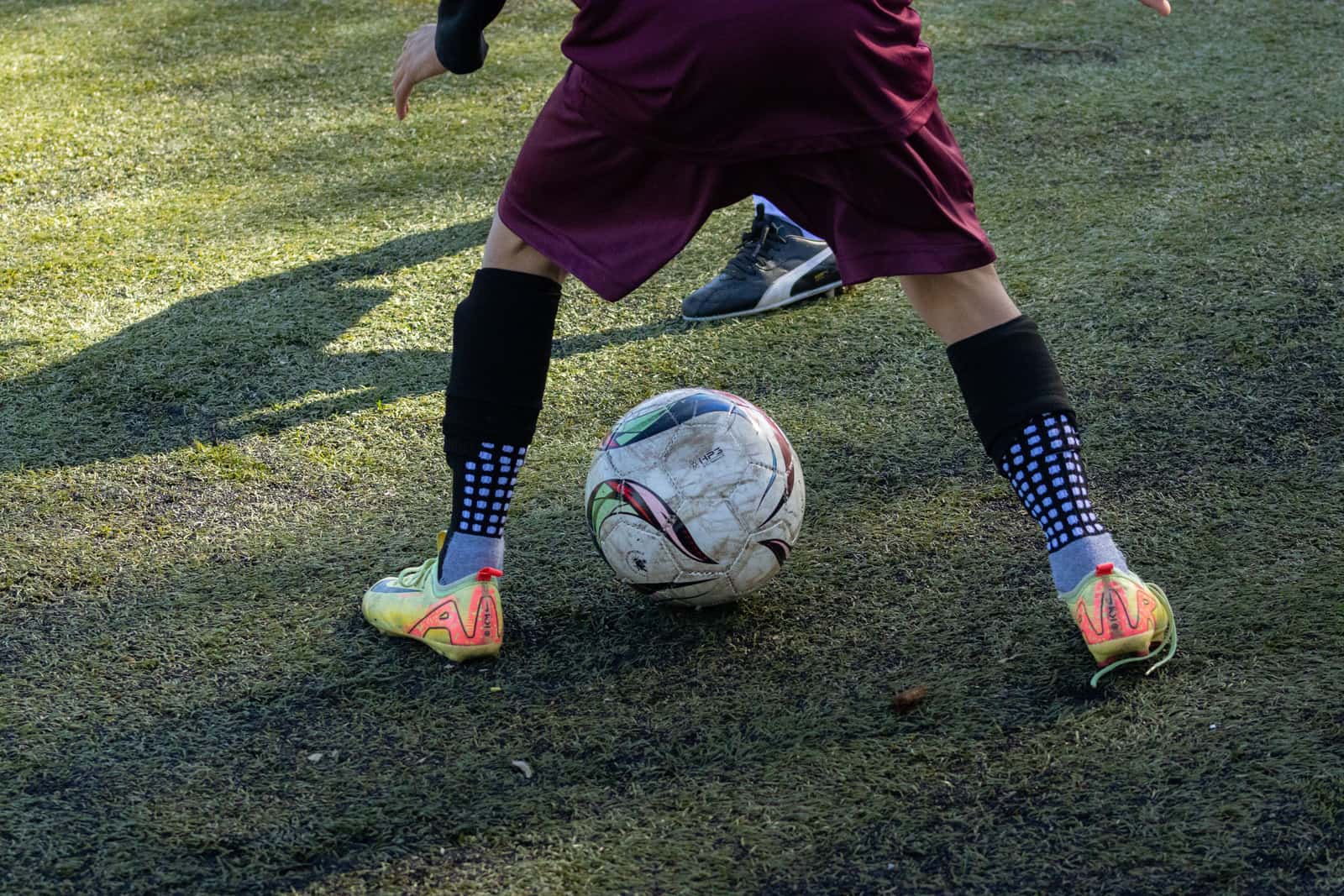
With slip-in guards, the sock is the retention system. There is no strap. The guard is held against the shin purely by the sock's compression, which means a sock that has lost its elasticity is a guard that will migrate.
Two failure modes here. A thin recreational sock never had enough compression in the first place. And an over-the-calf sock that has been washed thirty times has a cuff that no longer grips, even though it looks fine.
The fix: an over-the-calf sock with genuine compression through the calf. The adidas Copa Zone is the long-standing default for this specific reason. If your kid's socks are more than a season old and guards have started slipping, replace the socks before you do anything else — it is the cheapest possible fix and it works more often than not. See the sock picks.
Cause 2: the size
A guard that is too big for the leg cannot be held in place, because there is too much guard and not enough leg pressing against it. This is particularly common when guards were bought by age rather than by height, or inherited from an older sibling.
The check: the guard should run from just below the knee to just above the ankle bone. Have them crouch as if tying a lace — if the top digs into the kneecap, it is too long, and a too-long guard gets worn low, where there is even less leg to hold it.
The fix: go a size down. If they are between sizes, take the smaller — with guards, slightly short beats sliding. The size chart has the height bands.
Cause 3: the style is wrong for the age
If your kid is under about U10 and wearing slip-ins, the guards will slip, and no sock or size will fully fix it. Slip-ins require the player to keep their socks properly pulled up for a whole game, and eight-year-olds do not.
The fix: a strapped guard with attached ankle protection. It stays where you put it because a strap does not care what the sock is doing, and at that age the ankle coverage is worth having anyway. See the ankle guard picks.
The real fix for an older kid: a sleeve guard
If your kid is old enough to want slip-ins, is wearing a good sock, has the right size, and the guards still move — stop troubleshooting and switch to a compression sleeve guard.
A sleeve holds the guard in an integrated pocket, so it physically cannot rotate round the leg. It stays far lower profile than a strapped guard, which is what your kid actually wants. The only costs are no ankle coverage and one extra step getting changed, since the sleeve goes on before the sock.
This is the single most under-recommended product in the category, and for a U10 to U13 it is usually the correct answer. See the slip-in and sleeve picks.
What to buy for each cause
adidas
adidas Tiro League Shin Guards
The best compromise between the security of a strap and the low profile of a slip-in.

adidas
adidas Copa Zone Cushion V Over-the-Calf Socks
The safe default. If your kid wears slip-in shin guards, the grip through the calf is the reason to pick these.
adidas
adidas Tiro Match Shin Guards Kids
The best first pair of shin guards for a young rec player, precisely because it protects the ankle too.
Photos are licensed representative stock images, not the exact models.
Workarounds, ranked
If you need to get through a game this Saturday, in descending order of how well they work:
- Borrow a newer pair of socks. Highest chance of solving it outright, zero downside.
- Pull the sock up over the guard properly, then fold the cuff down over itself once. This tightens the grip meaningfully and costs nothing.
- Sock tape — the stretchy self-adhesive tape sold for this — wrapped once over the sock at the top of the guard. It works, and it is a workaround rather than a fix: it does nothing about the underlying cause and it is one more thing to remember.
- Elastic sleeves or bands worn over the sock. Effective and warm, and they can restrict circulation if pulled too tight, which is worth watching on a child.
What we would not do: tape the guard directly to the skin. It works, and taking it off after a game is genuinely unpleasant for a child.
Left and right
One easily missed cause: most youth shin guards are shaped with a left and a right, usually marked L and R inside. A guard on the wrong leg sits badly against the shin, rubs, and is far more likely to rotate. Worth a ten-second check before assuming anything is broken.
Common questions
How do you stop shin guards from slipping?
Work through three causes in order. First the sock — a stretched-out or thin sock is the commonest cause, and a proper compression over-the-calf sock often fixes it outright. Then the size, since a guard too large cannot be held in place. Then the style: a slip-in on a kid under U10 will slip regardless. Tape is a workaround, not a fix.
Why do my kid's shin guards keep moving?
Almost always the sock, the size, or the style. With slip-in guards the sock is the entire retention system, so a cuff that has lost its elasticity after a season of washing will let the guard migrate even though the sock looks fine. Check that before anything else.
Does sock tape work for shin guards?
Yes, and it is a workaround rather than a solution. Stretchy self-adhesive sock tape wrapped once over the sock at the top of the guard genuinely holds it, but it does nothing about the underlying cause and it is one more thing to remember every week. Try new socks first.
Should I use elastic bands to hold shin guards up?
They work, and watch how tight they are on a child — an elastic band pulled hard around a calf can restrict circulation. A compression sleeve guard achieves the same thing by design and is the better answer if slipping is a recurring problem.
Are shin guards meant to be tight?
The guard itself should sit flat against the shin with no gap, held there by the sock or a strap — snug rather than clamped. What should be genuinely tight is the sock's compression through the calf, since with slip-ins that is the only thing holding the guard in place.
Sources
- Nike — kids' soccer cleats and shoes — Verified that each Nike model named on this page is currently sold, and the source for Nike's own published upper, plate and surface descriptions.
- adidas — kids' soccer — Verified current availability of the adidas models named here, plus adidas's published material and construction claims.
- Vizari Sports — youth cleats and indoor shoes — Verified the Vizari models named here are currently sold, including the toddler size range and the indoor line, plus Vizari's published material claims.
- TRUsox — 3.0 performance grip socks — TRUsox's own description of the IN//EX grip technology and the range's construction.
Read next
- Best slip-in shin guards for kidsSlip-in and sleeve picks for U10 upward, what they give up in protection, and the sock that stops them sliding.
- Youth shin guard size chartThe height-based size chart, how high guards should go, and the crouch test that confirms the fit.
- Best kids' shin guards with ankle protectionStrapped guards with ankle protection for U6 to U11, and why that is the right style for young players.
- How to put on shin guard sleevesThe right order for sleeve and slip-in guards, and the mistake that makes them slide mid-game.
- Best youth soccer socksSock picks that actually hold slip-in shin guards, plus whether grip socks are worth the money.
- Slip-in vs ankle shin guardsThe protection trade-off stated plainly, the age the answer flips, and the sleeve option in between.