Shin Guards
How should shin guards fit?
Five minutes of checking in the kitchen is what separates a pair that gets worn from a pair that gets argued about.
By Ryder M. · Published October 10, 2026
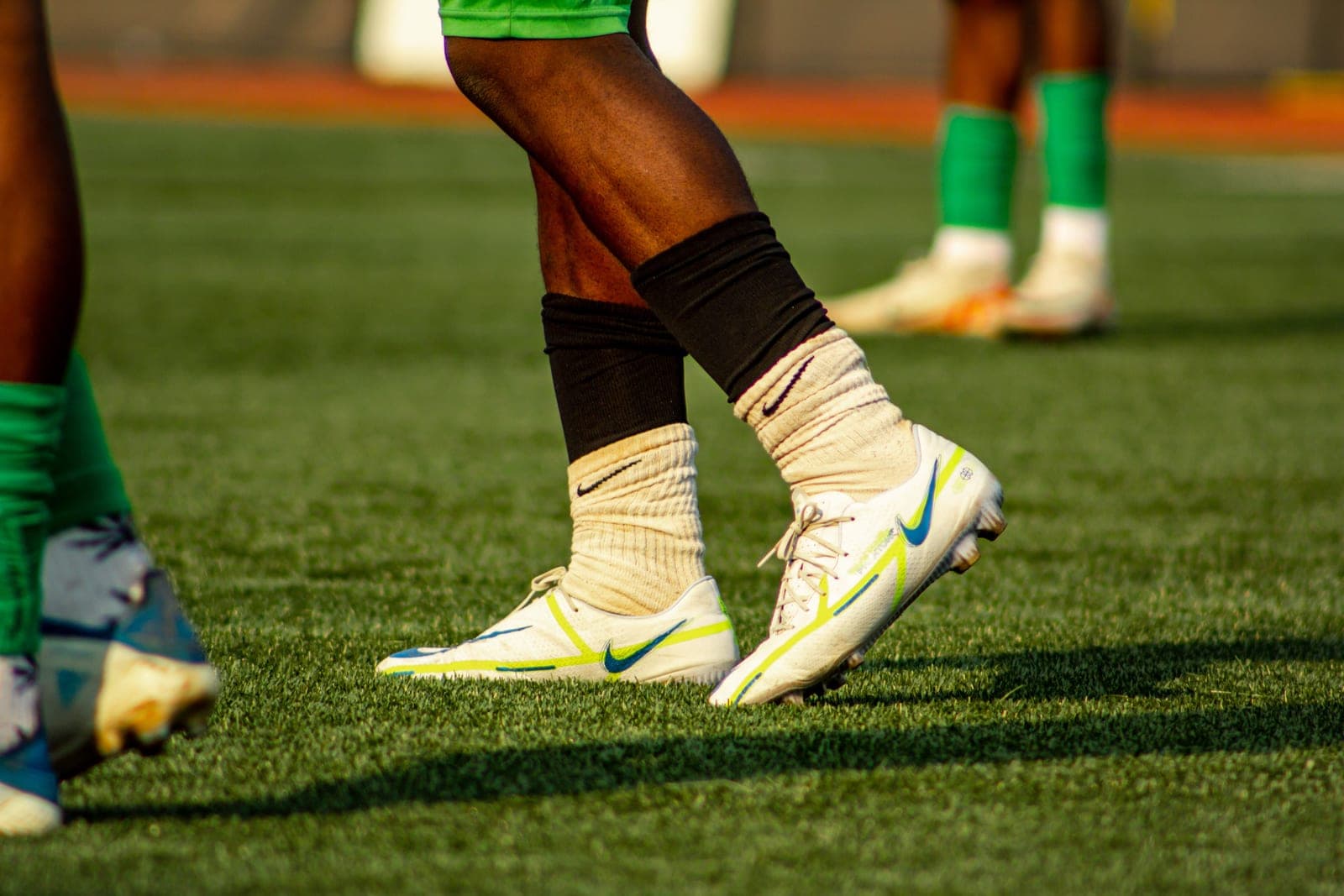
The short answer
- Top edge: two finger-widths below the kneecap, so it does not dig in when they crouch.
- Bottom edge: just above the ankle bone, not resting on it.
- Tightness: snug enough that the guard does not rotate when you twist it with your hand, loose enough to slide one finger under the strap or sleeve.
- Coverage: fully inside the sock, which Law 4 requires.
Almost every shin guard complaint a parent hears is a fit problem wearing a different costume. "They hurt" is usually a top edge sitting on the kneecap. "They slide down" is usually a guard one size too long, or sock tension doing a job a sleeve should be doing. "They're annoying" is usually a strap tail flapping against the other leg. None of those are reasons to buy a different style, and all of them are five-minute fixes.
Where the two edges belong
A shin guard protects the tibia, the long bone running from just below the knee down to the ankle. The guard should cover as much of it as it can without touching either joint, because the joints are where a hard edge causes pain and where a guard gets levered out of position.
- Stand them up straight, socks off, guard on bare leg. This is the only way to see where the edges actually sit.
- Top edge: aim for roughly two of your own finger-widths below the bottom of the kneecap. Any higher and it will catch the knee every time they bend.
- Bottom edge: just above the bony bump on the inside of the ankle. A guard resting on the ankle bone will bruise it over a full game, which is the opposite of the job.
- Have them crouch all the way down, as if tying a lace. This is the test that fails the most pairs. If the top edge digs in or the guard pushes down the leg, it is too long.
- Have them run across the room. Not jog in place — run, turn, and stop. A guard that stays put standing still and rotates on the first turn has not passed.
The crouch test is the one worth insisting on, because kids crouch constantly in a soccer game and the discomfort only shows up in that position. A guard that is comfortable standing and painful crouching is the most common reason a pair that is correctly sized on paper gets rejected.
How tight is tight enough
There is a simple two-sided test and it works for every style. Put your hand on the guard and try to twist it round the leg. If it rotates, it is too loose. Then try to slide one finger under the strap or the top of the sleeve. If you cannot, it is too tight. Anything in between is right.
| Style | What holds it on | The fit check that matters |
|---|---|---|
| Strapped with ankle guard | Hook-and-loop straps plus the ankle cuff | One finger under each strap. If the strap tail is long enough to flap, tuck or trim it |
| Sleeve | Compression sleeve with the guard in a pocket | Calf circumference, not just height. A sleeve that slides on the calf is a slip-in with extra steps |
| Slip-in | Sock tension, entirely | Twist test with the match sock on. A loose rec sock will not hold a slip-in, and no amount of sizing fixes that |
One thing that is not a fit measure: how it feels on the first pull-on. A new sleeve is always tighter than it will be after two washes, and a new strap is always stiffer. Judge a guard after a training session rather than in the store.
Guards that fit predictably
adidas
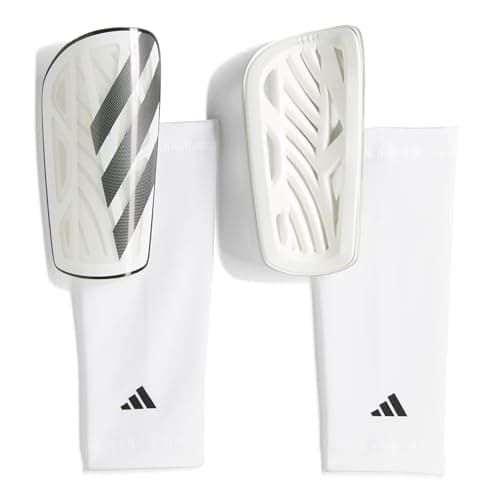
adidas Tiro League Shin Guards
The best compromise between the security of a strap and the low profile of a slip-in.
$18.99View on Amazon#ad — we may earn a commission · price as of October 16, 2026
adidas
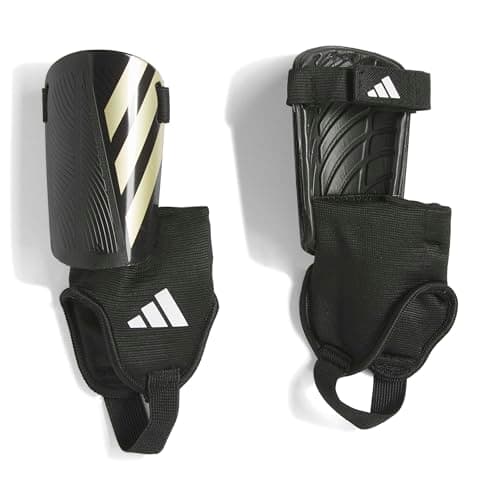
adidas Tiro Match Shin Guards Kids
The best first pair of shin guards for a young rec player, precisely because it protects the ankle too.
$14.99View on Amazon#ad — we may earn a commission · price as of October 16, 2026
Nike
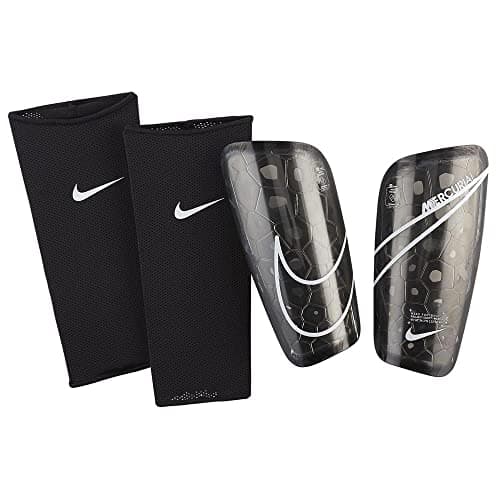
Nike Mercurial Lite Shin Guards
The right guard for an older player who will refuse anything bulkier — but not the right choice for a young beginner.
$44.00View on Amazon#ad — we may earn a commission · price as of October 16, 2026
Product photos come from each item’s current Amazon listing.
What the rules require
Law 4 is short on this and worth knowing exactly, because it settles two arguments. Shin guards must be made of a suitable material, they must be of an appropriate size, and they must be covered by the socks. The Law also puts the responsibility for whether a guard is suitable on the player rather than the referee, which is why a referee rarely measures anything and why "the ref didn't say anything" is not evidence that a guard is adequate.
The practical consequence is that the sock has to go over the guard, not around it. That rules out wearing a guard outside the sock to stop it sliding, which is the improvisation kids reach for first. It also means sock length is part of the fit: a sock that only just covers a size M guard will not cover a size L.
Indoor and futsal are not an exception. Futsal's own Law 4 makes shinguards compulsory, requires them to be covered entirely by the stockings, and specifies rubber, plastic or a similar approved material providing a reasonable degree of protection.
If it fits and still slides
A guard that passes every check above and still ends up at the ankle by halftime has a retention problem rather than a sizing problem, and the fix depends on which style you own. A slip-in needs tighter sock tension — a proper over-the-calf match sock or a dedicated sleeve. A sleeve needs to be the right calf size. A strapped guard needs the straps fastened before the sock goes on, not after.
How to stop shin guards slipping works through all of those in order, and how to put on shin guard sleeves covers the order of operations that trips up most under-nines. If you have reached the end of both and the guard still moves, it is usually the wrong style for that kid rather than the wrong size.
Fitting a kid who is about to grow
Shin guards are one of the few pieces of soccer gear where buying slightly large does less harm than it does with cleats — a guard that is a little long is uncomfortable, whereas a cleat that is a little long is a sliding foot under load. But it is still the wrong move, for a specific reason: an over-long guard fails the crouch test, and a guard that hurts when they crouch does not get worn.
The better plan is to size to the leg now and accept that guards are the cheapest thing in the bag. A pair that fits for one season and gets worn every game is a better purchase than a pair that fits for two and gets worn for neither. The full height table has the sizes, and if you are shopping for a nine to eleven year old specifically, the picks for ten-year-olds are sorted on exactly this trade-off.
At the youngest end the calculation is different again, because an under-six's leg is short enough that most adult-derived sizing stops being useful — the toddler shin guard picks cover that end properly.
Common questions
How tight should shin guards be?
Snug enough that you cannot rotate the guard round the leg with your hand, and loose enough to slide one finger under the strap or the top of the sleeve. If it twists, it is too loose and will migrate during a game. If you cannot get a finger under it, it is too tight and will leave marks.
Where should the top of a shin guard sit?
About two adult finger-widths below the bottom of the kneecap. Any higher and the top edge catches the knee every time the player bends or crouches, which is the most common reason a correctly sized guard gets rejected. Have them crouch all the way down before you decide the fit is right.
Should shin guards cover the ankle?
Only if you have bought the strapped style with an attached ankle guard, which is worth having up to about U10. On any style, the bottom edge of the shin plate should sit just above the ankle bone rather than resting on it — a guard pressing on the bony bump will bruise it over a full game.
Do shin guards go under or over socks?
Under. Law 4 requires shin guards to be covered by the socks, and futsal's Law 4 requires them to be covered entirely by the stockings. Wearing a guard outside the sock to stop it sliding is not compliant, and the slipping is better fixed with a tighter match sock or a sleeve-style guard.
How do I know if shin guards are too big?
Run the crouch test. Have the player squat all the way down as if tying a lace: if the top edge digs into the knee or the guard pushes down the leg, it is too long. The other sign is a bottom edge that sits on the ankle bone rather than above it.
Can shin guards be too small?
Yes, and it is less obvious than too big. A guard that stops well short of the ankle leaves the lower shin unprotected, which is where a lot of stud contact lands, and Law 4 asks for a guard of appropriate size. If there is a visible gap of bare shin above the sock line when they stand, go up a size.
Sources
- IFAB Laws of the Game — Law 4, The Players' Equipment — The Law text quoted on this site: undershorts and tights must be the same color as the main color of the shorts or the lowest part of the shorts, and players of the same team must wear the same color; shinguards must be of suitable material and appropriate size, covered by the socks, with the player responsible for their suitability; non-dangerous protective equipment of soft, lightweight padded material is permitted; and a player must not use equipment or wear anything that is dangerous, which must be removed rather than taped or covered. Law 4.3 is also the source for the kit-color rules quoted here: the two teams must wear colors that distinguish them from each other and the match officials, and each goalkeeper must wear colors that are distinguishable from the other players and the match officials. Law 4.4 names gloves, headgear, facemasks and knee and arm protectors of soft, lightweight padded material as permitted non-dangerous protective equipment, and separately permits goalkeepers caps and tracksuit bottoms.
- Coaching American Soccer — Law 4, The Players' Equipment — The Law 4 requirements quoted on this site: footwear is compulsory but cleats are not specified; shinguards must be of suitable material, appropriate size and covered by the socks, with the player responsible for suitability; a player must not use equipment that is dangerous; and the referee-level guidance that worn, pointed or exposed-shaft studs and shoes with sharp metal or pointed spikes are not permitted.
- Vizari Sports — youth cleats and indoor shoes — Verified the Vizari models named here are currently sold, including the toddler size range and the indoor line, plus Vizari's published material claims.
Read next
- Youth shin guard size chartThe height-based size chart, how high guards should go, and the crouch test that confirms the fit.
- How to stop shin guards from slippingThe three real causes of slipping guards and the fixes in order — starting with the one nobody checks.
- How to put on shin guard sleevesThe right order for sleeve and slip-in guards, and the mistake that makes them slide mid-game.
- Best shin guards for 10 year oldsShin guard picks for 9 to 11 year olds, the age kids start rejecting ankle guards — sized by height, with what each style actually gives up.
- Slip-in vs ankle shin guardsThe protection trade-off stated plainly, the age the answer flips, and the sleeve option in between.