Shin Guards
Do shin guards go under socks?
Under the socks. It is written into Law 4, and a guard worn over the sock fails the pre-game check.
By Ryder M. · Published October 4, 2026
The short answer
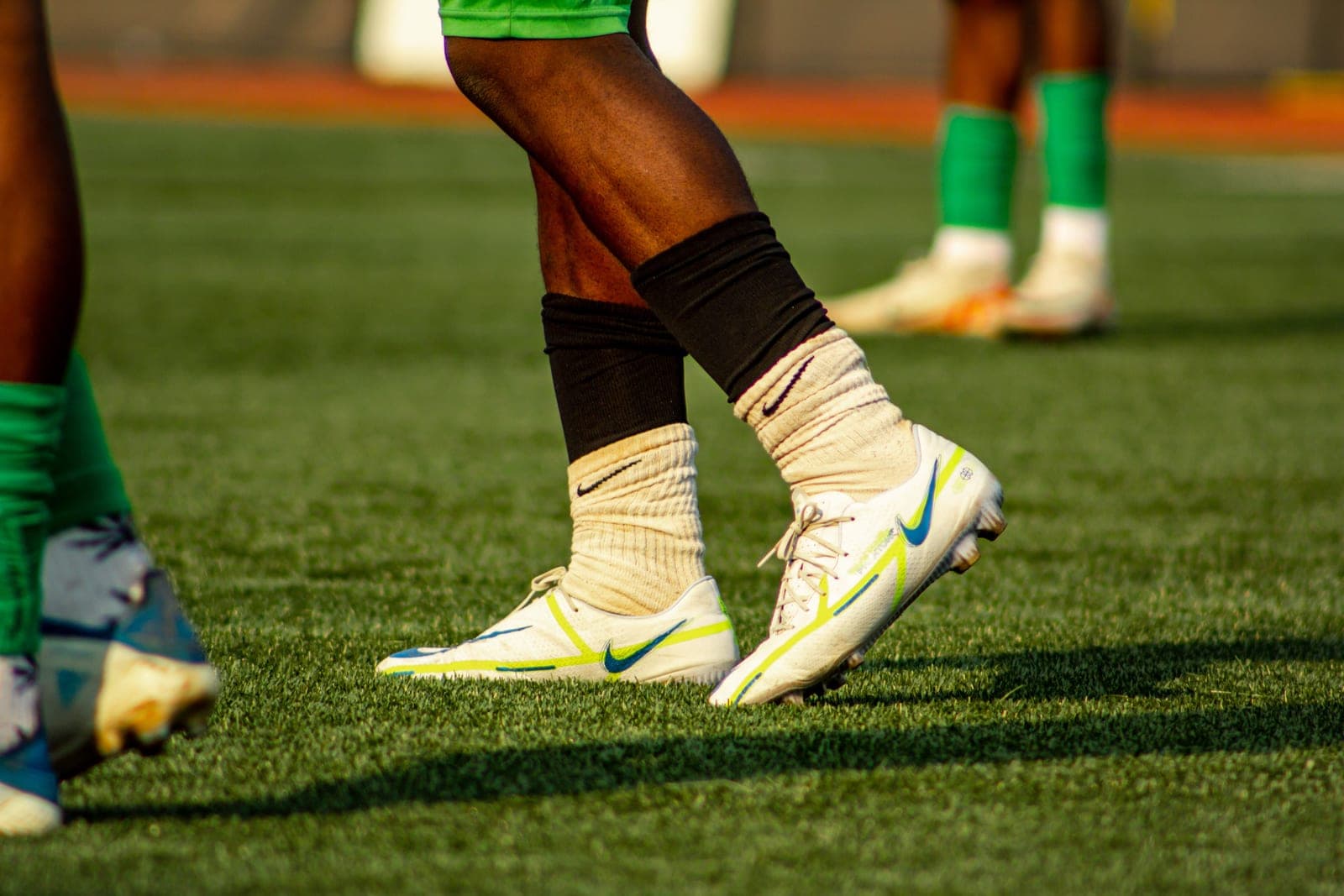
Under the socks, always. Law 4 requires that shinguards be made of a suitable material, be of an appropriate size to provide reasonable protection, and be covered by the socks — and it makes the player responsible for their size and suitability. A guard worn over the sock is not a style choice; it fails the referee's pre-game check.
This question gets asked a lot, usually because a kid has seen it done the other way somewhere, or because getting a sock over a guard on a thin leg is genuinely awkward and somebody looked for a shortcut. The rule is unambiguous, so the rest of this page is about the awkward part.
What the Law actually says
Law 4 lists shinguards in the compulsory equipment, alongside a shirt with sleeves, shorts, socks and footwear. The wording on the guards themselves is one sentence: they must be made of a suitable material and be of an appropriate size to provide reasonable protection, and be covered by the socks. Players are responsible for the size and suitability of their shinguards.
Two things follow from that sentence that are worth drawing out.
- There is no certification requirement in the Law. No standard is named, no sticker is required. The test is suitable material and appropriate size, judged by the referee.
- The responsibility sits with the player, not the league. Which in youth soccer means it sits with the parent, and it is why a guard that is the wrong size is your problem rather than something anyone will fix at the field.
Why the rule exists
Not arbitrary. A hard plastic shell with an exposed edge is an injury risk to the other player, which is the same principle behind every other equipment rule in Law 4 — a player must not use equipment or wear anything that is dangerous. The sock covers the edge.
It also keeps the guard where it is supposed to be. A guard held on only by its own strap rotates around a thin leg; the sock is doing real retention work, and that is the part most families discover the hard way.
How to get a sock over a guard on a thin leg
The order matters more than the technique, and almost everybody does it in the wrong order the first time.
- Put the sock on first, pulled all the way up over the calf.
- Slide the guard in from the top, between the sock and the shin, pad facing out. Not up from the ankle — that is where it jams.
- Position it so the top of the guard sits two finger-widths below the knee, and the bottom clears the ankle bone.
- Fasten the strap, if it has one, through the sock — it goes around the outside.
- Pull the sock up again over the top of the guard. Nothing should be visible.
If step two is the one that fails, the guard is probably too wide for the sock rather than too big for the leg. The size chart sizes by the child's height, which is how guards are actually sold, and how to put on shin guard sleeves covers the sleeve style separately.
Slip-in guards and sleeves: same rule
A slip-in guard has no strap and relies entirely on being held between the sock and the leg, so it has to be under the sock to function at all. A sleeve-style guard — a compression sleeve with the pad built in — goes on first and the match sock goes over it. Either way the match sock is the outer layer.
The one thing that confuses people: an elastic retention sleeve worn over the sock is a different object. It is a band whose job is to stop the whole assembly sliding down, and it is allowed because it covers the sock rather than exposing the guard. It also restricts circulation if pulled tight, which is worth watching on a child.
| Style | Goes on | Outer layer |
|---|---|---|
| Slip-in guard | Between sock and leg | Match sock |
| Strapped hard-shell | Under the sock, strap over the sock | Match sock |
| Sleeve with built-in pad | First, against the leg | Match sock |
| Ankle-wrap guard | Under the sock | Match sock |
| Retention band | Last, over the sock | Itself |
Guards and the socks that go over them
Franklin Sports
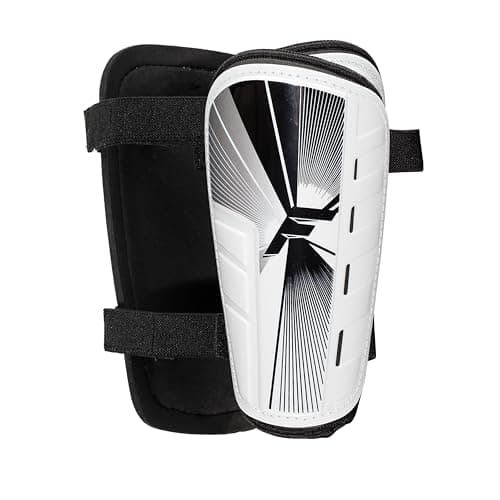
Franklin Sports Superlight Soccer Shin Guards
The pair to keep in the car for the morning you discover the real ones are at school.
$11.99View on Amazon#ad — we may earn a commission · price as of October 16, 2026
Mitre
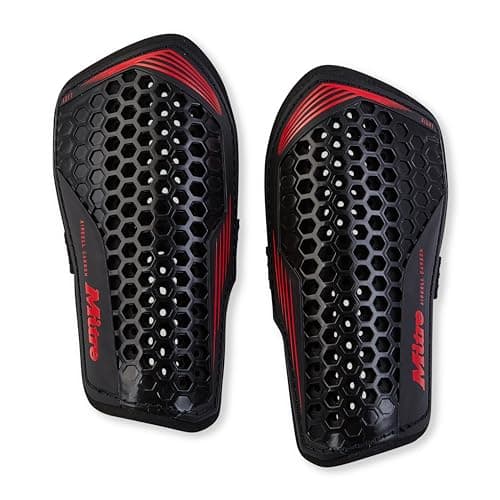
Mitre Aircell Carbon Shin Guards
A sensible middle option if you want strap security without the bulk of an ankle-disc guard.
$17.00View on Amazon#ad — we may earn a commission · price as of October 16, 2026
G-Form
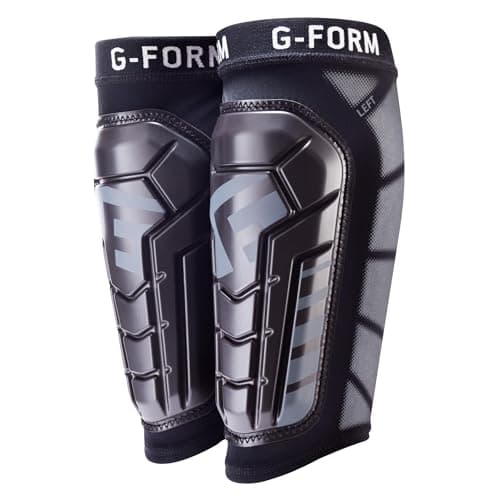
G-Form Pro-S Vento Shin Guards
Worth it for an older player who would otherwise wear the thinnest possible slip-in; not the safest choice for a beginner.
$28.99View on Amazon#ad — we may earn a commission · price as of October 16, 2026
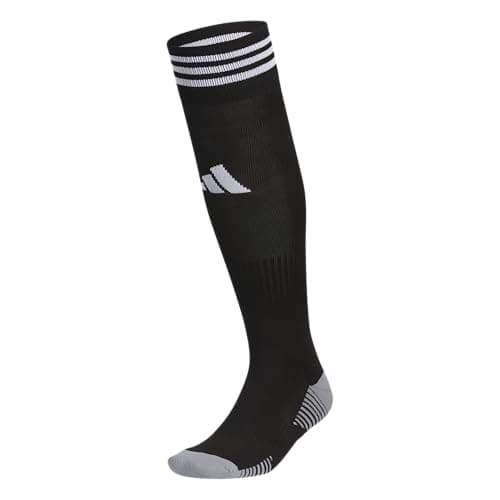
adidas
adidas Copa Zone Cushion Over-the-Calf Socks
The safe default. If your kid wears slip-in shin guards, the grip through the calf is the reason to pick these.
$10.00$16.00−38%View on Amazon#ad — we may earn a commission · price as of October 16, 2026
Product photos come from each item’s current Amazon listing.
What about the sock being too short?
Common and fixable. A match sock has to be over-the-calf, not crew length, or it cannot cover a full-size guard. If your kid's socks stop at mid-calf, that is the purchase to fix rather than the guard.
The sock picks cover the over-the-calf options, and this is also the point at which grip socks get confusing — a grip sock worn as the only sock still has to cover the guard, and the mid-calf versions do not. Are grip socks worth it goes through it.
If the guard keeps sliding down
This is the complaint behind most of the under-or-over confusion, and wearing the guard outside the sock does not solve it. Three things that do, in order:
- A sock with real elastic. A stretched-out hand-me-down sock has no retention left, and it is the commonest cause.
- The right size guard. Too short and there is nothing for the sock to grip; too long and it fights the ankle and works its way down.
- Sock tape or a retention band over the sock at the top of the guard. Both work, and both are workarounds rather than fixes.
The full diagnosis is on how to stop shin guards slipping, including why going up a size usually makes it worse.
Does this apply at practice too?
The Law governs matches. Most clubs require guards at practice as well, and most do not inspect how they are worn — but there is a practical reason to do it properly anyway: a kid who puts guards on the right way at training does it automatically on a Saturday, which is one less thing going wrong five minutes before kickoff.
Indoor and futsal sessions are the exception worth checking rather than assuming. Do you need shin guards for indoor soccer has the answer, and it is yes more often than parents expect.
In futsal the equivalent wording is tighter still: guards must be covered entirely by the stockings. Do you need shin guards for futsal has that Law in full.
Common questions
Do shin guards go under or over socks?
Under. Law 4 requires shinguards to be covered by the socks, so this is a rule rather than a preference, and a guard worn outside the sock fails the referee's pre-game equipment check. The only thing that goes over the sock is an elastic retention band, which covers the sock rather than exposing the guard.
Why do shin guards have to go under socks?
Two reasons. A hard plastic shell with an exposed edge is a risk to other players, which is the same principle as Law 4's general rule that a player must not wear anything dangerous. And the sock does real retention work — a guard held on by its own strap alone rotates around a thin leg.
How do you put shin guards on under socks?
Sock on first, pulled all the way up. Then slide the guard in from the top, between the sock and the shin, pad facing out — not up from the ankle, which is where it jams. Position the top two finger-widths below the knee, fasten any strap around the outside of the sock, then pull the sock back up over the guard.
Do slip-in shin guards go under socks?
Yes, and they have to. A slip-in guard has no strap and is held in place entirely by being between the sock and the leg, so wearing it outside the sock would not just break the rule, it would not work at all. The match sock is the outer layer for every guard style.
Will a referee check how shin guards are worn?
Yes. Inspecting players for compulsory equipment before kickoff is the referee's responsibility, and in youth soccer it is a quick look at the socks and the soles of the boots. Guards visible outside the sock, a sock that does not reach the top of the guard, or a guard obviously too small for the leg are the three things sent back.
Do shin guards need to be a certified size?
The Law does not name a standard. It requires that guards be of a suitable material and an appropriate size to provide reasonable protection, and it puts the responsibility for size and suitability on the player — which in youth soccer means the parent. Guards are sold by the child's height, which is the number to measure against.
Sources
- IFAB Laws of the Game — Law 4, The Players' Equipment — The Law text quoted on this site: undershorts and tights must be the same color as the main color of the shorts or the lowest part of the shorts, and players of the same team must wear the same color; shinguards must be of suitable material and appropriate size, covered by the socks, with the player responsible for their suitability; non-dangerous protective equipment of soft, lightweight padded material is permitted; and a player must not use equipment or wear anything that is dangerous, which must be removed rather than taped or covered. Law 4.3 is also the source for the kit-color rules quoted here: the two teams must wear colors that distinguish them from each other and the match officials, and each goalkeeper must wear colors that are distinguishable from the other players and the match officials. Law 4.4 names gloves, headgear, facemasks and knee and arm protectors of soft, lightweight padded material as permitted non-dangerous protective equipment, and separately permits goalkeepers caps and tracksuit bottoms.
- Coaching American Soccer — Law 4, The Players' Equipment — The Law 4 requirements quoted on this site: footwear is compulsory but cleats are not specified; shinguards must be of suitable material, appropriate size and covered by the socks, with the player responsible for suitability; a player must not use equipment that is dangerous; and the referee-level guidance that worn, pointed or exposed-shaft studs and shoes with sharp metal or pointed spikes are not permitted.
- adidas — Entrada 22 jersey — Verified current availability and adidas's published AEROREADY fabric description for the youth Entrada 22.
- TRUsox — 3.0 performance grip socks — TRUsox's own description of the IN//EX grip technology and the range's construction.
Read next
- Youth shin guard size chartThe height-based size chart, how high guards should go, and the crouch test that confirms the fit.
- How to stop shin guards from slippingThe three real causes of slipping guards and the fixes in order — starting with the one nobody checks.
- How to put on shin guard sleevesThe right order for sleeve and slip-in guards, and the mistake that makes them slide mid-game.
- Slip-in vs ankle shin guardsThe protection trade-off stated plainly, the age the answer flips, and the sleeve option in between.
- Do you need shin guards for indoor soccer?Whether indoor leagues require guards, why the smaller pitch argues for them, and what style to wear.
- Best youth soccer socksSock picks that actually hold slip-in shin guards, plus whether grip socks are worth the money.
- Are metal cleats allowed in youth soccer?What Law 4 says about footwear and studs, what referees are told to look for, and the molded alternatives that are always allowed.
- U7–U8 rec: the first real kitAges 6 to 8. Still a size 3 ball, but this is where the first real pair of cleats earns its place.