Shin Guards
Do you need shin guards for futsal?
Yes, and the futsal rule is written more tightly than the outdoor one. Here is the exact wording.
By Ryder M. · Published October 6, 2026
The short answer
Yes — shinguards are compulsory in futsal. The Futsal Laws of the Game require them, and the wording is stricter than the outdoor Law: they must be covered entirely by the stockings, must be made of rubber, plastic or a similar approved material, and must provide a reasonable degree of protection. A player without them does not pass the pre-game equipment check.
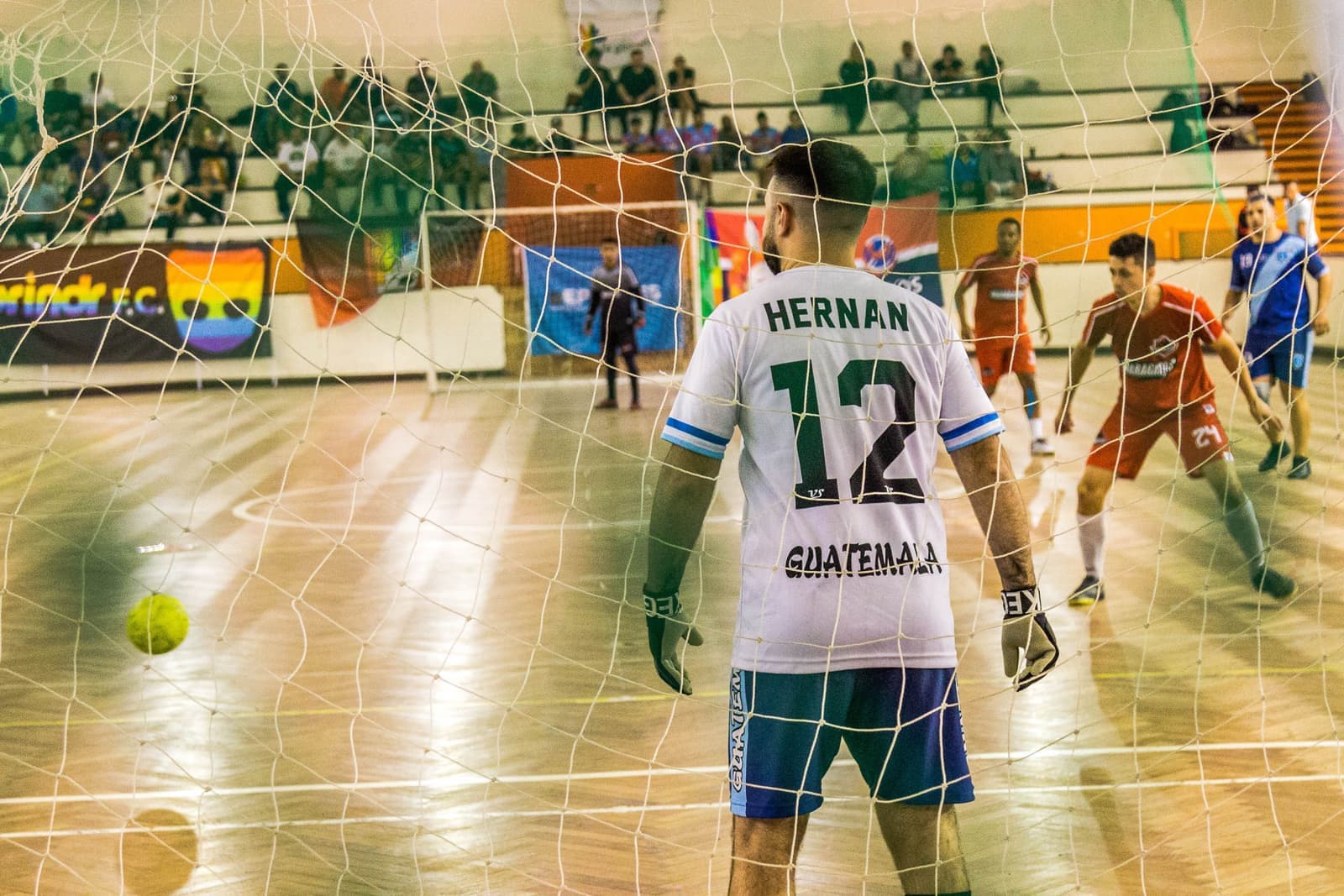
Parents ask this because futsal looks gentler. No studs, no sliding tackles, a smaller ball, a hard floor instead of a churned field. The conclusion people draw from that — less contact, so less protection needed — is the wrong way round, and the Law agrees.
What the Futsal Law says, word for word
Futsal has its own Laws of the Game, separate from the 11-a-side Laws, and Law 4 is the players' equipment. On shinguards it is specific in three ways:
- They must be covered entirely by the stockings — note "entirely", which is tighter than the outdoor Law's "covered by the socks".
- They must be made of rubber, plastic or a similar approved material. The outdoor Law says only "suitable material" and names nothing.
- They must provide a reasonable degree of protection. No size is specified, so this is the referee's call.
The same Law also specifies futsal footwear: canvas or soft leather training or gymnastic shoes with soles of rubber or a similar material. That is why cleats are not legal futsal footwear, which is the second thing families discover at the door.
Why a court is harder on shins, not easier
Three things about futsal increase the number of knocks a player takes per hour, and all three are consequences of the format rather than of rough play.
- A much smaller pitch. Five a side on a court means every player is inside tackling distance of two others almost continuously. The tackle count per minute is far higher than on an 11-a-side field.
- A heavier ball for its size with a low bounce. The Futsal Laws set a circumference of 62 to 64 cm, a weight of 400 to 440 g, and a first rebound of 50 to 65 cm when dropped from 2 m. It stays on the floor, at shin height, where feet are.
- A hard, unforgiving floor. On grass a foot that misses the ball slides. On a sealed court it stops, and whatever it hits absorbs the whole of it.
The outdoor version of this argument is on do you need shin guards for indoor soccer, which covers walled indoor and arena formats. Futsal is the stricter case of the same principle.
What a referee checks before a futsal game
The same quick look as outdoor, with one extra item. Guards visible outside the stocking, a stocking that does not reach the top of the guard, a guard obviously too small for the leg — and the shoes, because studs are not permitted.
The "entirely" wording matters here. A guard whose top edge peeks above a mid-calf sock passes outdoor checks fairly often and is a clear fail in futsal. If your kid plays both, buy over-the-calf match socks rather than relying on the grip socks they may prefer — are grip socks worth it covers why the mid-calf versions cause this problem.
Guards that suit a futsal court
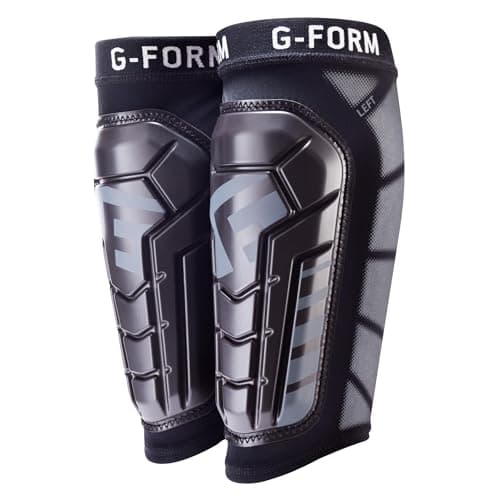
G-Form
G-Form Pro-S Vento Shin Guards
Worth it for an older player who would otherwise wear the thinnest possible slip-in; not the safest choice for a beginner.
$28.99View on Amazon#ad — we may earn a commission · price as of October 16, 2026
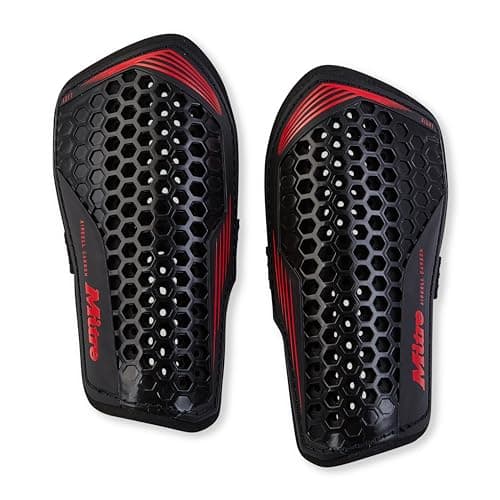
Mitre
Mitre Aircell Carbon Shin Guards
A sensible middle option if you want strap security without the bulk of an ankle-disc guard.
$17.00View on Amazon#ad — we may earn a commission · price as of October 16, 2026
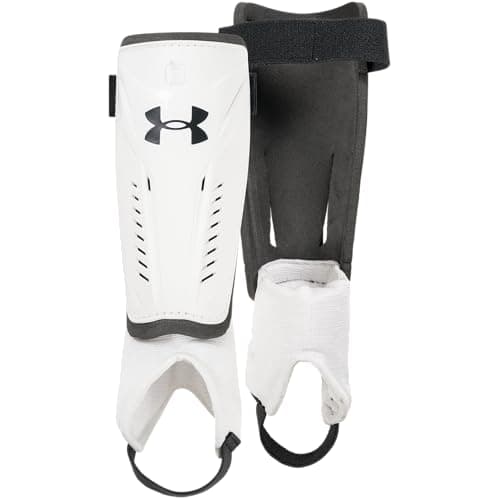
Under Armour
Under Armour Challenge Youth Shin Guards
The right guard when protection is the priority — a young defender, a nervous beginner, or a kid who has already taken a bad knock.
$16.97View on Amazon#ad — we may earn a commission · price as of October 16, 2026
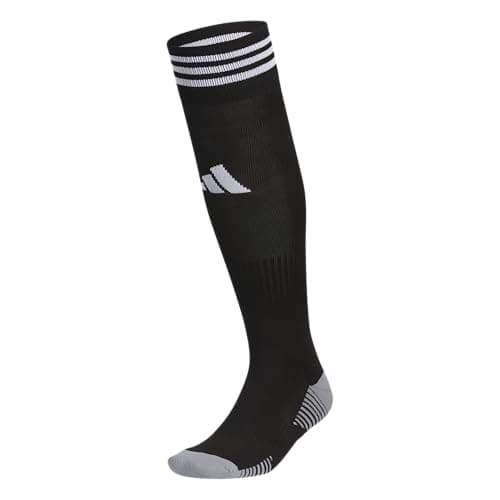
adidas
adidas Copa Zone Cushion Over-the-Calf Socks
The safe default. If your kid wears slip-in shin guards, the grip through the calf is the reason to pick these.
$10.00$16.00−38%View on Amazon#ad — we may earn a commission · price as of October 16, 2026
Product photos come from each item’s current Amazon listing.
Which guard style for futsal
The Law allows rubber, plastic or a similar approved material, which covers every mainstream style. Within that, futsal rewards a slightly different choice from outdoor soccer.
| Style | On a futsal court | Verdict |
|---|---|---|
| Sleeve with flexible pad | Stays put through constant direction changes; coolest option in a hot hall | Good for U11+ |
| Strapped hard shell with ankle | Most protection, and the ankle cover earns its place on a hard floor | Best for under U10 |
| Strapped hard shell, no ankle | Fine, and the usual middle choice | Good |
| Slip-in, minimal | Slides most on a court, because there is no strap and more cutting | Least suitable |
| Ankle-wrap guard | Good coverage where a court does the most damage | Good |
The ankle point is the one worth acting on. Outdoor, the ankle is hit by studs; on a court it is hit by another kid's shoe at speed, and the floor itself when a player goes down. For anybody under about U10 the strapped guard with attached ankle protection is the right purchase — the ankle guard picks cover those.
Does the club provide them?
Almost never, and this is the practical trap. Indoor and futsal programs are often run as drop-in winter sessions rather than as a season with a kit handout, so nobody sends a gear list. Parents arrive at a sports hall in January assuming it is a casual session and get turned away at the first game.
The useful rule: if there is a referee, there is an equipment check. If it is a coached training session with no official, the club's own policy applies, and most require guards at practice anyway — see do you need shin guards for soccer practice.
Sizing, which is by height not by shoe
Shin guards are sold against the player's height, which makes them one of the easier things to buy. The band runs from roughly XXS for a child under 3 ft 7 in up to adult sizes, and the top of the guard should sit about two finger-widths below the knee with the bottom clear of the ankle bone.
The full bands are in the youth shin guard size chart. One futsal-specific note: because the Law says "entirely", a guard at the top of its height band paired with a short sock is the combination that fails. Size to the chart and buy over-the-calf socks.
Common questions
Do you need shin guards for futsal?
Yes. The Futsal Laws of the Game make shinguards compulsory and word the requirement more tightly than the outdoor Law: they must be covered entirely by the stockings, be made of rubber, plastic or a similar approved material, and provide a reasonable degree of protection. A player without them fails the pre-game equipment check.
Do you wear shin guards in futsal?
Yes, and under the stockings. The Futsal Law requires that guards be covered entirely by the stockings, which is stricter than the outdoor wording — a guard whose top edge shows above a mid-calf sock is a clear fail. Over-the-calf match socks are the practical requirement that follows from the rule.
Do you need shin pads for futsal practice?
The Law governs matches, so a coached session with no referee comes down to the club's own policy — and most clubs require guards at practice. Given that futsal produces more tackles per minute than outdoor soccer, wearing them at training is the sensible default even where nobody checks.
Are futsal shin guards different from soccer shin guards?
No, there is no separate futsal product. The Futsal Law allows rubber, plastic or a similar approved material, which covers every mainstream style. What changes is which style suits best: a hard court with a high tackle count favors a strapped guard, and ankle protection is worth more indoors than out.
Why are shin guards needed in futsal if there are no studs?
Because the number of knocks per hour is higher, not lower. A five-a-side court keeps every player inside tackling distance continuously, the futsal ball is heavier for its size with a deliberately low bounce so it stays at shin height, and a hard floor does not let a mistimed foot slide the way grass does.
Can you wear cleats for futsal?
No. The Futsal Laws specify canvas or soft leather training or gymnastic shoes with soles of rubber or a similar material, which rules out studded cleats, and most facilities ban studs for floor damage anyway. A flat non-marking indoor or futsal shoe is what the rule requires.
Sources
- The FA — Futsal Laws of the Game, Law 4: The Players' Equipment — The futsal equipment requirements quoted on this site: shinguards are compulsory, must be covered entirely by the stockings, must be made of rubber, plastic or a similar approved material, and must provide a reasonable degree of protection. Also the futsal footwear requirement — canvas or soft leather training or gymnastic shoes with soles of rubber or a similar material — which is why cleats are not legal futsal footwear.
- The FA — Futsal Laws of the Game, Law 2: The Ball — The futsal ball specification quoted on this site: circumference not more than 64 cm and not less than 62 cm, weight 400-440 g at the start of the match, pressure equal to 0.6-0.9 atmosphere at sea level, and a first rebound of not less than 50 cm and not more than 65 cm when dropped from 2 m.
- IFAB Laws of the Game — Law 4, The Players' Equipment — The Law text quoted on this site: undershorts and tights must be the same color as the main color of the shorts or the lowest part of the shorts, and players of the same team must wear the same color; shinguards must be of suitable material and appropriate size, covered by the socks, with the player responsible for their suitability; non-dangerous protective equipment of soft, lightweight padded material is permitted; and a player must not use equipment or wear anything that is dangerous, which must be removed rather than taped or covered. Law 4.3 is also the source for the kit-color rules quoted here: the two teams must wear colors that distinguish them from each other and the match officials, and each goalkeeper must wear colors that are distinguishable from the other players and the match officials. Law 4.4 names gloves, headgear, facemasks and knee and arm protectors of soft, lightweight padded material as permitted non-dangerous protective equipment, and separately permits goalkeepers caps and tracksuit bottoms.
- Coaching American Soccer — Law 4, The Players' Equipment — The Law 4 requirements quoted on this site: footwear is compulsory but cleats are not specified; shinguards must be of suitable material, appropriate size and covered by the socks, with the player responsible for suitability; a player must not use equipment that is dangerous; and the referee-level guidance that worn, pointed or exposed-shaft studs and shoes with sharp metal or pointed spikes are not permitted.
- Select Sport — futsal balls — Select's futsal range including the Junior and Senior Jinga models, and Select's own description of the low-bounce bladder construction.
Read next
- Do you need shin guards for indoor soccer?Whether indoor leagues require guards, why the smaller pitch argues for them, and what style to wear.
- Do shin guards go under socks?The Law 4 requirement, why it exists, and how to get a sock over a guard on a thin leg without it sliding.
- Youth shin guard size chartThe height-based size chart, how high guards should go, and the crouch test that confirms the fit.
- Best kids' shin guards with ankle protectionStrapped guards with ankle protection for U6 to U11, and why that is the right style for young players.
- Futsal shoes vs indoor soccer shoesWhat separates a futsal shoe from an indoor soccer shoe, why the surface decides rather than the label, and what the futsal Laws actually require on the foot.
- Futsal ball vs soccer ballThe official circumference, weight, pressure and bounce specs side by side, plus which ball a winter indoor season needs.