Cleats
Are metal cleats allowed in youth soccer?
The Laws do not ban metal by name. Your league and the referee's pre-game check are what decide it.
By Ryder M. · Published October 4, 2026
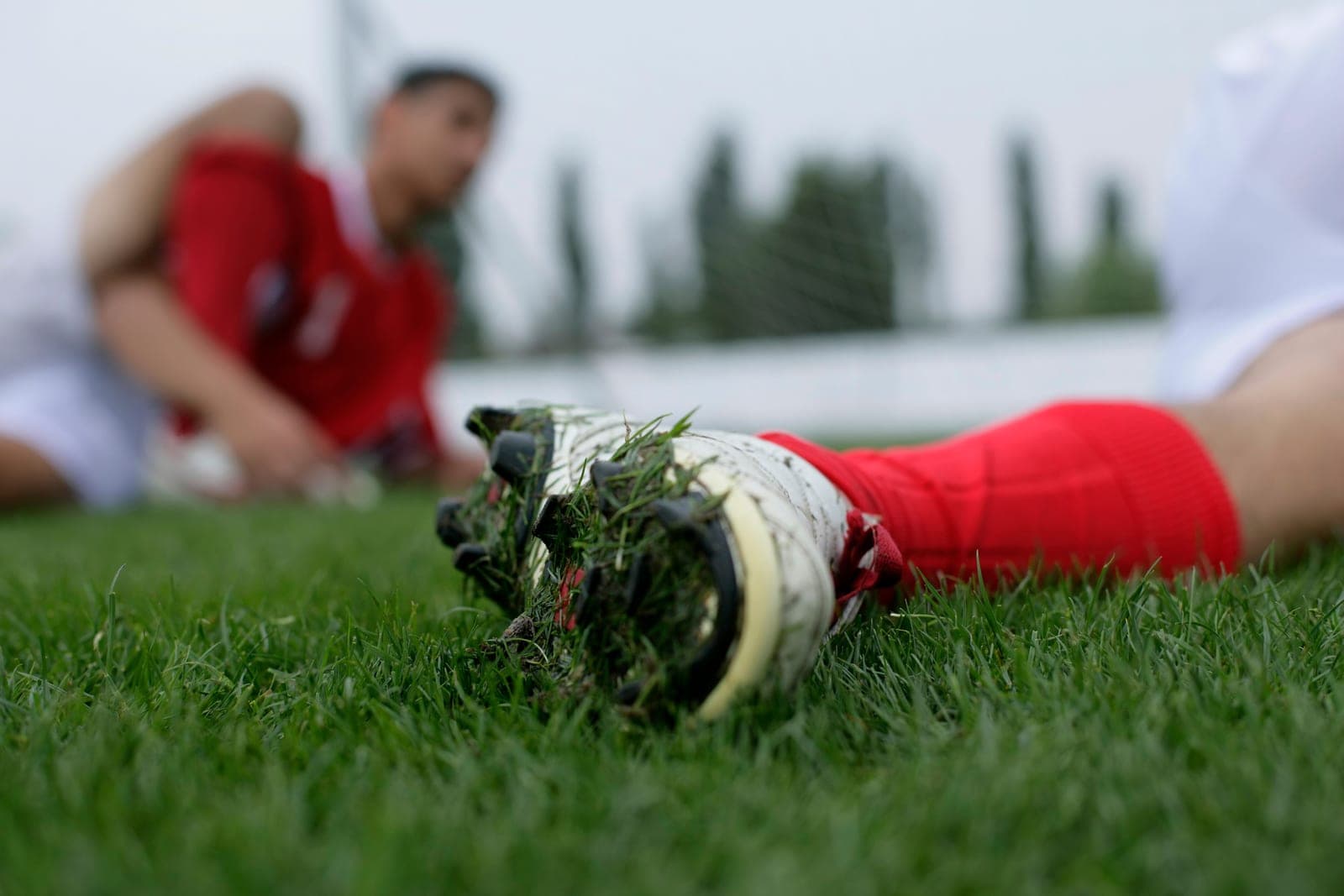
The short answer
The Laws of the Game do not ban metal studs by name. Law 4 says only that a player must not use equipment that is dangerous, and referee guidance is that worn, pointed or exposed-shaft studs and shoes with sharp metal spikes are not permitted. Many youth leagues restrict metal outright, so check your league's rules — and for a youth player, molded studs are the right answer anyway.
This question usually arrives one of two ways. Either a hand-me-down pair has turned up with metal-tipped studs in it, or a kid has seen a professional's boots and wants the same. Both deserve a straight answer rather than a shrug.
What Law 4 actually requires
Law 4 — the Players' Equipment — is short on footwear. It lists the compulsory kit as a shirt with sleeves, shorts, socks, shinguards and footwear. It requires footwear; it does not specify cleats at all. And the governing principle for everything else is one sentence: a player must not use equipment or wear anything that is dangerous.
The specifics are in referee guidance rather than in the Law's own text. Cleats with replaceable studs that are worn, pointed or have exposed shafts are not permitted. Nor are American football shoes, track shoes, baseball shoes, or shoes with any pointed spikes — including toe cleats and any cleats with sharp metal studs.
What the referee actually checks
Inspecting players for compulsory and non-compulsory equipment before kickoff is the referee's responsibility. In youth soccer this is usually a quick look at the bottom of the boots and the shin guards. What fails:
- A stud worn down to the metal shaft underneath. This is the commonest real failure and it happens on ordinary screw-in cleats, not just exotic ones.
- A loose or missing replaceable stud, leaving a thread or a shaft exposed.
- A toe cleat — the single stud at the front of a baseball or football shoe. This is why cross-sport hand-me-downs get turned away.
- Anything sharp or pointed to the touch.
Shin guards get checked at the same moment: Law 4 requires they be of suitable material, of an appropriate size to give reasonable protection, and covered by the socks. The player is responsible for the suitability. That last point catches more kids than footwear does — see do shin guards go under socks and the shin guard size chart.
Where metal studs come from in the first place
Two sources, and knowing which you are looking at matters.
Soft-ground (SG) soccer cleats. Vizari's own guide describes soft-ground construction as six to eight studs, often metal or a metal-and-plastic combination, frequently replaceable, built to penetrate deep into wet or muddy natural grass. These are real soccer cleats. They are also the wrong purchase for nearly every youth player, for reasons set out on cleats for rain and wet grass.
Other sports. Baseball and football cleats come in metal versions and have a toe cleat. Those are not borderline — referee guidance names them specifically. Soccer vs football vs baseball cleats explains what is different and why swapping does not work.
The surface rule nobody tells you
Separate from the Laws, facilities have their own rules, and they are usually stricter. Long studs of any material damage artificial surfaces, so plenty of turf and 3G facilities ban them outright regardless of what your league allows on grass. If midweek training is indoors or on turf, the question answers itself: turf shoes or indoor shoes, not studs.
What to buy instead
Molded firm-ground cleats. The studs are part of the plate, so there is no shaft to expose, nothing to work loose, and nothing to inspect beyond ordinary wear. Every pick below is a molded plate, currently sold in junior sizing.
Molded cleats that pass any check
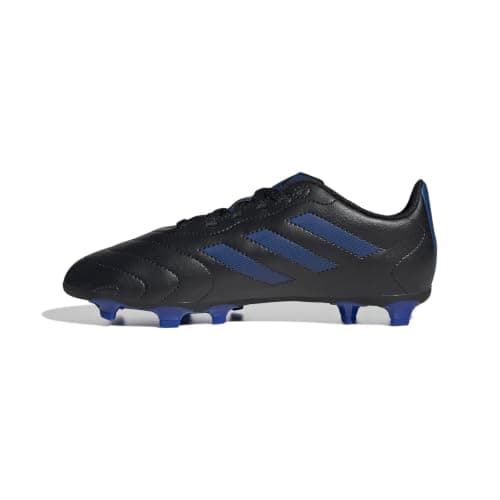
adidas
adidas Goletto VIII Firm Ground
The sensible answer when the honest requirement is a cleat that survives one rec season and costs as little as possible.
$33.67View on Amazon#ad — we may earn a commission · price as of October 16, 2026
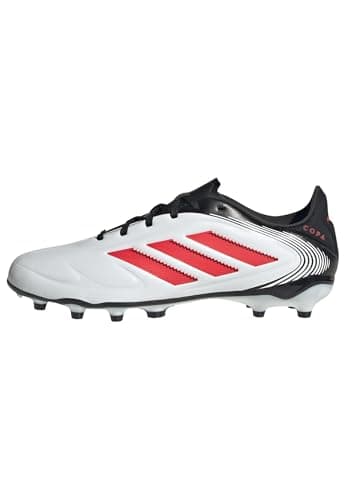
adidas
adidas Copa Pure 3 League Firm Ground (Kids)
The best mainstream junior cleat for a wide foot, and a real help to a player still learning first touch.
$60.00View on Amazon#ad — we may earn a commission · price as of October 16, 2026
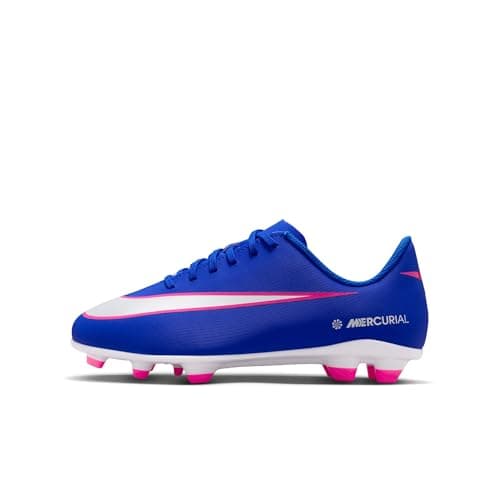
Nike
Nike Jr. Mercurial Vapor 16 Club MG
The safest default cleat for a rec player between U7 and U12, as long as the foot is average width or narrower.
$60.88View on Amazon#ad — we may earn a commission · price as of October 16, 2026
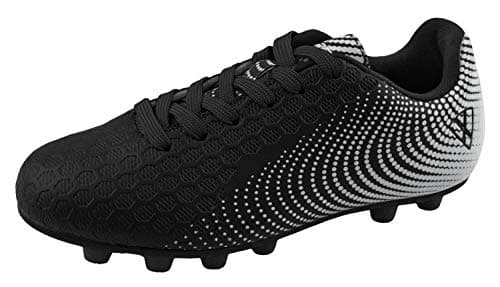
Vizari
Vizari Stealth Firm Ground
The honest choice for a first-season player: enough cleat to play in, not enough money to regret if they switch to basketball.
$12.08$36.97−67%View on Amazon#ad — we may earn a commission · price as of October 16, 2026
Product photos come from each item’s current Amazon listing.
If you are starting from scratch, the decision is the surface rather than the stud material — firm ground vs turf vs AG covers it, and the age-by-age picks narrow it further.
High school and older age groups
High school soccer in the US is governed by NFHS rules rather than by the Laws of the Game directly, and school and state associations add their own equipment requirements. We checked the NFHS soccer rules-changes release for 2025-26 and it does not address footwear, so there is nothing current to quote — ask the athletic director or the game official rather than assuming the Law 4 answer transfers. We would rather say that than guess.
For club and travel soccer, the league's own rules of competition are the document that matters. It is a one-line email to the registrar, and it is worth sending before buying.
Common questions
Are metal cleats allowed in youth soccer?
The Laws of the Game do not ban metal studs by name — Law 4 requires only that equipment not be dangerous. Referee guidance does prohibit worn, pointed or exposed-shaft studs and shoes with sharp metal spikes or toe cleats. Many youth leagues restrict metal studs outright as a local rule, so check your league's rules of competition before buying.
Will a referee check my kid's cleats?
Yes. Inspecting players for equipment before kickoff is the referee's responsibility. In youth soccer it is usually a quick look at the sole of the boots and at the shin guards. The commonest failure is a stud worn down far enough to expose the metal shaft underneath, which happens on ordinary cleats, not just unusual ones.
Can kids wear baseball or football cleats for soccer?
No. Referee guidance names American football, track and baseball shoes specifically, along with toe cleats and anything with pointed spikes. The toe cleat at the front of a football or baseball shoe is the detail that gets them turned away. Soccer cleats have no toe stud, which is one of the few genuinely hard differences between the sports.
What does Law 4 say about shin guards?
That they must be made of a suitable material, be of an appropriate size to provide reasonable protection, and be covered by the socks — and that the player is responsible for their size and suitability. There is no certification requirement in the Law itself. Guards worn over the socks fail the check.
Are screw-in studs allowed for youth soccer?
Replaceable studs are not banned as a category, but they fail the safety check as soon as one is worn, pointed, loose or missing, and that happens quickly on a youth player. Molded studs are part of the plate, so there is no shaft to expose and nothing to work loose — which is why they are the sensible choice at this age.
Can you wear metal studs on artificial turf?
Usually not, and this is a facility rule rather than a Law. Long studs of any material damage artificial surfaces, so many turf and 3G venues ban them regardless of what your league permits on grass. For turf training, a turf outsole or an AG plate is the right equipment and studs are not.
Sources
- Coaching American Soccer — Law 4, The Players' Equipment — The Law 4 requirements quoted on this site: footwear is compulsory but cleats are not specified; shinguards must be of suitable material, appropriate size and covered by the socks, with the player responsible for suitability; a player must not use equipment that is dangerous; and the referee-level guidance that worn, pointed or exposed-shaft studs and shoes with sharp metal or pointed spikes are not permitted.
- Vizari — guide to soft ground soccer cleats — A manufacturer's description of soft-ground construction: six to eight studs, often metal or metal-and-plastic, frequently replaceable, built for wet, muddy or soft natural grass so the longer studs penetrate deeper. Used for what SG cleats are, not for whether a child should wear them.
- UA Playbooks (underarmour.com) — types of cleats explained: football, soccer, baseball and more — The source for the toe-stud distinction — soccer cleats have no stud at the tip of the toe, baseball and softball cleats and lacrosse cleats do — and for the statement that soccer cleats are not made with metal spikes.
- Nike — kids' soccer cleats and shoes — Verified that each Nike model named on this page is currently sold, and the source for Nike's own published upper, plate and surface descriptions.
- adidas — kids' soccer — Verified current availability of the adidas models named here, plus adidas's published material and construction claims.
- Vizari Sports — youth cleats and indoor shoes — Verified the Vizari models named here are currently sold, including the toddler size range and the indoor line, plus Vizari's published material claims.
Read next
- Best soccer cleats for rain and wet grassWhy firm ground beats both turf shoes and soft-ground studs on a wet field, picks by level, and how to dry a soaked pair.
- Soccer vs football vs baseball cleats for kidsWhich cleat swaps between sports are allowed, which are refused, and why the toe stud is the whole answer.
- Firm ground vs turf vs artificial grass cleatsThe FG, AG, TF and MG decision table, whether one pair can cover a mixed schedule, and the cost of guessing wrong.
- Best youth turf soccer shoesTurf shoe picks by age and width, and why the turf outsole does more for comfort than any upper.
- Do shin guards go under socks?The Law 4 requirement, why it exists, and how to get a sock over a guard on a thin leg without it sliding.
- Youth shin guard size chartThe height-based size chart, how high guards should go, and the crouch test that confirms the fit.
- Soccer cleats vs softball cleatsWhy the toe cleat decides everything, which direction the swap actually works, and what youth leagues allow.
- U11–U12: nine-a-side, and the travel questionAges 10 to 12. Size 4 still, 9v9 format, and the level where travel-club gear diverges sharply from rec.