Cleats
Soccer cleats vs softball cleats
One of these works in the other sport. The other one is usually not allowed on the field.
By Ryder M. · Published September 29, 2026
Heads up: we earn a commission if you buy through our links, at no extra cost to you. It never changes which product we recommend — here’s how that works.
The short answer
| Soccer cleats | Softball cleats | |
|---|---|---|
| Toe cleat | None — removed for safety in tackles | Yes — for digging in and pivoting |
| Metal spikes | Never | Sometimes, by division |
| Cut | Almost always low | Low, mid or high |
| Build | Light and thin for ball feel | Bulkier, more ankle protection |
| Swap to the other sport? | Usually allowed in softball | Usually not allowed in soccer |
This question almost always arrives the same way: there is already a pair of cleats in the hallway, a second sport has started, and nobody wants to buy twice in the same month. So the useful answer is not a list of differences. It is which direction the swap works.
And the answer is asymmetric. Soccer cleats are usually fine in youth softball. Softball cleats are usually not allowed in soccer. One feature explains both halves.
The toe cleat, which is the whole story
Baseball and softball cleats carry a stud at the very tip of the toe. It is there for a specific job: digging in and pushing off for a short explosive start out of the batter's box or off a base.
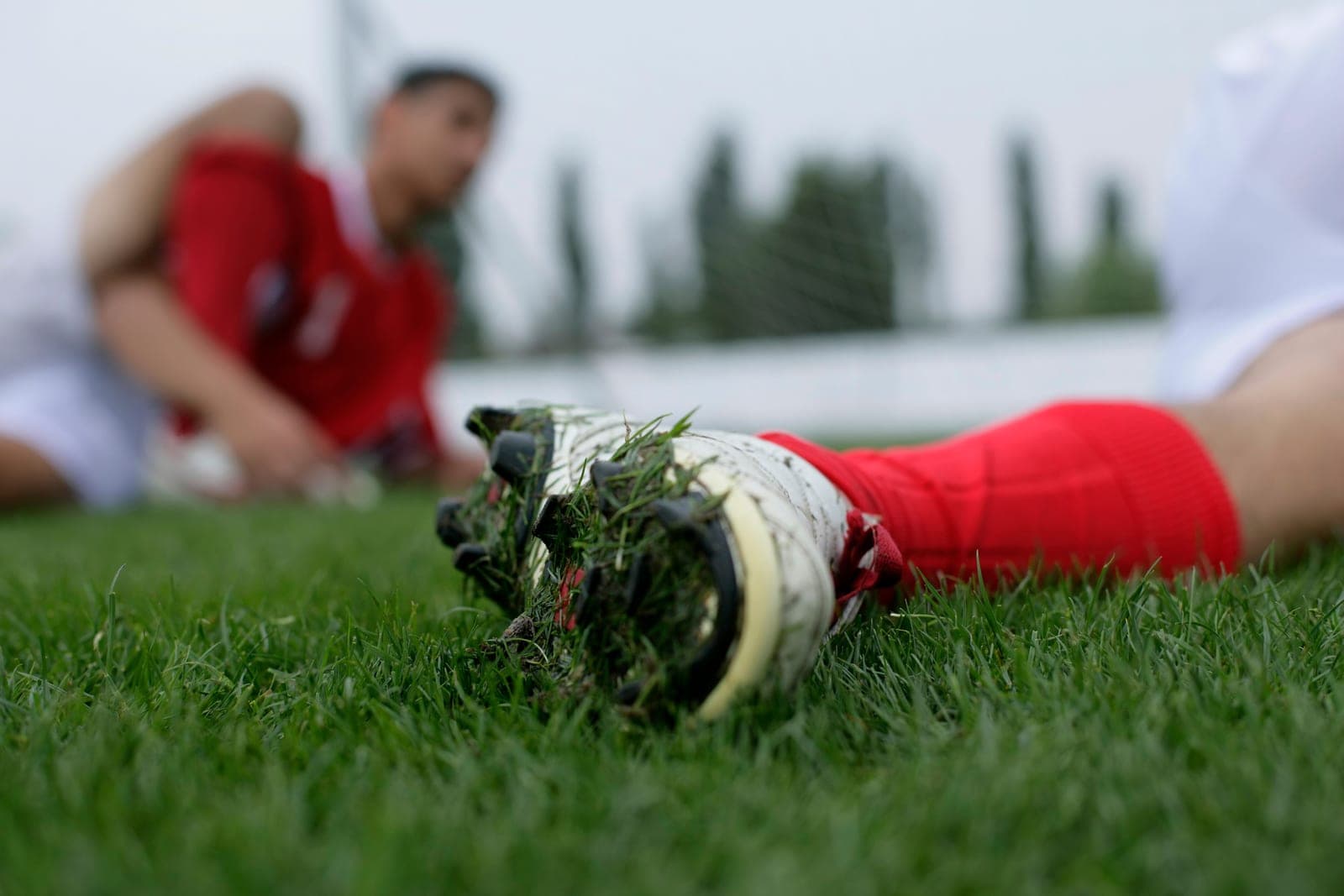
Soccer cleats do not have one, and the reason is safety. A stud at the point of the toe on a player who slides in to tackle is a hazard to the other player's leg, so the position has been designed out of the category. Comparisons across the cleat types are consistent on this: soccer cleats have no stud at the very tip of the toe the way a football or baseball cleat does.
That single difference is why a soccer referee will look at softball cleats and why a softball coach will not blink at soccer ones.
Can you wear soccer cleats for softball?
Generally yes, for youth softball, and plenty of kids do exactly that through an overlapping spring.
What you give up is real but modest. The missing toe cleat costs a little grip on an explosive start out of the box. Soccer cleats are also lighter and thinner-soled, which means less protection if a ball or a stray spike catches the foot, and less ankle coverage than a mid-cut softball shoe.
Against that, a soccer cleat that already fits and is already broken in beats a softball cleat bought in a hurry two sizes too big. For a rec softball season, the swap is a sensible economy.
Can you wear softball cleats for soccer?
Usually not, and this is the direction to be careful about.
- The toe cleat is the problem. Many youth soccer leagues and referees will not allow a cleat with a toe stud on the field, for the tackle-safety reason above. Check with the coach before the first game rather than at it.
- Metal spikes are out entirely. Soccer cleats are not made with metal spikes. Softball cleats sometimes are, and a metal spike has no place in a youth soccer game.
- The build is wrong for the sport. Softball cleats are bulkier and stiffer, with more ankle coverage. That is right for the sport they were made for and it dulls ball feel, which is most of what a soccer cleat is for.
If the only cleats in the house are softball cleats and there is a soccer game on Saturday, ask the coach first. If the answer is no, an entry-tier soccer cleat costs less than most parents expect — the budget picks cover that.
What the metal-spike rules actually say
Worth knowing even if your kid never crosses over, because the rule varies by age in a way most families are not told.
Little League's own guidance is that for the Little League (Majors) division and below, removable spikes are permitted only if no metal remains exposed when they are removed — and shoes with metal spikes or cleats are permitted from Intermediate 50/70, Junior and Senior League upward. So metal appears in the older divisions, not the younger ones.
Soccer has no equivalent step. Metal spikes simply are not part of the category, at any age.
Fit runs differently between the two
One more thing worth knowing before reusing a pair. Soccer cleats are designed to fit close, with about a thumb's width at the toe and no more, because ball feel depends on the foot and the shoe moving together.
Softball cleats are more commonly bought with room to spare, partly because the sport does not require that closeness and partly because they are worn with thicker socks. A softball cleat that fits comfortably may well be too long to be a good soccer cleat, even if the league allows it.
How kids' soccer cleats should fit covers the check, and the size chart covers converting from sneaker sizing.
The verdict
Use soccer cleats for softball, not the other way round. For a youth rec season, a well-fitting pair of soccer cleats is an acceptable softball shoe — you lose a little push-off from the missing toe cleat and some foot protection, and you keep a pair that fits.
Do not plan on softball cleats for soccer. The toe stud is often disallowed on safety grounds, metal spikes always are, and the extra bulk works against the one thing a soccer cleat exists to do. If softball is the primary sport and soccer is the add-on, budget for a cheap second pair rather than an argument with a referee. Are metal cleats allowed in youth soccer sets out what Law 4 requires and what the referee actually checks.
If it is one pair for both, buy soccer. It is the more portable of the two, and the cheaper category at the entry tier.
Soccer cleats that cross over well
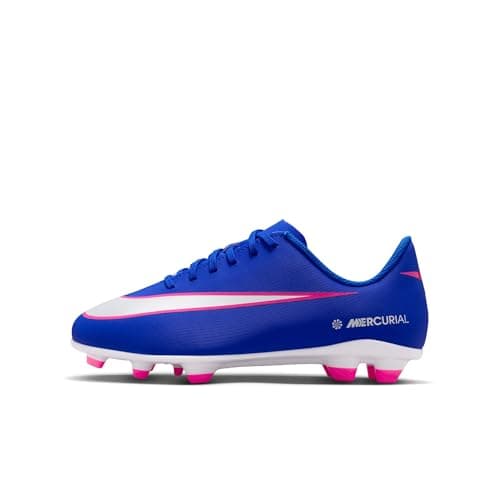
Nike
Nike Jr. Mercurial Vapor 16 Club MG
The safest default cleat for a rec player between U7 and U12, as long as the foot is average width or narrower.
$60.88View on Amazon#ad — we may earn a commission · price as of October 16, 2026
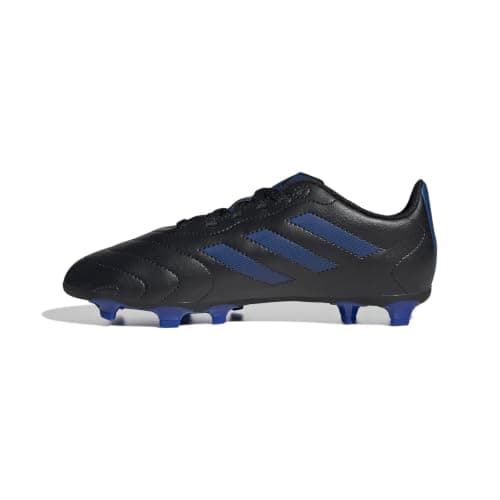
adidas
adidas Goletto VIII Firm Ground
The sensible answer when the honest requirement is a cleat that survives one rec season and costs as little as possible.
$33.67View on Amazon#ad — we may earn a commission · price as of October 16, 2026
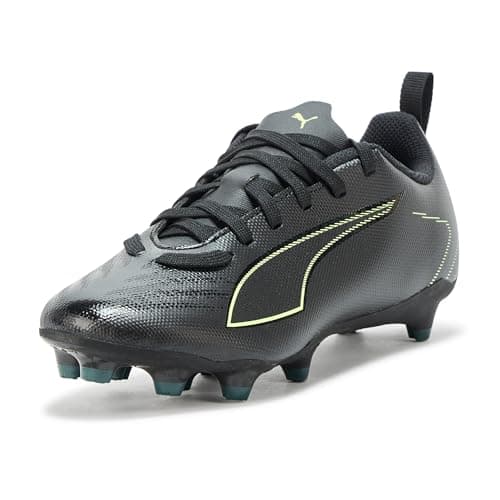
PUMA
PUMA Kids' Ultra Play Firm Ground/Artificial Ground
Good value for a dual-surface season, provided you can check the fit rather than guessing a size online.
$35.95$50.00−28%View on Amazon#ad — we may earn a commission · price as of October 16, 2026
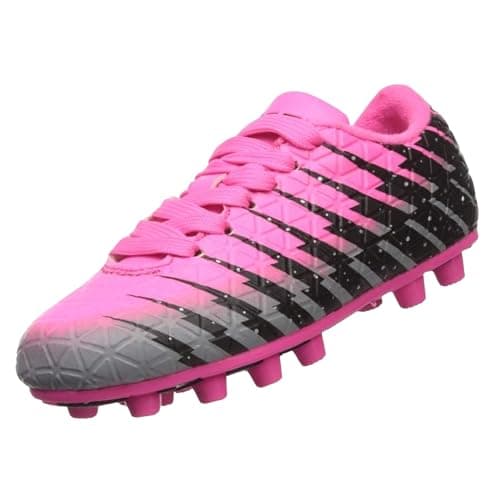
Vizari
Vizari Bolt Firm Ground
The most cleat-for-the-money in the budget tier, at the cost of some weight.
$24.99$27.49−9%View on Amazon#ad — we may earn a commission · price as of October 16, 2026
Product photos come from each item’s current Amazon listing.
For the other direction — soccer cleats going out to a different sport — soccer cleats vs flag football cleats is the case where they pass the rules without an argument.
Common questions
Can you use soccer cleats for softball?
Usually yes in youth softball, and it is the direction the swap works. You lose a little grip on an explosive start because soccer cleats have no toe cleat, and you get a lighter, thinner shoe with less foot and ankle protection. For a rec season, a soccer cleat that already fits beats a softball cleat bought in a hurry.
Can you wear softball cleats for soccer?
Often not. Softball cleats have a stud at the tip of the toe, which many youth soccer leagues and referees disallow because of the risk in a slide tackle, and metal spikes are never permitted in soccer. Check with the coach before the game rather than at it.
What is the difference between soccer and softball cleats?
The toe cleat, first and foremost — softball cleats have a stud at the tip of the toe for digging in, and soccer cleats have it removed for tackle safety. Beyond that, softball cleats are bulkier with more ankle coverage and sometimes metal spikes, while soccer cleats are light, thin and almost always low-cut for ball feel.
Are metal cleats allowed in youth softball?
It depends on the division. Little League's guidance is that for the Little League (Majors) division and below, removable spikes are permitted only if no metal is exposed once removed, while shoes with metal spikes are permitted from Intermediate 50/70, Junior and Senior League upward. Confirm with your own league — rules vary by organization.
Should I buy one pair of cleats for both sports?
If you are buying one pair, buy the soccer cleats. They are accepted in youth softball far more often than softball cleats are accepted in soccer, and they are the cheaper category at the entry tier. Check the fit though — soccer cleats should fit close, with about a thumb's width at the toe and no more.
Sources
- UA Playbooks (underarmour.com) — types of cleats explained: football, soccer, baseball and more — The source for the toe-stud distinction — soccer cleats have no stud at the tip of the toe, baseball and softball cleats and lacrosse cleats do — and for the statement that soccer cleats are not made with metal spikes.
- Little League — are cleats with metal spikes permitted? — The governing rule on metal spikes by division: for Little League (Majors) and below, removable spikes are permitted only if no metal remains exposed; metal spikes are permitted from Intermediate 50/70, Junior and Senior League upward.
- Nike — kids' soccer cleats and shoes — Verified that each Nike model named on this page is currently sold, and the source for Nike's own published upper, plate and surface descriptions.
Read next
- Soccer vs football vs baseball cleats for kidsWhich cleat swaps between sports are allowed, which are refused, and why the toe stud is the whole answer.
- Soccer cleats vs lacrosse cleatsThe toe stud, stud length and cut compared, which direction the swap works for youth players, and the verdict.
- How should kids' soccer cleats fit?The thumb's-width rule and four hands-on fit checks — because asking a kid whether shoes fit does not work.
- Best budget youth soccer cleatsCheap cleats that are actually worth buying, and exactly what each step up in price buys you.
- Youth soccer cleat size chartUS, EU and centimeter conversions with approximate ages, plus how each brand's junior sizing actually runs.
- U9–U10: size 4, seven-a-side, and a goalkeeperAges 8 to 10. The ball goes up to size 4, the format goes to 7v7, and someone has to play in goal.