Cleats
Soccer cleats vs lacrosse cleats
Closer than most cross-sport pairs, and the swap works far better in one direction than the other.
By Ryder M. · Published September 29, 2026
Heads up: we earn a commission if you buy through our links, at no extra cost to you. It never changes which product we recommend — here’s how that works.
The short answer
| Soccer cleats | Lacrosse cleats | |
|---|---|---|
| Toe stud | None — removed for tackle safety | Usually yes — for explosive starts |
| Stud length | Shorter, for ground feel and ball control | Slightly longer, for sharp cuts |
| Stud pattern | Conical or bladed, multi-directional | Built for lateral movement and pivots |
| Cut | Nearly always low | Mostly low, with mid and high options |
| Weight | Ultra-light | Light, but heavier than soccer |
| Swap to the other sport? | Workable for youth lacrosse | Usually disallowed in soccer |
Of the cross-sport cleat questions, this is the one where the two shoes are genuinely close. Both are built for a field sport with constant changes of direction, both are mostly low-cut, and both are light. A parent looking at them side by side would struggle to say which was which.
The differences are small and specific, and one of them decides the whole question.
The toe stud again
Lacrosse cleats generally carry a toe stud — the same feature football cleats have, for the same purpose: a hard push-off from a standing start. Soccer cleats do not, because a stud at the point of the toe drags on the ground through a kicking motion and is a hazard to another player in a tackle.
That is the feature that makes the swap one-directional. A lacrosse cleat taken onto a soccer field brings the toe stud with it, and most youth soccer leagues will not allow one.
Stud length and pattern
The second real difference, and the one that affects how each shoe feels rather than whether it is allowed.
- Lacrosse studs are slightly longer, for grip through sharp cuts and pivots. Lacrosse is a more lateral game than soccer, played with a stick that changes how a player balances through a turn.
- Soccer studs are shorter, which gives better ground feel and keeps the foot closer to the surface — useful when the foot is also the thing striking the ball.
- Soccer stud shapes are conical or bladed, chosen for acceleration and multi-directional grip rather than for maximum lateral bite.
The practical effect is small for a young player and real for an older one: a soccer cleat on a lacrosse field will not grip quite as hard through an aggressive cut.
Can you wear soccer cleats for lacrosse?
Yes, and it is a common and reasonable thing to do for youth lacrosse. Specialist coverage of the comparison says so directly: you can wear soccer cleats for lacrosse, with the caveat that the shorter studs mean you may not get optimal traction — and notes that this is more acceptable for youth players than for competitive ones.
So for a kid trying lacrosse for a season, or playing both in the same year, the soccer cleats in the hallway are a perfectly sensible starting point. If they stick with lacrosse and start playing competitively, that is the point to buy the sport-specific shoe.
Can you wear lacrosse cleats for soccer?
Usually not, for the toe stud reason. Check with the coach before the first game, because the answer comes from the league and the referee rather than from the shoe.
There is a second, quieter argument against it even where it is allowed. A soccer player's foot is the striking surface, and a lacrosse cleat's upper is built for contact and durability rather than ball feel. A kid learning to pass properly is working against their equipment.
Which to buy for a two-sport kid
If soccer is the main sport and lacrosse is the add-on, buy soccer cleats and use them for both. That is the portable direction, and a soccer cleat that fits properly is a better lacrosse shoe than a lacrosse cleat bought a size too big.
If lacrosse is the main sport and soccer is the add-on, you will most likely need two pairs, because the toe stud rules the lacrosse cleat out of soccer. An entry-tier soccer cleat is the cheapest way to solve that — see the budget picks.
Either way, get the surface right before the sport. A firm-ground plate on hard artificial turf is uncomfortable in both sports, and a turf outsole on wet grass slips in both. The surface decision page covers it once for everything.
The verdict
Soccer cleats work for youth lacrosse. You give up a little traction through hard cuts because the studs are shorter and there is no toe stud, and for a young player that is a small price for not buying a second pair.
Lacrosse cleats usually do not work for soccer. The toe stud is the blocker, and most youth leagues will disallow it. Where it is permitted, the heavier build and less ball-friendly upper still make it a compromise for a player learning to strike the ball.
Buying one pair for both: buy the soccer cleat. It travels in the direction that is allowed, and it is the better shoe for the sport where footwear affects the skill.
Soccer cleats that cross over well
Nike
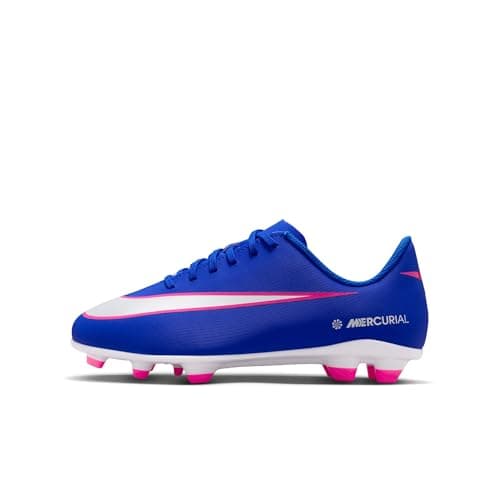
Nike Jr. Mercurial Vapor 16 Club MG
The safest default cleat for a rec player between U7 and U12, as long as the foot is average width or narrower.
$60.88View on Amazon#ad — we may earn a commission · price as of October 16, 2026
adidas
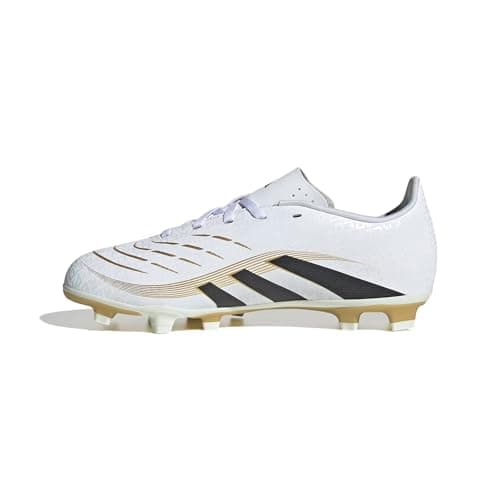
adidas Predator Club Firm Ground (Kids)
The value entry into the Predator line, and a genuinely useful shoe for a player working on striking.
$39.99View on Amazon#ad — we may earn a commission · price as of October 16, 2026
PUMA
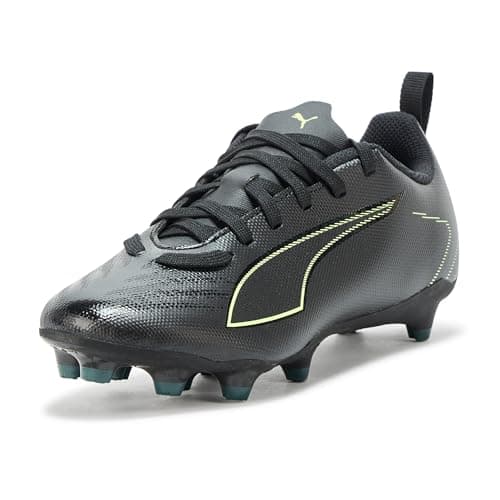
PUMA Kids' Ultra Play Firm Ground/Artificial Ground
Good value for a dual-surface season, provided you can check the fit rather than guessing a size online.
$35.95$50.00−28%View on Amazon#ad — we may earn a commission · price as of October 16, 2026
adidas
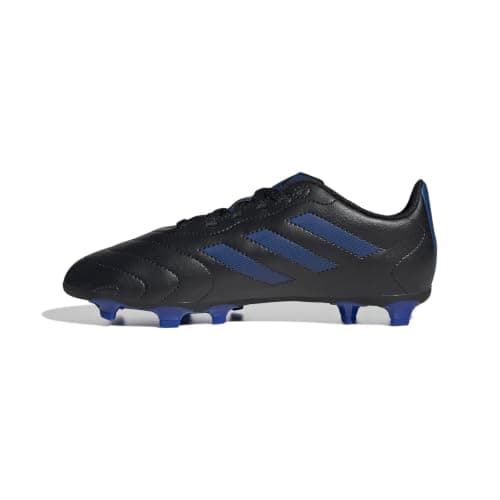
adidas Goletto VIII Firm Ground
The sensible answer when the honest requirement is a cleat that survives one rec season and costs as little as possible.
$33.67View on Amazon#ad — we may earn a commission · price as of October 16, 2026
Product photos come from each item’s current Amazon listing.
Common questions
Can you wear soccer cleats for lacrosse?
Yes, and for youth lacrosse it is a reasonable substitute. Soccer cleats have shorter studs and no toe stud, so you may not get optimal traction through an aggressive cut, but specialist comparisons say the swap works — with sport-specific cleats recommended once a player is competitive.
Can you wear lacrosse cleats for soccer?
Usually not. Lacrosse cleats generally have a toe stud, which most youth soccer leagues disallow because of the risk it poses in a tackle. Ask the coach before the first game. Even where it is permitted, the heavier build and less ball-friendly upper make it a poor soccer shoe.
What is the difference between soccer and lacrosse cleats?
The toe stud is the main one — lacrosse cleats usually have it, soccer cleats never do. Lacrosse studs are also slightly longer for grip through sharp cuts, while soccer studs are shorter for ground feel and ball control. Lacrosse cleats come in mid and high cuts; soccer cleats are nearly always low.
Are lacrosse cleats and soccer cleats the same?
Close but not identical. Both are light, mostly low-cut field-sport shoes built for changes of direction. The differences are the toe stud, slightly longer lacrosse studs, and an upper built for contact rather than ball feel. Those are small differences that decide whether the shoe is allowed on a soccer field.
What should a kid who plays both soccer and lacrosse buy?
Soccer cleats, if you are buying one pair. They are permitted in youth lacrosse far more often than lacrosse cleats are permitted in soccer, and a soccer cleat is the better shoe for the sport where footwear actually affects skill development. Match the plate to the surface before worrying about the sport.
Sources
- Scheels — lacrosse cleats vs soccer cleats — Side-by-side comparison of stud length, stud pattern, cut height and weight for lacrosse against soccer cleats, and its position that soccer cleats can be worn for youth lacrosse with reduced traction.
- UA Playbooks (underarmour.com) — types of cleats explained: football, soccer, baseball and more — The source for the toe-stud distinction — soccer cleats have no stud at the tip of the toe, baseball and softball cleats and lacrosse cleats do — and for the statement that soccer cleats are not made with metal spikes.
- Nike — kids' soccer cleats and shoes — Verified that each Nike model named on this page is currently sold, and the source for Nike's own published upper, plate and surface descriptions.
- adidas — kids' soccer — Verified current availability of the adidas models named here, plus adidas's published material and construction claims.
- Vizari Sports — youth cleats and indoor shoes — Verified the Vizari models named here are currently sold, including the toddler size range and the indoor line, plus Vizari's published material claims.
Read next
- Soccer cleats vs softball cleatsWhy the toe cleat decides everything, which direction the swap actually works, and what youth leagues allow.
- Soccer vs football vs baseball cleats for kidsWhich cleat swaps between sports are allowed, which are refused, and why the toe stud is the whole answer.
- Firm ground vs turf vs artificial grass cleatsThe FG, AG, TF and MG decision table, whether one pair can cover a mixed schedule, and the cost of guessing wrong.
- Best budget youth soccer cleatsCheap cleats that are actually worth buying, and exactly what each step up in price buys you.
- How should kids' soccer cleats fit?The thumb's-width rule and four hands-on fit checks — because asking a kid whether shoes fit does not work.
- U11–U12: nine-a-side, and the travel questionAges 10 to 12. Size 4 still, 9v9 format, and the level where travel-club gear diverges sharply from rec.