Heads up: we earn a commission if you buy through our links, at no extra cost to you. It never changes which product we recommend — here’s how that works.
The short answer
No brand sells a concrete ball, so buy for abrasion instead: a machine-stitched cover, an internal carcass to hold the shape, and a bladder that holds air. A plain training ball like the adidas Tiro is built for exactly this and is the pick. If the surface is a sealed court rather than rough concrete, a futsal ball is the better answer — its cover is built for exactly that abrasion.
Most of a youth player's touches happen on a driveway, a schoolyard or a cul-de-sac, not on a field. That is good for their development and hard on the ball, and the gear industry does not acknowledge it at all.
What concrete actually does to a ball
Three separate kinds of damage, in the order they show up.
The printed graphics go first. Cosmetic, fast, and no indication of anything structural. Every ball looks worn on concrete within a fortnight.
The cover abrades. Polyurethane scuffs and eventually thins. On a soft match-ball cover this happens noticeably faster than on a hard rec-ball cover, which is the key counterintuitive point of this page.
The seams open. Machine-stitched seams are the weak point and concrete works at them. Once water gets in through a seam, the ball gains weight and never dries properly.
What concrete does not do is pop a ball. A soccer ball used on a driveway dies of slow abrasion, not of a bang, and that is why durability specs matter more than price.
The three specs to filter on
Specs as the manufacturers state them. Nylon-wound carcass and butyl bladder both appear on inexpensive balls — they are not premium features.
Spec
Why it matters on concrete
What to look for
Carcass
Holds the ball round after thousands of impacts against a wall
Nylon-wound stated on the listing
Cover
Takes the abrasion. Harder lasts longer, softer feels better
Machine-stitched polyurethane
Bladder
Concrete play means more pumping if air escapes
Butyl, not latex
Size
Wrong size is worse than wrong surface
Size 3 to U8, size 4 for U9-U12, size 5 from U13
Price
You are buying a consumable
Cheap enough to replace without annoyance
Scroll the table sideways on a narrow screen.
The butyl bladder point is worth dwelling on, because it is the one that changes daily life. A latex-bladder ball needs pumping most weeks; a butyl one holds air for a month or more. On a ball that gets used every afternoon, that is the difference between a ball that is always ready and a ball that is always soft.
Start here
Pick by your kid’s level
The right answer changes with the level, not just the shoe size. Find your kid’s bracket and start there.
The pick for a ball that is going to live outside. Machine-stitched with an internal nylon-wound carcass for durability and a butyl bladder — which is exactly the spec sheet concrete asks for, at a rec-ball price.
A firmer feel than the adidas, which plenty of kids prefer on a hard surface, and Mikasa's air retention is reliably better than the bargain tier. The one to pick if the adidas training ball is out of stock in the size you need.
The alternative answer if the surface is a sealed court or smooth concrete: a futsal ball with a cover built for the abrasion of a hard court, and a low bounce that stops the ball leaving the driveway every third touch.
Tap any row to jump to the full write-up. The price in each button is the one Amazon reported on the date stamped under it — tap through for today’s number, which is the only one that can be relied on.
#
Product
Best for
Surface
Fit notes
Price
1
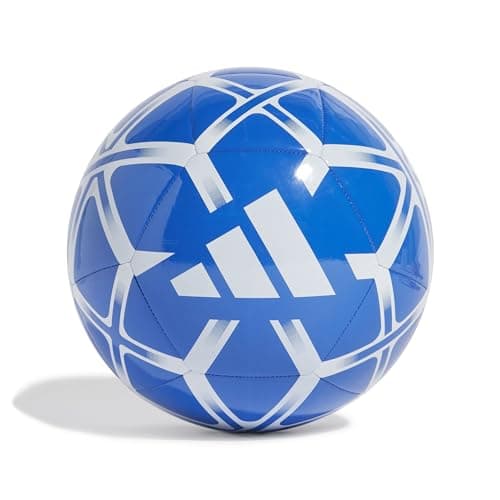
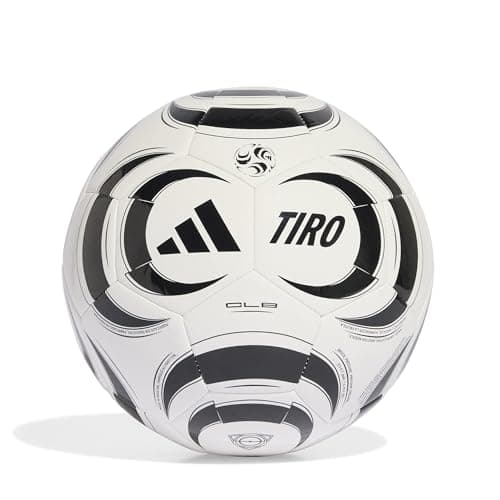
adidas Tiro Soccer BallThe one to buy if the ball is going to live in the yard rather than the gear bag.
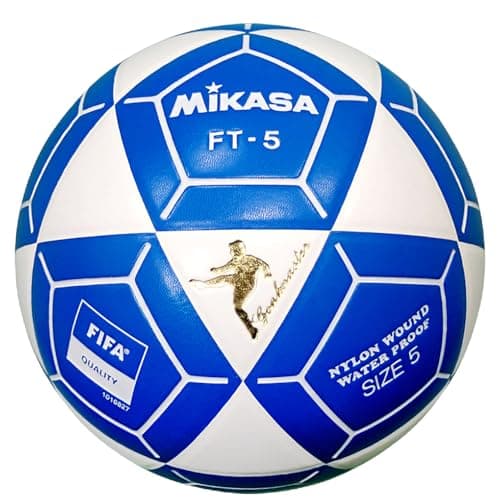
Mikasa FT5 Goal MasterA durable, slightly overlooked ball for an older player, and the heat-bonded cover is the real reason to pick it over a stitched rec ball.
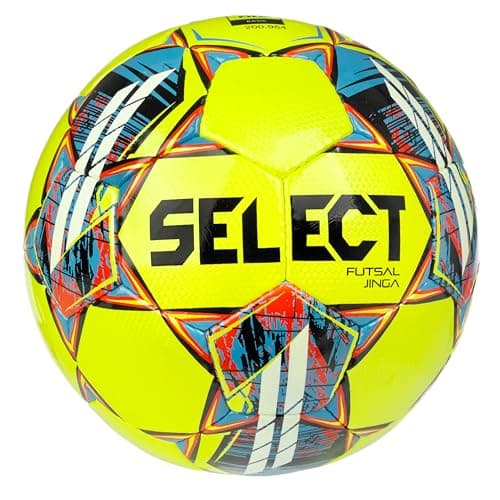
Select Jinga Futsal Ball (Junior)The right ball for a real indoor or futsal season, and the Junior size means a younger player is not handed an adult ball.
U7–U8 rec, U9–U10, U11–U12
Futsal (low bounce)
Buy the Junior size for U8 through about U12 and the Senior (size 4) above that.
Product photos come from each item’s current Amazon listing.
The futsal ball argument
Worth taking seriously if the surface is smooth. A futsal ball is purpose-built for a hard court: the cover is made for that abrasion, and the deliberately low bounce — the Futsal Laws specify a first rebound of 50 to 65 cm when dropped from 2 m — means it stays near the player instead of bouncing off down the street.
For technical work on a driveway that low bounce is a genuine advantage, and it is the reason futsal is credited with developing close control. The trade is that a futsal ball feels wrong on grass, so it cannot be the only ball.
Where it does not work is rough, unsealed concrete. A futsal cover handles a sports hall floor better than a parking lot. Futsal ball vs soccer ball has the full specification difference.
1. adidas
adidas Tiro Soccer Ball
The one to buy if the ball is going to live in the yard rather than the gear bag.
Best for
A practice ball that lives outside, U7+
Levels
U7–U8 rec · U9–U10 · U11–U12 · U13+ travel & club
Type / surface
Size 4
How it fits
Size 4 is the U9–U12 match size. Confirm the size on the listing before buying — the colorways are listed separately and not every one carries every size.
What we like
Costs little enough that a ball lost over a fence is an annoyance rather than a replacement purchase
An adidas training ball rather than an unbranded one, so the cover and valve are to a known standard
Where it falls short
Heavier feel than a match ball, which is fine for practice and noticeable in a game
Listed in size 4 only, so it suits U9 upward rather than the youngest brackets
Manufacturer’s published specs
adidas's basic training ball, listed in size 4 (adidas)
Requires inflation on arrival
These are the manufacturer’s own claims, not measurements we took.
This is the practical system that works, and it costs less than most families expect. One ball for the yard and driveway, bought cheap and expected to die. One ball for games and the gear bag, kept off concrete.
The reason is not sentiment about the good ball. It is that a ball which has been abraded on concrete has a different weight and flight from a new one, and a kid practicing with one and playing with the other is learning two balls. Keeping them separate means the game ball always feels like the game ball.
Both still need the right size for the age group, which is the decision that matters most. How to choose a soccer ball covers sizing, and the size-specific roundups — size 3, size 4 and size 5 — have the picks.
What to do about a wall
Most concrete practice is against a wall or a garage door, and the ball is not the only thing taking the damage. A rebounder does the same job without putting dents in the house, keeps the ball on the ground, and gives a truer return than brickwork.
It is also the single best purchase for touch volume, which is the actual goal of all this driveway work. The rebounder picks cover them, and a solo trainer is the cheaper version of the same idea.
A ball that lives on a driveway comes back filthy as well as scuffed, and cleaning it badly does more damage than the concrete did — how to clean a soccer ball has the method manufacturers publish, including the four things never to use.
Common questions
What soccer ball is best for concrete?+
One built for abrasion rather than for touch: a machine-stitched cover, an internal carcass to hold the shape, and a bladder that holds air. A plain training ball like the adidas Tiro is built for exactly that, at a rec-ball price. On a smooth sealed surface a futsal ball is a better answer, because its cover is designed for hard-court abrasion.
Does playing on concrete ruin a soccer ball?+
It wears one out rather than ruining it suddenly. The printed graphics scuff off within a fortnight, the polyurethane cover gradually abrades, and eventually the machine-stitched seams open and let water in. A ball used on a driveway dies of slow abrasion, which is why durability specs matter more than price.
Should you use an expensive ball on concrete?+
No. Match-quality covers are deliberately softer for touch, and softer covers abrade faster on hard ground — so an expensive ball on a driveway lasts less time than a cheap one and feels worse by the end. Buy the rec tier for concrete and keep any match ball off it.
Is a futsal ball good for concrete?+
On smooth or sealed concrete, yes — the cover is built for hard-court abrasion and the deliberately low bounce, specified in the Futsal Laws as a first rebound of 50 to 65 cm from a 2 m drop, keeps the ball near the player instead of bouncing away. On rough unsealed concrete it wears faster, and it always feels wrong on grass.
How long does a soccer ball last on concrete?+
There is no honest number — it depends on how rough the surface is and how many hours the ball takes. What is predictable is the order of failure: graphics first, then the cover, then the seams. Treat a driveway ball as a consumable, buy it cheap enough to replace without annoyance, and keep a separate ball for games.
What stops a ball going out of shape?+
An internal nylon-wound carcass, which manufacturers state on the listing, plus keeping it correctly inflated. Law 2's pressure range for a size 5 is 8.5 to 15.6 psi; under-inflation permanently deforms a ball and over-inflation stresses the seams, so a pump with a gauge is the cheapest useful thing a soccer family can own.
Sources
adidas — kids' soccer — Verified current availability of the adidas models named here, plus adidas's published material and construction claims.
AYSO — Size of Ball and Field by Age Division — Official ball sizes, circumference and weight ranges, and field dimensions by age division. Used for every ball-size and field-size figure on this site.
IFAB Laws of the Game — Law 2, The Ball — The official size 5 specification quoted on this site: circumference between 68 cm (27 in) and 70 cm (28 in), weight between 410 g (14 oz) and 450 g (16 oz) at the start of the match, and pressure equal to 0.6-1.1 atmosphere at sea level, which the Law itself states as 8.5-15.6 lbs per square inch.
The FA — Futsal Laws of the Game, Law 2: The Ball — The futsal ball specification quoted on this site: circumference not more than 64 cm and not less than 62 cm, weight 400-440 g at the start of the match, pressure equal to 0.6-0.9 atmosphere at sea level, and a first rebound of not less than 50 cm and not more than 65 cm when dropped from 2 m.
Select Sport — futsal balls — Select's futsal range including the Junior and Senior Jinga models, and Select's own description of the low-bounce bladder construction.
Select Sport — soccer balls — Select's current ball range, used to confirm that its outdoor balls start at size 3 and that its size 1 offering is a mini ball sold alongside the skills range rather than as a match ball.