Balls
How to clean a soccer ball
Water and a mild detergent, dried out of the sun. Everything else on the shelf under your sink will cost you the ball.
By Ryder M. · Published October 10, 2026
The short answer
- Brush or rinse off loose mud and turf rubber first, dry, before any water goes near it.
- Wash with plenty of water and a mild detergent. Never leave the ball immersed in detergent.
- Rinse and drain thoroughly — leftover detergent is what fades the graphics.
- Dry in a well-ventilated place out of the sun. Never a hair dryer, radiator or tumble dryer.
- Store cool and dry, away from direct sunlight — and never in a hot car trunk.
A soccer ball is a stitched or bonded cover over a bladder, held in shape by air pressure and glue. That construction tolerates water and mud fine and tolerates heat, solvents and standing detergent very badly. Which means cleaning a ball is less about getting it clean than about not doing any of the four things that quietly destroy it.
The method manufacturers publish
Molten's own care instructions are the clearest published version of this, and they are short. For a very dirty synthetic-leather ball — which covers essentially every youth ball sold — use plenty of water and a mild detergent to clean it off, never leave it immersed in detergent, and rinse and drain thoroughly after washing. Then leave the ball to dry in a well-ventilated place out of the sun.
- Knock the loose stuff off dry. A soft brush or a dry cloth takes off caked mud, grass and the rubber crumb that comes home from turf. Doing this wet just spreads it into the seams.
- Wash with plenty of water and a small amount of mild detergent. Dish soap is the household version of this. A cloth or a soft brush is enough — a soccer ball does not need scrubbing.
- Pay attention to the seams, where the grit collects. On a machine-stitched ball this is also the part that eventually lets water in, so keeping it clear matters more than the panels do.
- Rinse thoroughly and drain. The reason is specific: detergent chemicals left on the cover can fade the colors.
- Wipe it over and leave it to dry somewhere ventilated and out of direct sun. Several hours, with the valve pointing down if you can.
One thing worth saying plainly because it comes up constantly: do not put a soccer ball in a washing machine. It is a sealed object with a bladder and glued or stitched seams, and a wash cycle combines heat, agitation and prolonged detergent immersion — the three things the manufacturer's instructions specifically rule out.
What never to use
- Heat to speed up drying. Molten's guidance is explicit: never use hair dryers or similar appliances. Heat and moisture together can dissolve the glue holding the cover in place.
- Leather creams and protective sprays. The ones sold for coats and shoes should not be used on a ball — they make the surface slippery and less able to absorb sweat.
- Bleach, alcohol or solvent cleaners. They degrade cover material and ball markings.
- Standing detergent. Not a soak, not a bucket left overnight. Wash, rinse, drain.
- Direct sunlight to dry. Out of the sun, every time, for the cover and the graphics both.
If the ball is genuine natural leather — rare in youth soccer, common in display balls — the method is different again: a small amount of purpose-made leather cleaner on a soft cloth, wiped off and polished afterwards, with plenty of water and leather shampoo for mud. Then the same dry-in-the-shade rule.
Balls that survive the treatment
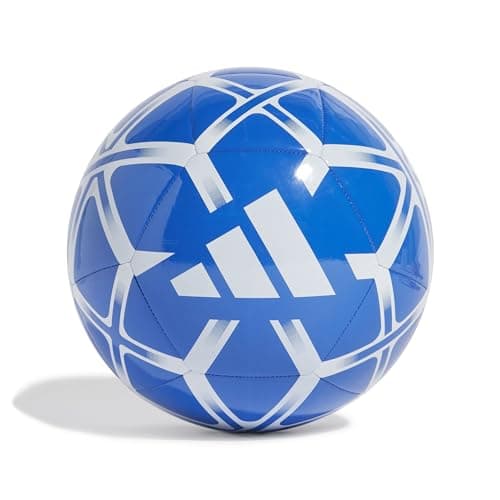
adidas
adidas Starlancer Club
The sensible default youth ball — right size range, right price, air stays in.
$18.00View on Amazon#ad — we may earn a commission · price as of October 16, 2026
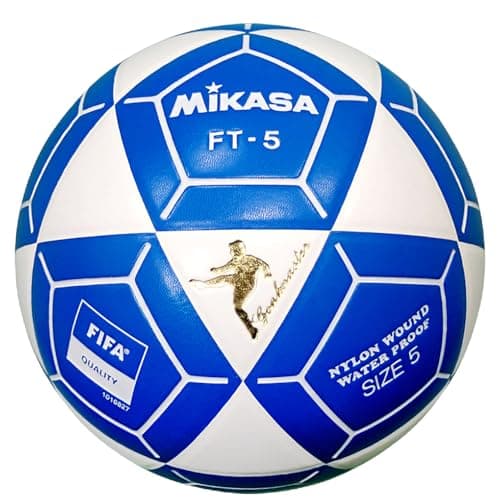
Mikasa
Mikasa FT5 Goal Master
A durable, slightly overlooked ball for an older player, and the heat-bonded cover is the real reason to pick it over a stitched rec ball.
$36.51View on Amazon#ad — we may earn a commission · price as of October 16, 2026
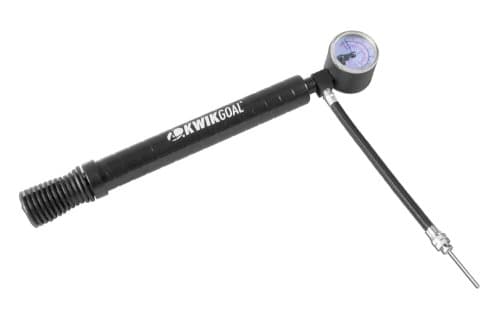
Kwik Goal
Kwik Goal Premier Hand Pump
The pump to buy if you are buying one: an inline gauge turns inflating a ball from a guess into a reading.
$29.99View on Amazon#ad — we may earn a commission · price as of October 16, 2026
Product photos come from each item’s current Amazon listing.
Does a dirty ball actually play differently?
A muddy ball plays differently mostly because it is heavier, and the weight is water. FIFA's quality marks require seven laboratory tests, and one of them checks water absorption, alongside weight, circumference, roundness, bounce, pressure loss and shape retention. That tells you that a ball taking on water is a known failure mode rather than a cosmetic one. A ball that has been left wet and dirty repeatedly is a ball whose flight has genuinely changed.
The other half is pressure. Cleaning a ball is a natural moment to check it, and most balls that come out of a winter garage are soft as well as filthy. Law 2 puts a size 5 between 8.5 and 15.6 psi; for a size 3 or 4 the figure is printed next to the valve. Soccer ball PSI by size covers why that asymmetry exists.
Storing a ball between seasons
Three rules, all from manufacturer guidance, all routinely broken by every soccer family including ones who know better.
- Clean and fully dry before it goes away. A damp ball in a dark bag for four months is how a cover mildews.
- Cool, dry, out of direct sunlight. Not a windowsill, not a shed roof.
- Never a hot car trunk. Molten names this specifically: high temperature and humidity cost a ball its tuned shape and deteriorate the carcass.
Leave it inflated rather than flat — an under-inflated ball sitting for months loses its shape permanently, because the cover is built to be held taut. And if you own more than one ball, rotating them extends the life of each, which is the manufacturer's own recommendation rather than a sales pitch.
If the ball in question has mostly lived on concrete, there is a limit to what cleaning will do — abrasion is not dirt. Best soccer balls for concrete covers which balls survive that surface, and training ball vs match ball explains why it is worth keeping the good one off the driveway in the first place. Once it is clean and inflated, best soccer balls for juggling is where the ball earns its keep.
Common questions
How do you clean a soccer ball?
Brush the loose mud and turf rubber off dry first, then wash with plenty of water and a mild detergent — never leaving the ball immersed in detergent — rinse and drain thoroughly, and leave it to dry in a well-ventilated place out of the sun. That is the manufacturer's published method, and it is also the one least likely to wreck the ball.
Can you put a soccer ball in the washing machine?
No. A ball is a sealed cover over a bladder held together with stitching or glue, and a wash cycle combines heat, agitation and prolonged detergent immersion — the three things manufacturer care instructions specifically rule out. Water and heat together can dissolve the glue holding the cover in place.
What should you not use to clean a soccer ball?
Bleach, alcohol and solvent cleaners, which degrade the cover material and the ball markings; leather creams and protective sprays, which make the surface slippery and less able to absorb sweat; any heat source to speed up drying, including hair dryers; and detergent left standing on the ball, which can fade the colors.
How do you dry a soccer ball?
In a well-ventilated place out of direct sunlight, with the valve pointing down if you can manage it. Never use a hair dryer, radiator or tumble dryer — manufacturer guidance rules them out explicitly, because heat and moisture together can dissolve the glue that holds the cover panels in place.
Does cleaning a soccer ball make it play better?
Cleaning a ball that has been left wet and muddy repeatedly does, because the weight it has gained is water. FIFA's quality marks require a laboratory test program that checks certified balls for water absorption alongside bounce, roundness and shape retention, which tells you a ball taking on water is a real failure mode. A merely dusty ball plays fine.
How should you store a soccer ball over the winter?
Clean and fully dry, inflated rather than flat, somewhere cool and dry and out of direct sunlight — and never a hot car trunk, which manufacturers name specifically because high heat and humidity cost a ball its tuned shape. If you own more than one, rotating them extends the life of each.
Sources
- Molten — ball care instructions — A ball manufacturer's published care instructions, and the source for the ball-care facts on this site: always use a thin inflation needle to avoid damaging the valve, and inflate slowly to the pressure printed on the ball; a very dirty synthetic-leather ball is cleaned with plenty of water and a mild detergent, never left immersed in detergent, and rinsed and drained thoroughly; detergent chemicals may fade the colors; the ball is then left to dry in a well-ventilated place out of the sun, and never dried with a hair dryer or similar appliance; store it in a cool dry place away from direct sunlight; never leave a ball in high temperatures or humidity such as a car trunk in summer, which costs it its tuned shape and deteriorates the carcass; leather protection creams and sprays must not be used because they make the surface slippery; and rotating two or more balls extends the life of each.
- FIFA — the quality marks for footballs — The three FIFA quality marks (FIFA QUALITY PRO, FIFA QUALITY, FIFA BASIC), the seven laboratory tests every certified ball must pass — weight, circumference, roundness, bounce, water absorption, loss of pressure, and shape and size retention — and the fact that the Pro mark means passing those same seven tests under more demanding conditions rather than passing extra tests.
- IFAB Laws of the Game — Law 2, The Ball — The official size 5 specification quoted on this site: circumference between 68 cm (27 in) and 70 cm (28 in), weight between 410 g (14 oz) and 450 g (16 oz) at the start of the match, and pressure equal to 0.6-1.1 atmosphere at sea level, which the Law itself states as 8.5-15.6 lbs per square inch.
- AYSO — Size of Ball and Field by Age Division — Official ball sizes, circumference and weight ranges, and field dimensions by age division. Used for every ball-size and field-size figure on this site.
Read next
- Soccer ball PSI by sizeThe official pressure range for a size 5, why sizes 3 and 4 do not have one, and how to inflate to a number instead of guessing.
- How to inflate a soccer ballStep by step, the official pressure range, and the thumb test for when there is no gauge in the bag.
- Best soccer balls for concreteWhy concrete destroys balls, the three specs that slow it down, the picks that survive a driveway, and the case for a futsal ball instead.
- Training ball vs match ballWhat separates a training ball from a match ball in construction, why the tier names mean nothing on their own, and the FIFA mark that does mean something.
- Best soccer balls for jugglingWhich soccer ball to juggle with at each age, why a slightly smaller or heavier ball teaches faster, and the picks that survive a driveway.