Balls
Training ball vs match ball
Neither term is defined by anybody. Here is what actually changes, and the one label you can check.
By Ryder M. · Published October 6, 2026
Heads up: we earn a commission if you buy through our links, at no extra cost to you. It never changes which product we recommend — here’s how that works.
The short answer
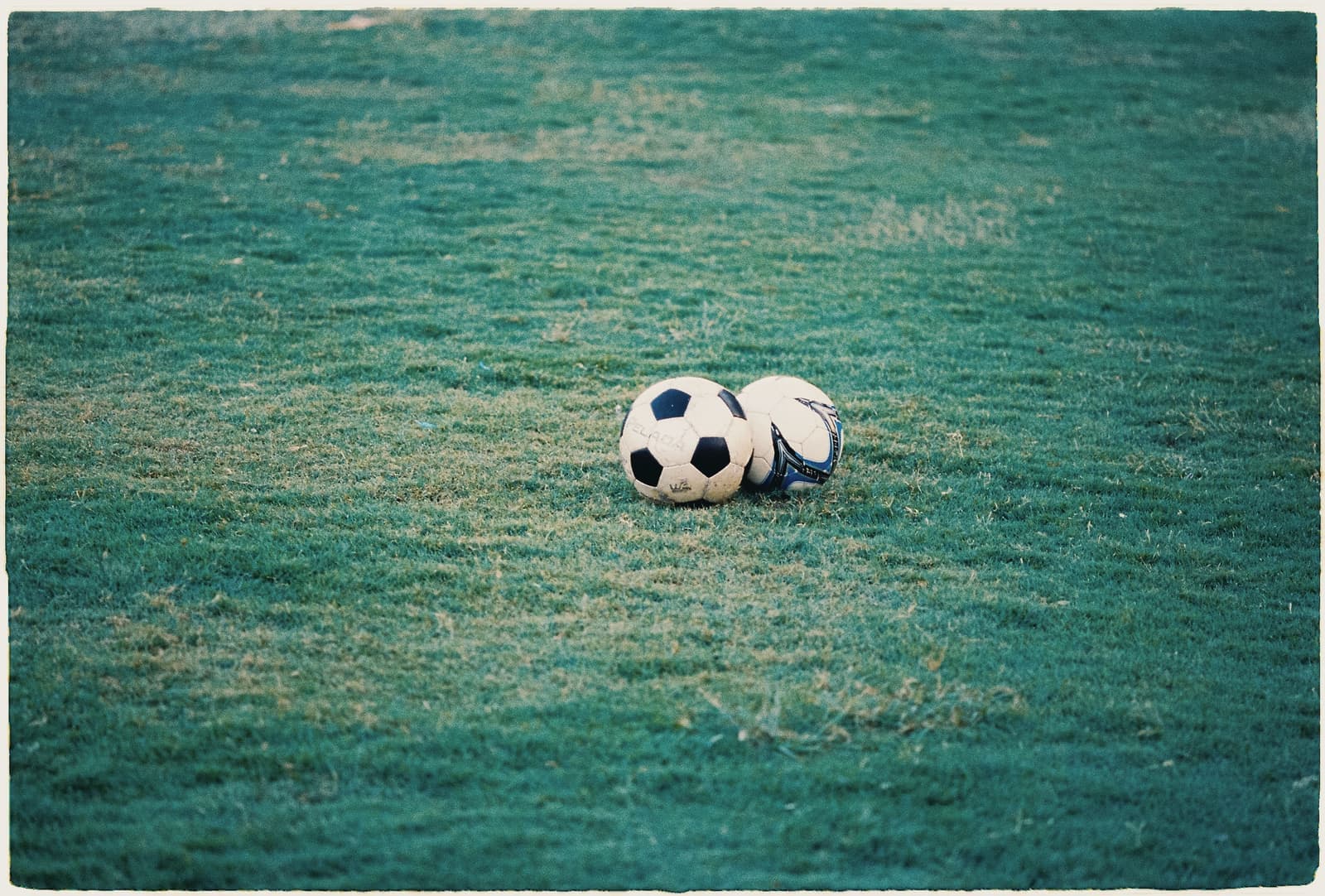
"Training" and "match" are manufacturer tier names, not standards — no governing body defines either. In practice a match ball has a thermally bonded or hand-stitched cover, a tighter weight and circumference tolerance and often a FIFA quality mark; a training ball is machine-stitched with a tougher cover built for volume. For anyone under about U12, buy the training ball. The match-ball advantages are in flight consistency a youth player cannot yet exploit.
This search usually starts in a store, looking at two balls of the same size with a $70 gap between them. The honest answer is that the gap is real but it buys something most youth players do not use.
What is actually defined
Two things, and neither of them is the tier name.
- Law 2 sets the ball itself. For a size 5: circumference between 68 cm and 70 cm, weight between 410 g and 450 g at the start of the match, and pressure equal to 0.6 to 1.1 atmosphere at sea level — which the Law itself states as 8.5 to 15.6 psi.
- FIFA sets three quality marks for balls. FIFA QUALITY PRO, FIFA QUALITY and FIFA BASIC. Every certified ball passes the same seven laboratory tests — weight, circumference, roundness, bounce, water absorption, loss of pressure, and shape and size retention — and the Pro mark means passing those same tests under more demanding conditions rather than passing extra ones.
That is the whole of it. There is no "match ball" category in the Laws and no "training ball" definition anywhere. A brand can call a ball either thing.
What actually differs in construction
| Training ball | Match ball | |
|---|---|---|
| Cover attachment | Machine-stitched | Thermally bonded or hand-stitched |
| Water resistance | Seams eventually let water in | Bonded seams keep it out |
| Weight tolerance | Looser within the legal range | Tight, so every ball feels the same |
| Flight consistency | Good | Better, and measurably so |
| Durability on abrasive surfaces | Usually better — built for volume | Often worse, because the cover is softer |
| Carcass | Often nylon-wound for shape retention | Multi-layer, tuned for feel |
| Price | Low | High |
Read down the durability row again, because it is the one that surprises people: a training ball frequently outlasts a match ball. Match-ball covers are softer for touch, and softer covers abrade faster on a concrete driveway or a gravelly school field.
Which should you buy for a kid?
Split it by age, not by ambition. The variable is whether the player can yet produce the strike that makes a match ball's flight consistency visible.
| Level | Buy | Why |
|---|---|---|
| U6-U8 (size 3) | Training / rec ball | Nobody at this age gets anything from match construction. Air retention matters more. |
| U9-U12 (size 4) | Training ball | Striking is developing but not consistent. Spend the difference on a second ball. |
| U13+ (size 5) | Training ball for the yard, one match ball for games | This is the first age a player will feel the difference. |
| Club U13+ playing several times a week | A match-quality ball | Volume justifies it, and so does the standard of play. |
The size question is settled separately and it matters far more than the tier — a U10 with a match-quality size 5 is worse off than a U10 with a cheap size 4. How to choose a soccer ball covers both decisions in order.
Training and match tiers, side by side
adidas
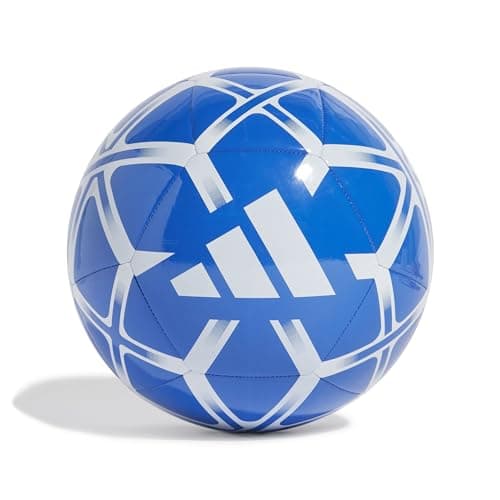
adidas Starlancer Club
The sensible default youth ball — right size range, right price, air stays in.
$18.00View on Amazon#ad — we may earn a commission · price as of October 16, 2026
adidas
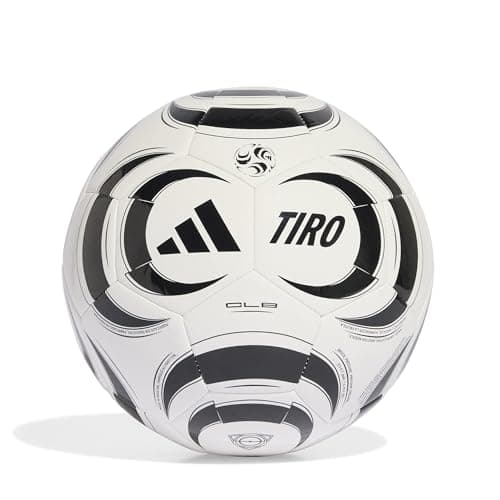
adidas Tiro Soccer Ball
The one to buy if the ball is going to live in the yard rather than the gear bag.
$16.17$25.00−35%View on Amazon#ad — we may earn a commission · price as of October 16, 2026
Mikasa
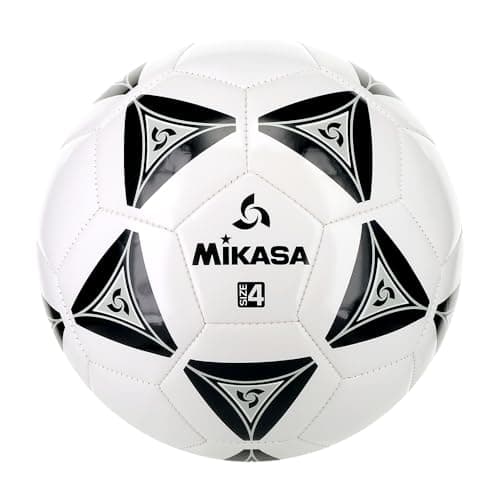
Mikasa Serious Soccer Ball
A good value competitive training ball if you can find it in the size you need.
$20.99View on Amazon#ad — we may earn a commission · price as of October 16, 2026
Select
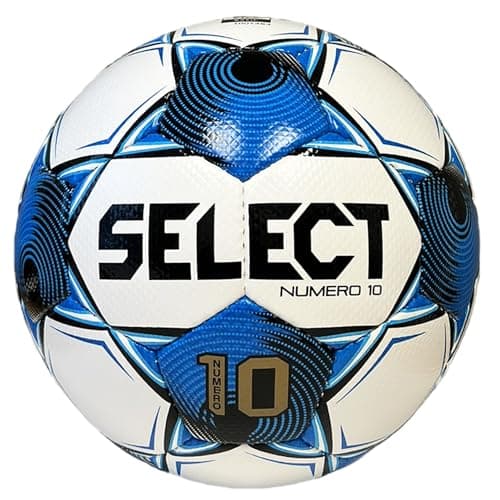
Select Numero 10
Worth the money from about U12 upward, and a waste of it before then.
$48.10$53.45−10%View on Amazon#ad — we may earn a commission · price as of October 16, 2026
Product photos come from each item’s current Amazon listing.
The thing that actually ruins a ball
Not the tier. Pressure. A ball kept under-inflated loses its shape permanently, and a ball kept over-inflated stresses the seams — and Law 2's range for a size 5 is 8.5 to 15.6 psi, which is a wider window than most people assume but still a window.
Bladder material is the other half of it. A butyl bladder holds air considerably longer than a latex one, which is the difference between pumping monthly and pumping most weeks. That spec appears on cheap balls as well as expensive ones, and it is a better thing to filter on than the tier name.
Buying a pump with a gauge on it is the single cheapest improvement available to a youth soccer family — see the ball pump picks and how to inflate a soccer ball.
Is a "match ball" required for games?
No, not at youth level. The league provides or specifies the game ball, and the requirement is that it meets Law 2 — correct size, correct weight, correct pressure. FIFA quality marks are mandatory for balls in international matches organized by FIFA or the confederations, which is not a U12 rec fixture.
So the match ball you buy is for your own kid's training and warm-up, not for the game. Which makes it a comfort and feel purchase rather than a compliance one, and reframes whether it is worth the money.
What about futsal and indoor balls?
Different category entirely, and not a tier of the same thing. The Futsal Laws set a circumference of 62 to 64 cm, a weight of 400 to 440 g and a controlled low bounce — a first rebound of not less than 50 cm and not more than 65 cm when dropped from 2 m. That low bounce is the whole point, and a resized outdoor ball does not have it.
If the winter season is indoors, the tier question is beside the point and the ball type is the decision. Futsal ball vs soccer ball covers the specification.
Whichever tier you buy, how it is washed and stored decides how long it keeps its shape. How to clean a soccer ball covers the manufacturer's own routine and the storage rules that a hot car trunk breaks.
Common questions
What is the difference between a training ball and a match ball?
Neither term is defined by a governing body, so the difference is whatever each manufacturer means by it. Typically a match ball has a thermally bonded or hand-stitched cover, a tighter weight and circumference tolerance within Law 2's range, and often a FIFA quality mark; a training ball is machine-stitched with a tougher cover built for volume of use.
Do kids need a match ball?
No. Youth leagues require only that the game ball meets Law 2 — correct size, weight and pressure — and the league provides or specifies it. A match ball bought for a child is for their own training and warm-up, which makes it a feel purchase rather than a requirement, and below about U12 the flight consistency it buys is not something the player can yet exploit.
What does the FIFA Quality mark mean on a soccer ball?
That the ball has passed a laboratory test program covering seven properties: weight, circumference, roundness, bounce, water absorption, loss of pressure, and shape and size retention. There are three marks — FIFA QUALITY PRO, FIFA QUALITY and FIFA BASIC — and the Pro mark means passing those same seven tests under more demanding conditions, not passing additional ones.
Are training balls more durable than match balls?
Often yes, which surprises people. Match-ball covers are softer for touch and abrade faster on a concrete driveway or a gravelly field, while training balls are built for volume and frequently use a nylon-wound carcass to hold their shape. For a ball that lives in a yard, the cheaper tier is usually the longer-lasting one.
What pressure should a soccer ball be?
Law 2 specifies pressure equal to 0.6 to 1.1 atmosphere at sea level for a size 5, which the Law itself states as 8.5 to 15.6 pounds per square inch. Under-inflation permanently deforms a ball and over-inflation stresses the seams, so a pump with a gauge on it is the cheapest useful purchase in youth soccer.
Is a futsal ball a type of training ball?
No, it is a different ball governed by a different Law. The Futsal Laws set a circumference of 62 to 64 cm, a weight of 400 to 440 g and a deliberately low bounce — a first rebound of between 50 cm and 65 cm when dropped from 2 m. That low bounce is the point of the ball, and a resized outdoor ball does not have it.
Sources
- IFAB Laws of the Game — Law 2, The Ball — The official size 5 specification quoted on this site: circumference between 68 cm (27 in) and 70 cm (28 in), weight between 410 g (14 oz) and 450 g (16 oz) at the start of the match, and pressure equal to 0.6-1.1 atmosphere at sea level, which the Law itself states as 8.5-15.6 lbs per square inch.
- FIFA — the quality marks for footballs — The three FIFA quality marks (FIFA QUALITY PRO, FIFA QUALITY, FIFA BASIC), the seven laboratory tests every certified ball must pass — weight, circumference, roundness, bounce, water absorption, loss of pressure, and shape and size retention — and the fact that the Pro mark means passing those same seven tests under more demanding conditions rather than passing extra tests.
- AYSO — Size of Ball and Field by Age Division — Official ball sizes, circumference and weight ranges, and field dimensions by age division. Used for every ball-size and field-size figure on this site.
- The FA — Futsal Laws of the Game, Law 2: The Ball — The futsal ball specification quoted on this site: circumference not more than 64 cm and not less than 62 cm, weight 400-440 g at the start of the match, pressure equal to 0.6-0.9 atmosphere at sea level, and a first rebound of not less than 50 cm and not more than 65 cm when dropped from 2 m.
- adidas — kids' soccer — Verified current availability of the adidas models named here, plus adidas's published material and construction claims.
Read next
- How to choose a soccer ball for your kidThree checks in order — size, bladder, where it lives — and what you can safely ignore below U12.
- Best size 4 soccer ballsSize 4 picks for U9 through U12, and the point where a match-quality ball starts earning its money.
- Best size 5 soccer ballsSize 5 picks for U13 upward, including budget options, and why quality finally justifies itself here.
- Futsal ball vs soccer ballThe official circumference, weight, pressure and bounce specs side by side, plus which ball a winter indoor season needs.
- Best soccer ball pumpsWhich pump to buy, why dual action matters, and why the gauge is the feature worth paying for.
- How to inflate a soccer ballStep by step, the official pressure range, and the thumb test for when there is no gauge in the bag.