Heads up: we earn a commission if you buy through our links, at no extra cost to you. It never changes which product we recommend — here’s how that works.
The short answer
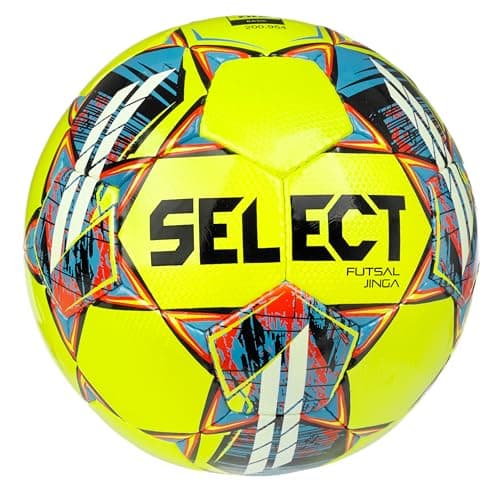
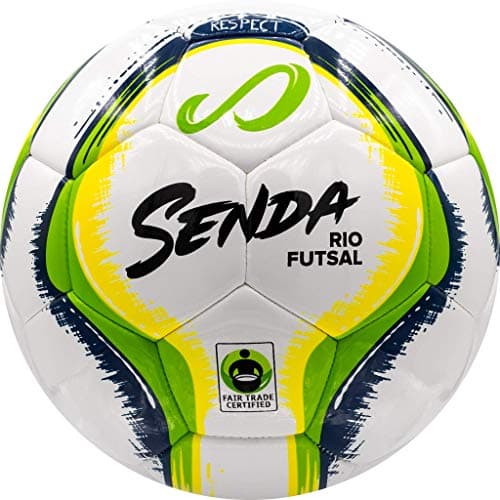
For a child playing winter futsal, the Select Jinga Futsal Ball (Junior) is the pick — Select builds its futsal range around a low-bounce bladder and sizes it by age, which is the whole point of the category. The budget pick is the Senda Rio Match Futsal Ball in size 3, the cheapest genuine futsal ball here and the right one for U8 to U12. Prices come from the live Amazon listing, with the date they were read printed under each button.
The thing to understand before you spend anything: a futsal ball is not a small soccer ball. The FA's Futsal Laws of the Game specify it separately — circumference not more than 64 cm and not less than 62 cm, weight 400 to 440 grams at the start of the match, pressure of 0.6 to 0.9 atmosphere at sea level, and a first rebound of not less than 50 cm and not more than 65 cm when dropped from two meters.
Compare that with Law 2 of the outdoor game, which specifies a size 5 ball at 68 to 70 cm circumference and 410 to 450 grams. The futsal ball is four to eight centimeters smaller around and almost exactly as heavy. That is the entire design: a denser ball that will not bounce away on a hard floor, which is why it stays on the ground and why futsal develops close control.
Which also means an outdoor ball in a gym is the wrong equipment, not a cheaper version of the right one. Futsal ball vs soccer ball is the full comparison if you want to see the two specs side by side.
What size futsal ball by age
Futsal sizing runs on its own scale and does not map onto outdoor sizes. Senda's own sizing guidance is the source for the age bands; a league rule always overrules a row here.
Age / level
Futsal size
Note
U6 to U8
Size 2 or junior size 3
Brands differ here — buy by the age on the box, not the number
U8 to U12
Size 3
The workhorse junior futsal size, and what most youth leagues use
U13 and up
Size 4
The adult futsal size; a size 5 futsal ball is not a standard product
Any age, casual indoor play
Size 3
Easier to control on a floor and kinder to walls and shins
Scroll the table sideways on a narrow screen.
This is the single most common futsal buying error: assuming a child who plays with a size 4 outdoor ball needs a size 4 futsal ball. They almost certainly need a size 3. The futsal scale tops out where the outdoor scale is still going, so numbers that look familiar mean something different. Soccer ball diameter by size and how to choose a soccer ball cover the outdoor ladder for comparison.
How we sorted these
It has to be sold as a futsal ball. An indoor ball with a felt cover is a different product; this page only includes balls whose makers describe a low-bounce futsal construction.
Junior sizing has to exist. A futsal ball only sold in size 4 is an adult product. Every pick is available in a junior size.
Published specification over marketing copy. Where a maker publishes its bladder construction or sizing guidance we quote it; where it does not, we say that instead of inventing a number.
A named budget pick. Winter futsal blocks are often one season long, so the cheapest genuine futsal ball gets called out rather than buried.
Quick picks
Tap any row to jump to the full write-up. The price in each button is the one Amazon reported on the date stamped under it — tap through for today’s number, which is the only one that can be relied on.
#
Product
Best for
Surface
Fit notes
Price
1
Select Jinga Futsal Ball (Junior)The right ball for a real indoor or futsal season, and the Junior size means a younger player is not handed an adult ball.
U7–U8 rec, U9–U10, U11–U12
Futsal (low bounce)
Buy the Junior size for U8 through about U12 and the Senior (size 4) above that.
The right ball for a real indoor or futsal season, and the Junior size means a younger player is not handed an adult ball.
Best for
Indoor and futsal play, sized by age
Levels
U7–U8 rec · U9–U10 · U11–U12
Type / surface
Futsal (low bounce)
How it fits
Buy the Junior size for U8 through about U12 and the Senior (size 4) above that. A futsal ball is graded by bounce rather than by the outdoor size chart, so do not read Junior as a size 3 outdoor ball.
What we like
Split into Junior and Senior rather than sold in one adult size, so an U8 is not playing with a size-4 ball
The genuinely low bounce is the whole point of a futsal ball and cheap indoor balls do not deliver it
Where it falls short
The heavy, low-bounce feel is wrong for outdoor grass play, so this cannot be the only ball
Costs more than a rec outdoor ball of the same nominal size
Manufacturer’s published specs
Butyl bladder with polyester fibers inside, which Select credits for the bounce and control (Select)
Sold in a Junior size as well as Senior — the Junior is the youth futsal ball (Select)
Durable PU surface with a textured pattern (Select)
FIFA Basic approved, one-year warranty (Select)
These are the manufacturer’s own claims, not measurements we took.
Three picks, and why that is the whole honest list
We would rather this page had eight entries. It has three because the US youth futsal ball market is genuinely small: most of what comes back on a search for an indoor ball is either a felt-covered indoor ball, which is a different product, or an adult size 4 futsal ball with no junior option. Rather than pad the list with balls we cannot stand behind, the page stops where the real options stop.
If what you actually want is an indoor ball rather than a futsal ball specifically — a ball for a gym, a basement or a hard court, without a futsal league involved — best indoor soccer balls for kids is the broader page and includes felt-covered options this one deliberately excludes.
What else futsal actually needs
Court shoes, not cleats. The FA's futsal equipment law calls for canvas or soft leather training or gymnastic shoes with soles of rubber or similar material, which is why cleats are not legal futsal footwear. Futsal shoes vs indoor soccer shoes sorts the two out and best indoor soccer shoes for kids ranks them.
Shin guards, which are compulsory. Futsal Law 4 requires them, requires them to be covered entirely by the stockings, and requires rubber, plastic or a similar approved material. Do you need shin guards for futsal is the rule and best shin guards for futsal is the shopping.
Correct pressure. The futsal range is 0.6 to 0.9 atmosphere, which is lower than an outdoor ball. Over-inflating a futsal ball defeats the purpose of buying one — the soccer ball PSI chart by size has the numbers and how to inflate a soccer ball the method.
A pump with a gauge. You cannot hit a 0.6 to 0.9 atmosphere window by thumb. Best soccer ball pumps covers the ones with inline gauges.
A futsal ball is almost as heavy as a size 5 and several centimeters smaller around. That density is why it stays down.
Does a FIFA mark matter on a futsal ball?
Less than it looks. FIFA's quality program runs three marks — FIFA QUALITY PRO, FIFA QUALITY and FIFA BASIC — and every certified ball passes the same seven laboratory tests: weight, circumference, roundness, bounce, water absorption, loss of pressure, and shape and size retention. The Pro mark means passing those same seven tests under more demanding conditions, not passing extra ones.
For a ten-year-old in a church hall on Tuesday nights, that distinction is not worth paying for. What matters is that the ball is a futsal ball at the right size, inflated inside its window, and that it stays round — and the cheapest pick on this page does that.
Common questions
What is the best futsal ball for kids?+
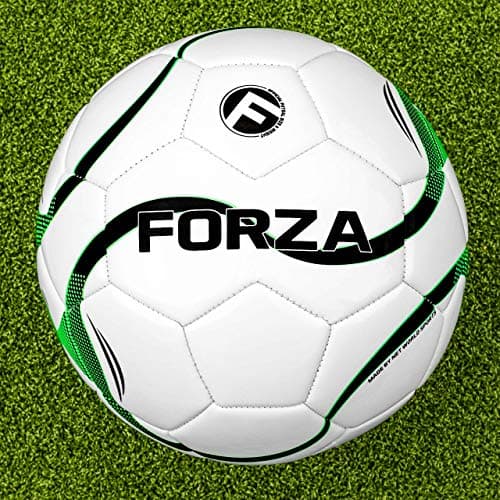
The Select Jinga Futsal Ball (Junior) is our pick: Select builds its futsal range around a low-bounce bladder and sizes it by age, which is what the category exists for. The Senda Rio Match Futsal Ball in size 3 is the budget pick and the right ball for most U8 to U12 players, and the FORZA futsal ball is the pick that covers both size 3 and size 4 for a crossover year.
What size futsal ball for an 8 year old?+
Size 3 for most eight-year-olds, and size 2 or a junior size 3 for the youngest players. Futsal sizing runs on its own scale and does not map onto outdoor sizes, so a child who uses a size 4 outdoor ball does not need a size 4 futsal ball — size 4 is the adult futsal size. Buy by the age printed on the box rather than by matching the number on your outdoor ball.
What makes a futsal ball different from a soccer ball?+
It is specified as a different ball. The FA's Futsal Laws require a circumference of 62 to 64 cm and a weight of 400 to 440 grams, against 68 to 70 cm and 410 to 450 grams for an outdoor size 5 under IFAB Law 2. So it is several centimeters smaller around and almost exactly as heavy — denser, in other words — and the Law also caps its first rebound at 50 to 65 cm when dropped from two meters. That controlled bounce is the whole point.
Can you use a regular soccer ball for futsal?+
For a casual kickabout, yes. For actual futsal, no — it bounces too much on a hard floor, which undoes the close-control game the format is built around, and a league playing to the Futsal Laws requires a ball meeting that specification. If you are buying one ball for both, buy the outdoor ball for outdoor play and treat the futsal ball as the indoor-season purchase.
What pressure should a kids futsal ball be?+
Within the Law's range of 0.6 to 0.9 atmosphere at sea level, and for a junior player the lower end of that is usually better: a softer ball is easier to control and kinder on a hard floor. Use a pump with an inline gauge, because you cannot judge a 0.6 to 0.9 window by feel, and inflate slowly with a thin needle as ball manufacturers' own care instructions advise.
Do kids need special shoes for futsal?+
Yes. The FA's futsal equipment law calls for canvas or soft leather training or gymnastic shoes with rubber or similar soles, which rules out cleats of any kind. A flat non-marking indoor sole is what you want, and most facilities enforce it independently of the Laws because studs damage floors and are unsafe on them. Shin guards are also compulsory in futsal and must be covered entirely by the stockings.
Sources
The FA — Futsal Laws of the Game, Law 2: The Ball — The futsal ball specification quoted on this site: circumference not more than 64 cm and not less than 62 cm, weight 400-440 g at the start of the match, pressure equal to 0.6-0.9 atmosphere at sea level, and a first rebound of not less than 50 cm and not more than 65 cm when dropped from 2 m.
The FA — Futsal Laws of the Game, Law 4: The Players' Equipment — The futsal equipment requirements quoted on this site: shinguards are compulsory, must be covered entirely by the stockings, must be made of rubber, plastic or a similar approved material, and must provide a reasonable degree of protection. Also the futsal footwear requirement — canvas or soft leather training or gymnastic shoes with soles of rubber or a similar material — which is why cleats are not legal futsal footwear.
IFAB Laws of the Game — Law 2, The Ball — The official size 5 specification quoted on this site: circumference between 68 cm (27 in) and 70 cm (28 in), weight between 410 g (14 oz) and 450 g (16 oz) at the start of the match, and pressure equal to 0.6-1.1 atmosphere at sea level, which the Law itself states as 8.5-15.6 lbs per square inch.
Select Sport — futsal balls — Select's futsal range including the Junior and Senior Jinga models, and Select's own description of the low-bounce bladder construction.
FIFA — the quality marks for footballs — The three FIFA quality marks (FIFA QUALITY PRO, FIFA QUALITY, FIFA BASIC), the seven laboratory tests every certified ball must pass — weight, circumference, roundness, bounce, water absorption, loss of pressure, and shape and size retention — and the fact that the Pro mark means passing those same seven tests under more demanding conditions rather than passing extra tests.
Molten — ball care instructions — A ball manufacturer's published care instructions, and the source for the ball-care facts on this site: always use a thin inflation needle to avoid damaging the valve, and inflate slowly to the pressure printed on the ball; a very dirty synthetic-leather ball is cleaned with plenty of water and a mild detergent, never left immersed in detergent, and rinsed and drained thoroughly; detergent chemicals may fade the colors; the ball is then left to dry in a well-ventilated place out of the sun, and never dried with a hair dryer or similar appliance; store it in a cool dry place away from direct sunlight; never leave a ball in high temperatures or humidity such as a car trunk in summer, which costs it its tuned shape and deteriorates the carcass; leather protection creams and sprays must not be used because they make the surface slippery; and rotating two or more balls extends the life of each.