Heads up: we earn a commission if you buy through our links, at no extra cost to you. It never changes which product we recommend — here’s how that works.
The short answer
Shin guards are compulsory in futsal and must be covered entirely by the socks. The hard floor and the pace mean low-profile beats bulky: the adidas Tiro League sleeve is the best all-round futsal pair because the guard cannot migrate round the leg, the Mitre Aircell Carbon is the vented strapped option, and the G-Form Pro-S Vento is the pick for an older player who would otherwise wear the thinnest guard they can find. Skip ankle-disc guards indoors.
Futsal changes two things about shin guards, and both push in the same direction. The first is the rule: the FA's Futsal Law 4 makes shinguards compulsory, requires them to be covered entirely by the stockings, and specifies they be made of rubber, plastic or a similar approved material offering a reasonable degree of protection. There is no discretion in it. The second is the surface, and that is where the product decision lives.
The game is faster and the touches are more frequent. Futsal is played in a small space with a heavy, low-bounce ball — the FA's Futsal Law 2 sets a 62 to 64 cm circumference, 400 to 440 g, and a first rebound of only 50 to 65 cm from a 2 m drop. More touches per minute means more contact on the shin and more movement of anything strapped to it.
The floor is unforgiving and the shoes are flat. There are no studs to catch, which removes the stud-to-shin impact that justifies a thick outdoor shell. What replaces it is repeated low-level knocks and the occasional hard court landing.
It is hot. An indoor court in winter is warmer than an outdoor pitch in summer, and a solid plastic shell with an ankle cuff is the thing a kid takes off at the first opportunity.
Ankle discs get in the way. The ankle padding that earns its place in a U8 grass game is dead weight on a futsal court, where the ball stays low and the contact is shin-on-shin rather than stud-on-ankle.
Start here
Pick by your kid’s level
The right answer changes with the level, not just the shoe size. Find your kid’s bracket and start there.
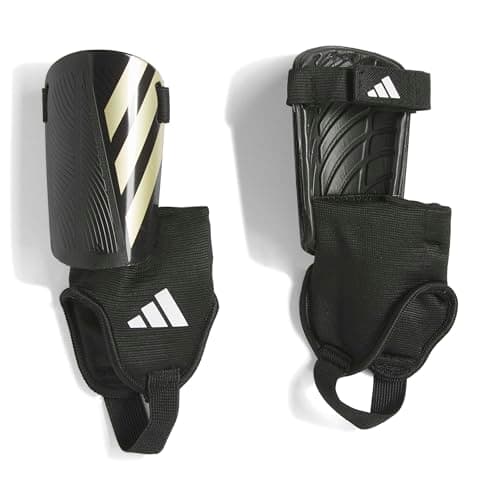
At this age protection still outranks profile, even indoors, and the strap means the guard stays where you put it for a seven-year-old. The ankle cuff is the part to accept rather than seek out on a court.
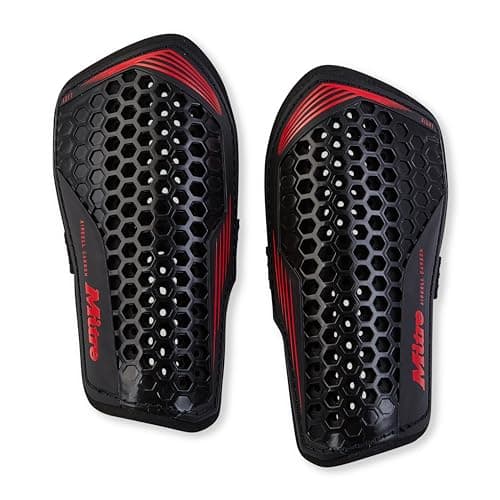
The best fit for futsal of any strapped guard here: Mitre deliberately leaves the ankle sock off as a weight saving and vents the shell so air moves round the leg. CE and SATRA tested, which is more than most guards at this price state.
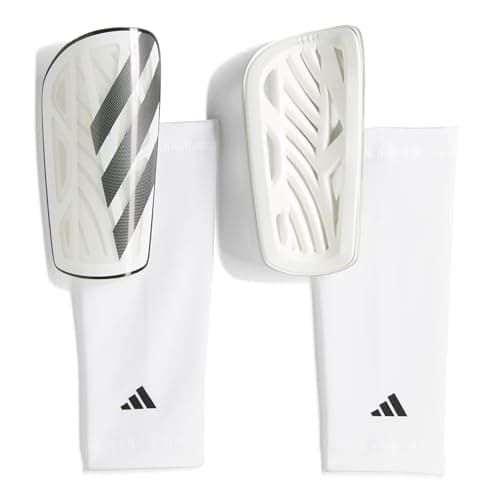
The sleeve solves the problem futsal creates: constant direction changes migrate a slip-in round the leg, and a sleeve pocket cannot. Lower profile than a strapped guard and far more secure than a bare slip-in.
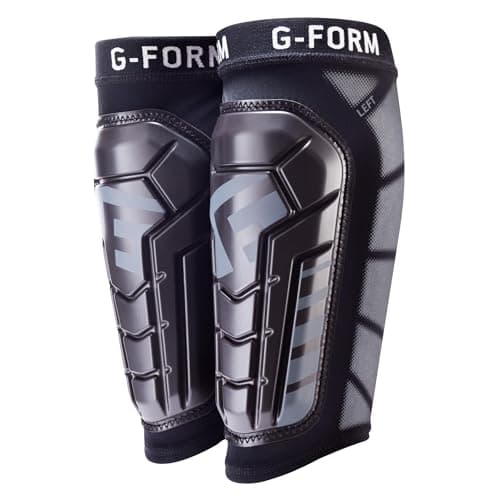
The coolest and least intrusive option, and the one an older player will actually keep on through a tournament. The flexible pad spreads impact rather than blocking it, which is a fair trade on a court with no studs.
Tap any row to jump to the full write-up. The price in each button is the one Amazon reported on the date stamped under it — tap through for today’s number, which is the only one that can be relied on.
G-Form Pro-S Vento Shin GuardsWorth it for an older player who would otherwise wear the thinnest possible slip-in; not the safest choice for a beginner.
U11–U12, U13+ travel & club
Sleeve with flexible pad
Sized by calf circumference as well as height — measure, do not guess, because a loose sleeve defeats the design..
Product photos come from each item’s current Amazon listing.
Which style, by what you are optimizing for
Protection ratings compare the styles against each other as the manufacturers describe them. No independent impact testing is implied — only Mitre states CE and SATRA testing among the guards here.
Style
Stays put?
Protection
Heat
Futsal verdict
Compression sleeve
Best
Mid
Warm
The default pick
Vented strapped shell, no ankle
Very good
Best here
Coolest shell
Best if you want a rigid shell
Flexible sleeve pad
Good
Lowest rigid-equivalent
Coolest overall
Best for an older player who resists guards
Bare slip-in
Worst — migrates
Lowest
Coolest slip-in
Only with a very tight sock
Hard shell with ankle discs
Very good
Highest
Hottest
Overkill indoors
Scroll the table sideways on a narrow screen.
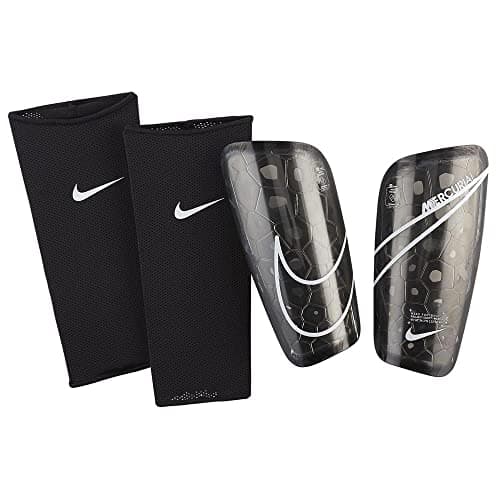
The bare slip-in is the one to be careful with. It is the lightest guard made and it is held in place by nothing but the sock, which is a reasonable bet in a slow outdoor game and a poor one in futsal. Nike's own copy for the Mercurial Lite says it needs a tight sock or a sleeve to stay put and that a loose rec sock will let it slide. How to stop shin guards slipping covers the fixes if that is the pair you already own.
1. adidas
adidas Tiro League Shin Guards
The best compromise between the security of a strap and the low profile of a slip-in.
Best for
A U10+ player who keeps losing guards out of their socks
Levels
U9–U10 · U11–U12 · U13+ travel & club
Type / surface
Compression sleeve
How it fits
Sized by height like other guards, but the sleeve also has to fit the calf — a very slim or very sturdy leg may need a size either way.
What we like
The sleeve solves the slip-in problem properly: the guard cannot migrate round the leg mid-game
Lower profile than a strapped guard while being far more secure than a bare slip-in
Where it falls short
The sleeve has to be pulled on before the sock, which is one more step a distracted kid will get wrong
Warmer than a slip-in, and sleeves need washing as often as socks
Manufacturer’s published specs
Compression sleeve style with the guard held in an integrated pocket
No external strap
Youth and adult sizing
These are the manufacturer’s own claims, not measurements we took.
Every guard here sizes by the child's height, not their age or their shoe size, and the target is simple: the guard should run from just below the knee to just above the ankle bone. If the top digs into the knee when the child crouches, it is too long.
Sleeve guards add a second dimension. A sleeve has to fit the calf as well as the shin, and G-Form sizes the Pro-S Vento by calf circumference as well as height — measure rather than guess, because a loose sleeve defeats the whole design. A very slim or very sturdy leg may need a size either side of the height band. Youth shin guard size chart has the full conversion, and how should shin guards fit covers what right looks like on a leg.
The rest of the futsal kit
Two things are worth saying because they come up in the same conversation.
Cleats are not legal futsal footwear. The FA's Futsal Law 4 specifies canvas or soft leather training or gymnastic shoes with soles of rubber or a similar material, which rules studs out entirely. Futsal shoes vs indoor soccer shoes explains the difference between the two flat-soled options, and best indoor soccer shoes for kids is the roundup.
And the socks matter more here than outdoors, because they are doing the job of holding the guard in place as well as covering it. A thin, loose rec sock is the reason a slip-in guard ends up round a shin. Best youth soccer socks covers what holds a guard, and do shin guards go under socks answers the question the kit check will ask.
What not to buy for futsal
Anything with fixed ankle discs, past about U9. They are hot, they slow the player down and the impact they are built for — a stud to the ankle bone — does not happen on a futsal court.
A guard that will not vanish under a sock. The Laws require full coverage by the stockings, so profile is a compliance question and not only a comfort one.
A bare slip-in with a loose sock. The combination is the single most common reason a guard ends up somewhere other than the shin by half time.
A size up for growing room. A guard that slides is worse than one that is slightly short, and unlike a cleat there is nothing to tighten. Take the smaller size when a child is between bands.
One last note on cleaning, because futsal guards get worn more often than outdoor ones. Reusch's own care instructions for a hard-shell guard are to remove dirt with a soft brush and wipe with a damp cloth, avoid solvents and cleaners entirely, keep the guard away from excessive heat and strong sunlight, and store it dry and ventilated — their line is that otherwise the performance of the shinguard reduces significantly. How to wash shin guards has the full method for shells and sleeves.
Common questions
What are the best shin guards for futsal?+
The adidas Tiro League sleeve for most players: it is lower-profile than a strapped guard and the pocket stops the guard migrating during the constant direction changes futsal involves. The Mitre Aircell Carbon is the pick if you want a rigid vented shell without an ankle cuff, and the G-Form Pro-S Vento suits an older player who would otherwise wear the thinnest guard they can find.
Are shin guards required in futsal?+
Yes. The FA's Futsal Law 4 makes shinguards compulsory, requires them to be covered entirely by the stockings, and specifies that they be made of rubber, plastic or a similar approved material providing a reasonable degree of protection. Unlike some indoor soccer leagues, there is no discretion — a player without them is not properly equipped.
Can you use outdoor shin guards for futsal?+
Legally yes, as long as they are covered by the socks. Practically, a bulky outdoor guard with ankle discs is the wrong tool indoors: the court is hot, the pace is higher and the stud-to-ankle impact the discs are built for does not happen. A lower-profile sleeve or a vented shell without an ankle cuff is the better buy.
Do you wear shin guards under socks in futsal?+
Yes, and the Laws are specific: the shinguards must be covered entirely by the stockings. That is the same requirement as outdoor soccer, where Law 4 says guards must be of suitable material and appropriate size and covered by the socks. It is also a practical argument for a low-profile guard, since a bulky one will not disappear under a futsal sock.
What size shin guards does my kid need for futsal?+
Size by height, not age: the guard should run from just below the knee to just above the ankle bone, and should not dig into the knee when the child crouches. Sleeve-style guards also need the calf measured, because a loose sleeve defeats the design. When a child falls between two bands, take the smaller — a guard that slides is worse than one slightly short.
Can kids wear cleats for futsal?+
No. The FA's Futsal Law 4 specifies canvas or soft leather training or gymnastic shoes with rubber or similar soles, which rules out studs of any kind. A futsal shoe or an indoor court shoe is what is required, and the two are not quite the same thing — futsal shoes tend to be built for a harder, faster game on a smooth court.
Sources
The FA — Futsal Laws of the Game, Law 4: The Players' Equipment — The futsal equipment requirements quoted on this site: shinguards are compulsory, must be covered entirely by the stockings, must be made of rubber, plastic or a similar approved material, and must provide a reasonable degree of protection. Also the futsal footwear requirement — canvas or soft leather training or gymnastic shoes with soles of rubber or a similar material — which is why cleats are not legal futsal footwear.
The FA — Futsal Laws of the Game, Law 2: The Ball — The futsal ball specification quoted on this site: circumference not more than 64 cm and not less than 62 cm, weight 400-440 g at the start of the match, pressure equal to 0.6-0.9 atmosphere at sea level, and a first rebound of not less than 50 cm and not more than 65 cm when dropped from 2 m.
IFAB Laws of the Game — Law 4, The Players' Equipment — The Law text quoted on this site: undershorts and tights must be the same color as the main color of the shorts or the lowest part of the shorts, and players of the same team must wear the same color; shinguards must be of suitable material and appropriate size, covered by the socks, with the player responsible for their suitability; non-dangerous protective equipment of soft, lightweight padded material is permitted; and a player must not use equipment or wear anything that is dangerous, which must be removed rather than taped or covered. Law 4.3 is also the source for the kit-color rules quoted here: the two teams must wear colors that distinguish them from each other and the match officials, and each goalkeeper must wear colors that are distinguishable from the other players and the match officials. Law 4.4 names gloves, headgear, facemasks and knee and arm protectors of soft, lightweight padded material as permitted non-dangerous protective equipment, and separately permits goalkeepers caps and tracksuit bottoms.
Coaching American Soccer — Law 4, The Players' Equipment — The Law 4 requirements quoted on this site: footwear is compulsory but cleats are not specified; shinguards must be of suitable material, appropriate size and covered by the socks, with the player responsible for suitability; a player must not use equipment that is dangerous; and the referee-level guidance that worn, pointed or exposed-shaft studs and shoes with sharp metal or pointed spikes are not permitted.
Reusch — Shinguard Attrakt Supreme (care instructions) — A manufacturer's own care instructions for a hard-shell shinguard, quoted on this site: remove dirt with a soft brush and wipe with a damp cloth; do not use solvents or other cleaners as they may cause damage; do not expose the product to excessive heat or strong sunlight; store in a dry and ventilated area, otherwise the performance of the shinguard reduces significantly.