Balls
Size 1 vs size 3 soccer ball
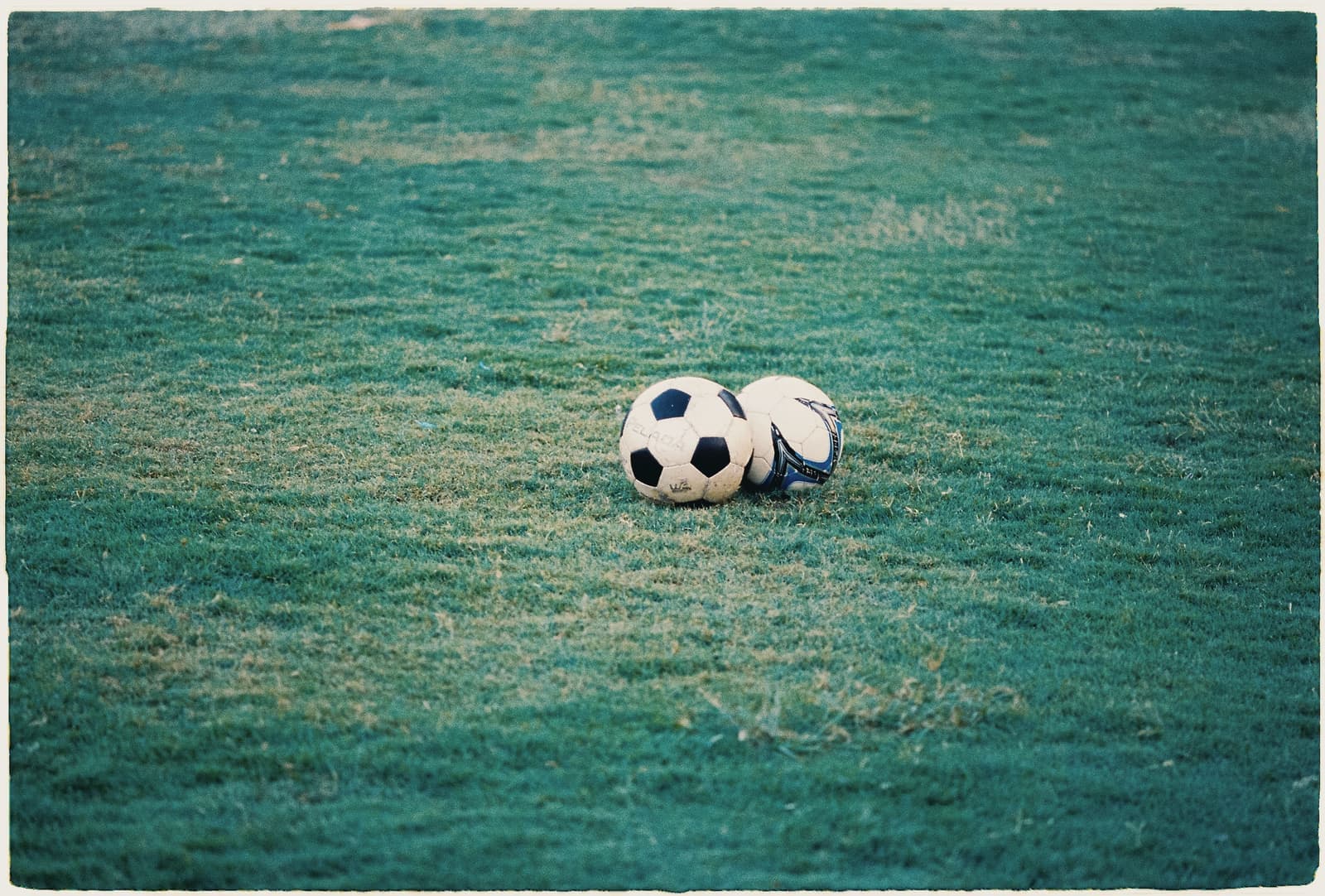
One of these is the smallest ball anyone plays a game with. The other is a training toy, and a good one.
By Ryder M. · Published September 29, 2026
Heads up: we earn a commission if you buy through our links, at no extra cost to you. It never changes which product we recommend — here’s how that works.
The short answer
| Size 1 | Size 3 | |
|---|---|---|
| What it is | Mini or skills ball | The smallest match ball |
| Age divisions that use it | None | AYSO 6U and 8U |
| Circumference | Roughly 18–20 in | 23.0–25.0 in |
| Weight | Roughly 7–9 oz | 10–12 oz |
| Buy it for | Footwork practice, juggling, souvenirs | Games and practice, U8 and under |
This comparison looks like a choice and is not one. If you are buying a ball for a child who has joined a team, the answer is size 3 and the size 1 is not in the running.
The reason is simple enough to check. AYSO publishes ball size by age division, and its table starts at size 3 — that is the ball for 6U and 8U, with size 4 from 10U and size 5 from 14U. There is no division, anywhere in the table, that plays with a size 1 or a size 2.
So what are size 1 balls for? They are skills balls, and they have a real use — just not the one the search suggests.
What a size 1 ball is actually for
- Footwork and close control. A smaller ball demands a more precise touch, which is why coaches use mini balls for tight drills. A kid who can control a size 1 will find a size 3 easy.
- Juggling practice. The classic use, and genuinely the fastest way to get a kid's touch count up in a driveway.
- Indoor and hallway play. Small enough to be tolerable indoors, which matters more in January than anyone admits.
- Souvenirs and collectibles. A large share of size 1 balls sold are commemorative mini balls with foam cores, sold for display rather than play. Select lists its size 1 alongside its skills range rather than among its match balls.
Check that last point before you order. A foam-core mini ball does not need inflating and is meant to sit on a shelf. If you want one to practice with, you want an inflatable one, and the listing will say.
What a size 3 ball is for
Everything else, up to about U9. AYSO's published figures put size 3 at 23.0 to 25.0 inches in circumference and 10 to 12 ounces, and that is the ball a 6U or 8U player uses for games and for practice.
If your kid is on a team and you own one ball, own this one. It is the size they will use in every session, and practicing with the ball you play with is worth more than any training aid.
Who should own both
A narrower group than the marketing suggests, and worth being specific about.
- A kid who genuinely practices alone and wants to. A mini ball makes driveway juggling and close-control work harder in a useful way. If they are not already practicing alone, a second ball will not start them.
- A family with an indoor space and a long winter. A size 1 is the ball that gets played with indoors without anything being broken, and a kid touching a ball in February is better than a kid not.
- A coach or a parent running drills. Mini balls are a coaching tool first, which is where the category comes from.
Everyone else is better served spending the same money on a second size 3 so one can live in the car. How to choose a soccer ball covers what actually differs between balls at the same size, which matters more than owning several sizes.
What about size 2?
Same answer as size 1, slightly larger. Size 2 balls exist, they are not in any age division's ball table, and they are sold as skills and promotional balls. A few programs for very young children use one, but that is a program's own choice rather than a standard.
If your child is three or four and just kicking a ball around, size 3 is still the sensible purchase — it is the size they will grow into for organized play, and it is light enough at 10 to 12 ounces for a small child to move.
Sizing beyond size 3
Once you are past the size 1 question, the sizes that matter are the three in the age tables. Size 3 to about U8, size 4 for U9 through U12, size 5 from U13. The transitions are the part families get wrong, and both have their own page.
Size 3 vs size 4 covers the U9 step, which is the bigger jump of the two, and size 4 vs size 5 covers the move to a full-size ball at U13.
The verdict
Buy a size 3. If your child plays organized soccer at U8 or below, this is the ball, and a size 1 cannot substitute for it — no age division uses one and it will not prepare them for a game ball.
Add a size 1 only if they practice alone. As a second ball for juggling and close-control work it earns its keep, and it is cheap. As a first ball it is a mistake.
Check for a foam core before ordering any mini ball. Half the size 1 market is display merchandise, and the photographs do not distinguish them.
The size 3 balls worth owning
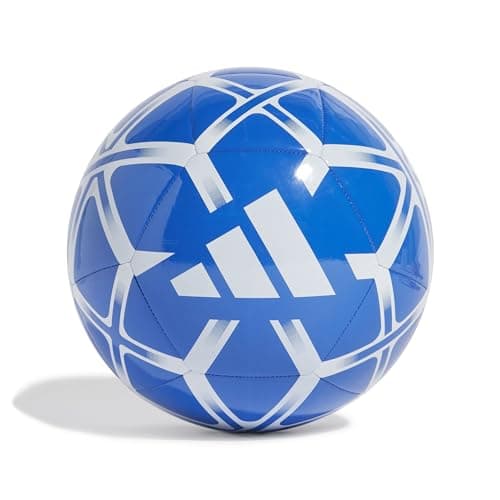
adidas
adidas Starlancer Club
The sensible default youth ball — right size range, right price, air stays in.
$18.00View on Amazon#ad — we may earn a commission · price as of October 16, 2026
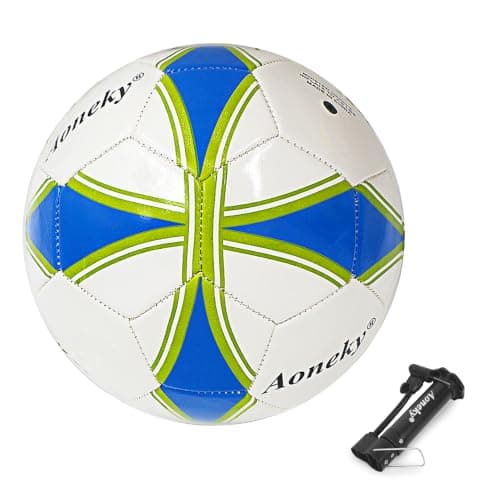
Aoneky
Aoneky Size 3 Soccer Ball with Pump
The right first purchase for a brand-new soccer family, purely because of the pump.
$8.98$9.99−10%View on Amazon#ad — we may earn a commission · price as of October 16, 2026
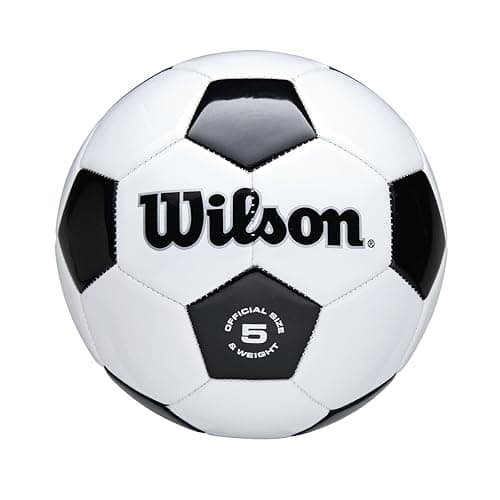
Wilson
Wilson Traditional Soccer Ball
Buy it as a second, disposable yard ball. Do not buy it as the ball your kid takes to games.
$18.67View on Amazon#ad — we may earn a commission · price as of October 16, 2026
Product photos come from each item’s current Amazon listing.
A size 1 earns its place in one specific drill, and best soccer balls for juggling is where that case gets made properly — alongside the reason the game-size ball is usually still the better juggling ball.
Common questions
What is a size 1 soccer ball for?
Skills work rather than games. Size 1 balls are mini or skills balls used for footwork drills, juggling practice and indoor play, and a large share of the market is commemorative mini balls sold for display. No age division plays with one — AYSO's ball size table starts at size 3.
What age uses a size 1 soccer ball?
None, for organized play. AYSO's published ball sizing gives size 3 for 6U and 8U, size 4 for 10U and 12U, and size 5 from 14U, with no size 1 or 2 listed at any division. A size 1 is a training and novelty ball that players of any age can use for close-control work.
Should I buy a size 1 or size 3 ball for my 5 year old?
Size 3. It is the ball their age division plays with, it is what every practice will use, and at 10 to 12 ounces it is light enough for a small child. A size 1 is worth adding later as a second ball for juggling, but it will not prepare them for a game.
How big is a size 1 soccer ball?
Roughly 18 to 20 inches in circumference and around 7 to 9 ounces, against 23.0 to 25.0 inches and 10 to 12 ounces for a size 3 in AYSO's published figures. The difference is substantial — a size 1 is closer to a large grapefruit than to a soccer ball a child would play a game with.
Are mini soccer balls inflatable?
Some are and some are not, and the listings look alike. Commemorative mini balls are often foam-core display items that never need a pump, while skills-training mini balls have a bladder and inflate normally. Read the description rather than the title before ordering one to actually kick.
Sources
- AYSO — Size of Ball and Field by Age Division — Official ball sizes, circumference and weight ranges, and field dimensions by age division. Used for every ball-size and field-size figure on this site.
- Select Sport — soccer balls — Select's current ball range, used to confirm that its outdoor balls start at size 3 and that its size 1 offering is a mini ball sold alongside the skills range rather than as a match ball.
- adidas — kids' soccer — Verified current availability of the adidas models named here, plus adidas's published material and construction claims.
- AYSO — Size of Ball and Field by Age Division — Official ball sizes, circumference and weight ranges, and field dimensions by age division. Used for every ball-size and field-size figure on this site.
- adidas — kids' soccer — Verified current availability of the adidas models named here, plus adidas's published material and construction claims.
Read next
- Size 3 vs size 4 soccer ballThe U9 cutoff, what changes at the transition, and when to start practicing with the bigger ball.
- Best size 3 soccer ballsSize 3 picks for U6 through U8, the bladder difference that matters, and why you need a pump.
- How to choose a soccer ball for your kidThree checks in order — size, bladder, where it lives — and what you can safely ignore below U12.
- Size 4 vs size 5 soccer ballThe U13 cutoff, the real weight difference, and how to prepare for the last ball-size change there is.
- U6 first kicks: what your kid actually needsAges 3 to 5. Size 3 ball, shin guards, and an honest answer on whether cleats are needed at all.
- U7–U8 rec: the first real kitAges 6 to 8. Still a size 3 ball, but this is where the first real pair of cleats earns its place.