Heads up: we earn a commission if you buy through our links, at no extra cost to you. It never changes which product we recommend — here’s how that works.
The short answer
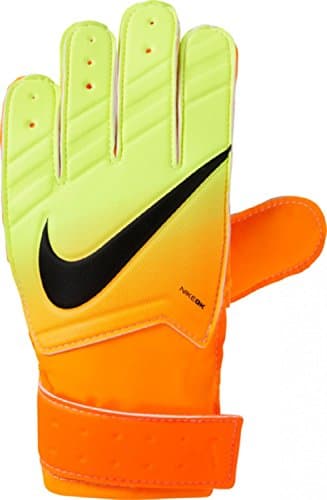
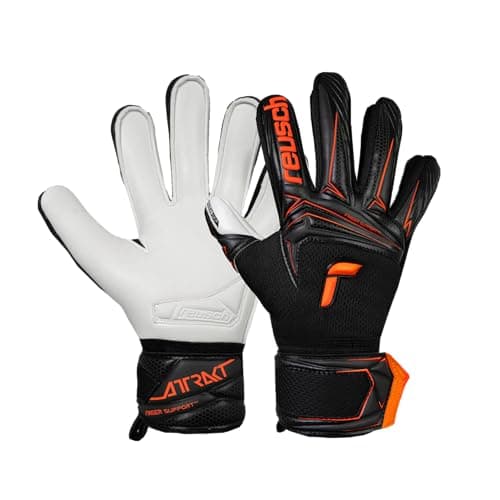
Most ten-year-olds take a size 5 or 6 — measure the palm in inches and add one. Then split the decision: if they are the designated keeper, buy the Reusch Attrakt Grip Evolution Finger Support Junior, which is built on a genuine youth last with finger protection. If they just rotate into goal, the Nike Jr. Match is the right amount of glove and a third of the cost.
Ten is the age this question actually matters, which is why it deserves its own page rather than a line on a size chart. Below ten, almost every kid is a rotating keeper and any glove will do. From about ten, clubs start naming a keeper, shots get hard enough to hurt, and fingers start getting jammed.
First: which kind of ten-year-old is this?
Everything follows from this and it takes one question. Does the coach put them in goal every week, or do they take a turn in a rotation?
The same ten-year-old, two different purchases. Buying the designated-keeper glove for a rotating keeper wastes money on latex that wears out unused.
Rotating rec keeper
Designated keeper
Buy
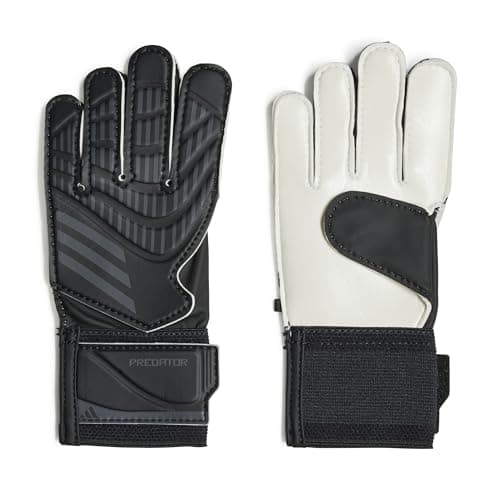
Nike Jr. Match or adidas Youth Predator
Reusch Attrakt Advance Finger Support Junior
Finger protection
Not needed
Yes — this is the age it starts to matter
Latex grade
Basic is fine
Grip latex, and expect to replace it
Replace when
It no longer fits
Grip goes, usually within a season
Spend
As little as possible
Properly, once
Scroll the table sideways on a narrow screen.
The reason this split matters more than the age: grip latex is a consumable. It wears out whether or not the kid is making saves with it, and a premium glove sitting in a bag for five weeks between turns in goal has aged for nothing.
Size, which is a measurement not a birthday
Hand size at ten varies enormously, so the age column on any chart is a starting point rather than an answer. Size 5 is roughly a 4-inch palm and size 6 roughly a 5-inch palm, which between them cover most ten-year-olds.
Measure across the palm at its widest point, just below the knuckles, in inches. Use the dominant hand.
Add about one inch. That number is the glove size.
Check the gap: roughly a fingertip's space beyond the longest finger with the glove on.
The fist test. Have them close their hand. If they cannot make a comfortable fist, the glove is too small or too stiff, whatever the chart said.
The fist test is the one that decides it. A keeper has to close their hand around a ball, and a glove that prevents it makes them worse at the only thing the position requires. The full conversions are in the youth goalie glove size chart.
Start here
Pick by your kid’s level
The right answer changes with the level, not just the shoe size. Find your kid’s bracket and start there.
The pick for a ten-year-old who plays in goal every week. It is built on a genuine youth sizing range rather than being a shrunken adult glove, and Reusch's Finger Support system addresses the actual common injury at this age — a hyperextended finger.
The glove for a rotating rec keeper, including the ten-year-old who takes one turn in goal per game. No finger spines means a softer, more natural feel, and it is easy to find in a store on a Friday.
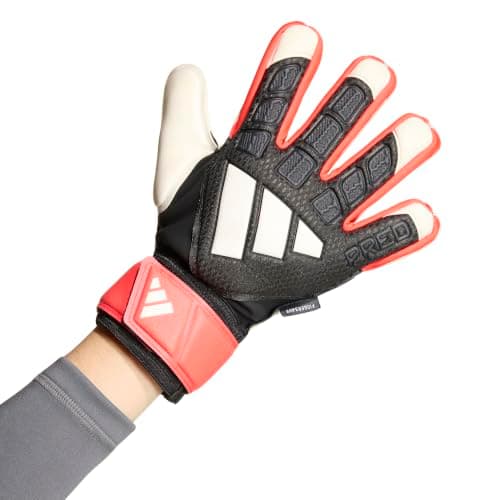
adidas Youth Predator Match Fingersave Goalkeeper Gloves
The pick specifically when a finger has already been jammed. The Fingersave spines are the most substantial protection here, and adidas lists the range for ages 8 to 16 so it carries a ten-year-old forward.
Tap any row to jump to the full write-up. The price in each button is the one Amazon reported on the date stamped under it — tap through for today’s number, which is the only one that can be relied on.
Product photos come from each item’s current Amazon listing.
Does a ten-year-old need finger protection?
If they are the designated keeper, yes — and this is the age it changes. Two things happen around ten. Outfield players start striking the ball hard enough that a keeper's hand absorbs real force, and keepers start going to the ball with fingers extended rather than catching it against the chest.
A hyperextended or jammed finger is the characteristic youth keeper injury, and finger spines are the one protective feature that addresses it directly. The cost is feel: the spines stiffen the glove, and some keepers dislike how it changes a catch. Finger protection vs no finger protection goes through that trade properly.
For a rotating keeper, no. The exposure is too low to justify either the stiffness or the price.
1. Reusch
Reusch Attrakt Advance Finger Support Junior
The best-fitting youth keeper glove here, and the right pick for a kid who genuinely plays in goal every week.
Best for
A regular U11+ keeper who wants finger protection
Levels
U9–U10 · U11–U12 · U13+ travel & club
Type / surface
Finger support (integrated)
How it fits
Measure across the palm and add about an inch to find the glove size. A keeper glove should have roughly a fingertip's gap at the end — too tight and they cannot make a fist.
What we like
The genuine youth-specific last matters more than any single feature — most junior gloves are shrunken adult gloves and fit badly
Finger support is the one protective feature that addresses the actual common keeper injury at this age: a hyperextended finger
Reusch's grip latex is a real step up from generic junior gloves
Where it falls short
Grip latex wears fast on hard or artificial surfaces — expect visible palm wear within a season
More expensive than a rec keeper who plays one rotation in goal per game needs
Manufacturer’s published specs
Integrated Finger Support, which Reusch states stabilizes all fingers and the thumb without sacrificing mobility (Reusch)
Grip Advance latex palm (Reusch)
Evolution Negative Cut, wrapping the latex round the fingertips (Reusch)
AIRVENTSYSTEM mesh panels and DURAGUARD reinforcement in high-wear zones (Reusch)
Construction Reusch states is tailored specifically to junior keepers (Reusch)
These are the manufacturer’s own claims, not measurements we took.
Worth knowing before you are annoyed by it. The grip on a keeper glove comes from soft latex, and soft latex is soft: it grips better and wears faster, which are the same property. A regular ten-year-old keeper will have visible palm wear inside a season, and on hard or artificial surfaces considerably sooner.
That is not a defect and there is no glove that avoids it — the firmer the latex, the worse the grip. What you can do is slow it down: dampen the palms before use, keep them out of direct sun, and wash the grip rather than scrubbing it. How to wash goalie gloves has the method.
The practical consequence for a ten-year-old: do not save the good gloves for games. A keeper who trains in worn-out gloves and plays in new ones is learning two different grips.
What else a ten-year-old keeper needs
Padded pants or leggings. The single biggest comfort change for a keeper on a hard field, and the reason some kids stop wanting the position. See the keeper pants picks.
A different cleat, maybe. A keeper pushes off laterally rather than sprinting forward, and a comfort-line cleat suits that better than a speed one. Best cleats for goalkeepers covers it.
A second pair of gloves. Training pair and match pair, with the training pair being last season's. This is how families manage the latex problem without doubling the budget.
Nothing else. Keeper jerseys and chest protectors are a solution to problems a ten-year-old does not have.
If you are not yet sure the position will stick, the budget glove picks are the right place to start — a cheap properly shaped glove answers the question of whether they want to keep doing it.
The three gloves above use three different cuts, which is the word on the box that decides how snug each one feels — goalie glove cuts explained translates it.
The next rung up changes the purchase rather than the size: by high school most keepers are in adult glove sizing and the cut starts to matter more than the spines. Best goalie gloves for high school soccer covers that crossover.
Common questions
What size goalie gloves does a 10 year old need?+
Usually a size 5 or 6, but measure rather than assume because hand size at ten varies a lot. Measure across the palm at its widest point just below the knuckles in inches and add about one — that number is the glove size. Then check there is roughly a fingertip's gap beyond the longest finger and that they can make a comfortable fist.
What are the best goalie gloves for a 10 year old?+
It depends on how often they play in goal. For a designated keeper, the Reusch Attrakt Advance Finger Support Junior — Reusch states its construction is tailored specifically to junior keepers rather than being a shrunken adult glove, and it has finger protection. For a kid who rotates into goal, the Nike Jr. Match is the right amount of glove at a fraction of the price.
Does a 10 year old goalkeeper need finger protection?+
If they are the designated keeper, yes — ten is roughly the age it starts to matter, because outfield players begin striking the ball hard enough for the hand to absorb real force and keepers start going to the ball with fingers extended. A jammed or hyperextended finger is the characteristic youth keeper injury. For a rotating keeper the exposure is too low to justify the stiffness or the cost.
Should I buy bigger goalie gloves for my 10 year old to grow into?+
No. An oversized keeper glove means the hand cannot close inside it, the latex sits away from the fingers so grip drops, and the glove rotates on the hand during a dive, which is how a finger gets caught. Gloves are a consumable — the latex wears out within a season of regular use — so a pair that fits for one season has not been wasted.
How long do youth goalie gloves last?+
For a regular keeper, roughly a season, and less on hard or artificial surfaces. The grip comes from soft latex, and softer latex grips better and wears faster — those are the same property, so there is no glove that avoids it. Dampening the palms before use, keeping them out of direct sun and washing rather than scrubbing all slow it down.
What else does a 10 year old goalkeeper need?+
Padded keeper pants or leggings, which make the biggest comfort difference on a hard field, and a second pair of gloves so they are not training in the match pair. A comfort-line cleat suits a keeper's lateral push-off better than a speed cleat. Keeper jerseys and chest protectors solve problems a ten-year-old does not have.
Sources
Reusch — Attrakt goalkeeper gloves — Reusch's own description of the Finger Support system, AirVent ventilation and its youth sizing range.
adidas — kids' soccer — Verified current availability of the adidas models named here, plus adidas's published material and construction claims.
Nike — kids' soccer cleats and shoes — Verified that each Nike model named on this page is currently sold, and the source for Nike's own published upper, plate and surface descriptions.
FootballBoots.co.uk — best boots for goalkeepers — What a keeper actually needs from a boot — explosive push-off, secure footing on lateral movement, and a soft distribution touch — plus its position that keepers should match the plate to the playing surface rather than to the position.