Cleats
Do soccer cleats come in wide sizes?
Width letters barely exist in soccer. What exists is lines that run wide, which is a different kind of shopping.
By Ryder M. · Published October 10, 2026

The short answer
Mostly no. Unlike running or basketball shoes, soccer cleats are rarely sold in width letters — a few adult models offer a wide option, and the junior ranges almost never do. What exists instead is lines that run wide by design: adidas Copa is the most accommodating of the adidas lines, Nike's Tiempo and Legend are its roomier silos, and F50 and Mercurial are the narrowest. Shop the line, not the letter.
This is one of the most frustrating discoveries in youth soccer shopping, because every parent of a wide-footed kid arrives having learned to buy 2E sneakers and reasonably expects the same option to exist here. It largely does not, and pretending otherwise wastes a return shipment.
Why soccer sizing works this way
Two reasons, and both are structural rather than accidental. The first is that a soccer cleat is meant to fit close — the whole point of the upper is to put the foot in contact with the ball, which is why the industry builds to one last per line and tunes the last's shape rather than offering widths. The second is that junior cleats are unisex and sized to normal shoe size, as brands state themselves, so the junior range is already a single simplified size run before width gets considered at all.
The consequence is that fitting a wide foot in soccer is a matter of picking the right line and the right closure, not the right letter. That is actually workable — the lines genuinely differ, and the brands publish how.
| Brand line | Runs | Built for |
|---|---|---|
| adidas Copa | Widest of the adidas lines | Comfort and control; center-backs, holding midfielders |
| adidas Predator | Middle | Striking the ball; central midfielders |
| adidas F50 | Narrowest of the adidas lines | Speed; wingers, attacking fullbacks, forwards |
| Nike Tiempo / Legend | Roomier Nike silos | Comfort and control, leather-feel touch |
| Nike Phantom | Middle | Precision; central midfielders, playmakers |
| Nike Mercurial | Narrow | Speed; forwards and wide midfielders |
How to tell before you buy
- Measure both feet standing, with match socks on. Width shows up at the forefoot, and it changes under load. A measurement taken sitting is a different number.
- Leave about half an inch at the toe — Under Armour's kids' guide puts the target there, and it is the figure worth holding to even when it feels generous.
- Look at the forefoot, not the length. If the foot has to spread to fit, the cleat is the wrong line regardless of whether the length is right.
- Check the closure. A laced cleat can be opened up across the instep. A laceless one cannot, which makes laceless a bad category for an unusually shaped foot in either direction.
- Try the roomy line in the same size. A Copa or a Tiempo in the same size as a Mercurial is a materially different fit, and that is the test that settles it.
The failure mode to avoid is sizing up for width. A longer cleat is not a wider cleat — it is a longer one, with the widest part of the shoe now sitting in front of the widest part of the foot. The foot still gets squeezed and now it slides as well, which is the fit problem that actually causes injuries.
The lines that run wide
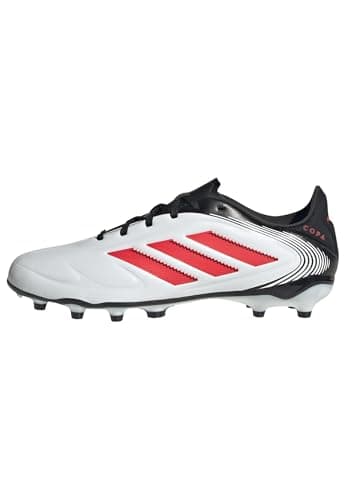
adidas
adidas Copa Pure 3 League Firm Ground (Kids)
The best mainstream junior cleat for a wide foot, and a real help to a player still learning first touch.
$60.00View on Amazon#ad — we may earn a commission · price as of October 16, 2026
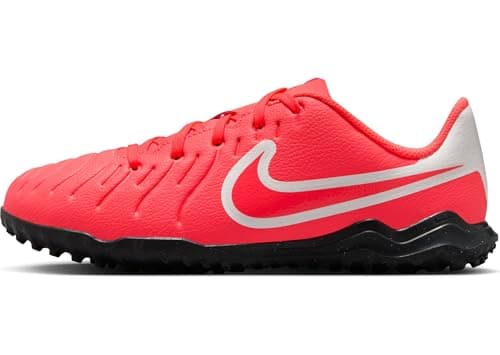
Nike
Nike Jr. Tiempo Legend 10 Club Turf
The Nike turf answer for a foot the Mercurial pinches — same outsole benefit, more room.
$56.94View on Amazon#ad — we may earn a commission · price as of October 16, 2026
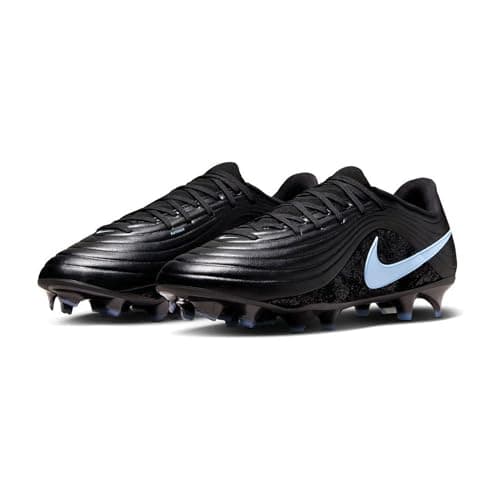
Nike
Nike Jr. Tiempo Maestro Academy MG
The comfort-first Nike junior cleat, and the sensible pick for a defender, a keeper, or a kid who plays in discomfort and has stopped mentioning it.
$46.42View on Amazon#ad — we may earn a commission · price as of October 16, 2026
Product photos come from each item’s current Amazon listing.
Lacing is the adjustment that does exist
Since width letters are not available, lacing is the real width tool, and Nike publishes the pattern itself. Wide foot lacing skips a set of eyelets at the bottom and crosses the laces above the gap, which expands the midfoot region and comfortably accommodates a wider foot. It is free, it takes two minutes, and most parents have never heard of it.
Two related patterns are worth knowing for a broad foot that also has a high instep. High arch lacing runs the lace straight up the same side instead of crossing over, which relieves pressure on the top of the foot. Window lacing skips a single eyelet to open a window around one specific pressure point. How to lace soccer cleats has all of them step by step.
What lacing cannot do is widen the toe box, because the toe box has no laces over it. If the pinch is at the little toe rather than across the instep, lacing will not help and the line is wrong.
What about the few wide models that exist?
A small number of adult soccer cleats are sold in a wide option, and if the player is in adult sizing it is worth searching for specifically. Below that crossover — which happens around 6Y or 7Y where the junior ranges end — the honest answer is that the option generally is not there, and the line-plus-lacing approach is the whole toolkit.
One thing that genuinely helps and is often overlooked: the stock insole. Removing a thick insole frees real volume in a cleat, and replacing it with a thinner one is a cheap way to buy depth for a foot that is wide and high rather than wide and flat. It is a fit adjustment podiatry-informed sources treat as legitimate rather than a brand gimmick.
For the model-by-model shortlist, best soccer cleats for wide feet is the roundup this page sits behind, and best youth soccer cleats for high arches covers the volume problem that often travels with width. If the foot is wide and flat rather than wide and high, best soccer cleats for flat feet is the right page.
And if what you are really fighting is sizing rather than width, do soccer cleats run big or small explains why a cleat in a kid's street-shoe size often feels wrong in both directions at once.
Common questions
Do soccer cleats come in wide widths?
Rarely. A few adult models are sold in a wide option, but width letters are mostly absent from soccer and almost entirely absent from junior ranges. What exists instead is lines built on roomier lasts — adidas Copa, Nike Tiempo and Nike Legend run wide; adidas F50 and Nike Mercurial run narrow.
What soccer cleats are best for wide feet?
Shop by line rather than by width letter. adidas Copa is the most accommodating of the adidas lines, and Nike's Tiempo and Legend are its roomier silos. Pair that with wide foot lacing, which skips a set of eyelets at the bottom to expand the midfoot, and most broad feet can be fitted without a wide size existing.
Should I size up soccer cleats for wide feet?
No. A longer cleat is not a wider cleat — sizing up puts the widest part of the shoe in front of the widest part of the foot, so the foot still gets squeezed and now slides as well. Change the line, change the lacing, or change the insole, but keep the length correct at about half an inch at the toe.
How do I know if soccer cleats are too narrow?
Look at the forefoot under load. Measure both feet standing with match socks on, and if the foot visibly has to spread to fit inside the upper, the cleat is the wrong line regardless of whether the length is right. A pinch at the little toe is a toe-box problem, and no lacing pattern reaches the toe box.
Can lacing make soccer cleats wider?
Across the midfoot, yes. Nike's own lacing guide describes wide foot lacing as skipping a set of eyelets at the bottom and crossing above the gap, which expands the midfoot region to accommodate a wider foot. High arch lacing and window lacing relieve specific pressure points. None of them widen the toe box.
Are laceless cleats good for wide feet?
Better than for narrow feet, but still a compromise. A laceless cleat has no adjustment at all, so it works when the foot happens to match the last and offers nothing when it does not. For an unusually shaped foot in either direction, a laced pair is the safer purchase precisely because it can be adjusted.
Sources
- Unisport — adidas Predator vs F50 vs Copa — Position mapping for the adidas silos — Predator for number 8s and 10s, F50 for wingers, attacking fullbacks and forwards, Copa for center-backs, defensive midfielders and classic number 9s — plus the width ranking (F50 narrowest, Predator middle, Copa most accommodating).
- Nike — Mercurial, Phantom and Tiempo compared by playing style — Nike's own statement of which silo suits which position: Mercurial 'built for speed; best for forwards and wide midfielders', Phantom 'built for precision; best for central midfielders and playmakers', Tiempo 'built for comfort and control'. The source for every Nike position claim on this site.
- Under Armour — how to buy soccer cleats for kids — A manufacturer's own buying guide, and the source for the statement that kids' soccer cleats are unisex and sized to normal shoe size, plus its guidance on leaving about half an inch at the toe and fitting with match socks on.
- Nike — how to lace running shoes — Nike's own lacing guide and the source for every lacing pattern described on this site: standard criss-cross lacing for a snug fit across the top of the foot; heel lock lacing, which feeds each lace through the top loop on the same side then crosses them through the opposite loop, to create a firm grip around the heel that minimizes movement and prevents blisters; wide foot lacing, which skips a set of eyelets at the bottom to expand the midfoot region; high arch lacing, which runs the lace straight up the same side instead of crossing over, to relieve pressure on the top of the foot; window lacing, which skips an eyelet to open a window around a pressure point; and runner's loop lacing, which builds a loop on each side at the top eyelets and crosses them through each other.
- Michigan Foot Doctors — insoles for soccer cleats (Dr. Tom Biernacki, DPM) — A board-certified podiatrist's guidance on insoles in cleats: high arches need cushioned support against the lateral roll that causes sprains in supinators, thick orthotics lift the heel out of the cleat's heel cup, and the factory sockliner must come out first.
- adidas — kids' soccer — Verified current availability of the adidas models named here, plus adidas's published material and construction claims.
Read next
- Best youth soccer cleats for wide feetWhich lines genuinely run wide, which only claim to, and why sizing up makes a width problem worse.
- Best youth soccer cleats for narrow feetWhich junior lines are built slim, why laceless is the wrong category for a narrow foot, and the lacing fixes that work.
- How to lace soccer cleatsFour lacing patterns that change how a cleat fits, which problem each one solves, and the fixes for two lace holes and over-long laces.
- Do soccer cleats run big or small?Why cleats feel smaller than sneakers at the same number, which junior lines run shortest, and the one-measurement method that gets the order right first time.
- Best youth soccer cleats for high archesWhy a high arch needs volume rather than width, which junior lines provide it, and the low-volume insole rule that makes the difference.
- Youth soccer cleat size chartUS, EU and centimeter conversions with approximate ages, plus how each brand's junior sizing actually runs.