Cleats
Do soccer cleats run big or small?
Small. The useful part of the answer is which brands run shortest and what to do about it.
By Ryder M. · Published October 6, 2026
The short answer
Soccer cleats run small — most junior models fit about half a size shorter and noticeably tighter than a sneaker with the same number on the box. That is deliberate rather than a manufacturing fault: a cleat is built to hold the foot still against the plate. Order the measured size, do not size up a whole size, and leave about half an inch at the toe.
This question gets asked twice: once before the first order, and again after a pair has arrived and the kid says they are tight. Both times the right answer is the same, and it is more specific than "order up".
Why they run small
A sneaker is designed around comfort standing and walking, so it has volume in the forefoot and a little slack everywhere. A cleat is designed to stop the foot sliding relative to the studs. If the foot moves inside the shoe, the studs grip the ground and the foot does not go with them — which is both slower and a blister. Everything about cleat construction, including the snug fit, follows from that.
On top of that, almost every performance cleat is cut on a narrower last than a sneaker. The result is a shoe that feels short and tight at the same numbered size, which parents reasonably read as "these run small".
Which junior lines run shortest and narrowest
Width and length run together in practice: a narrow shoe feels short because the foot cannot spread, so the toes hit the end sooner. This is the table to order from.
| Junior line | Length | Width | What to order |
|---|---|---|---|
| adidas F50 Hyperfast | True to length | Narrowest | Measured size; wrong line for a broad foot |
| Nike Mercurial (Vapor, Superfly) | True to length | Narrow | Measured size, and nothing less |
| Nike Phantom | True to length | Average to wide | Measured size |
| adidas Predator | True to length | Average | Measured size |
| Nike Tiempo | True to length | Roomiest Nike | Measured size |
| adidas Copa Pure | True to length | Widest mainstream | Measured size |
| PUMA junior (Ultra, Future) | Runs short | Generous average | Try on, or add half a size |
| Vizari | True to length | Average | Measured size |
The pattern worth holding on to: with one exception the numbers are honest and the width is what varies. A "small" cleat is usually a narrow cleat on a broad foot. The youth cleat size chart has the conversions, including the toddler-to-youth-to-adult changeovers that cause most of the ordering mistakes.
How to measure once and order right
- Stand the child on a sheet of paper with their match socks on, heel against a wall.
- Mark the end of the longest toe — which is not always the big toe — and measure heel to mark in millimeters.
- Measure both feet and use the longer one. A 5 mm difference between feet is normal.
- Add about 10 mm, which is roughly the half inch Under Armour recommends, and match that to the brand's own chart.
- Check the width column above. If the foot is broad, change the line rather than the number.
Doing this in the evening is marginally better than the morning, because feet swell through the day and a cleat that fits at 8 pm fits at any kickoff. How kids' cleats should fit goes through the on-foot checks once the pair arrives.
Cleats by how they run
adidas
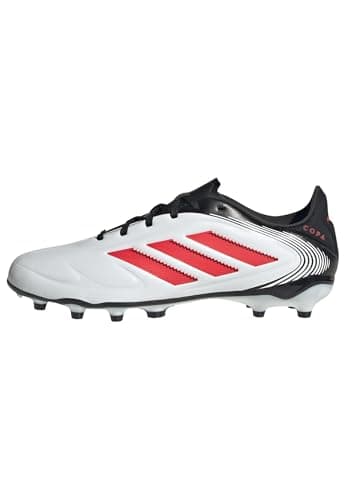
adidas Copa Pure 3 League Firm Ground (Kids)
The best mainstream junior cleat for a wide foot, and a real help to a player still learning first touch.
$60.00View on Amazon#ad — we may earn a commission · price as of October 16, 2026
Nike
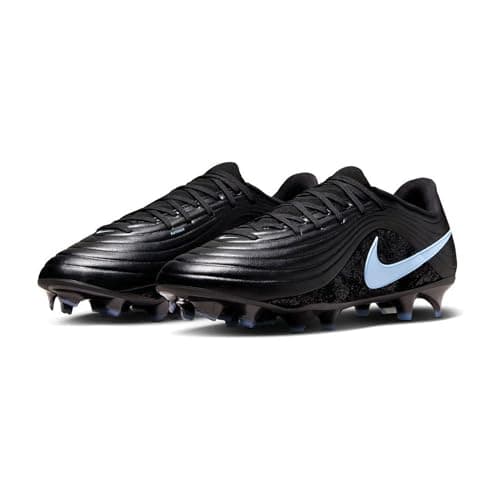
Nike Jr. Tiempo Maestro Academy MG
The comfort-first Nike junior cleat, and the sensible pick for a defender, a keeper, or a kid who plays in discomfort and has stopped mentioning it.
$46.42View on Amazon#ad — we may earn a commission · price as of October 16, 2026
adidas
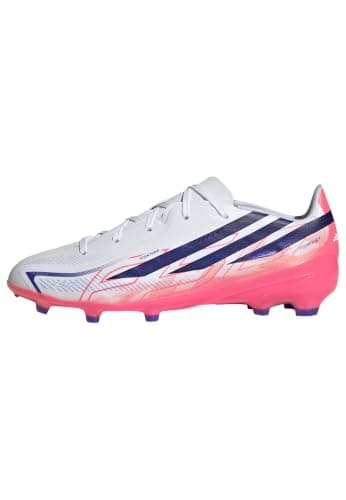
adidas F50 Hyperfast League Kids FG
The right speed cleat for a slim-footed winger or striker playing on grass, and the wrong shoe for almost everyone else.
$51.30$70.00−27%View on Amazon#ad — we may earn a commission · price as of October 16, 2026
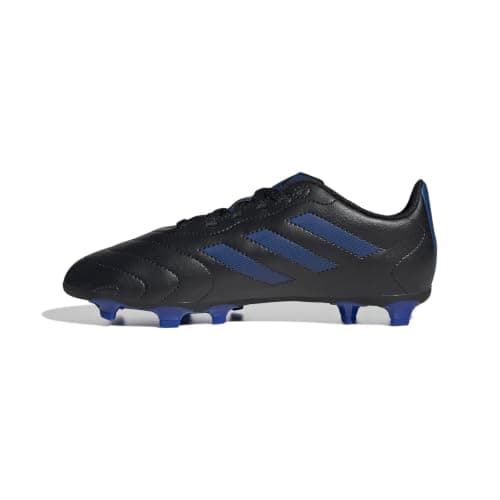
adidas
adidas Goletto VIII Firm Ground
The sensible answer when the honest requirement is a cleat that survives one rec season and costs as little as possible.
$33.67View on Amazon#ad — we may earn a commission · price as of October 16, 2026
Product photos come from each item’s current Amazon listing.
Why sizing up a whole size backfires
This is the single most common response to "they run small" and it produces a worse outcome than a cleat that is slightly snug.
- Heel lift. A long cleat lets the heel rise out of the heel cup every stride. That is the friction that makes a blister, and it arrives inside one half.
- The foot slides forward on braking. Toes hit the end of the shoe on every stop, which is how kids get a bruised nail from cleats that are supposedly too big.
- The studs stop being under the right part of the foot. Plates are laid out for a foot in a specific position. Half an inch forward and the forefoot studs are under the arch.
The exception, and it is narrow: half a size is tolerable in a PUMA junior model, which genuinely runs short. A whole size is never the answer.
What to do if the pair you have is too tight
Before returning them, check whether the problem is length or width. Press down on the toe box with the child standing: if there is a thumb's width of room and they still say tight, it is width, and no amount of wearing-in fixes a narrow last. Return and change the line.
If it is marginal rather than wrong, a synthetic upper does give a little over the first few sessions — how to break in soccer cleats covers what actually helps and which internet methods wreck the shoe. If the pair is genuinely a size short, no method rescues it.
Does this change for turf and indoor shoes?
Slightly. Turf shoes and indoor shoes are built on sneaker-like lasts and run closer to normal shoe sizing than cleats do, so a kid who takes a 3Y cleat usually takes a 3Y turf shoe and finds it roomier. Futsal shoes vary more by brand than cleats do, so measure rather than assume.
Shin guards are the other sizing question that trips families up, and it works on a completely different variable: they are sold by the child's height, not by shoe size. The shin guard size chart has those bands.
One brand does break the true-to-length rule often enough to plan around: PUMA's junior models run short across the range we have looked at, so half a size up is frequently simply the correct size. Nike vs adidas vs PUMA on fit has that and the width picture for each line.
Common questions
Do soccer cleats run big or small?
Small. Most junior cleats fit about half a size shorter and noticeably tighter than a sneaker with the same number, because a cleat is built to hold the foot still against the plate rather than to be roomy. Order the measured size with about half an inch of room at the toe, and change the brand line rather than the number if the fit problem is width.
Should I size up in soccer cleats for a kid?
No. Sizing up a whole size gives you heel lift every stride, toes hitting the end of the shoe on every stop, and the plate's studs sitting under the wrong part of the foot. Half a size is defensible in a PUMA junior model, which genuinely runs short; a whole size is not defensible in anything.
Are soccer cleats true to size?
In length, mostly yes — the big exception is PUMA's junior range, which runs short. What varies is width: adidas F50 and Nike Mercurial are cut on deliberately narrow lasts, adidas Copa Pure and Nike Tiempo are the roomiest. A cleat that feels short is usually a narrow cleat on a broad foot.
How much room should there be in kids' soccer cleats?
About half an inch at the toe, which is Under Armour's own guidance in its buying guide for parents, and roughly a thumb's width pressed down with the child standing. Fit them with the match socks on, because socks and shin guards both change the fit, and measure in the evening when feet are at their largest.
Do turf shoes run the same size as cleats?
Turf and indoor shoes are built on sneaker-like lasts and usually feel roomier than a cleat with the same number, so the same numbered size generally works and feels less tight. Futsal shoes vary more between brands than cleats do, so measure instead of assuming the cleat size carries over.
What if the cleats are tight across the middle of the foot?
That is a width problem, not a length problem, and it does not improve with wearing in. Check that there is still a thumb's width at the toe — if there is, return them and move to a wider line such as the adidas Copa Pure or the Nike Tiempo. A narrow last on a broad foot stays painful.
Sources
- Under Armour — how to buy soccer cleats for kids — A manufacturer's own buying guide, and the source for the statement that kids' soccer cleats are unisex and sized to normal shoe size, plus its guidance on leaving about half an inch at the toe and fitting with match socks on.
- Nike — kids' soccer cleats and shoes — Verified that each Nike model named on this page is currently sold, and the source for Nike's own published upper, plate and surface descriptions.
- adidas — kids' soccer — Verified current availability of the adidas models named here, plus adidas's published material and construction claims.
- Vizari Sports — youth cleats and indoor shoes — Verified the Vizari models named here are currently sold, including the toddler size range and the indoor line, plus Vizari's published material claims.
- Nike — Mercurial, Phantom and Tiempo compared by playing style — Nike's own statement of which silo suits which position: Mercurial 'built for speed; best for forwards and wide midfielders', Phantom 'built for precision; best for central midfielders and playmakers', Tiempo 'built for comfort and control'. The source for every Nike position claim on this site.
- Unisport — adidas Predator vs F50 vs Copa — Position mapping for the adidas silos — Predator for number 8s and 10s, F50 for wingers, attacking fullbacks and forwards, Copa for center-backs, defensive midfielders and classic number 9s — plus the width ranking (F50 narrowest, Predator middle, Copa most accommodating).
Read next
- Nike vs adidas vs PUMA: how they really fit a kid's footNike narrow, adidas wide, PUMA small — how much of that is true, how much is one model being mistaken for a brand, and which line to try first for a slim, average or wide foot.
- Youth soccer cleat size chartUS, EU and centimeter conversions with approximate ages, plus how each brand's junior sizing actually runs.
- How should kids' soccer cleats fit?The thumb's-width rule and four hands-on fit checks — because asking a kid whether shoes fit does not work.
- How to break in soccer cleatsFive steps to break cleats in without blisters, and why the water trick is a bad idea on modern uppers.
- Best youth soccer cleats for wide feetWhich lines genuinely run wide, which only claim to, and why sizing up makes a width problem worse.
- Best youth soccer cleats for narrow feetWhich junior lines are built slim, why laceless is the wrong category for a narrow foot, and the lacing fixes that work.
- Youth shin guard size chartThe height-based size chart, how high guards should go, and the crouch test that confirms the fit.