Heads up: we earn a commission if you buy through our links, at no extra cost to you. It never changes which product we recommend — here’s how that works.
The short answer
Brand is the wrong unit. Within Nike, the Mercurial is narrow and the Tiempo is generous; within adidas, the F50 is narrow and the Copa is generous. Both brands run true to length. The one real brand-level difference is that PUMA junior cleats run short — plan on half a size up — and PUMA width sits at generous-average.
Every parent gets told the same three things in the store: Nike runs narrow, adidas runs wide, PUMA runs small. Two of those are a model being mistaken for a brand, and one of them is genuinely useful. This page sorts out which is which, using the junior models that are actually on shelves rather than the adult boots the fit forums argue about.
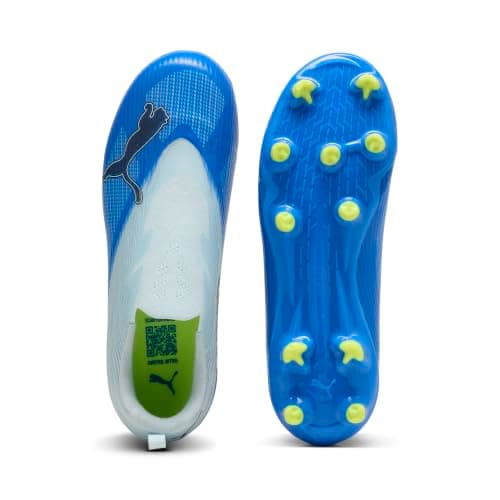
PUMA's junior range runs short. Not narrow — short. It shows up across the models we have looked at: the Kids' Ultra Play runs slightly short with a snug heel, the Future 8 Play turf shoe is forgiving in width but runs short, and the laceless Ultra 7 Match LL Junior runs slightly short like the rest of the range.
That matters more than any width claim, because length is the measurement that decides whether a cleat is safe to wear. A shoe half a size short does not pinch at the sides where a child can describe it; it jams the toes at the front, and the first symptom is usually a black toenail rather than a complaint. If you are ordering PUMA for a kid who has only ever worn Nike or adidas, order half a size up and measure on arrival.
Why “Nike runs narrow” is only half true
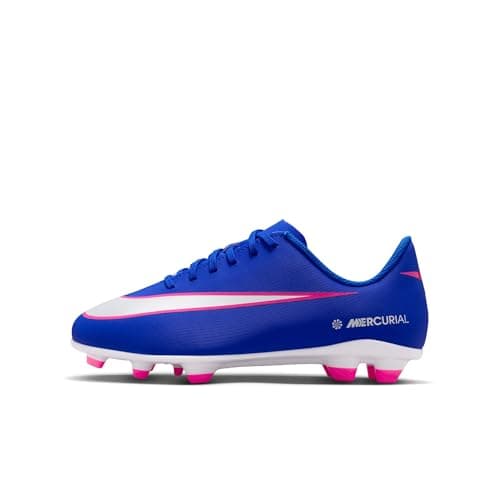
It is true of the Mercurial, which is the Nike line most kids want because it is the one the fast players wear. Our note on the Jr. Mercurial Vapor 16 Club says it runs true to length but narrow, and that a genuinely wide foot will feel it through the midfoot. That single shoe is where the whole reputation comes from.
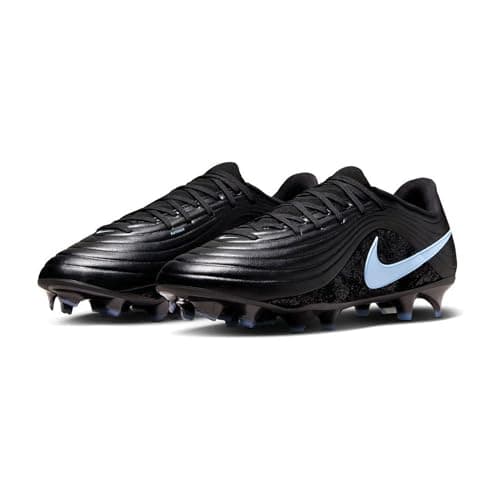
Move one silo across and the picture changes. The Jr. Phantom line carries slightly more forefoot volume at the same size, and the Jr. Tiempo Maestro Academy is the most generous Nike junior last we have found — closer to the adidas Copa than to the Mercurial. A child the Mercurial pinched has two more Nike options before leaving the brand.
Independent fit guides land in the same place. A 2026 retailer round-up of the widest-fitting boots includes Nike twice: the Phantom 6 Low Elite for good forefoot width and a particularly generous heel, and the Tiempo Legend Pro as one of Nike's widest-fitting options with space through the forefoot, midfoot and heel. A brand that appears twice in a wide-feet ranking is not a narrow brand.
And “adidas runs wide” has the same problem
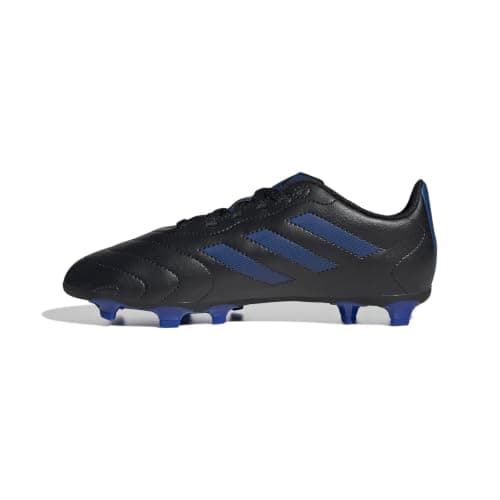
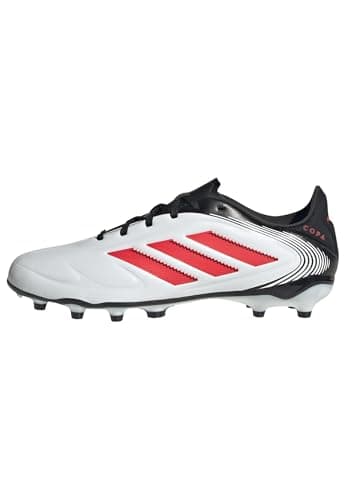
The Copa is generous. Our note on the Jr. Copa Pure.3 calls it generous in width and true in length, and names it as the first cleat to try for a kid who has been squeezed by Nike junior models. The budget Goletto also runs slightly generous, which is why it keeps turning up as the answer for a wide-footed rec player on a budget.
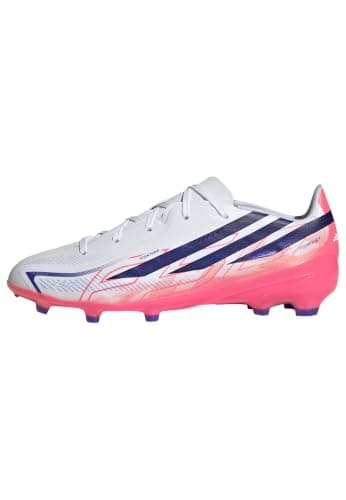
The F50 is the opposite. Our note on the F50 Hyperfast League Kids calls it narrow through the forefoot and midfoot, and says in plain terms that it is the adidas line for a slim foot and the one to avoid for a wide one. The Predator sits between the two at average width, with one caveat: the fold-over tongue on the League model adds pressure across the instep, so a high-volume foot can find a middling-width shoe tight anyway.
A retailer silo guide ranks adidas the same way — F50 narrowest, Predator in the middle, Copa most accommodating — which is the spread, within one brand, that the folklore assigns to the gap between brands.
Compiled from this site's own per-model fit notes, which come from manufacturer and retailer listings plus published fit guides. Width is relative within the junior ranges, not an absolute measurement.
Line
Width
Length
Try it first for
Nike Mercurial (Vapor)
Narrow
True
A slim foot that wants the fast shoe
Nike Phantom
Average
True
A Mercurial fan whose foot is average
Nike Tiempo
Generous
True
A wide foot that has been pinched by a Mercurial
adidas F50
Narrow
True
A slim foot; avoid on a wide one
adidas Predator
Average
True
An average foot; watch the instep on fold-over tongues
adidas Copa
Generous
True
The first try for a wide foot
adidas Goletto
Slightly generous
True
A wide foot on a budget
PUMA Ultra
Average, snug heel
Runs short
An average foot — order half a size up
PUMA Future
Forgiving, stretchy
Runs short
An awkward foot that nothing else suits
Scroll the table sideways on a narrow screen.
Start here
Pick by your kid’s level
The right answer changes with the level, not just the shoe size. Find your kid’s bracket and start there.
The low-risk first try at this age whatever the brand folklore says: slightly generous in width, true to length, and cheap enough that a fit mistake is not expensive.
The shoe to try when a Nike junior model has pinched. Generous width and true length, and the fastest way to find out whether width was really the problem.
Worth trying for a generous average foot at this age, with the standing PUMA caveat: order half a size up, and remember a laceless shoe has no way to snug down.
Tap any row to jump to the full write-up. The price in each button is the one Amazon reported on the date stamped under it — tap through for today’s number, which is the only one that can be relied on.
Nike Jr. Tiempo Maestro Academy MGThe comfort-first Nike junior cleat, and the sensible pick for a defender, a keeper, or a kid who plays in discomfort and has stopped mentioning it.
U9–U10, U11–U12, U13+ travel & club
MG (multi-ground)
The most generous Nike junior last — closer to the adidas Copa than to the Mercurial.
adidas Goletto VIII Firm GroundThe sensible answer when the honest requirement is a cleat that survives one rec season and costs as little as possible.
U6, U7–U8 rec, U9–U10
FG
Runs slightly generous in width and true in length.
adidas F50 Hyperfast League Kids FGThe right speed cleat for a slim-footed winger or striker playing on grass, and the wrong shoe for almost everyone else.
U9–U10, U11–U12, U13+ travel & club
FG (firm ground)
Narrow through the forefoot and midfoot, true to length.
PUMA Ultra 7 Match LL FG/AG JuniorA good dual-surface option for an older player with an average-to-wide foot, and the wrong purchase for a narrow one.
U11–U12, U13+ travel & club
FG/AG
Fits a generous average width with no way to snug it down, and runs slightly short like the rest of the PUMA junior range.
Product photos come from each item’s current Amazon listing.
What the brands themselves say, and what they do not
Nike publishes a silo guide that maps Mercurial to forwards and wide midfielders for speed, Phantom to central midfielders and playmakers for precision, and Tiempo to comfort and control. Comfort and control is as close as a manufacturer gets to saying “this is the wide one”. PUMA's lines are described the same way: Future for creative playmakers with an adaptive fit that wraps comfortably around the foot, Ultra for speed with a lightweight, streamlined shape, King for a soft touch and durability.
Notice what is missing. None of them publishes a width. Brands describe silos by playing style, and the fit information arrives as an adjective — streamlined, adaptive, comfortable — attached to a marketing position. That is why fit folklore exists at all: there is no official number to replace it with.
It is also why the useful rule is not a brand rule. A “speed” silo in any brand is built on a tighter last, because a shoe sold on acceleration is sold on feeling locked down. A “comfort” or “touch” silo in any brand is built roomier. Mercurial, F50 and Ultra are the three speed lines; Tiempo, Copa and King are the three touch lines. The pattern crosses the badges.
1. adidas
adidas Copa Pure 3 League Firm Ground (Kids)
The best mainstream junior cleat for a wide foot, and a real help to a player still learning first touch.
Best for
A U9+ player learning proper ball control
Levels
U9–U10 · U11–U12 · U13+ travel & club
Type / surface
FG
How it fits
Generous width, true length. The first cleat to try for a kid who has been squeezed by Nike junior models.
What we like
The softest upper of any junior cleat at this price, which genuinely helps a kid who is learning to receive a pass
Roomier toe box than the Mercurial or F50 lines — this is the adidas answer for a wide foot
Copa heritage means a plain, un-flashy look that holds up when the neon fades
Where it falls short
The soft upper scuffs and creases fast, so it looks worn well before it is worn out
Heavier than a speed cleat at the same price point
Manufacturer’s published specs
adidas positions the kids' Copa Pure line around comfort, ball control and natural touch for developing players
Softer upper than the Goletto line
Firm-ground plate
These are the manufacturer’s own claims, not measurements we took.
The comfort-first Nike junior cleat, and the sensible pick for a defender, a keeper, or a kid who plays in discomfort and has stopped mentioning it.
Best for
A U9+ defender, keeper or any player who wants comfort over speed
Levels
U9–U10 · U11–U12 · U13+ travel & club
Type / surface
MG (multi-ground)
How it fits
The most generous Nike junior last — closer to the adidas Copa than to the Mercurial. True to length, and a reasonable first try for a foot the Mercurial has pinched.
What we like
The roomiest and most forgiving Nike junior line, which makes it the Nike answer for a broad or high-volume foot
Softer, leather-feel upper is more comfortable through the long stretches of standing and jogging that make up a youth session
Multi-ground plate means one pair covers grass games and turf training
Where it falls short
Heavier than the Mercurial at the same tier, which a genuinely fast player will feel
The softer upper creases and scuffs early, so it looks worn well before it is worn out
Manufacturer’s published specs
Tiempo is Nike's touch-and-comfort silo, positioned by Nike for players who prioritize a soft, precise touch and all-day comfort (Nike)
Academy tier of the current Tiempo Maestro junior family
Multi-ground plate; junior sizing
These are the manufacturer’s own claims, not measurements we took.
The safest default cleat for a rec player between U7 and U12, as long as the foot is average width or narrower.
Best for
The default first real cleat, U7 through U12
Levels
U7–U8 rec · U9–U10 · U11–U12
Type / surface
MG (multi-ground)
How it fits
Runs true to length but narrow. Order the regular size with a thumb's width at the toe and do not go up a full size to buy time — the heel will slip and blister.
What we like
Multi-ground plate means one pair covers a rec season split between grass and turf fields
The Club tier is the cheapest step into the Mercurial line, so the shoe looks like what the older kids wear without the Academy or Pro price
Wide size run from little kid up through big kid, so siblings can stay in one model
Where it falls short
Narrow through the midfoot like most of the Mercurial line — a genuinely wide foot will feel it
Synthetic upper does not stretch and mold the way leather does, so it will not grow with the foot at all
Manufacturer’s published specs
Synthetic leather upper with textured detailing for grip on the ball (Nike)
Molded studs on a plastic plate, rated by Nike for natural grass and artificial grass
Low-top collar
Sold in little kids' and big kids' sizing
These are the manufacturer’s own claims, not measurements we took.
A good dual-surface option for an older player with an average-to-wide foot, and the wrong purchase for a narrow one.
Best for
A U11+ player on mixed grass and artificial grass who wants no laces
Levels
U11–U12 · U13+ travel & club
Type / surface
FG/AG
How it fits
Fits a generous average width with no way to snug it down, and runs slightly short like the rest of the PUMA junior range. Not the pick for a slim foot.
What we like
A dual-surface plate and a clean striking surface in one junior shoe, which is an unusual combination at this price
Lighter than most junior cleats carrying a comparable plate
No laces to come undone mid-match, and no lace pressure across the instep
Where it falls short
Laceless means no adjustment at all, so a narrow foot slides inside it and a growth spurt cannot be accommodated
PUMA junior sizing is the least consistent of the big three — a model to try on rather than guess
Manufacturer’s published specs
Laceless construction — the LL in the model name (PUMA)
FG/AG outsole PUMA rates for firm natural grass and artificial grass
Lightweight synthetic upper, junior sizing
These are the manufacturer’s own claims, not measurements we took.
Whatever the badge says, the shoe in the box is the only evidence that counts. Do this before the tags come off:
Fit with the match socks on, and with shin guards in place if the guards are the sock-sleeve kind. Under Armour's kids' guide says the same thing, and a thin house sock hides about half a size.
Press for the gap. About half an inch of space in front of the longest toe — which is not always the big toe. Do this standing, with weight on the foot.
Check the heel, not the toe, for the slip test. Have them walk, then rise onto the toes. Any lift at the heel means the shoe is too long or too wide at the back, and no amount of lacing fixes a heel that was never held.
Have them stand on one leg and bend the knee forward. This is where width shows up: a narrow shoe on a wide foot bulges visibly over the edge of the soleplate when the foot loads.
Then ask one question and believe the answer. “Does anything press?” A child who says the shoe presses somewhere is correct about that, always, and about the cause almost never.
Which brand for which foot
Start here, then test at home. A foot that defeats this table is a foot to take to a store and measure.
The foot
Try first
Then
Avoid
Slim, narrow heel
Nike Mercurial
adidas F50
Copa, PUMA Ultra 7 laceless
Average
adidas Predator
Nike Phantom
Nothing in particular
Wide forefoot
adidas Copa
Nike Tiempo, adidas Goletto
Mercurial, F50
High instep
Nike Tiempo
Copa
Fold-over tongues; laceless uppers
Wide and on a budget
adidas Goletto
PUMA Future (half size up)
Any speed silo
Awkward, nothing fits
PUMA Future
Nike Tiempo
Anything laceless
Scroll the table sideways on a narrow screen.
Two feet on the same child are often half a size apart, which no brand accounts for. Fit the larger foot and pad the smaller one with a thicker sock if it swims. If you are already reaching for an insole to fix a fit, read the arch-support advice first — a thick orthotic lifts the heel out of the cleat's heel cup and creates the slip you were trying to cure, which the high arches page goes into.
What a width label would not tell you anyway
Three things decide whether a cleat works, and brand fit is only one of them.
The plate. A firm-ground plate on a turf field is uncomfortable and slippery regardless of how well the upper fits — firm ground vs turf cleats sorts out which plate the kid actually needs.
Whether it is laced. A laceless shoe is a fixed-volume shoe: it fits or it does not, with no adjustment. That is a bigger fit variable than any brand difference, and are laceless soccer cleats good for kids covers the trade.
Lacing pattern. A standard criss-cross is not the only option, and a heel-lock or wide-foot pattern changes how a borderline shoe fits — see how to lace soccer cleats.
Growth. Any fit decision has a shelf life of a few months at this age. When to replace kids' soccer cleats is the maintenance side of the same question.
Which is the honest summary of this whole page: the badge on the side is the least informative thing about how a cleat will fit. The silo tells you more, the plate tells you more, and the four-minute test at home tells you everything. Start from the youth cleat size chart for the number, use the silo table above to pick which shoe to order in it, and then check the shoe rather than the reputation.
Common questions
Do Nike soccer cleats run narrow?+
The Mercurial does, and that is where the reputation comes from — our note on the Jr. Mercurial Vapor 16 Club says it runs true to length but narrow through the midfoot. The rest of the range does not: the Phantom carries more forefoot volume and the Jr. Tiempo Maestro is the most generous Nike junior last we have found, closer to an adidas Copa. A 2026 retailer guide to the widest-fitting boots lists two Nike models.
Do adidas cleats run wide?+
The Copa and the Goletto do. The F50 does not — we record it as narrow through the forefoot and midfoot, and as the adidas line to avoid for a wide foot. The Predator sits at average width, with the caveat that a fold-over tongue adds instep pressure. The spread inside adidas is as wide as the gap people imagine between adidas and Nike.
Do PUMA soccer cleats run small?+
Yes, in the junior range, and this is the one brand-level fit fact on this page that holds up. The Kids' Ultra Play, the Future 8 Play turf shoe and the laceless Ultra 7 Match LL Junior all run short in our notes. Order half a size up from the size the child wears in Nike or adidas, then measure the gap at the toe when it arrives.
Which brand of soccer cleat is best for wide feet?+
Start with the adidas Copa, which we record as generous in width and true in length, and which is the first thing to try after a Nike model has pinched. If the budget is tight, the adidas Goletto runs slightly generous for much less. Inside Nike, the Tiempo is the wide-foot answer. The brand matters less than the silo.
Is it the brand or the model that decides fit?+
The model, nearly always. Speed silos — Mercurial, F50, Ultra — are built on tighter lasts because a shoe sold on acceleration is sold on feeling locked down. Touch silos — Tiempo, Copa, King — are built roomier. That pattern crosses all three brands, which is why one brand can be both the narrow answer and the wide one.
Should I size up in soccer cleats so they last longer?+
No. A cleat that is half a size long lets the foot slide forward on every stop and turn, which is how children end up with toe blisters and bruised nails in a shoe that felt fine indoors. Buy the size that fits with match socks on and about half an inch at the toe. The one exception is PUMA, where half a size up is often simply the correct size.
How do I know if a cleat is too narrow rather than too short?+
Have the child stand on one leg and bend that knee forward, loading the foot. Width problems show as a visible bulge over the edge of the soleplate; length problems show as toes pressed against the front with no gap when standing. Check the heel separately — any lift when they rise onto the toes means the shoe is too long or too loose at the back, and lacing will not fix it.
Sources
Unisport — top 10 best football boots for wide feet in 2026 — A retailer fit guide written model by model rather than brand by brand, and the source for the cross-brand width claims on this site: the PUMA King 20 Ultimate ranked first because it is "seriously wide", with room in the heel, midfoot, forefoot and outsole; the Nike Phantom 6 Low Elite described as having good width in the forefoot and a particularly generous heel; the Nike Tiempo Legend Pro called one of Nike's widest-fitting options, with space through the forefoot, midfoot and heel; and the adidas Copa Pure 4 Elite included in a wide-feet ranking despite a relatively tapered midfoot, because its wider forefoot compensates. The guide makes no claim that any one brand is narrowest overall — it treats width as a property of the model rather than the badge, which is the point the cross-brand fit page is built on.
Unisport — your guide to PUMA boots — The source for PUMA's three silos as the retailer describes them: Future "designed for creative playmakers who rely on agility and freedom of movement" with "an adaptive fit that wraps comfortably around the foot"; Ultra built for players who put speed and acceleration first, with a "lightweight construction and a streamlined shape"; King "well suited for players who value a soft, comfortable touch and long-lasting durability over lightweight speed". The guide itself publishes no width or volume figures for any silo.
Unisport — adidas Predator vs F50 vs Copa — Position mapping for the adidas silos — Predator for number 8s and 10s, F50 for wingers, attacking fullbacks and forwards, Copa for center-backs, defensive midfielders and classic number 9s — plus the width ranking (F50 narrowest, Predator middle, Copa most accommodating).
Nike — Mercurial, Phantom and Tiempo compared by playing style — Nike's own statement of which silo suits which position: Mercurial 'built for speed; best for forwards and wide midfielders', Phantom 'built for precision; best for central midfielders and playmakers', Tiempo 'built for comfort and control'. The source for every Nike position claim on this site.
Nike — kids' soccer cleats and shoes — Verified that each Nike model named on this page is currently sold, and the source for Nike's own published upper, plate and surface descriptions.
adidas — kids' soccer — Verified current availability of the adidas models named here, plus adidas's published material and construction claims.
Under Armour — how to buy soccer cleats for kids — A manufacturer's own buying guide, and the source for the statement that kids' soccer cleats are unisex and sized to normal shoe size, plus its guidance on leaving about half an inch at the toe and fitting with match socks on.