Heads up: we earn a commission if you buy through our links, at no extra cost to you. It never changes which product we recommend — here’s how that works.
The short answer
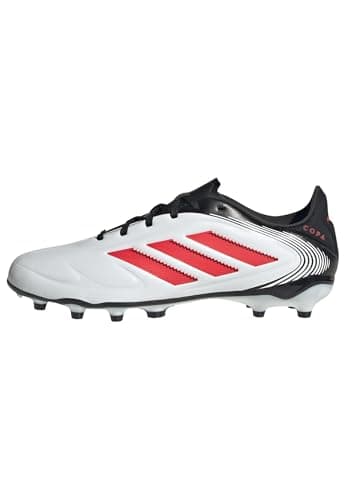
A high arch is a volume problem, not a width one: the foot is tall through the instep, so lace pressure builds across the top. It also absorbs shock poorly. The fix is a roomy, soft-upper line — the Nike Tiempo or adidas Copa — plus a low-volume arch-support insole, with the factory sockliner removed first.
High arches are the least well served foot shape in youth soccer, because almost every product and every guide is written about width. A high-arched foot can be perfectly normal width and still not fit properly, and the symptom looks nothing like the wide-foot symptom.
What it looks like: pressure along the top of the foot where the laces sit, sometimes with a mark or redness after playing; no pressure at all at the sides; and often a complaint that the cleat feels hard underfoot even when the length is right.
Those are two separate things happening at once. The instep pressure is the volume problem. The hardness is the shock problem — a high arch is a rigid structure that does less of the flattening a lower arch does on landing, so more force reaches the foot.
Start here
Pick by your kid’s level
The right answer changes with the level, not just the shoe size. Find your kid’s bracket and start there.
The most generous Nike junior last, with a leather-feel upper that accommodates volume rather than fighting it, on a plate that covers grass and artificial grass.
More forefoot volume than the Mercurial at the same size and a forgiving upper, which suits a taller foot without going all the way to a leather-feel line.
Tap any row to jump to the full write-up. The price in each button is the one Amazon reported on the date stamped under it — tap through for today’s number, which is the only one that can be relied on.
#
Product
Best for
Surface
Fit notes
Price
1
Nike Jr. Tiempo Maestro Academy MGThe comfort-first Nike junior cleat, and the sensible pick for a defender, a keeper, or a kid who plays in discomfort and has stopped mentioning it.
U9–U10, U11–U12, U13+ travel & club
MG (multi-ground)
The most generous Nike junior last — closer to the adidas Copa than to the Mercurial.
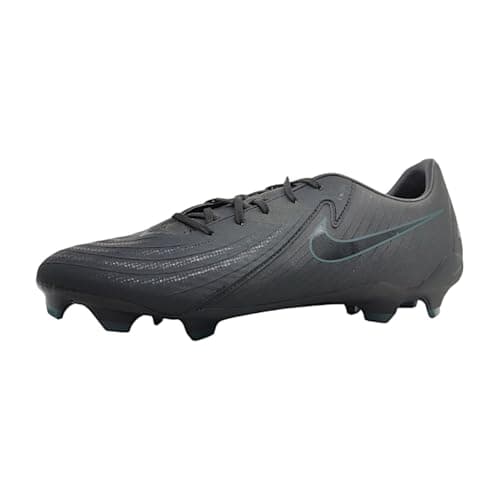
Nike Jr. Phantom GX II Academy FG/MGThe better Nike choice for a midfielder or defender who needs a reliable striking surface more than a few grams saved.
U9–U10, U11–U12, U13+ travel & club
FG/MG
Slightly more forefoot volume than a Mercurial at the same size.
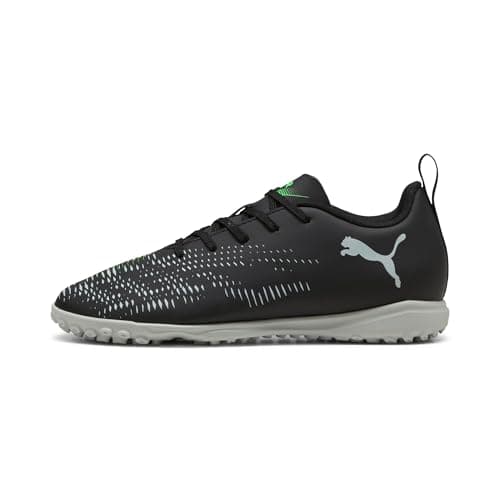
PUMA Future 8 Play TurfThe most comfortable junior turf shoe here, with the least protection — a fine trade for training, less so for a competitive match.
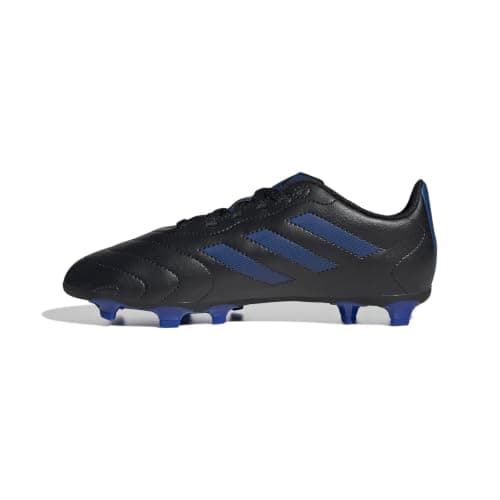
adidas Goletto VIII Firm GroundThe sensible answer when the honest requirement is a cleat that survives one rec season and costs as little as possible.
U6, U7–U8 rec, U9–U10
FG
Runs slightly generous in width and true in length.
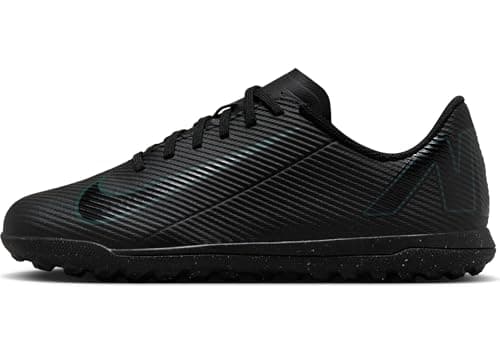
Nike Jr. Mercurial Vapor 16 Club TurfThe right second pair once a kid is training on artificial turf every week, and a bad only-pair if games are on grass.
U7–U8 rec, U9–U10, U11–U12, U13+ travel & club
TF (turf)
Same narrow Mercurial last as the firm-ground Club.
Product photos come from each item’s current Amazon listing.
Volume is not width, and the difference decides the purchase
Wide foot
High-volume foot
Where the pressure is
Across the ball, both sides
Across the top, under the laces
Mark after playing
Outside edge of little toe
A lace line across the instep
What helps
A wider last
A softer upper and different lacing
What makes it worse
Sizing up
Lacing tighter to stop heel lift
Scroll the table sideways on a narrow screen.
A kid can have both, and plenty do. But they are separate problems with separate fixes, and treating a volume problem as a width problem sends you to the wrong shoe. The wide feet picks cover the other case.
The insole swap, and the two rules that come with it
This is the part that does the work. A high arch benefits from arch support that fills the gap under the midfoot, and podiatry guidance for doing it in a cleat is specific about how.
Remove the factory sockliner first. Layering a new insole over the old one is the most common error — it lifts the foot out of the heel cup and cuts ground feel.
Use a low-volume insole, not a thick orthotic. A thick orthotic in a cleat raises the heel out of the heel cup, which creates instability while solving the arch problem. Slim, cleat-specific profiles exist precisely for this.
There is a second reason this matters for high arches specifically. A high-arched foot tends to roll outward rather than inward, and supporting the arch is aimed at limiting the lateral roll that contributes to ankle sprains in that foot type. That is a clinical judgment, not a shopping one — which is why it belongs with a doctor rather than a product page.
Lacing changes that relieve instep pressure
Skip the eyelet over the highest point of the instep. Lace up to it, cross over it, and continue. This removes pressure from exactly the place it builds.
Use parallel lacing rather than criss-cross over the midfoot. Less downward force on the instep for the same overall tightness.
Lace-lock the top eyelets instead of over-tightening the middle. If the reason the laces are tight is heel lift, fix the heel rather than crushing the instep.
Any of these can be undone in thirty seconds, which makes them worth trying before buying anything.
What to avoid
Laceless cleats. They have no adjustment anywhere, and the whole approach for a high instep is adjusting where pressure falls. A fold-over tongue is a similar problem in a milder form — it adds a layer across the instep, which is why a high-volume foot often finds those models tight.
Also avoid solving instep pressure by sizing up. The cleat gets longer, not taller, and you add heel lift to the list of problems. If the length is right, keep the length.
1. Nike
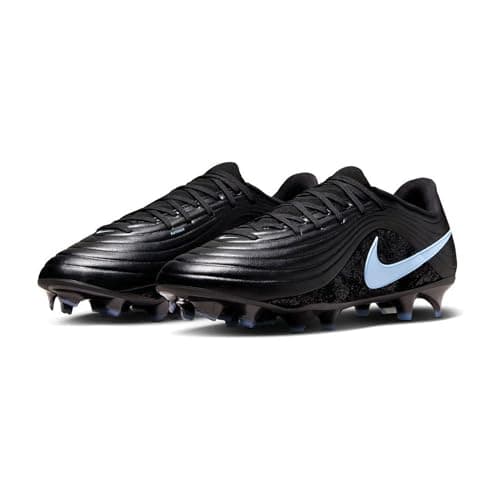
Nike Jr. Tiempo Maestro Academy MG
The comfort-first Nike junior cleat, and the sensible pick for a defender, a keeper, or a kid who plays in discomfort and has stopped mentioning it.
Best for
A U9+ defender, keeper or any player who wants comfort over speed
Levels
U9–U10 · U11–U12 · U13+ travel & club
Type / surface
MG (multi-ground)
How it fits
The most generous Nike junior last — closer to the adidas Copa than to the Mercurial. True to length, and a reasonable first try for a foot the Mercurial has pinched.
What we like
The roomiest and most forgiving Nike junior line, which makes it the Nike answer for a broad or high-volume foot
Softer, leather-feel upper is more comfortable through the long stretches of standing and jogging that make up a youth session
Multi-ground plate means one pair covers grass games and turf training
Where it falls short
Heavier than the Mercurial at the same tier, which a genuinely fast player will feel
The softer upper creases and scuffs early, so it looks worn well before it is worn out
Manufacturer’s published specs
Tiempo is Nike's touch-and-comfort silo, positioned by Nike for players who prioritize a soft, precise touch and all-day comfort (Nike)
Academy tier of the current Tiempo Maestro junior family
Multi-ground plate; junior sizing
These are the manufacturer’s own claims, not measurements we took.
A roomy line with a soft upper — the Nike Tiempo and adidas Copa lines are the most accommodating junior options — combined with a low-volume arch-support insole. A high arch is a volume problem rather than a width one, so the thing that helps is an upper that gives across the instep, not a wider forefoot.
Is a high arch the same as a wide foot?+
No, and confusing them sends you to the wrong shoe. A wide foot presses out at the sides across the ball of the foot. A high-volume foot presses up against the laces along the top, with no side pressure at all. The fixes differ: a wider last for one, a softer upper and different lacing for the other.
Should I put insoles in my child's soccer cleats?+
For a high arch it is usually the most useful change you can make, with two rules from podiatry guidance: take the factory sockliner out first rather than layering, and use a low-volume insole rather than a thick orthotic, which would lift the heel out of the cleat's heel cup. If there is ongoing pain, see a doctor first.
How do I relieve pressure on the top of my child's foot in cleats?+
Skip the eyelet directly over the highest point of the instep, or switch to parallel lacing across the midfoot instead of criss-cross. If the laces are tight because the heel is lifting, lace-lock the top eyelets instead of over-tightening the middle. All three take seconds and cost nothing.
Are laceless cleats bad for high arches?+
Usually, yes. Managing a high instep is about adjusting where pressure falls, and a laceless cleat has no adjustment at all. Fold-over tongue models are a milder version of the same issue, since they add a layer across the instep — which is why a high-volume foot often finds them tight.
Sources
Michigan Foot Doctors — insoles for soccer cleats (Dr. Tom Biernacki, DPM) — A board-certified podiatrist's guidance on insoles in cleats: high arches need cushioned support against the lateral roll that causes sprains in supinators, thick orthotics lift the heel out of the cleat's heel cup, and the factory sockliner must come out first.
Nike — Mercurial, Phantom and Tiempo compared by playing style — Nike's own statement of which silo suits which position: Mercurial 'built for speed; best for forwards and wide midfielders', Phantom 'built for precision; best for central midfielders and playmakers', Tiempo 'built for comfort and control'. The source for every Nike position claim on this site.
adidas — kids' soccer — Verified current availability of the adidas models named here, plus adidas's published material and construction claims.
Nike — kids' soccer cleats and shoes — Verified that each Nike model named on this page is currently sold, and the source for Nike's own published upper, plate and surface descriptions.